Quick Answer: How Do You Stop Cottonwood Fluff in Sacramento Gutters?
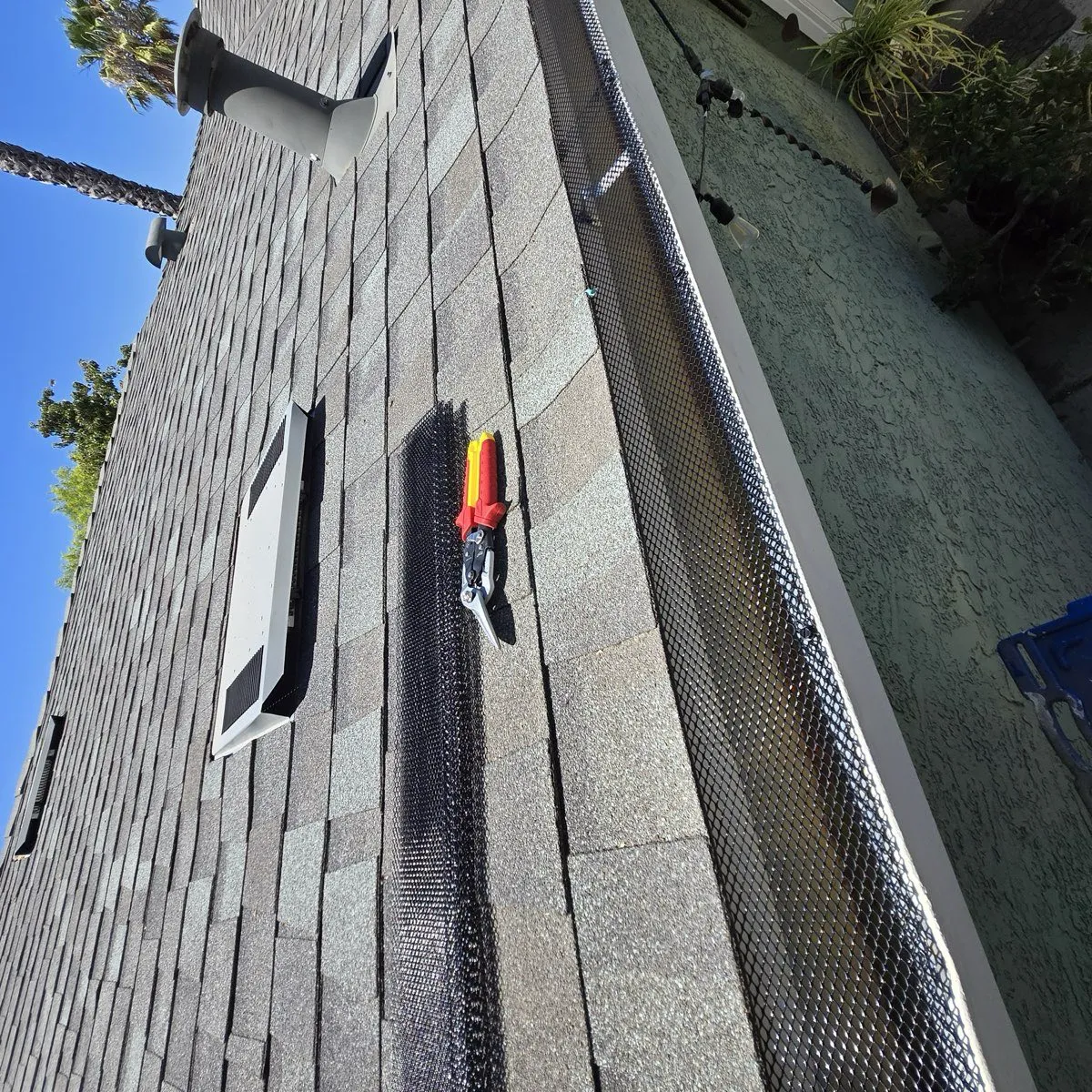
Install a 2mm stainless steel micro-mesh and schedule a single mid-June surface sweep. Sacramento’s Fremont cottonwoods (Populus fremontii) release three debris waves between late March and late June: male catkins, female catkins with green seed capsules, and the cotton-attached seeds themselves. The cotton fluff is the killer — the individual fibers are finer than 3mm screen openings, so standard guards do nothing. Once the fluff lands in a gutter, it mats into a felt-like layer that holds water, sprouts seedlings within 48 hours, and clogs downspouts before the next storm. Riparian neighborhoods like River Park, Campus Commons, Sierra Oaks, and Land Park’s river side have the heaviest cottonwood exposure in the Sacramento metro.
Table of Contents
- The Three Cottonwood Debris Waves
- When Cottonwoods Drop in Sacramento (2026 Timing)
- Why Fluff Defeats Standard Gutter Guards
- Sacramento Cottonwood Hotspots
- Gutter Guard Comparison for Cottonwood Debris
- The Sprouting Problem (Yes, Seriously)
- Cleaning Schedule for Cottonwood Properties
- Cost: Repeat Cleaning vs. One-Time Guard Install
- Frequently Asked Questions
Cottonwood gutters Sacramento problems are the debris event most homeowners don’t plan for. Oak acorns get attention in fall. Sweetgum balls get attention in winter. But by the time it’s May 12 and there’s a snowstorm of white fluff drifting through your backyard, the cotton is already in your gutters — and the seeds attached to it are about to start sprouting.
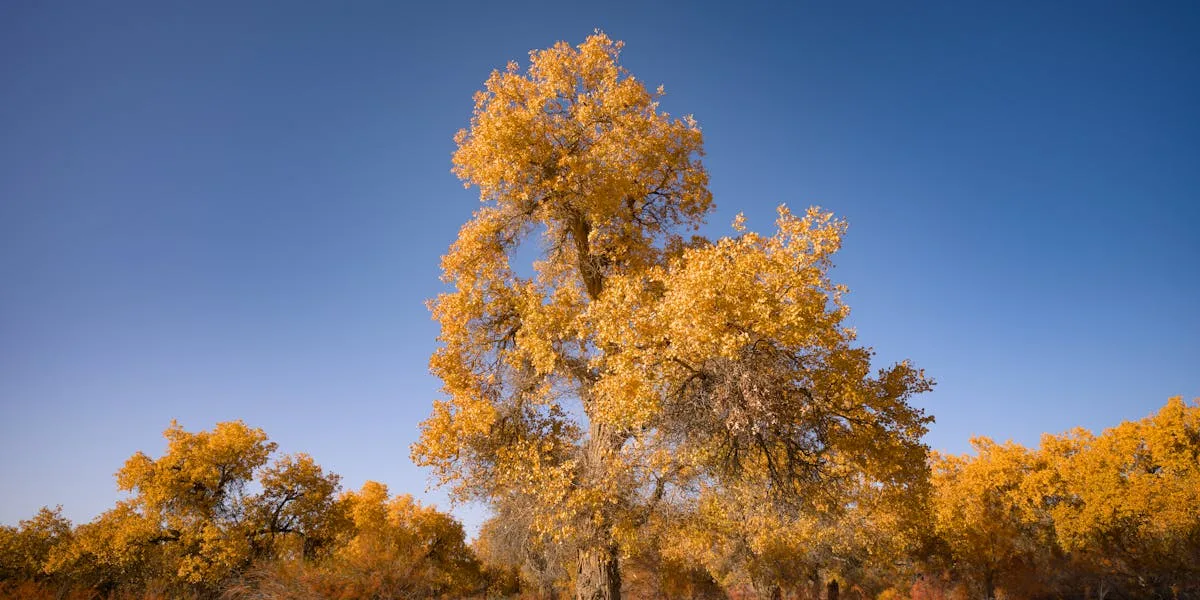
Fremont cottonwood (Populus fremontii) is California’s dominant native riparian tree along the Sacramento and American Rivers. The UC Agriculture and Natural Resources tree species database documents mature Fremont cottonwoods reaching 40 to 100 feet tall with broad spreading crowns. Along the American River Parkway, individual trees over 120 years old are common. Every May, those trees release seeds attached to cotton fibers that drift hundreds of yards on the warm valley breeze. If your home is within roughly 300 yards of running water in central Sacramento, the cotton is landing on your roof.
TL;DR: Fremont cottonwood drops male catkins (March-April), female catkins (April-May), and seed fluff (May-June peaking ~May 15). The cotton fibers pass through 3mm screens and mat into a felt layer that holds water and grows seedlings within 48 hours. Only 2mm stainless micro-mesh stops it. Riparian neighborhoods within 300 yards of the American or Sacramento Rivers are the highest-risk zones. Skip cleaning in May and you have a sprouting wet mat by late June. Plan a 2mm micro-mesh install before next spring, or schedule a mid-June professional cleaning if you’re past the window for this year.
The Three Cottonwood Debris Waves (And Why They Stack)
Sacramento homeowners typically only notice cottonwoods during the “cotton snow” week in mid-May. By then, two earlier debris waves have already filled the bottom of the gutter, and the fluff is just the visible top layer. Understanding the full sequence is the difference between cleaning once and cleaning three times.
1. Male Catkins (March–April)
Reddish-brown caterpillar-shaped flower clusters, 2 to 4 inches long. They release pollen and then drop in large numbers over a 2 to 3 week window. A single mature Fremont cottonwood can drop several thousand catkins.
Why it matters: The bulky stalks plug downspout strainers and outlet drops similar to acorns. Drying catkins also fuel ember intrusion risk — relevant for any home pulling into Zone 0 compliance.
2. Female Catkins + Capsules (April–May)
Greenish strings, slightly longer than the male catkins, carrying small green seed capsules (3 to 5mm). The capsules ripen for 4 to 6 weeks after pollination, then split open three valves and release the cotton-bound seeds.
Why it matters: The capsules themselves are gutter-bottom debris that holds moisture. The split valves are sharp little wooden flakes that knife into 3mm screens and lodge sideways.
3. Cotton Fluff with Seeds (May–June)
The famous “cotton snow.” Each seed (about 1mm) is attached to a tuft of white silky fibers that catches wind and water. Peak drop is typically May 10 through May 25 along Sacramento riparian corridors.
Why it matters: Cotton fibers pass through any opening larger than 1mm. Once wet, they mat into a continuous felt that holds water and germinates seeds within 48 hours.
Most homeowners who only schedule a fall and a spring gutter cleaning miss this window entirely. The April spring sweep happens before the fluff drops, and the October fall sweep happens after the cotton has already turned into root-bound brown muck. By the time you see the next clog symptom, it’s already June and the seedlings are 4 inches tall.
When Cottonwoods Drop Catkins in Sacramento (2026 Timing)
Sacramento’s 2026 cottonwood drop is running about 10 days early because of a warm April. Most American River Parkway trees released their first wave of male catkins between March 22 and April 8. Peak cotton fluff is happening this week and next — roughly May 10 through May 25 — with some downstream variation closer to the Sacramento River confluence.
Fremont Cottonwood Debris Wave Timing (Sacramento, Typical Year)
Timing varies year to year by about 10 days in either direction. UC Davis Department of Plant Sciences observations of Central Valley riparian phenology and CalFlora field reports for Populus fremontii show the seed-release window consistently centered on the second and third weeks of May, with cooler springs pushing it into late May and early June. For a Sacramento homeowner, the rule of thumb is simple: if the cotton is in the air, it’s already in your gutter.
Pro Tip: The “Cotton Visible” Test
Stand in your front yard and look toward the nearest cottonwood. If you can see white fluff drifting on the breeze, the cotton has been landing on your roof for at least 5 to 7 days already. The visible airborne fluff is the back end of the release, not the start. Schedule a cleaning that week if you don’t have 2mm guards installed.
Why Cottonwood Fluff Defeats Standard Gutter Guards
Most gutter guards on Sacramento homes were sized for leaves and pine needles. Cottonwood fluff is a different physics problem. The individual fibers are roughly 0.05mm thick and 5 to 15mm long, which is finer than a human hair. Any guard with openings larger than 1mm is essentially transparent to wet cotton.
Once cotton fluff lands wet in a gutter, three things happen fast:
- Felting. The fibers tangle and compress under their own weight into a continuous felt-like mat that runs the length of the gutter trough.
- Water retention. The mat holds 4 to 8 times its dry weight in water, so it stays wet between rain events and even between sprinkler cycles on adjacent landscaping.
- Germination. Each fiber tuft carries one Fremont cottonwood seed. In a wet gutter at 65 to 85 degrees F, germination starts within 24 to 48 hours. By day 7, you have green sprouts. By day 21, you have rooted seedlings 2 to 4 inches tall.
This is the same biological mechanism that lets Fremont cottonwood colonize a fresh gravel bar after a flood. The seed is built to find any moist, sun-warmed surface and root immediately. Your gutter is, accidentally, an excellent cottonwood nursery.
Gutter Guard Performance Against Cottonwood Fluff
Field observations across Sacramento River-corridor properties, 2023–2026. Performance varies with installation quality and seasonal load.
Reverse-curve guards (Gutter Helmet, LeafGuard, similar) perform better than screens but still let a significant amount of fluff slip into the trough during the highest-volume days, because cotton fibers don’t follow the same water-tension path that solid debris does. They ride the airflow over the curve and drop in. For a full reverse-curve vs. micro-mesh breakdown, see our reverse curve vs micro-mesh comparison.
Sacramento Cottonwood Hotspots
Fremont cottonwood is California native, but it only grows naturally where there’s reliable surface water. Sacramento’s cottonwood concentration follows the rivers and creeks almost exactly. The further your home is from running water, the lower the cotton exposure — with one exception: the wind. A south-southwest breeze (Sacramento’s prevailing summer afternoon wind) can carry visible cotton 300 to 500 yards from the source tree.
| Sacramento Neighborhood | Riparian Source | Cotton Exposure | Typical Peak Window |
|---|---|---|---|
| River Park | American River Parkway (south bank) | Very High | May 8–22 |
| Campus Commons | American River Parkway | Very High | May 8–22 |
| Sierra Oaks / Arden Park | American River Parkway | Very High | May 10–25 |
| College-Glen | American River Parkway | High | May 10–25 |
| Carmichael (river side) | American River Parkway | Very High | May 10–25 |
| Fair Oaks (river side) | American River Parkway | High | May 12–28 |
| Land Park (river side) | Sacramento River | High | May 10–25 |
| Riverside / Pocket | Sacramento River | High | May 10–25 |
| Discovery Park / North Natomas (south edge) | River confluence | Very High | May 5–22 |
| Rancho Cordova (river side) | American River Parkway | High | May 12–28 |
| West Sacramento (river side) | Sacramento River | High | May 10–25 |
| Elk Grove (most) | Distant from rivers | Low | N/A |
| Roseville / Rocklin (most) | Distant from rivers | Low | N/A |
The American River Parkway is the single largest cottonwood source in the Sacramento metro. The Sacramento County Regional Parks manages 23 miles of riparian corridor running from Discovery Park to Folsom Lake. That corridor holds tens of thousands of mature Fremont cottonwoods, all releasing seed simultaneously in May. Any home along that strip is downwind of an enormous biological source.
Gutter Guard Comparison for Cottonwood Debris
Not all micro-mesh is created equal. Cottonwood debris specifically rewards stainless steel construction, fine mesh (2mm or smaller), and a flat or slightly raised mounting orientation that lets airflow lift the dry cotton off the mesh between rain events.
2mm Stainless Steel Micro-Mesh
RecommendedBlocks individual cotton fibers, the seed capsules, and the catkin stalks. Stainless steel won’t corrode from prolonged moisture contact with the wet fluff mat. The flat-mounted versions allow afternoon breeze to dry and lift cotton off the surface within 1 to 2 days, so no mat forms on top.
Best for: Any home within 300 yards of the American or Sacramento Rivers. See our full mesh gutter guard guide.
Reverse-Curve (Gutter Helmet, LeafGuard)
PartialBetter than screens because the curved surface keeps the bulk of the cotton from landing inside, but the airborne fluff still finds its way through the front lip on calm days. Catkin stalks accumulate on the curve face and need physical removal.
3mm Aluminum Screen
Not RecommendedCotton fluff passes through unimpeded. Catkins and seed capsules wedge sideways and stick. The screen has to be lifted off and cleared by hand after every May, which defeats the point of a guard.
Foam Inserts
AvoidFoam cells absorb the wet cotton and never release it. By July, the foam is a saturated, sprouting, mold-growing brick. We pull foam inserts out of cottonwood-zone gutters every summer that are unsalvageable.
Brush Guards
AvoidBristle structure traps cotton between filaments. Pulling the cotton out is slower than just cleaning the gutter would have been. See our foam, brush, and snap-in screen guard breakdown for why these fail on multiple Sacramento debris types.
The Sprouting Problem (Yes, Seriously)
The strangest part of cottonwood gutter problems is that they don’t stay as debris. They become a living plant inside your gutter trough. This happens every year on hundreds of Sacramento homes and most owners never look up to see it.
Here’s the timeline we observe on cottonwood-exposed gutters that didn’t get a May or early-June cleaning:
- Day 0 (mid-May): Cotton fluff arrives, mats into a wet felt layer along the gutter floor.
- Day 2: Seeds in the felt begin germinating. Tiny white radicles (first roots) extend into the debris.
- Day 7: Green cotyledons (seed leaves) visible above the felt. From the ground you can sometimes see green fringe along the gutter edge.
- Day 14: True leaves emerge, 2 to 3 inches of growth.
- Day 21: Seedlings reach 4 to 6 inches with established root mats woven through the felt.
- Day 45 (late June onward): Sacramento heat kills the seedlings, but the dead root mats remain glued to the gutter floor.
- Fall: The dead root mat traps oak leaves, sweetgum balls, and pine needles. Drainage is gone before the first October storm.
We pulled an extreme case off a Campus Commons two-story last June: 47 linear feet of gutter held a continuous root mat with seedlings averaging 5 inches tall, plus dozens of inch-tall plants growing out of the front lip facing the lawn. The homeowner had assumed the “green stuff” was moss. It was a baby cottonwood forest.
Real-World Scenario: Sierra Oaks 1958 Ranch
A 2,200 sq ft single-story near Eastern Avenue and Fair Oaks Boulevard has six mature Fremont cottonwoods along the back property line (city of Sacramento street tree planted before subdivision). Owner cleaned in fall, again in early April, and assumed the gutters were good through the dry season.
Reality on inspection in late June: 8 of 11 downspouts running at less than 30% flow. North-side gutters held a 1.5 inch deep wet cotton mat with seedlings 3 to 4 inches tall. Fascia behind the gutter showed early water staining from overflow during a freak late-May thunderstorm. Fix: 2mm stainless micro-mesh install ($4,420 for 188 linear feet) and full gutter flush. Result: zero clogs and zero sprouts the following May despite normal cottonwood release.
Cleaning Schedule for Cottonwood Properties
If you’re in a cottonwood zone and you don’t have 2mm micro-mesh installed, your annual gutter calendar needs a different shape than the standard Sacramento spring-and-fall schedule.
| Cleaning | Timing | Why |
|---|---|---|
| 1. Late winter flush | Late February | Clear winter oak, pine, and sweetgum debris before catkin drop starts. |
| 2. Post-catkin sweep | Mid-April | Clear male catkin debris before fluff arrives so the trough is empty to receive cotton. |
| 3. Post-fluff cleaning | Mid-June | Remove cotton mat before seedlings root. Single most important cleaning of the year. |
| 4. Pre-storm fall | Late October | Clear summer dust, fall leaves, and any dead root mat residue before rainy season. |
Four cleanings a year is what most cottonwood properties need without guards. With 2mm micro-mesh installed, the schedule collapses to a single mid-June surface sweep with a leaf blower from the ground — no ladder, no scooping, no cost beyond 15 minutes. That’s the math that makes guards pay for themselves on riparian-zone homes.
Cost: Repeat Cleaning vs. One-Time Guard Install
A typical Sacramento riparian-zone single-story home has 150 to 200 linear feet of gutters. Here’s the 5-year cost comparison most homeowners run when we walk them through the cottonwood problem.
5-Year Cost: Repeat Cleaning vs. 2mm Micro-Mesh (175 ft Cottonwood-Zone Home)
Sacramento Gutter Guard pricing observations, May 2026. Cleaning rate assumes $215/visit at 4 visits, plus $240/yr average for fascia or downspout damage repair on un-guarded cottonwood homes.
The break-even on a riparian-zone home is typically between year 4 and year 5. After year 5, the cumulative savings widen quickly — and that’s before factoring in fascia damage, foundation moisture from overflow, or the insurance considerations covered in our insurance and gutter damage guide.
For a deeper Sacramento-specific cost breakdown by mesh type and home size, see gutter guard cost per linear foot Sacramento.
Cotton already in your gutters this week?
Peak 2026 fluff release is happening right now along the American and Sacramento River corridors. Book a mid-June cleaning or a quote on 2mm stainless micro-mesh before the seedlings root.
Get a Free QuoteFrequently Asked Questions
Why is cottonwood fluff clogging my gutters?
Cottonwood fluff clogs Sacramento gutters because the cottony fibers attached to Fremont cottonwood (Populus fremontii) seeds are designed to float on wind and water. When they land on a roof, they catch on shingle granules and ridge vents, then wash into gutters during the next watering cycle or rain shower. Inside the gutter, the wet cotton mats into a dense, felt-like layer that holds water rather than letting it drain. Standard 3mm and 5mm gutter screens do not stop cotton fluff at all because the individual fibers are smaller than the openings. The fluff also carries the green seed capsules with it, which then sprout in the moist debris and grow root mats inside the gutter trough within two to three weeks.
When do cottonwoods drop catkins in Sacramento?
Fremont cottonwoods in Sacramento drop catkins and seed fluff from late April through late June, with peak fluff release typically in the second and third weeks of May. The cycle starts with the male catkins (the 2 to 4 inch reddish-brown dangling flower clusters) dropping in late March and April after pollen release. The female catkins follow and release the cotton-attached seeds about four to six weeks later. UC ANR and the California Native Plant Society note that timing shifts about 10 days earlier in warm springs and 10 days later in cool, wet springs. For 2026, Sacramento’s warm April put peak fluff at roughly May 5 through May 25 along the American River Parkway and Sacramento River corridor.
Do gutter guards stop cottonwood fluff?
Only fine micro-mesh gutter guards reliably stop cottonwood fluff in Sacramento. A 2mm stainless steel micro-mesh blocks the cotton fibers, the seed capsules, and the dropped catkin stalks while still letting heavy rain through. Standard 3mm aluminum screens, foam inserts, and brush guards all fail against cottonwood debris. The 3mm openings are larger than individual cotton fibers, so the fluff blows right through. Foam inserts trap the fluff inside their cells and turn into a soaking wet sponge that grows mold and sprouting seedlings. Brush guards collect cotton between the bristles into a thick mat that has to be picked out by hand. After installing 2mm micro-mesh on cottonwood-heavy properties, most clients only need one annual mid-June surface sweep with a leaf blower to clear the cotton off the top of the mesh.
Where are the worst cottonwood trees in Sacramento?
The heaviest cottonwood concentrations in Sacramento are along the American River Parkway from Discovery Park east through Rancho Cordova, the Sacramento River corridor from Discovery Park north through Garcia Bend, and the Cosumnes River Preserve area south of Elk Grove. Within neighborhoods, the most affected zones are River Park, Campus Commons, Sierra Oaks, College-Glen, Arden Park, Riverside, Land Park (river side), and the older sections of Carmichael and Fair Oaks closest to the American River. Fremont cottonwoods are California native riparian trees that only grow naturally near year-round water, so any home within about 300 yards of the American River, Sacramento River, or one of their tributary creeks has a high probability of cottonwood debris exposure during May and June.
Can cottonwood seedlings really grow inside my gutters?
Yes, cottonwood seedlings routinely sprout and grow inside Sacramento gutters that have not been cleaned during May or June. The Fremont cottonwood seed is engineered to germinate within 24 to 48 hours of contact with moist substrate, and a debris-filled gutter is an ideal nursery: warm, moist, and full of decomposing organic matter. By late June, gutters that received heavy fluff in May commonly hold 2 to 6 inch green seedlings rooted into the bottom of the trough. By August, the seedlings die back from heat stress, but the root mats they leave behind hold debris against the gutter floor and accelerate aluminum corrosion. We pull mini cottonwood seedlings out of customer gutters every year, particularly in River Park, Campus Commons, and the older blocks of Carmichael.
What is the difference between cottonwood catkins and cottonwood fluff?
Catkins are the dangling flower structures the tree produces. Cottonwood fluff is the cotton-attached seed mass that female catkins release after pollination. The two debris types arrive at slightly different times and behave differently in gutters. Male catkins are 2 to 4 inch reddish-brown caterpillar-shaped strings that drop in late March and April after releasing pollen. They are bulky and clog gutter outlets and downspout strainers similarly to acorns or sweetgum balls. Female catkins are greenish and produce the seed capsules that split open in May and June, releasing the cotton fluff. The fluff is the bigger long-term problem because it carries the seeds that sprout, and because it mats together into a felt that screens cannot stop.
Stop the Cotton, Catkins, and Sprouts in One Install
We install 2mm stainless steel micro-mesh engineered for cottonwood-heavy properties throughout Sacramento’s riparian corridors. Free on-site assessment. Honest product recommendation. Pricing by linear foot — no high-pressure sales calls.
Free estimates • Sacramento, River Park, Campus Commons, Sierra Oaks, Carmichael, Fair Oaks, Land Park & surrounding riparian neighborhoods
Related Articles
Valley Oak Acorn Gutter Clogs
The 3-week window that kills Sacramento downspouts every fall.
Eucalyptus Bark & Leaves
Why blue gum debris is a fire hazard and how to stop it.
Sweetgum Seed Pod Solutions
Liquidambar gum balls and the guards that block them.
Crepe Myrtle & Sooty Mold
Sticky bloom drop that wrecks Sacramento gutters every summer.
Mesh Gutter Guards Sacramento
Full breakdown of mesh sizes, materials, and Sacramento performance.
Gutter Guard Cost Per Linear Foot
Real Sacramento pricing by product, home size, and installer.
Serving Sacramento’s Cottonwood & Riparian Neighborhoods
We install 2mm micro-mesh guards across Sacramento’s cottonwood-heavy riparian corridors — River Park, Campus Commons, Sierra Oaks, Arden Park, College-Glen, Carmichael, Fair Oaks, Land Park, Riverside — plus the broader metro service area below.