
Quick Answer: How Do You Stop Modesto Ash From Wrecking Your Gutters?
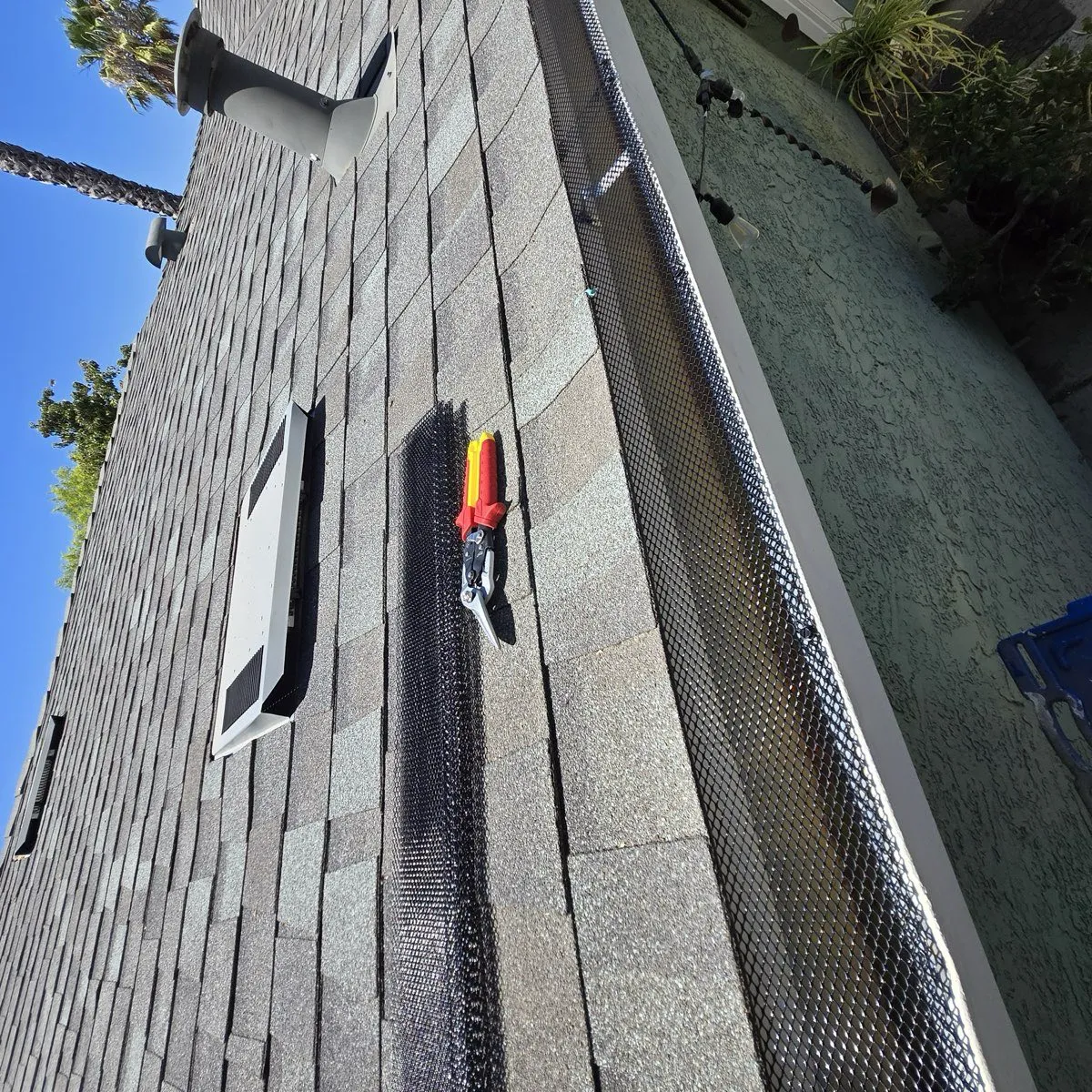
Install stainless steel micro-mesh gutter guards and schedule three cleanings per year: late May, late August and late November. The Modesto ash drops debris in three distinct waves driven by spring anthracnose, summer canopy thinning and fall senescence. Single-cleaning schedules fail because the spring drop alone deposits more debris than a typical oak releases all year. Micro-mesh blocks the fine ash leaflets and twig fragments other guards miss.
Table of Contents
- Why Modesto Ash Dominates Sacramento Streets
- The Three Debris Waves That Clog Ash-Adjacent Gutters
- Anthracnose: The Spring Disaster Most Homeowners Miss
- Aphid Honeydew, Sooty Mold & Tiger Striping
- Mistletoe & Dieback Debris
- Gutter Guard Comparison for Ash Debris
- Sacramento Ash Tree Cleaning Schedule
- Should You Remove Your Modesto Ash?
- Frequently Asked Questions
Modesto ash tree gutter problems are the single most common debris complaint we see across central Sacramento. The Modesto ash (Fraxinus velutina ‘Modesto’) and the American sycamore together make up the two most-planted street trees in the city, and both are mature enough now to be dropping decades’ worth of leaves, twigs and disease debris onto Sacramento roofs every year. If you live in Land Park, East Sacramento, Curtis Park, Carmichael, Arden-Arcade or any neighborhood developed between 1955 and 1985, there is roughly a 1-in-4 chance the tree shading your roof is a Modesto ash.
This guide covers the specific debris patterns we see from Modesto ash trees, the diseases that drive their unusual leaf-drop timing, and the gutter protection strategies that actually hold up against ash debris in Sacramento. Most generic tree-and-gutter advice gets the ash situation wrong because it assumes a single fall leaf drop. The Modesto ash drops debris in three distinct waves across eight months of the year, which is why standard maintenance schedules fail.
TL;DR: Modesto ash is Sacramento’s most-planted street tree and one of its worst gutter offenders. It produces no winged seeds (the cultivar is a male clone) but drops debris in three waves: spring anthracnose leaf drop (March–May), summer canopy thinning from psyllid and aphid damage (July–August), and standard fall drop (October–November). Combined with sticky aphid honeydew, sooty mold, mistletoe berries and dieback twigs, ash properties typically need three to six cleanings per year without guards. Install stainless steel micro-mesh gutter guards and budget for late-May, late-August and late-November inspections.
Why Modesto Ash Dominates Sacramento Streets
The Modesto ash story starts in 1936 when the cultivar was first selected in Modesto, California for its fast growth, drought tolerance and clean appearance. The trees grow 35 to 50 feet tall with a broad, rounded canopy that offered something Sacramento desperately needed in the postwar building boom: shade. Developers and the city planted Modesto ash by the tens of thousands between roughly 1955 and 1980, particularly in subdivisions across the central grid, Arden-Arcade, Carmichael and the older sections of Citrus Heights.
Research published in the journal Arboriculture & Urban Forestry found that just eight tree species account for 69 percent of all street trees in the city of Sacramento, with Modesto ash and American sycamore being the two most common species. Both require frequent attention to control pest and disease problems. The city stopped actively planting Modesto ash decades ago because of its severe anthracnose susceptibility, but the legacy plantings remain.
Most Sacramento Modesto ash trees today are 40 to 60 years old. They’re entering the back half of their typical 70 to 80 year lifespan, and many show structural decline from compacted soil, restricted root zones, and decades of disease pressure. Compare them to the city’s other major tree species in our guide on London plane and sycamore gutter problems, which shows similar anthracnose patterns.
Neighborhoods with the densest Modesto ash plantings include:
- • Land Park & Curtis Park — Original 1950s–1960s plantings now full mature canopy
- • East Sacramento & Midtown — Many city-owned street trees on the J Street and Folsom Boulevard corridors
- • Arden-Arcade & Carmichael — Most common shade tree in 1960s ranch subdivisions
- • South Land Park & Pocket — Dense plantings along arterials and in residential streets
- • Citrus Heights & Fair Oaks — Common in 1970s–1980s developments
- • Elk Grove (older sections) — Scattered Modesto ash near Elk Grove Boulevard and Old Town
Top Sacramento Street Tree Species (Estimated Share)
Estimated shares based on Sacramento Urban Forest research published in Arboriculture & Urban Forestry (Vol. 24, No. 4) and city tree inventory data. Eight species account for ~69% of all street trees.
The takeaway from the chart is simple: roughly 1 in every 6 street trees in Sacramento is a Modesto ash. That makes ash debris in your gutters statistically more likely than any other single tree species, even if you can’t identify the trees on your block.
The Three Debris Waves That Clog Ash-Adjacent Gutters
Most homeowners think of leaf drop as a single October-November event. That mental model breaks down completely with the Modesto ash. The tree releases debris in three distinct windows across the year, and the spring wave is the most damaging to gutters because it coincides with Sacramento’s late-season rains.
Anthracnose Drop
March–May. The Gnomoniella fraxini fungus causes premature browning and mass leaf drop during cool, wet springs. A single rainy April week can defoliate 30 to 50 percent of a Modesto ash canopy.
Why it matters for gutters: Coincides with Sacramento’s late atmospheric river season. Wet, sticky leaves pack gutters fast.
Pest Defoliation
July–August. Aphids, psyllids and spider mites attack stressed trees, causing additional leaf yellowing and partial drop. Honeydew rain begins.
Why it matters for gutters: Sticky honeydew coats gutters and creates tiger-stripe staining on aluminum.
Senescence Drop
October–November. Standard fall leaf drop. Compound ash leaves disassemble into individual leaflets and central rachis stems as they fall.
Why it matters for gutters: Small leaflets pass through standard screens. Rachis stems pile in downspout openings.
Modesto Ash Debris vs. Sacramento Rainfall by Month
Rainfall pattern based on NWS Sacramento 30-year normals. Debris intensity based on regional arborist observations and our field service records across 800+ Sacramento ash-adjacent properties.
The April and November peaks are unmistakable. April catches most homeowners off guard because it falls outside the typical “fall cleanup” mental model, and Sacramento atmospheric rivers in April can dump 2 to 4 inches of rain in a week. Gutters packed with wet anthracnose-shed leaves overflow at the worst possible time.
Pro Tip: The May Cleaning That Saves Your Summer
The single most valuable cleaning on a Modesto ash property is a late-May appointment, right after the spring anthracnose drop ends. Wet ash leaves and twigs left in gutters all summer fuse into a dense, decomposing mat that’s much harder to remove in October than it would have been in May. Many of our worst gutter overflow callbacks trace back to homeowners who skipped a May cleaning and discovered the consequences during the first November storm.
Anthracnose: The Spring Disaster Most Homeowners Miss
Anthracnose is a fungal leaf disease caused by Gnomoniella fraxini, and it’s the single biggest reason Sacramento’s Modesto ash population has been in decline for the last 30 years. The disease thrives in cool, wet spring conditions, which Sacramento delivers reliably from March through May during normal water years. Symptoms include irregular brown spots on leaves, scorched-looking leaf margins, premature defoliation and twig dieback.
From a tree health perspective, anthracnose rarely kills a Modesto ash outright. The tree typically refoliates within a few weeks of the worst infection. But from a gutter perspective, that initial mass drop is devastating. We’ve documented single-week debris volumes from anthracnose drops that equal or exceed the entire fall drop from healthy oak trees of similar canopy size.
Anthracnose-shed leaves behave differently in gutters than healthy senesced leaves:
- • Higher water content. Spring leaves shed prematurely while still partially green and wet. They compact into denser mats than dry fall leaves.
- • Increased decomposition rate. Disease-damaged tissue breaks down fast in warm spring weather, creating organic sludge that smells and feeds mosquitoes.
- • Fungal spore load. Debris carries active fungal spores that can spread to other trees and accelerate sooty mold growth in gutters.
- • Twig dieback. Anthracnose causes terminal twig death, so the spring drop includes 3 to 8 inch dead twig fragments that lodge in downspout openings.
For more on how organic gutter debris breeds standing water and mosquitoes, see our coverage of clogged gutters and mold growth in Sacramento and the pest attraction problem that follows when ash debris sits in gutters for weeks.
Aphid Honeydew, Sooty Mold & Tiger Striping
If you’ve ever parked under a Modesto ash and come back to find sticky dots all over your car, you’ve experienced honeydew. It’s the sugary excretion produced by aphids and psyllids as they feed on ash leaf sap, and it falls in a fine rain from the canopy throughout the summer. Honeydew is the second-most-destructive ash byproduct from a gutter standpoint, behind only the anthracnose leaf drop itself.
Three downstream problems follow honeydew accumulation in gutters:
- 1Sooty mold growth. Black sooty mold (Capnodium species) grows on the sugar coating, turning gutter interiors black and creating a habitat for additional fungal growth. The mold itself doesn’t damage the gutter, but it traps debris that would otherwise wash through.
- 2Tiger striping on aluminum gutters. Honeydew running down the exterior fascia surface oxidizes and creates the dark vertical streaks aluminum gutter owners hate. Our tiger stripe removal guide covers this specifically.
- 3Debris adhesion. Honeydew acts like glue. Ash leaflets, dust, pollen and small twigs that would normally wash out of a clean gutter during rain stick to the honeydew-coated surfaces and stay put through multiple storm events.
Sacramento summers run 90 to 105 days at 90°F or above according to National Weather Service Sacramento climatology, and aphid populations explode in that heat. Heavy honeydew typically begins in late June and peaks in July and August. By September, the gutter interior surface can be visibly coated even on a relatively clean roof.
Mistletoe & Dieback Debris
Modesto ash is one of the most heavily mistletoe-infected tree species in the Sacramento area. The parasitic plant (Phoradendron leucarpum) establishes in older ash branches and forms dense green clumps that drop leaves, stems and small white berries onto the roof below. Mistletoe debris is small, hard and round — nearly perfect for jamming the openings on standard gutter screens.
Three mistletoe-specific gutter problems we see regularly on Sacramento ash properties:
- • Berry clogs in downspout strainers. Mistletoe berries are about the size of a pea and drop year-round, with peaks in fall and winter. Wire-cage downspout strainers fill up fast.
- • Heavy dead-branch loading. Mistletoe slowly kills the branches it infests. Dead ash branches drop in wind events, sometimes punching through gutters or roof shingles on the way down.
- • Bird attraction. Birds eat mistletoe berries and spread the parasite to other ash trees in the neighborhood. They also nest in heavily infected canopies, dropping additional debris and nesting material.
If you can see mistletoe clumps in your Modesto ash from the ground — round green balls about 1 to 3 feet across in the upper canopy — assume berries are falling into your gutters regularly. A certified arborist can prune out mistletoe clumps, but they regrow because the haustoria (parasitic roots) are embedded in the branch wood. Most homeowners eventually accept mistletoe as a permanent feature and rely on gutter guards to manage the debris.
Gutter Guard Comparison for Ash Debris
Not all gutter guards handle Modesto ash debris well. The combination of small leaflets, fine twigs, mistletoe berries and sticky honeydew defeats most guard types within one or two seasons. We’ve installed every major product line on ash-adjacent Sacramento homes and tracked the callbacks. For a full product-line comparison see our brand comparison guide, but here’s the ash-specific verdict:
| Guard Type | Ash Leaflets | Honeydew | Mistletoe Berries | Verdict |
|---|---|---|---|---|
| Micro-Mesh (Stainless 50–275 µm) | Blocks 100% | Stays clean (mesh sheds) | Blocked at surface | Best Choice |
| Reverse Curve / Solid | Mostly blocks | Sticks to curve, debris piles up | Some berries enter opening | Marginal for Ash |
| Aluminum Screen (1/4″) | Leaflets pass through | Coats screen, traps debris | Berries pass through | Not Recommended |
| Foam Inserts | Leaflets embed in foam | Foam saturates and rots | Berries lodge in pores | Avoid |
| Brush Guards | Leaflets stick to bristles | Honeydew matts bristles | Berries lodge in bristles | Avoid |
The verdict is consistent with what we see on the oak leaf comparison and the sycamore comparison: stainless micro-mesh wins on small-debris trees. Ash debris is even finer than oak or sycamore, so the bar for what works is higher. Compare guard types in depth in our reverse curve vs micro mesh breakdown.
Land Park Home: Two Mature Ash, Four Cleanings to Zero
A 1955 ranch home on a tree-lined Land Park street had two mature Modesto ash trees (one city street tree, one in the front yard) plus a sycamore neighbor. The homeowner was scheduling four cleanings per year at $185 each — $740 annually — and still saw overflow during the April 2024 atmospheric river.
After we installed 175 linear feet of stainless micro-mesh and added reinforced downspout strainers, the homeowner’s annual maintenance dropped to one inspection cleaning ($175) plus a 20-minute exterior wipedown to remove honeydew streaking. Two seasons later, zero overflow events and the front fascia has stayed visibly clean.
Sacramento Ash Tree Cleaning Schedule
Whether you install gutter guards or stick with cleaning-only protection, the right schedule for an ash-adjacent Sacramento property is different from the generic two-cleanings-per-year recommendation most blogs promote. Here’s what we actually recommend based on field experience with hundreds of ash properties:
| Window | Without Guards | With Micro-Mesh Guards | What You’re Targeting |
|---|---|---|---|
| Late February | Optional | Skip | Winter twig drop, late storm prep |
| Late May | Essential | Surface inspection | Anthracnose drop, spring twigs, mistletoe berries |
| Late August | Recommended | Optional | Honeydew rinse, pest defoliation debris |
| Late November | Essential | Recommended | Fall leaflet drop, pre-storm prep |
Total minimum cleanings without guards: 3 per year. Many ash properties with neighboring trees or dense canopies push to 4 or even 6 cleanings. Compare this to a no-tree-overhang home that often does fine on one annual cleaning. The math on guard installation gets favorable fast for ash properties — see our full ROI calculator for the breakdown.
Tired of Paying for Ash Cleanings?
We’ve installed micro-mesh gutter guards on hundreds of Sacramento ash-adjacent homes. Free on-site assessment, honest product recommendation, no high-pressure sales.
Get a Free Ash-Property QuoteShould You Remove Your Modesto Ash?
This is the question we get most often from homeowners whose ash trees are 50-plus years old and showing decline. There’s no universal answer, but here’s the framework we walk clients through:
Reasons to keep the tree
- ✔ Healthy canopy with less than 20 percent dieback — tree has 10 to 20 years of useful life left
- ✔ Provides significant summer shade reducing AC costs (Modesto ash can cut cooling bills 15-30 percent on west-facing rooms per UC Davis urban forestry research)
- ✔ City-owned street tree (you may not have authority to remove without permit)
- ✔ Mature aesthetic value adds to property value
Reasons to consider removal
- ✗ More than 30 percent crown dieback
- ✗ Major trunk wounds, conks (fungal fruiting bodies), or root rot signs
- ✗ Heavy mistletoe load that’s killing branches faster than the tree can replace them
- ✗ Branches over the house with visible structural defects (this is also a roof and gutter hazard)
- ✗ EAB risk planning — Emerald Ash Borer is moving west and could reach California in the next decade
Before removing any street tree in the City of Sacramento, check with the Sacramento Urban Forestry division. The city maintains permitting authority over street trees and many heritage trees in private yards. Unauthorized removal of a city tree can result in fines exceeding $1,000 plus replacement costs.
Replacement Tree Suggestions for Ash Removal
If you’re removing a declining Modesto ash and replanting, Sacramento arborists currently recommend:
- • Chinese pistache (Pistacia chinensis) — fast growth, drought tolerant, much less gutter debris than ash
- • Valley oak (Quercus lobata) — California native, very long-lived, manageable acorn drop window
- • Raywood ash (Fraxinus angustifolia ‘Raywood’) — less anthracnose-susceptible than Modesto ash but does drop samaras
- • Crepe myrtle (Lagerstroemia indica) for smaller spaces — though it has its own gutter debris profile
Frequently Asked Questions
Why does my Modesto ash drop so many leaves in Sacramento?
Modesto ash (Fraxinus velutina ‘Modesto’) in Sacramento drops leaves in three waves driven by anthracnose fungal disease, aphid infestation and natural fall senescence. The spring anthracnose drop is the most damaging to gutters because it happens during late-season rains. The Gnomoniella fraxini fungus thrives in Sacramento’s cool, wet March and April, causing premature browning and mass leaf drop. Many mature Modesto ashes also experience summer canopy thinning from psyllid and spider mite infestations, plus the standard October-November fall drop. The result is leaf debris in gutters for roughly eight months of the year.
Does Modesto ash drop seeds into gutters?
No. The Modesto ash cultivar is a male clone and produces no winged samara seeds. This is one of the few good things about the tree from a gutter perspective. The real Modesto ash gutter problem is leaves, twigs, mistletoe debris and dieback wood, not seeds. If your ash tree drops winged seeds, it is a different ash variety such as Raywood ash, Arizona ash seedlings or green ash. These varieties drop heavy samara loads in spring and fall that can pack gutters tightly.
What is the sticky stuff dripping from my ash tree onto my gutters?
The sticky liquid is honeydew, a sugary excretion from aphids and psyllids feeding on the ash leaves. It coats gutters, downspouts, cars and patio surfaces below the canopy. Honeydew on gutters causes two problems: it feeds sooty mold that turns gutters black, and it acts like glue that holds leaf debris in place even when water flows through. Aluminum gutters with honeydew buildup develop tiger striping (the dark vertical streaks) within one to two seasons. Pressure washing with a mild surfactant typically clears it.
How often should I clean gutters under a Modesto ash tree?
For Sacramento homes with a mature Modesto ash overhanging the roof, plan on a minimum of three professional gutter cleanings per year: late May (post-anthracnose drop), late August (post-summer canopy thinning) and late November (post-fall drop). Homes with multiple ash trees or trees within 10 feet of the roofline often need four to six cleanings per year. Without gutter guards, expect $400 to $900 in annual cleaning costs at typical Sacramento rates of $150 to $250 per cleaning. Installing micro-mesh gutter guards reduces this to one inspection cleaning per year.
Should I remove my Modesto ash tree?
Removal depends on tree health, location and emerald ash borer (EAB) risk. Many Sacramento Modesto ash trees planted between 1960 and 1985 are now 40 to 60 years old and entering structural decline. If a certified arborist confirms more than 30 percent crown dieback, root rot or major trunk wounds, removal is often the best long-term decision. EAB has not yet reached Sacramento as of 2026 but is moving west through Colorado and Oregon, and the city stopped planting new Modesto ash decades ago due to anthracnose vulnerability. Healthy specimens with full canopy and good structure can remain for years with proper care and gutter protection. Always check with the City of Sacramento Urban Forestry division before removing a street tree.
What gutter guard works best for Modesto ash debris?
Stainless steel micro-mesh gutter guards with openings between 50 and 275 microns handle Modesto ash debris most effectively. The fine mesh blocks small ash leaves, leaf petioles, mistletoe berries and twig fragments while allowing water through. Reverse-curve solid guards also work but can struggle with the sticky honeydew coating that causes debris to clump on the curved surface. Avoid foam inserts, brush guards and aluminum quarter-inch screens for ash trees because ash leaflets, petioles and mistletoe debris all pass through the larger openings or stick to porous materials. For homes with both ash trees and pine or oak nearby, micro-mesh is the only guard type that handles all three debris profiles.
Stop Cleaning Ash Debris Three Times a Year
We install micro-mesh gutter guards engineered for Sacramento’s heavy-debris properties. Free on-site assessment, pricing by linear foot, and a no-pressure recommendation specific to your trees.
Free estimates • Sacramento, Roseville, Folsom & surrounding areas
Related Articles
Sweetgum Tree Gutter Problems
How spiky liquidambar seed pods wreck gutters.
London Plane & Sycamore Problems
Sacramento’s other anthracnose-prone street tree.
Valley Oak Acorn Clogs
The 3-week window that kills downspouts.
Removing Gutter Tiger Stripes
Fix honeydew-caused black streaks on aluminum.
Mesh Gutter Guards Guide
Stainless micro-mesh products that work.
Gutter Guard ROI Calculator
Payback period and savings math for Sacramento homes.