Quick Answer
Chinese tallow clogs gutters because both its waxy leaves and its hard white seeds resist decomposition and mat together into a water-holding plug. The seeds behave like gravel and jam downspouts; the leaves pass through cheap screens and matt in the trough. The only guard that reliably stops both is a 2mm-or-finer stainless micro-mesh.
Under an overhanging tallow, budget two cleanings a season without guards, or a single annual mesh brush-off with a micro-mesh gutter guard installation.

In This Guide
TL;DR: Chinese tallow (the "popcorn tree") drops small waxy leaves and hard white seeds that do not decompose and do not flush. The seeds jam downspouts; the leaves mat in the trough and slip through screen guards. A 2mm stainless micro-mesh gutter guard is the only guard that stops both. Without guards, clean twice a season. This is a different failure mode than oak leaves, so solutions built for leaves alone will not hold.
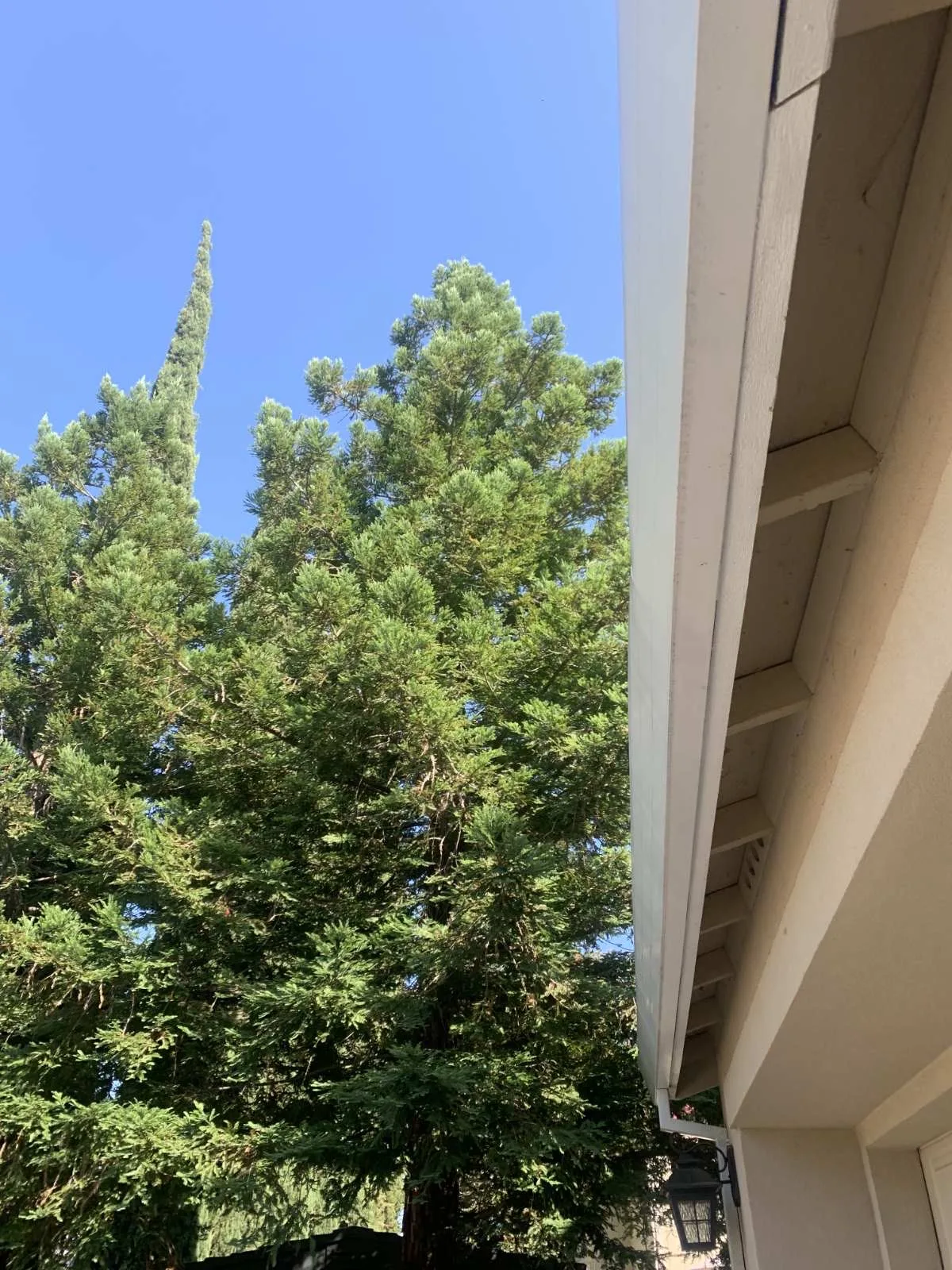
If your street turns brilliant red and orange in November and drops clusters of little white beads that look like popcorn, you live near Chinese tallow (Triadica sebifera). It is one of the most widely planted ornamental shade trees in older Sacramento neighborhoods, and it is quietly one of the hardest on gutters.
Most gutter debris guides talk about leaves. Tallow is a two-part problem: the leaves are small and waxy, and the seeds are hard, round, and persistent. Together they create a clog that is denser and more stubborn than what a typical oak or maple produces, and the debris arrives over a months-long window instead of a single autumn drop.
This guide covers exactly why tallow behaves the way it does in a Sacramento gutter, what it does to downspouts, and which protection actually works. If your problem is native oak acorns rather than tallow, our valley oak acorn gutter guide covers that heavy-debris scenario, and our oak leaves clogging gutters guide handles the leaf side.
Why the Popcorn Tree Is a Gutter Problem
The thing that makes tallow difficult is wax. The tree gets its common name — the "Chinese tallow" or "candleberry" tree — from the waxy coating on its seeds, which was historically rendered for candles and soap. That same wax is what defeats normal gutter maintenance.
Wax repels water. When a waxy tallow leaf lands in your gutter, it does not soak, soften, and break apart the way an oak or elm leaf does. It stays intact, curls, and interlocks with other leaves into a shingled mat that holds a film of water on top rather than letting it drain through. The seeds are worse: they are essentially small wax-coated pebbles that never rot.
Pro Tip
If you have ever pulled a handful of debris out of a gutter and found it dry and springy rather than black and slimy, that is the wax signature of tallow. Slimy black debris means decomposed leaves you can flush. Dry, intact debris that holds its shape is tallow, and it has to be lifted out by hand or blocked at the source. That difference is why standing water sits over tallow debris — see our standing water in gutters guide for the drainage side of the problem.
Three Kinds of Debris, One Long Season
A tallow tree does not clog your gutter in a single weekend of leaf drop. It contributes debris across a long window, which is why homeowners think they cleaned it and then find it clogged again a month later.
- Fall leaves (October–December): Small, oval, waxy leaves turn red, orange, and purple, then drop. Because they are small, they slip through wide screen guards that would stop a big sycamore leaf.
- Seed capsules and hulls (November–January): The three-lobed capsule splits and drops fragments as the white seeds are exposed.
- Persistent white seeds (December–February): The waxy "popcorn" seeds cling to bare branches for weeks, then drop through winter, feeding the gutter long after the leaves are gone.
This staggered schedule is the trap. A single fall cleaning misses the winter seed drop entirely. By the first big atmospheric river storm of the season, the gutter you cleared in October can already be re-plugged with seeds.
Chinese Tallow Drops Debris for Four-Plus Months
Debris windows overlap the November–March Sacramento rainy season, so a single fall cleaning is not enough.
What Tallow Seeds Do to Your Downspout
The seeds are where tallow does its real damage. Each hard white seed is roughly 4 to 8mm — small enough to travel down the gutter with the water flow, large enough to lodge at the downspout reducer where the trough necks down into the drop outlet.
Because the seeds do not decompose, they accumulate at that pinch point and build a rigid plug. Add waxy leaf fragments as a binder, and you get a blockage that a garden hose will not clear. On tallow homes we frequently pull a downspout apart to find a solid core of seeds and wax that had to be pushed out with a drain snake. Our downspout clog signs and solutions guide covers how to spot the early warning signs before the plug forms.
Once a downspout blocks, water backs up into the gutter, overflows at the foundation, and the whole system fails during exactly the storms it exists to handle. That overflow at the foundation is how a tree problem becomes a foundation drainage problem in Sacramento's expansive clay soil.
Which Gutter Guards Stop Tallow Debris
Tallow defeats most guard types because it has both a small-leaf problem and a hard-seed problem at the same time. Here is how each major guard style performs against it.
| Guard Type | Stops Waxy Leaves? | Stops Seeds? | Verdict for Tallow |
|---|---|---|---|
| Stainless micro-mesh (2mm or finer) | Yes | Yes | Recommended |
| Aluminum screen (1/8"–1/4") | No — small leaves pass | Partial | Fails |
| Reverse-curve / surface tension | Mostly | No — seeds enter slot | Poor |
| Foam insert | Traps on top | Traps on top | Saturates & fails |
| Brush (hedgehog) | No | Seeds wedge in bristles | Fails |
The pattern is the same one we see with other fine-debris trees: only a solid micro-mesh surface sheds both the small waxy leaves and the hard seeds. Water passes through the mesh; the debris dries on top and blows or washes off. For a broader look at how mesh sizes handle Sacramento's worst debris, see our pine needle gutter guard guide, which covers the same fine-aperture logic for a different stubborn debris type.
Got a tallow tree over your roofline? We install 2mm micro-mesh guards rated for heavy fine-debris loads and assess your seed and leaf drop on site.
Cleaning Schedule for Tallow-Shaded Homes
Whether you have guards changes the schedule completely. Here is what we recommend for Sacramento homes with a tallow overhanging or adjacent to the roof.
Without Guards
- Late fall (mid-November): First cleaning, after the bulk of the leaf color drop.
- Early winter (early January): Second cleaning, to clear the seed drop before the heaviest storms.
- Mid-season check: For a tree directly over the roof, a quick downspout check between storms in December.
With Micro-Mesh Guards
- Once a year: A single brush-off of the mesh surface, ideally in late winter after the seed drop ends.
- No trough digging: Because debris never enters the gutter, you are cleaning a flat surface, not excavating a packed trough.
That reduction — from two or three ladder trips a season to one surface wipe — is the core value of guards on a tallow home. For the full cleaning walkthrough either way, our complete gutter cleaning guide covers technique and safety, and if you would rather not climb the ladder at all, our professional gutter cleaning service handles it.
Where Tallow Trees Line Sacramento Streets
Chinese tallow was planted heavily as a street and yard tree from the 1970s through the 1990s because of its fast growth and reliable fall color. You will find the densest concentrations in the established mid-century and older neighborhoods: pockets of Land Park, Tahoe Park, Colonial Heights, parts of Arden-Arcade, and along many older Carmichael and Citrus Heights streets.
If your neighborhood mixes tallow with native oaks, you are dealing with two debris problems at once — waxy tallow seeds and heavy valley oak acorns. That combination is the strongest case for micro-mesh, because no cleaning schedule keeps up with both. Homeowners in heritage-canopy areas can see the full neighborhood picture in our Land Park and Curtis Park gutter guide.
One ecological note worth knowing: Chinese tallow is listed as an invasive species in parts of California. Some homeowners choose to replace it over time for that reason. But for the gutter problem specifically, you do not have to lose the tree — a micro-mesh guard and an annual clean solve the debris without removing the shade.
Frequently Asked Questions
Why do Chinese tallow trees clog gutters so badly in Sacramento?
Tallow drops waxy leaves that hold water and mat together, plus hard white seeds that behave like gravel. The wax coating on both keeps them from decomposing, so instead of rotting and flushing away, they pack into a dense, water-holding layer. The tree also drops over a long window — leaves in fall, seeds through winter — so the debris keeps arriving for months.
What do Chinese tallow berries do to a downspout?
The hard white seeds are 4 to 8mm and do not compress, so they migrate to the downspout opening and pile up at the reducer where the gutter narrows into the drop. Because they do not decompose, that plug stays until it is physically cleared. Combined with waxy leaf fragments, it forms a blockage a garden hose cannot flush — often needing a drain snake.
Which gutter guard works best against Chinese tallow debris?
A stainless steel micro-mesh guard with a 2mm or finer aperture is the only type that reliably keeps both tallow leaves and seeds out. Screen guards let the small waxy leaves through, reverse-curve hoods let seeds bounce into the intake slot, and foam or brush inserts trap the waxy debris and saturate within a season. Micro-mesh sheds both because water passes through while debris rolls off. Our gutter guard installation service fits this on tallow homes.
How often should I clean gutters under a Chinese tallow tree?
Without guards, plan on two cleanings during tallow season — one in mid-to-late fall after the leaf drop, and a second in early winter once the berries start dropping. Homes with a tallow directly overhanging often need a third mid-season downspout check. With a quality micro-mesh guard, that drops to a single annual brush-off of the mesh.
Should I remove a Chinese tallow tree to protect my gutters?
Not for the gutters alone. Chinese tallow is considered invasive in parts of California, so some homeowners remove it for ecological reasons, but for gutter protection a micro-mesh guard plus an annual cleaning handles the debris without losing the shade. If the tree is diseased or dropping limbs, that is a separate arborist question.
Keep the Shade, Lose the Clogs
Chinese tallow is a beautiful street tree, and you do not have to choose between its fall color and a working gutter system. The reason it defeats normal maintenance is specific — wax-coated leaves and seeds that resist decomposition and jam downspouts — and the fix is just as specific: a fine stainless micro-mesh guard that blocks both, paired with a single annual surface clean.
If you are seeing dry, springy debris in the trough, overflow during storms, or a downspout that will not flush, tallow is likely the culprit. Get the guard sized to your debris load and the problem is off your winter to-do list for good.
Free Tallow Debris Assessment
Sacramento Gutter Guard evaluates your tree canopy, current debris load, and downspout condition, then recommends the right micro-mesh guard for popcorn-tree properties. No obligation.