Quick Answer
The right gutters for 1920s Land Park and Curtis Park homes are 6-inch half-round profiles in copper or factory-painted aluminum, hung on strap brackets that keep the gutter off original Douglas fir rafter tails. K-style aluminum is the wrong call on pre-1940 architecture -- it traps moisture against the fascia, hides the rafter tails Craftsman homes were designed to show, and accelerates the wood rot the original galvanized half-rounds prevented. Pair with stainless micro-mesh guards rated for valley oak acorns, plan for three debris cycles per year (October, December, March), and budget $5,200 to $14,000 for full restoration on a typical 95818 lot.
Table of Contents
- Why Land Park and Curtis Park Gutters Are Different
- The Heritage Tree Reality: Oak, Elm & Sycamore Load
- Half-Round vs K-Style for 1920s Homes
- Hidden Box Gutters: The Forgotten 1920s System
- Copper Gutter Restoration & Patina Timeline
- Land Park, Curtis Park & South Land Park: Block-Level Differences
- 1920s Fascia & Rafter Tail Repair
- 95818 & 95822 ZIP Code Realities
- Cost Breakdown for Historic Home Owners
- Frequently Asked Questions
Land Park Sacramento gutter installation work concentrates in the 1920s-1940s Tudor Revival, Craftsman, and Colonial Revival housing stock between Broadway and Sutterville Road. The neighborhood's defining feature -- William Land Park's 236-acre canopy of valley oak, elm, and sycamore -- drops 4 to 7 times the annual leaf and acorn volume of a production Sacramento neighborhood. Curtis Park, just east across Franklin Boulevard, shares the heritage canopy and adds a denser Craftsman bungalow stock with more original hidden box gutter installations. Both neighborhoods reward half-round gutter restoration over K-style replacement and require gutter guards rated for heavy mixed organic debris. Source: City of Sacramento Department of Community Development, Sacramento County Assessor, US Climate Data.
Why Land Park and Curtis Park Gutters Are Different
Most Sacramento gutter advice assumes a 1980s-2010s tract home: 5-inch K-style aluminum, screwed straight into a Hardie fascia, draining onto a flat compacted-fill yard. Land Park and Curtis Park break every one of those assumptions. The homes were built between roughly 1918 and 1948, sit on full lath-and-plaster construction with original wood fascias, drain onto mature clay-loam topsoil under 100-year-old trees, and were designed around gutter profiles that almost no production crew in Sacramento installs anymore.
There are four factors that make Land Park and Curtis Park gutter work fundamentally different from the rest of the metro:
Original Half-Round Design
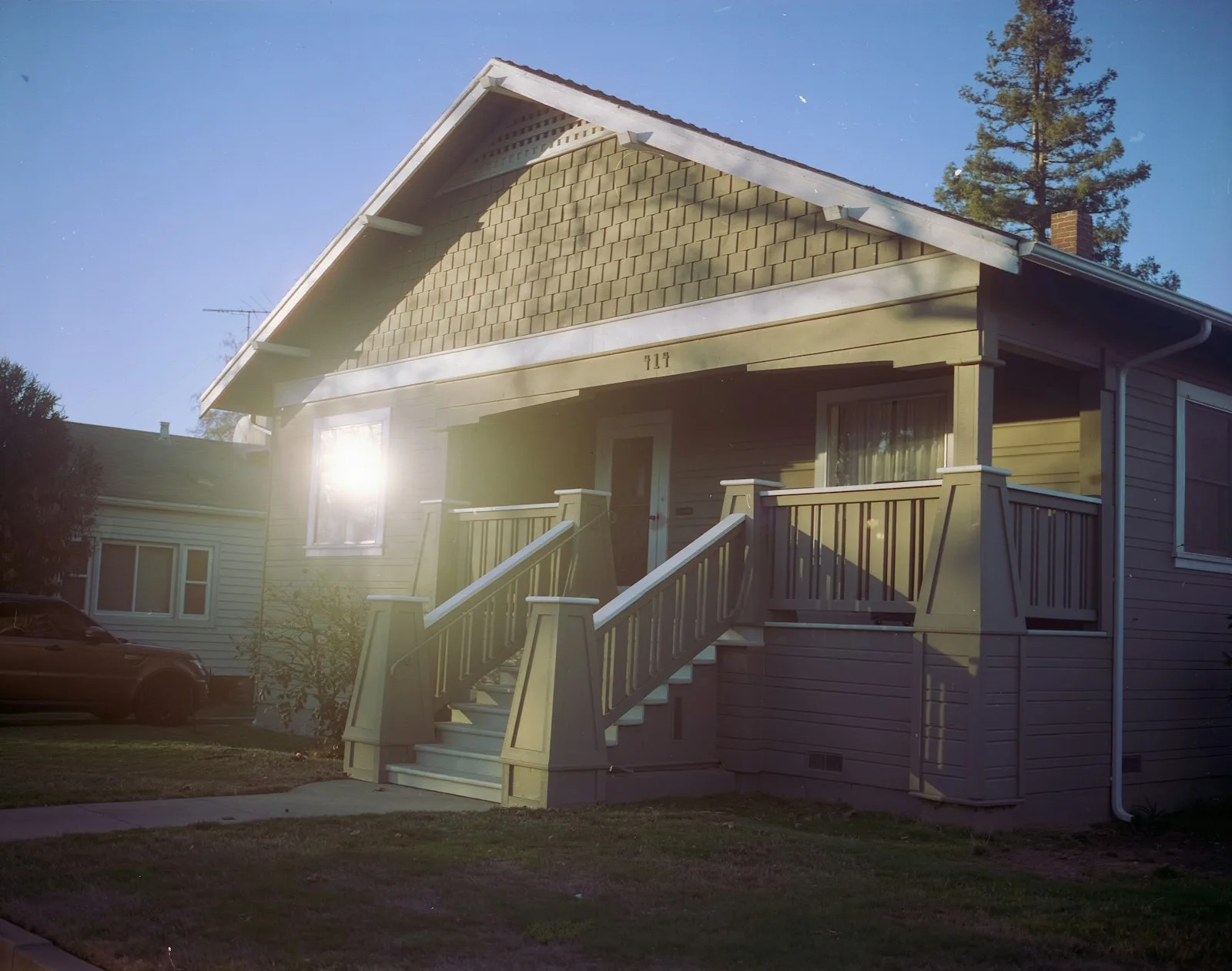
Pre-1948 homes were built for half-round gutters on strap hangers. The fascia was sized for that profile. K-style aluminum bolted to the same fascia covers the decorative rafter tails the architect designed to be visible.
Hidden Box Gutter Era
Many 1920s Land Park and Curtis Park homes have hidden box gutters built into the cornice or behind a parapet -- not external gutters at all. Replacing them with surface-mounted K-style changes the roofline.
Heritage Canopy Volume
The William Land Park canopy and the Curtis Park heritage trees produce 4 to 7 times the debris of a Natomas or Elk Grove yard. Standard quarter-inch screens fail within months under valley oak acorn and English elm samara load.
Original Douglas Fir Framing
Rafter tails, fascia boards, and barge rafters are all old-growth Douglas fir. The wood is excellent if kept dry but rots quickly when modern K-style gutters trap water behind the back leg.
Sacramento County Assessor records show approximately 2,600 single-family homes in 95818 (Land Park, Curtis Park, Hollywood Park, Land Park Hills) and another 5,400 in 95822 (South Land Park, Hollywood Park southern blocks, Pocket-adjacent). The median build year in the core Land Park grid south of Broadway is 1934. In Curtis Park, the median is 1928. Those numbers matter because every gutter decision -- material, profile, hanging method, downspout routing -- needs to assume original 1920s-1940s framing underneath.
The Heritage Tree Reality: Oak, Elm & Sycamore Load
The William Land Park canopy and the Curtis Park streetscape were planted as a deliberate civic project in the 1910s-1930s. The result is one of the densest mature tree canopies in inland California -- and one of the heaviest gutter debris loads we see anywhere in our service area. The neighborhood's defining species are also the worst offenders for gutter systems.
| Tree Species | Debris Type | Peak Drop | Land Park / Curtis Park Hotspot |
|---|---|---|---|
| Valley Oak | Acorns, small leaves, catkins | Sept - Dec | Land Park Drive, 11th Ave, 12th Ave, McKinley Park edge |
| Coast Live Oak | Small evergreen leaves, acorns, catkins | Year-round | South Land Park, 24th Street Curtis Park corridor |
| English Elm | Samaras (seeds), small leaves | Mar - Apr seeds, Nov leaves | Land Park core grid, Donner Way, Riverside Boulevard |
| London Plane Sycamore | Large leaves, seed balls, bark strips | Nov - Feb | Sutterville Road, Curtis Park interior streets |
| Modesto Ash | Small compound leaves, samaras | Oct - Dec | Curtis Park east side, Vallejo Way |
| Camphor | Evergreen leaves, berries | Spring leaf flush, fall berries | Hollywood Park, S Land Park Drive |
| Crepe Myrtle | Sticky bloom drop, sooty mold residue | Jul - Sept | Mid-block plantings throughout both neighborhoods |
Land Park / Curtis Park Gutter Debris Load by Month
Relative debris volume from heritage trees in 95818 and 95822 (based on service-call data)
The November peak is the one that defines the neighborhood: valley oak acorn drop overlaps with sycamore leaf fall and the first heavy rains of the season. In a typical week between November 10 and December 5, our crews see gutters in the Land Park core grid filled to 70% capacity within five days of a cleaning. That is not a maintenance problem -- that is a planning problem. The right answer is either three professional cleanings per year, or a properly specified heavy-debris gutter guard system rated for mixed organic load.
Two specific tree species deserve their own deep-dive resources for Land Park and Curtis Park homeowners. We have separate guides on valley oak acorn gutter clogs -- including the 3-week downspout-plug window unique to Quercus lobata -- and on London plane and sycamore gutter problems, which covers the bark-strip and seed-ball failure modes that catch most homeowners off guard.
Half-Round vs K-Style for 1920s Land Park Homes
The single most common mistake we see on Land Park and Curtis Park gutter replacements is the default K-style decision. A homeowner calls three local installers, all three quote 5-inch or 6-inch K-style aluminum, and a 1928 Craftsman bungalow ends up with a 1990s gutter profile that fights the architecture for the next 25 years. The right choice is almost always half-round.
Half-round gutters predate K-style by roughly 80 years. They were the only residential gutter in common use from the late 1800s until the K-style profile was introduced for production housing after World War II. Every original gutter installed on a pre-1948 Sacramento home was half-round -- usually 5-inch or 6-inch galvanized steel hung on copper or galvanized strap brackets.
| Factor | Half-Round | K-Style |
|---|---|---|
| Period accuracy (pre-1948) | Correct -- original profile | Anachronistic |
| Cost (aluminum, installed) | $14-$22/linear ft | $8-$14/linear ft |
| Cost (copper, installed) | $25-$42/linear ft | $22-$36/linear ft |
| Hanging method | Strap brackets (off the fascia) | Hidden hangers (into the fascia) |
| Rafter tail visibility | Preserves -- gutter sits below tails | Covers -- back leg hides the rafter ends |
| Self-cleaning | Excellent -- debris rolls out the curved bottom | Poor -- debris settles in the flat bottom corner |
| Capacity (6-inch) | ~5,540 sq ft roof area | ~7,960 sq ft roof area |
| Period home curb appeal | Correct, preserves architectural intent | Visibly wrong on Craftsman/Tudor |
K-style has one real advantage: it holds more water per linear foot than a half-round of the same nominal size. That capacity difference matters on huge production-roof footprints in Elk Grove or Natomas. It rarely matters on a 1,400-2,400 sq ft Land Park bungalow. For a full head-to-head breakdown including hanger options and storm-load math, see our half-round vs K-style gutters Sacramento guide.
Pro Tip: Strap Hangers vs Hidden Hangers on Pre-1948 Fascia
The bracket type matters as much as the gutter profile. Original Sacramento half-rounds used external strap hangers that wrapped over the roof sheathing under the first course of shingles, then bent down and supported the gutter from underneath. Modern hidden hangers screw straight through the fascia into the rafter tail. On a 1920s home with original 1x6 redwood or Douglas fir fascia, hidden hangers create six to ten new screw penetrations per linear foot through a 100-year-old board -- and every penetration is a future water entry point. Strap hangers preserve the original fascia material and stay closer to the way the home was built.
In our experience working on Curtis Park and Land Park Craftsman bungalows, the most common K-style failure pattern is fascia rot behind the back leg. Water wicks behind the gutter, sits against the fascia, and degrades the wood over 5 to 10 years. By the time the homeowner notices, the fix is no longer a gutter replacement -- it is a fascia rebuild plus gutter replacement, which doubles or triples the project cost.
Live in Land Park or Curtis Park?
We work on pre-1948 Sacramento homes every week. Half-round restoration, hidden box gutter rebuilds, copper installations, and heritage-tree gutter guard systems are core to what we do. Free on-site assessments in 95818 and 95822 -- including a no-pressure walkthrough of what the original gutters likely were and what restoration costs realistically run.
Schedule Your Free AssessmentCopper Gutter Restoration & Patina Timeline in Land Park
Copper is the right material for high-end Land Park restorations -- and a small share of Land Park homes still have their original 1920s-1940s copper systems in place, usually on the higher-end Tudor Revivals along Land Park Drive and on the rebuilt Colonials in the Curtis Park core. The decision for homeowners is rarely "copper or aluminum?" It is "repair existing copper, replace with new copper, or replace with painted aluminum that mimics the look?"
Copper Repair vs Replace Decision Rules
- If less than 25% of joints leak and the gutter body is structurally sound, repair is cheaper and preserves the original patina. Expect $1,800 to $4,500 for resoldering, pinhole patching, and replacing 1-3 damaged sections.
- If 25-50% of joints leak or there is visible green-staining at multiple downspouts, partial replacement of the worst runs combined with repair of the rest typically lands between $3,200 and $7,000.
- If more than 50% of joints leak or the gutter is sagging or pulling away from the fascia, full replacement is usually the right call. Full 6-inch half-round copper with copper downspouts runs $5,200 to $9,800 for a typical Land Park home.
- If you cannot afford copper but want the look, factory-painted aluminum in copper-tone or bronze is a credible middle path at $14 to $22 per linear foot installed. It will not develop true patina but holds the finish for 18-25 years before refinishing.
Copper Patina Timeline in Sacramento Climate
Copper patina develops faster in humid coastal climates than in inland California. Sacramento's dry summers slow the chemistry. New copper gutters in 95818 follow a predictable color progression -- and homeowners restoring a home in stages should understand the timeline so the new sections eventually match the original.
| Time After Install | Color | What is Happening |
|---|---|---|
| 0-3 months | Bright copper / salmon pink | Factory finish, no oxidation |
| 3-12 months | Russet brown | Initial oxide layer forms, color deepens |
| 1-5 years | Chocolate brown to dark brown | Even browning, slight darkening near downspouts |
| 5-12 years | Dark brown with green streaks | Carbonate compounds start forming in protected areas |
| 12-25 years | Mixed brown-green | Patina spreading across the gutter surface |
| 25+ years | Full verdigris green | Stable patina layer, sealed against further corrosion |
For a full material comparison including 50-year cost-of-ownership math, see our aluminum vs copper gutters Sacramento guide. The short version for Land Park homeowners: over a 50-year hold, copper's single install can cost less than three aluminum replacements at typical local labor rates.
50-Year Cost: Copper Half-Round vs Aluminum K-Style
Cumulative cost on a typical 200-linear-foot Land Park home, including replacements
Land Park, Curtis Park & South Land Park: Block-Level Differences
The Land Park / Curtis Park area is not a single neighborhood. It is at least four distinct micro-neighborhoods with different build dates, different architectural styles, and different gutter problems. The right specification varies block by block.
Land Park Core (95818)
Built: 1920s-1940s | Tudor Revival, Mediterranean, Colonial Revival
Bounded roughly by Broadway, 21st Street, Sutterville Road, and 5th Street. Highest concentration of high-value 1920s-30s architecture in the area. Many homes have hidden box gutters or original galvanized half-rounds. Best fit: half-round copper or factory-painted aluminum, with stainless micro-mesh guards. Heavy heritage tree canopy across the entire grid.
Curtis Park (95818)
Built: 1910s-1940s | Craftsman bungalows, Spanish Colonial, Storybook
Bounded roughly by 21st Street, Donner Way, Franklin Boulevard, and Sutterville. Sacramento's most cohesive Craftsman neighborhood with deep eaves, exposed rafter tails, and wide front porches. Half-round in copper or bronze-toned aluminum is the standard. K-style is visibly wrong on Craftsman bungalows here.
South Land Park & Hollywood Park (95822)
Built: 1940s-1960s | Late Tudor, post-war Colonial, early ranch
South of Sutterville Road. Mix of late pre-war and early post-war housing. Some K-style installations are period-appropriate here for the post-1948 builds. Half-round still fits the Tudor and Colonial holdouts. Trees are slightly younger than Land Park Core but still heavy canopy in most blocks.
Land Park Hills & West of Land Park
Built: 1950s-1970s | Mid-Century ranch, post-war stucco
West of South Land Park Drive. Mostly post-1950 housing. K-style 5-inch or 6-inch is the right call here, often with painted aluminum in matching trim color. Tree canopy is lighter than the eastern grid but still meaningful for gutter cleaning schedules.
A useful comparison point: our Davis CA gutter cleaning guide covers a community with similar heritage tree density and the same regional climate. The biggest differences for Land Park and Curtis Park are the older housing stock (1920s-1940s vs Davis's mix of eras) and the more concentrated Tudor Revival and Craftsman architectural styles that demand period-correct gutter profiles.
1920s Fascia & Rafter Tail Repair Before New Gutters
The fascia under a 1920s Land Park gutter is almost always original old-growth Douglas fir or redwood. The wood is structurally excellent when dry -- some of the best lumber that ever shipped out of California. The problem is that 90+ years of marginal gutter performance has usually caused localized rot at the back of the gutter line and at downspout outlets. Installing a new gutter without addressing the fascia first guarantees a callback in 5 to 10 years.
Where to Look for Hidden Rot
- Behind the back leg of the existing gutter -- pull the gutter loose at one section and probe the fascia with a screwdriver. Soft wood means rot, even if it looks intact from the front
- At every downspout outlet -- chronic overflow at corners and outlets soaks the fascia for decades
- Where rafter tails meet the fascia -- the joint between the rafter tail and the fascia is a notorious water entry point on Craftsman homes
- Under the bottom course of roofing -- if drip edge was missing (it usually was on pre-1980 installs), water has been wicking into the fascia top edge for the home's entire life
Repair Sequencing for a Period-Correct Result
- Remove the old gutter completely before any fascia work
- Cut out rotted fascia sections back to sound wood, splice in new material -- ideally clear vertical-grain Douglas fir or cedar to match the original
- Repair or replace damaged rafter tails -- on Craftsman bungalows, rafter tails are visible from the street, so the new wood needs to match the profile of the existing decorative cut
- Prime and paint all new wood with a high-quality primer and a topcoat that matches the existing trim color
- Install proper drip edge under the bottom course of roofing before any new gutter goes up -- this is the single biggest preventable failure on historic homes
- Hang the new gutter on strap brackets if half-round, with appropriate spacing for the local wind and rain load
For a deeper dive on what fascia rot looks like before it becomes visible from the ground, see our guide on fascia board damage from neglected gutters. The economics are stark: catching fascia rot during a gutter project costs $400-$1,200 in additional materials and labor. Catching it after the new gutter is installed turns into a $3,000-$8,000 repair, because the new gutter has to come off again.
95818 & 95822 ZIP Code Realities
The two ZIP codes that cover Land Park and Curtis Park have meaningfully different housing stock, lot sizes, and gutter needs. A gutter specification that fits 95818 may be wrong for 95822 even on homes built the same year.
95818: Land Park Core, Curtis Park & East Land Park
The 95818 ZIP code covers the historic core of Land Park, all of Curtis Park, parts of the Sutterville corridor, and the eastern blocks adjacent to Riverside Boulevard. Median build year is approximately 1932. Average lot size is 5,500-7,000 sq ft. Most homes are single-story Craftsman bungalows or 1.5-story Tudor Revivals on full foundations with crawlspaces. The heritage tree canopy is densest here, particularly in the William Land Park-adjacent blocks. Half-round is the default recommendation; copper is appropriate for restoration-grade work on the higher-end Tudor and Colonial homes.
95822: South Land Park, Hollywood Park & Pocket-Adjacent
The 95822 ZIP code covers South Land Park, Hollywood Park, the Land Park Hills, and the blocks transitioning toward the Pocket and Greenhaven. Median build year is approximately 1955. Lot sizes are larger -- 7,000-9,500 sq ft is typical. Housing is a mix of late pre-war holdouts, post-war Colonials, and Mid-Century ranches. K-style gutters are period-appropriate for the post-1948 builds, which means more flexibility on profile and material choice. Tree canopy is still meaningful but lighter and younger than the 95818 core.
Key Local Statistic: The Sacramento metro receives approximately 18-20 inches of rainfall annually, concentrated almost entirely between November and April (US Climate Data, NOAA NWS Sacramento). For a 1,800 sq ft Land Park roof, that translates to roughly 22,500 gallons of water per year passing through the gutter system -- nearly all of it in five months. Undersized or poorly maintained gutters in Land Park overflow at the worst possible time, against expansive clay-loam soil that swells when saturated. See our guide on Sacramento clay soil foundation protection for the deeper dive on why this matters for pre-1948 foundations.
What 95818 and 95822 Have in Common
- Heritage tree canopy requires either three professional cleanings per year or a properly specified heavy-debris gutter guard system
- Expansive clay-loam soil means downspout extensions of at least 6 feet from the foundation are non-negotiable
- Original 1x6 Douglas fir or redwood fascia is common on pre-1955 homes and needs assessment before any new gutter install
- Tree-lined streets mean ladder access requires care on the front elevations -- power lines, branches, and street parking complicate setup
- Architectural review is not generally required, but neighborhood norms strongly favor period-correct gutter profiles -- particularly on Land Park Drive and the Curtis Park core
The Land Park canopy includes some species worth knowing in depth. Older eucalyptus plantings along Riverside Boulevard and in scattered blocks of Curtis Park create their own debris problem -- see our eucalyptus tree gutter problems guide for the bark-strip and gum-nut failure modes that surprise most homeowners.
Cost Breakdown for Land Park & Curtis Park Homeowners
Historic home gutter costs in Sacramento run 1.4 to 2.5 times the average production-neighborhood quote. The premium covers period-correct profile, proper hanger system, fascia assessment, and the slower install pace required to avoid damaging original framing. Here is what to expect on a typical 1920s-1940s Land Park or Curtis Park home.
| Project Scope | Per Linear Foot | Typical Home Total |
|---|---|---|
| Half-round aluminum (painted) | $14-$22 | $2,800-$5,200 |
| Half-round copper | $25-$42 | $5,200-$9,800 |
| Copper repair (less than 25% joints) | $10-$22 (effective) | $1,800-$4,500 |
| Hidden box gutter EPDM restoration | $14-$22 (liner only) | $3,200-$6,500 |
| Hidden box gutter copper restoration | $55-$90 (liner only) | $8,500-$18,000 |
| Stainless micro-mesh guard add-on | $14-$22 | $2,500-$5,500 |
| Fascia repair (per affected section) | $24-$48 | $400-$2,400 partial |
| Three professional cleanings per year | -- | $600-$1,050 annual |
25-Year Ownership Cost: Three Land Park Gutter Strategies
Total cost of install plus maintenance on a typical 1920s 200-linear-foot home
The math favors guards every time on a heritage-canopy home. Two of the three 25-year strategies cost less than the "cheap install plus cleanings forever" approach, even before factoring in the value of a 50-year copper system on a $900,000+ Land Park home at resale. The right question for Curtis Park and Land Park homeowners is not "can I save money on the gutter install?" It is "which 25-year strategy preserves the architecture and the foundation?"
For homeowners considering whether to invest in any historic-home gutter project, our broader guide to gutters for older Sacramento homes covers the full pre-1970 housing stock across the metro -- including Midtown, Oak Park, East Sacramento, and the Fab 40s.
Frequently Asked Questions: Land Park & Curtis Park Gutters
What gutters work best on 1920s Land Park homes?
Half-round gutters in copper or factory-painted aluminum, hung on strap brackets that keep the gutter off original Douglas fir rafter tails. The original 1920s gutters in Land Park were almost always half-round galvanized steel -- K-style did not enter residential construction until after World War II. Six-inch half-round in copper or bronze-toned painted aluminum preserves the period look while handling the heavy heritage tree debris from the William Land Park canopy. Pair with heavy-debris gutter guards rated for valley oak acorn load.
How do I restore hidden box gutters?
Open the soffit panel or remove the top course of trim to expose the gutter channel, scrape and reseal or replace the existing liner with a single-piece EPDM rubber or .032 aluminum coil, install a properly sized internal downspout outlet with a debris screen, then reflash the back leg under the roofing material with at least 6 inches of overlap. Expect $35 to $80 per linear foot for full restoration. Never paint over a leaking box gutter or pack it with caulk -- that hides water damage already happening inside the wall.
Are half-round gutters worth it for Craftsman homes?
Yes. Half-round matches the period the home was built in, sheds organic debris better than K-style, and mounts on strap hangers that keep the gutter off original rafter tails. Half-round copper runs $25-$42 per linear foot installed; painted aluminum half-round runs $14-$22. On a Curtis Park bungalow worth $700,000 to $1.5 million, the difference between K-style and half-round is a small fraction of the restoration budget and a large fraction of the curb appeal return. See our half-round vs K-style comparison for the full breakdown.
How much does it cost to restore copper gutters in Land Park?
Copper gutter restoration in Land Park typically costs $4,500 to $14,000. Repair-only work runs $1,800-$4,500. Full half-round copper replacement averages $25-$42 per linear foot installed, or $5,200-$9,800 for a typical Land Park home. Adding micro-mesh copper guards adds another $14-$22 per linear foot. A correctly installed copper system will outlast three generations of aluminum replacements.
Do Land Park and Curtis Park homes need historic district approval for gutter work?
Land Park is not currently a Sacramento Register historic district, so gutter replacements generally do not require Preservation Commission review. Curtis Park sits outside the Sacramento Register boundary but several blocks fall inside conservation areas where exterior changes may trigger neighborhood design review through the Sierra Curtis Neighborhood Association. Most projects do not need a permit unless they involve structural fascia repair, hidden box gutter rebuilds, or downspout connections to the city storm system. Always confirm with the City of Sacramento Community Development Department before starting work on any pre-1940 home.
What tree species cause the worst gutter problems in Land Park and Curtis Park?
Valley oaks, coast live oaks, English elms, and London plane sycamores are the four worst offenders. Many trees lining 11th Avenue, 12th Avenue, Land Park Drive, and the Curtis Park grid are 80-120 years old. Mature valley oaks drop acorns from 50-70 feet that dent .027 aluminum on impact. English elms produce tiny samaras every March that pass straight through quarter-inch screens. London plane sycamores shed bark strips and seed balls from November through February. The combined load exceeds what production-neighborhood gutter systems were designed for.
Ready to Restore Your Land Park or Curtis Park Gutters?
Sacramento Gutter Guard works on pre-1948 homes every week. Half-round restoration, hidden box gutter rebuilds, copper installations, and heritage-tree gutter guard systems are core to what we do. Free on-site assessments throughout 95818 and 95822. Call us at (916) 232-5022 or request a free estimate.
Related Articles
Gutters for Older Sacramento Homes
Full pre-1970 housing-stock guide covering Midtown, Oak Park, East Sac, and the Fab 40s.
Half-Round vs K-Style Gutters Sacramento
Side-by-side comparison of profile, capacity, hangers, and period accuracy.
Aluminum vs Copper Gutters Sacramento
50-year cost-of-ownership math for the two most common Sacramento gutter materials.
Valley Oak Acorn Gutter Clogs
The 3-week downspout-plug window that defines September-October on Land Park homes.
Fascia Board Damage from Neglected Gutters
Why pre-1948 Douglas fir fascia rots behind modern K-style gutters -- and how to catch it.
Sacramento Clay Soil & Foundation Protection
Why downspout extension distance matters more in Land Park than in production neighborhoods.
Sources
- City of Sacramento. "Community Development Department -- Preservation." cityofsacramento.gov
- Sacramento County Assessor. "Property Search -- 95818, 95822." saccounty.gov
- National Park Service. "National Register of Historic Places Database." nps.gov
- Sierra Curtis Neighborhood Association. "Neighborhood History and Architecture." sierra2.org
- US Climate Data. "Climate Sacramento, California." usclimatedata.com
- NOAA / National Weather Service Sacramento. "Climate Normals." weather.gov/sto
- This Old House. "Cost to Install Gutters." thisoldhouse.com