Quick Answer: How Do You Handle Eucalyptus Debris in Sacramento Gutters?
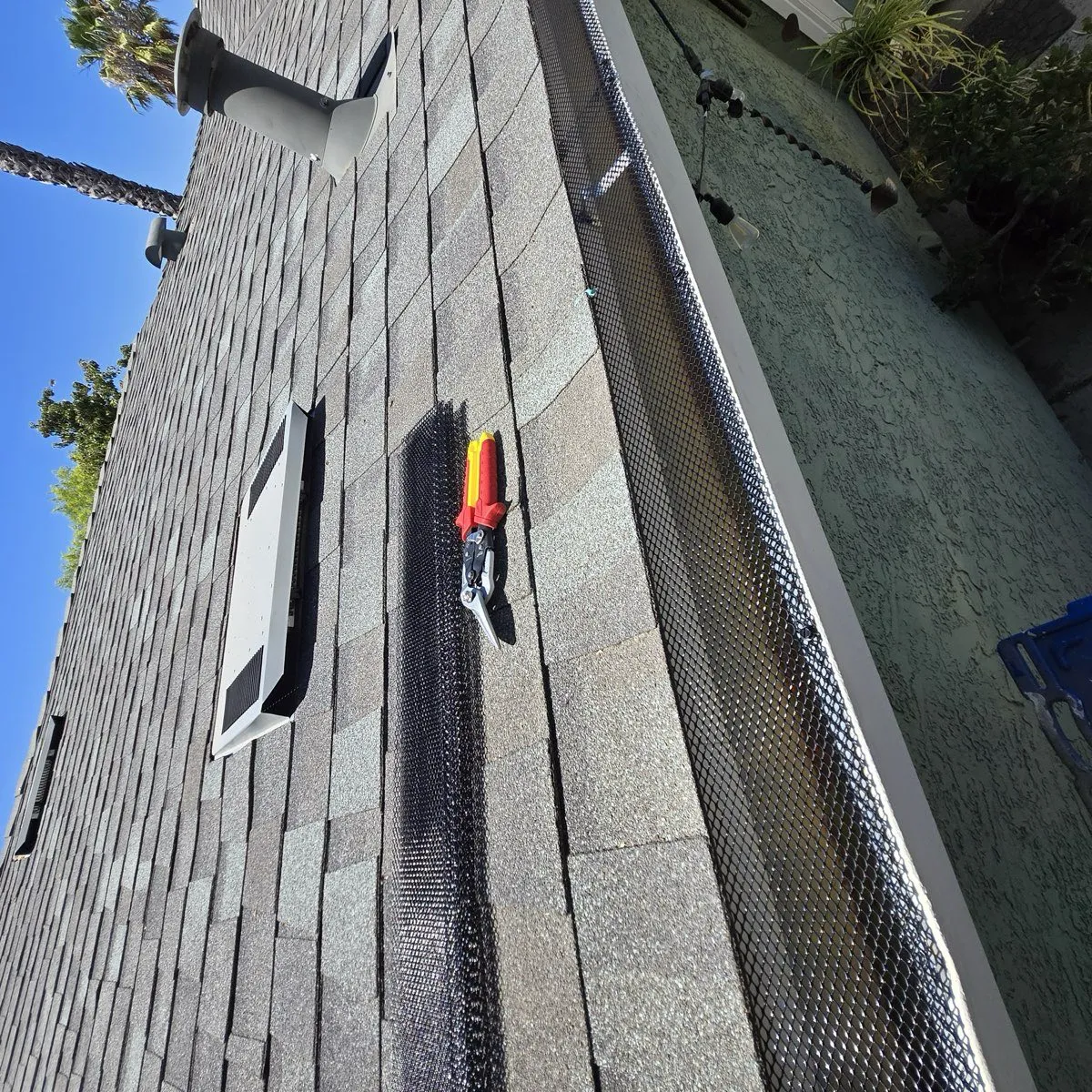
Install a 2mm stainless steel micro-mesh gutter guard and schedule a mid-May sweep. Sacramento eucalyptus trees (usually blue gum, Eucalyptus globulus) shed three distinct debris types: long bark ribbons from April through August, sickle-shaped leaves year-round, and gum nut capsules in late summer. The combination matters for a Sacramento home: eucalyptus litter is the hottest-burning common tree debris in the region, and it stacks on rooflines in neighborhoods like Land Park, Curtis Park, Fair Oaks, and Carmichael. A 2mm mesh blocks all three debris types, handles ember-cast during red flag events, and meets CAL FIRE home hardening standards for Zone 0 protection.
Table of Contents
- The Three Eucalyptus Debris Types
- Sacramento Eucalyptus Shed Calendar
- Why Eucalyptus Gutter Debris Is a Fire Hazard
- Sacramento Neighborhoods With Mature Eucalyptus
- Gutter Guard Comparison for Eucalyptus Debris
- How Eucalyptus Debris Damages Gutters
- Cleaning Schedule for Eucalyptus Properties
- Cost Analysis: Guards vs. Repeat Cleaning
- Frequently Asked Questions
Eucalyptus tree gutter problems in Sacramento don’t look like the acorn or pine needle issues most homeowners know about. A mature blue gum doesn’t drop one thing at one time of year. It sheds three distinct debris types across eight months of shedding, and each one defeats a different category of gutter guard. Add the fire behavior of eucalyptus litter in a CAL FIRE-mapped region, and you have a maintenance problem that’s also a safety problem.
Sacramento has more eucalyptus than most homeowners realize. The City of Sacramento Urban Forestry program manages roughly 110,000 public trees, with eucalyptus prominent in older neighborhoods from the city’s 1900s-era windbreak plantings. Along the American River Parkway and in neighborhoods like Curtis Park and Fair Oaks Village, blue gum (Eucalyptus globulus), red ironbark (E. sideroxylon), and silver dollar eucalyptus (E. cinerea) stand 100 to 180 feet tall and drop debris onto every rooftop inside a 50-foot radius.
TL;DR: Eucalyptus sheds bark ribbons (April–August), sickle leaves (year-round with fall peak), and gum nut capsules (August–October). Bark ribbons thread through 3mm screens and wrap downspouts. Leaves carry volatile oils that burn hot in fire events. Gum nuts plug downspout elbows. Only 2mm stainless micro-mesh handles all three. Land Park, Curtis Park, Fair Oaks, and Carmichael have the oldest trees. Budget a 2mm micro-mesh install or plan on 3–4 cleanings per year. For WUI homes, combine with wildfire home hardening.
The Three Eucalyptus Debris Types (And Why Each One Matters)
Most Sacramento tree-debris guides treat eucalyptus as a single debris category. It’s not. A blue gum on your property line is simultaneously shedding three different materials with three different shapes, three different densities, and three different failure modes for your gutters.
1. Bark Ribbons
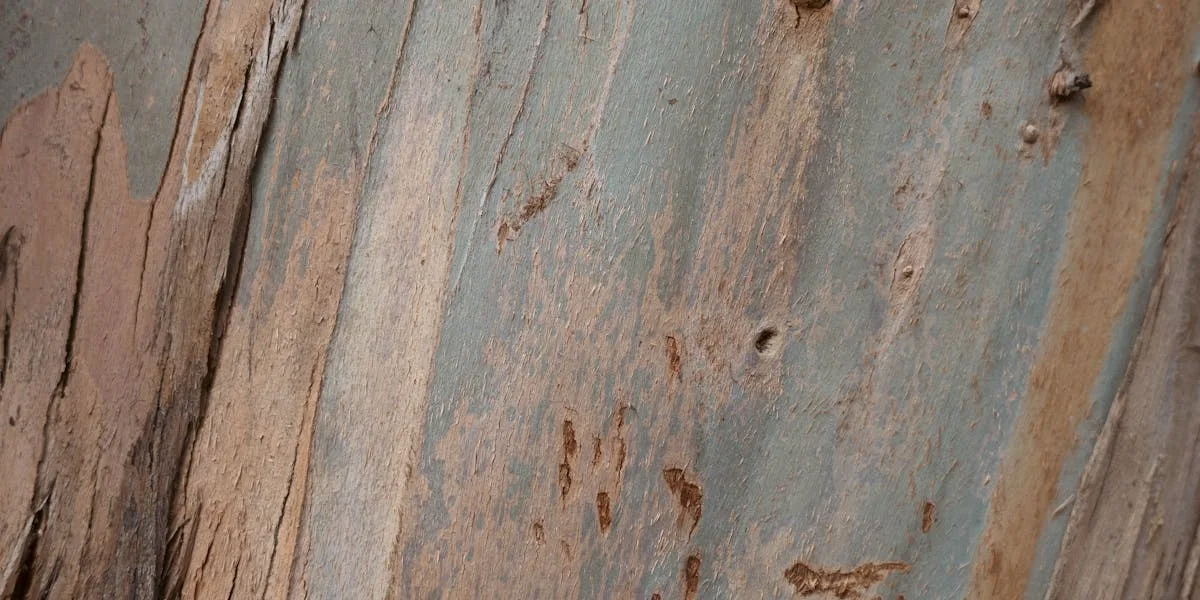
Long strips (6 inches to 6 feet) of outer bark that peel off in ropy curls from April through August. Blue gum is famous for this — the tree renews its bark annually and sheds the old layer in dramatic papery ribbons that can wrap around power lines, fence posts, and gutter openings.
Why it matters: Bark strips thread through 3mm screen guards and wedge in downspout openings. They also carry high surface area of volatile oil for fire ignition.
2. Sickle Leaves
Curved, leathery, sickle-shaped leaves 4 to 10 inches long. They drop year-round with a modest spring and fall peak. The waxy surface (hydrophobic) repels water, so they mat together into dense clumps rather than washing through gutter openings.
Why it matters: The wax coating keeps leaves from decomposing quickly and causes them to bridge over 3mm and larger mesh openings.
3. Gum Nut Capsules
Woody seed capsules (10–30mm diameter for blue gum, smaller for other species) that drop from late summer through fall. Hard, dense, and roughly the size of marbles or small walnuts depending on species.
Why it matters: Gum nuts plug downspout elbows similarly to acorns — if you’ve read our valley oak acorn guide, the mechanics are the same.
Property owners who only deal with one of the three (say, a homeowner who clears gutters every December) routinely find their gutters already damaged before the next drop arrives. Eucalyptus debris is a three-season problem, not a single-event cleanup.
The Sacramento Eucalyptus Shed Calendar
Timing matters for eucalyptus because the bark shed coincides with Sacramento’s summer wildfire season. Peak bark drop runs from mid-April through mid-August, overlapping completely with the period CAL FIRE historically designates as elevated wildfire risk across the Sacramento metro and foothills.
Eucalyptus Debris Drop Intensity by Month (Sacramento)
Shed timing based on regional arborist observations and USDA PLANTS database phenology data for Eucalyptus globulus in Mediterranean climate zones.
The dashed box shows the overlap between peak bark shed and California’s declared wildfire season. For Sacramento homes in or near CAL FIRE-designated Very High Fire Hazard Severity Zones — including portions of Folsom, El Dorado Hills, and the eastern Sacramento County foothills — this is the worst possible timing. Your gutters are accumulating the hottest-burning fuel source right when Zone 0 ember protection matters most.
Species Variation Matters
Not all eucalyptus species behave the same way in Sacramento gutters. The dominant residential species and their debris profiles:
- • Blue gum (Eucalyptus globulus) — The biggest and most common mature eucalyptus in Sacramento. Dramatic bark shed, large sickle leaves (up to 10 inches), and medium gum nuts (15–30mm). The worst for gutters.
- • Red ironbark (E. sideroxylon) — Rough, persistent bark that doesn’t shed in ribbons. Less bark in gutters, but heavy leaf and small-capsule drop year-round.
- • Silver dollar (E. cinerea) — Smaller species (40–60 ft max). Round juvenile leaves transition to sickle adult leaves. Light bark shed. Often ornamental in residential landscapes.
- • Red gum (E. camaldulensis) — Common along the American River Parkway. Mottled bark, moderate shed. Long narrow leaves. Large seed capsules.
- • Lemon-scented gum (Corymbia citriodora) — Smooth powdery bark that sheds in flakes rather than ribbons. Smaller leaves. Easier on gutters than blue gum but still a debris source.
If you’re unsure which species is dropping on your roof, the fastest identifier is the bark pattern on the trunk. Smooth trunks with peeling ribbons visible in summer = blue gum or red gum. Rough furrowed trunks that don’t peel = ironbark. Smooth gray trunks without peeling = silver dollar. The bark type directly predicts how much ribbon debris you’ll see in gutters.
Why Eucalyptus Gutter Debris Is a Fire Hazard
This is the piece most Sacramento homeowners miss. Eucalyptus litter isn’t just messy — it’s the most ignitable common tree debris in California. Every component of the eucalyptus drop — bark, leaves, and gum nut capsules — contains volatile organic compounds, primarily 1,8-cineole (eucalyptol), that lower the ignition temperature compared to other plant debris.
The 1991 Oakland Hills Tunnel Fire accelerated research into eucalyptus fire behavior. Studies from the California Department of Forestry and Fire Protection (CAL FIRE) and UC Berkeley Fire Research have documented that eucalyptus litter sustains combustion at lower fuel moisture levels than oak or pine debris. In a Sacramento summer with 8–12% fuel moisture (common from June through October), eucalyptus debris in a gutter is effectively pre-dried tinder.
The Ember Intrusion Mechanism
During a wildfire event in or near Sacramento, the biggest home-loss mechanism isn’t flame contact — it’s ember cast. Wind-blown embers travel miles ahead of a fire front and land on rooftops. A clean gutter might catch and extinguish an ember. A gutter full of dry eucalyptus bark ignites on contact and carries flame to fascia, soffit, and attic ventilation.
This is exactly why CAL FIRE’s Zone 0 (0–5 feet from the home) hardening standards call for non-combustible gutter protection and no combustible debris within the home footprint. Our wildfire home hardening guide walks through the complete Zone 0 requirements.
CAL FIRE’s 2024 Fire Hazard Severity Zone maps designate portions of eastern Sacramento County, El Dorado County, and Placer County as Very High Fire Hazard Severity Zones (VHFHSZ). Homes in these zones are legally required to comply with defensible space (Public Resources Code 4291) and home hardening standards. Eucalyptus debris in gutters is a specific compliance issue for these properties — insurers have begun flagging it during FAIR Plan inspections.
Relative Ignition Risk of Gutter Debris Types
Relative scale based on volatile organic compound content, ignition temperature, and combustion sustain rate. Source: synthesized from CAL FIRE fuel studies and UC Berkeley Fire Research publications.
Pro Tip: The Pre-Red-Flag Sweep
If you’re a Sacramento homeowner with eucalyptus nearby and you get a National Weather Service Red Flag Warning or Fire Weather Watch, a 30-minute gutter sweep before the event is the cheapest wildfire risk reduction available. Dry eucalyptus bark in a gutter during a red flag event is a loaded match. Empty gutter = no match. Check the NWS Sacramento forecast during fire season. Our wildfire protection guide has the full pre-event checklist.
Sacramento Neighborhoods With Mature Eucalyptus
Eucalyptus distribution in the Sacramento metro follows the city’s early-1900s planting history. Trees that have survived 80 to 120 years are now 100 to 180 feet tall and drop debris across entire blocks. These are the neighborhoods where we see the most eucalyptus gutter work:
- • Land Park (around William Land Park) — Mature blue gum and red gum planted around the park perimeter and along Broadway. Residential streets within three blocks of the park have heavy debris loads each spring. Many 1920s–1940s homes have trees on the lot or immediately adjacent.
- • Curtis Park — Mature eucalyptus mixed with the neighborhood’s signature oak canopy. The combination means properties here deal with oak acorns, oak leaves, and eucalyptus debris simultaneously — an eight-month debris season.
- • Fair Oaks Village — Original eucalyptus windbreaks from the community’s early orchard days are still standing. Village-adjacent lots on Fair Oaks Boulevard and California Avenue have some of the largest blue gums in the Sacramento metro. Our Fair Oaks gutter service sees heavy bark cleanup calls every May.
- • Carmichael (American River Parkway-adjacent) — Red gum and blue gum along the parkway overhang homes on Fair Oaks Blvd, Sutter Avenue, and surrounding residential streets. Debris from parkway trees lands on private roofs even when the tree is off-property.
- • Arden-Arcade corridor — Mature eucalyptus scattered through the 1950s-era neighborhoods. Lots with original landscape trees often have a blue gum planted as a back-corner shade tree that’s now 120+ feet tall.
- • Folsom (older sections near Sutter Street and Folsom Lake) — Historic-era eucalyptus on large lots and adjacent to Folsom Lake State Recreation Area. Foothill elevations near Folsom are also in or near CAL FIRE VHFHSZ mapping, making eucalyptus debris a compounded fire risk. See our Folsom gutter cleaning guide.
- • Orangevale and Citrus Heights — Mixed residential-agricultural transition zones with remnant eucalyptus from former orchard windbreaks. Our Citrus Heights maintenance guide covers the area’s specific tree mix.
- • East Sacramento (Fab 40s and surrounding) — Scattered mature eucalyptus among the dominant oak canopy. Less common than in Land Park or Fair Oaks but present on select blocks.
Newer metro subdivisions — Natomas, most of Elk Grove, Roseville, Rocklin, and newer Folsom developments — rarely have mature eucalyptus. After the 1991 Oakland Hills Fire, the California Invasive Plant Council added blue gum to invasive species lists and most municipalities stopped planting eucalyptus in residential rights-of-way. New residential lots in these areas deal with sweetgum, crape myrtle, and planted oaks rather than eucalyptus.
Gutter Guard Comparison for Eucalyptus Debris
Eucalyptus is the stress test of gutter guards. The debris is long, oily, fibrous, and comes in three different shapes simultaneously. Guards designed for single-species debris (just pine, just oak) often fail here. Below is how each major guard category performs against eucalyptus specifically. For cross-species guard comparisons, our brand comparison guide is the broader reference.
| Guard Type | Blocks Bark Ribbons | Blocks Leaves | Blocks Gum Nuts | Fire Rated | Verdict |
|---|---|---|---|---|---|
| 1/4″ screen (~6mm) | No | No | Partial | Depends | Fails |
| 1/8″ screen (~3mm) | No — bark threads through | Partial | Yes | Depends | Bark Plugs |
| Reverse curve (surface tension) | No — bark bridges slot | Partial | Partial | Metal only | Fails |
| Foam insert | No — wraps foam | No | Partial | Combustible | Fire Risk |
| Brush guard (hedgehog) | No — tangles bristles | No | Partial | Depends | Fails |
| Stainless 2mm micro-mesh | Yes | Yes | Yes | Non-combustible | Works |
| Stainless 1.5mm micro-mesh | Yes | Yes | Yes | Non-combustible | Best for WUI |
The key insight: eucalyptus bark is the hardest debris type to block because the strips are flexible, long, and can thread through openings that would easily stop a leaf or acorn. A 3mm screen blocks a leaf, blocks an acorn, but a 6-inch bark ribbon threads through 3mm openings in multiple spots simultaneously. The only reliable defense is a mesh tight enough that no bark fiber can pass — which is 2mm or smaller. Our reverse curve vs micro mesh deep-dive has the full technical comparison.
Mature Eucalyptus on Your Property?
We install 2mm stainless micro-mesh guards rated for eucalyptus-heavy properties across Land Park, Curtis Park, Fair Oaks, Carmichael, and the Folsom foothill corridor. Free on-site assessment includes tree species ID, shed pattern analysis, and wildfire zone check.
How Eucalyptus Debris Damages Sacramento Gutters
Eucalyptus damage doesn’t show up immediately. It compounds across multiple seasons, and by the time a homeowner sees water behind the gutter or fascia staining, the failure chain has been running for months. Here’s the typical progression on an unprotected Sacramento property with mature blue gum nearby:
- April–June: Bark shed begins. Long ribbons accumulate in gutters and over downspout drops. On warm afternoons, bark dries quickly and begins matting into the bottom of the gutter. Any rainfall at this point runs through partial blockage.
- July–August: Peak bark plus summer leaves. Bark accumulation reaches maximum density. Sacramento’s summer dry spell means debris bakes in the sun and becomes tinder-dry. Gutters feel “stuffed” when probed. Fire risk peaks here.
- September–October: Gum nut drop. Capsules roll into existing bark plug and wedge into downspout openings. First fall leaves add a compacting layer on top. Downspout flow is now essentially zero on the worst gutter runs.
- October–November: First storms. Water fills the gutter. Can’t drain through the debris plug. Overflows front edge onto landscaping, back onto fascia. Our water behind gutters guide explains the mechanics.
- November–February: Winter storm damage. Repeated overflow events drive water behind gutters. Fascia absorbs moisture. Soffit bays hold water. Interior exterior-wall corners may show staining. Hangers stressed by standing water weight.
- March–May: Damage becomes visible. Paint peels or blisters on fascia. Dark streaks under gutter line. Stained stucco or siding. Hanger pullout visible. Homeowner calls for gutter repair or replacement.
The typical remediation bill at step 6 ranges from $800 (limited fascia repair, gutter section replacement) to $5,500+ (full fascia rebuild, new gutters, exterior paint touch-up, sometimes interior drywall repair). All of it is preventable with either aggressive cleaning scheduling or guard installation. Our fascia rot guide covers the full damage picture.
Real Case: Fair Oaks Village Home
A 1952 Fair Oaks ranch with two mature blue gums on the property line was running on annual December cleanings only. After three years, the homeowner noticed paint peeling on the south-facing fascia and hanger pullout on the back gutter. Inspection found bark-plugged downspouts on both rear drops, fascia rot on 18 linear feet, and two sections of gutter pulled 1.5 inches away from the fascia.
Remediation: new fascia on the affected runs ($1,200), 140 linear feet of seamless gutter replacement with reinforced hangers ($2,100), 2mm stainless micro-mesh ($1,800), exterior paint ($400). Total: $5,500. A mid-May cleaning schedule plus a 2mm guard at year one would have cost roughly $2,200 total and prevented the damage.
Cleaning Schedule for Sacramento Eucalyptus Properties
The correct cleaning frequency depends on tree proximity, whether guards are installed, and whether you’re in a CAL FIRE-designated fire zone. Here’s the breakdown we use for customer recommendations. For the broader seasonal playbook, our best time for gutter cleaning guide is a good companion read.
Without Gutter Guards
| When | Why | Typical Cost |
|---|---|---|
| Mid-May | After peak bark shed. Clears ribbons before summer fire season. | $175–$325 |
| Late August | Summer accumulation + pre-gum-nut check. Fire season peak. | $175–$300 |
| Early November | Gum nut + leaf clear before rainy season starts. | $200–$350 |
| Early February (optional) | Post-storm check. Required for heavy-debris properties. | $150–$250 |
| Annual Total | $550–$1,225 |
The mid-May and late-August cleanings are the non-negotiable ones for fire-zone properties. Skipping either puts dry eucalyptus debris in gutters during red flag weather. Non-fire-zone properties can sometimes drop to three cleanings by combining the August check into the November clear, but we don’t recommend it for homes with two or more mature blue gums nearby.
With 2mm Stainless Micro-Mesh Installed
- • Late May surface sweep — Use a leaf blower on low setting or soft broom to clear bark ribbons off the mesh surface. 20–40 minutes for typical homes. Done from a ladder without removing guards.
- • October downspout flush — Run a hose into one gutter section per downspout. Confirm fast drainage. 10–15 minutes total.
- • Pre-red-flag sweep (event-driven) — Before any forecasted Red Flag Warning, spend 15 minutes clearing any visible mesh accumulation. Optional for non-fire-zone homes, recommended for VHFHSZ properties.
- • Annual cost: $0–$200 — DIY surface sweep is free, professional sweep and inspection runs $150–$200 for most properties.
Cost Analysis: Guards vs. Repeat Cleaning on Eucalyptus Homes
Eucalyptus properties have one of the most favorable guard-installation cost curves in the Sacramento market because the cleaning frequency is high and the damage potential is significant. Here’s a typical 10-year comparison for a Land Park or Fair Oaks home with 180 linear feet of gutter and two mature blue gums within 40 feet of the structure.
| Scenario | Year 1 Cost | Annual Ongoing | 10-Year Total |
|---|---|---|---|
| Cleaning only (3x/year) | $700 | $700–$1,000 | $7,000–$10,000 |
| Cleaning + 1 damage event | $700 + $3,500 repair | $700–$1,000 | $10,500–$13,500 |
| 2mm micro-mesh guards installed | $3,500–$6,200 | $0–$200 | $3,500–$8,200 |
| Break-even year | Year 4–5 for cleaning-only comparison; Year 2–3 when damage event is avoided | ||
Pricing reflects the Sacramento market as of early 2026. Eucalyptus-heavy properties typically price at the higher end of per-linear-foot guard installation because installers use heavier-gauge mesh and reinforced hangers to handle the accumulated bark and leaf weight. Properties in CAL FIRE VHFHSZ zones may also qualify for rebates through the California home hardening rebate program, which can reduce out-of-pocket cost by 15–40%.
10-Year Cumulative Cost: Cleaning vs. Guards (Eucalyptus Property)
Land Park Home: Before and After
A 1935 Land Park Tudor near 3rd Avenue and Freeport Blvd has three mature blue gums on the rear property line, roughly 30 feet from the roof. The owner was paying for cleanings in March, August, and December ($215 each, $645/year). In summer 2024, a missed August cleaning led to a July 2025 Red Flag Warning with gutters full of dry bark. No fire occurred, but the risk was documented by the home’s FAIR Plan carrier during a routine inspection, and the carrier flagged it for non-renewal if not corrected.
Fix: full 2mm stainless micro-mesh install on 165 linear feet ($4,850), with one late-May surface sweep annually. Two full fire seasons clean. FAIR Plan renewal approved. Total first-two-year cost including the guard install and annual sweep: $5,050, versus $1,290 for cleanings-only over the same period — but the insurance threat removal made the math trivial.
Frequently Asked Questions
Do eucalyptus trees clog gutters in Sacramento?
Yes, eucalyptus trees are among the worst gutter-clogging species in the Sacramento region. A single mature blue gum (Eucalyptus globulus) can shed 30 to 60 pounds of bark strips each year, plus year-round sickle-shaped leaves and seasonal gum nut (capsule) drops. Unlike oak leaves, eucalyptus bark strips come off in long ropy ribbons that wrap around downspout openings and wedge under standard 3mm screen guards. The oily leaf waxes also cause the debris to mat together rather than wash through, so clogs form faster than with most other tree species in Sacramento.
How often should I clean gutters with eucalyptus trees nearby?
Sacramento homes with mature eucalyptus trees within 50 feet need gutter cleaning at least three times per year without guards installed: late spring (after peak bark shed in April–May), early fall (before rainy season starts), and mid-winter (after the first storms flush fine debris). Properties with two or more mature eucalyptus directly overhanging the roof often need four cleanings annually. With 2mm micro-mesh guards installed, most eucalyptus properties need only one annual surface sweep, typically in late May after peak bark drop.
Are eucalyptus leaves a fire hazard in gutters?
Eucalyptus debris in gutters is one of the highest fire-risk debris loads in the Sacramento metro. Eucalyptus leaves and bark contain volatile oils (primarily 1,8-cineole) that ignite at lower temperatures than most other plant debris. CAL FIRE has documented that eucalyptus litter burns hotter and faster than oak, pine, or sweetgum debris, with research showing eucalyptus leaf fuel loads can sustain flame spread even in dry Sacramento summers. For homes in CAL FIRE designated Very High Fire Hazard Severity Zones (VHFHSZ) in the eastern Sacramento County foothills, eucalyptus debris in gutters is a Zone 0 ember intrusion risk during red flag events.
What gutter guard works best for eucalyptus bark and leaves?
Stainless steel 2mm micro-mesh is the only gutter guard that reliably handles eucalyptus debris in Sacramento. The mesh size stops bark ribbons, sickle leaves, and gum nut capsules while letting rainwater through. Standard 3mm screen guards fail because eucalyptus bark strips thread through the openings and create internal clogs that are impossible to remove without pulling the guard. Foam inserts and brush guards are complete non-starters because the oily bark wraps around bristles and compacts into foam cells. For WUI homes in foothill Sacramento County, non-combustible stainless steel mesh also meets CAL FIRE home hardening requirements for ember-resistant gutter protection.
Where are eucalyptus trees in Sacramento?
Eucalyptus trees are scattered across older Sacramento neighborhoods but concentrate in specific zones. The highest densities are in Land Park (around William Land Park and Broadway), Curtis Park, Fair Oaks Village, Carmichael (especially along the American River Parkway), the Arden-Arcade corridor, and older sections of Folsom and Orangevale. Many of these trees are blue gum (Eucalyptus globulus) planted in the early 1900s as windbreaks and shade trees. Most eucalyptus along the American River Parkway are 80 to 120 years old with heights of 100 to 180 feet. Newer subdivisions in Elk Grove, Natomas, Roseville, and Rocklin rarely have eucalyptus because the species fell out of favor for residential planting after the 1991 Oakland Hills Fire.
Can eucalyptus oil damage aluminum gutters?
Eucalyptus oil does not chemically etch or corrode aluminum gutters the way acidic debris can stain and pit metal, but it creates two indirect damage mechanisms. First, the waxy oil residue binds with airborne dust and tannins to form a sticky film inside gutters that traps fine debris and accelerates clog formation. Second, eucalyptus debris holds water far longer than oak or pine debris (the hydrophobic wax resists drainage), and that prolonged moisture contact is what drives the oxidation and pinhole corrosion we see on 15+ year old aluminum gutters under mature eucalyptus canopies. Homes that keep gutters clean or use micro-mesh guards rarely see this secondary damage.
Stop the Bark, Leaves, and Fire Risk in One Install
We install 2mm stainless micro-mesh engineered for eucalyptus-heavy properties across the Sacramento metro. Free on-site assessment. Honest product recommendation. Pricing by linear foot. Zone 0 fire-ready mesh options for VHFHSZ homes.
Free estimates • Sacramento, Land Park, Curtis Park, Fair Oaks, Carmichael, Folsom & surrounding areas
Related Articles
Valley Oak Acorn Gutter Clogs
The 3-week window that kills downspouts on Sacramento oak properties.
Sweetgum Seed Pod Solutions
Liquidambar gum balls and the guards that block them.
Best Gutter Guards for Pine Needles
Pine needle solutions for Sacramento-area homes.
Gutter Guards & Wildfire Protection
Home hardening strategies for Sacramento WUI properties.
Gutter Guard Cost Per Linear Foot
Real Sacramento pricing by product, home size, and installer.
Best Gutter Guard Brands Compared
LeafFilter vs Raptor vs Gutterglove for Sacramento homes.
Serving Sacramento-Area Eucalyptus Neighborhoods
We install 2mm micro-mesh guards across Sacramento’s eucalyptus-heavy neighborhoods — Land Park, Curtis Park, Fair Oaks, Carmichael, Arden-Arcade, Folsom, and Orangevale — plus the broader metro service area below.