Quick Answer: How Do You Stop Sweetgum Balls From Clogging Gutters?
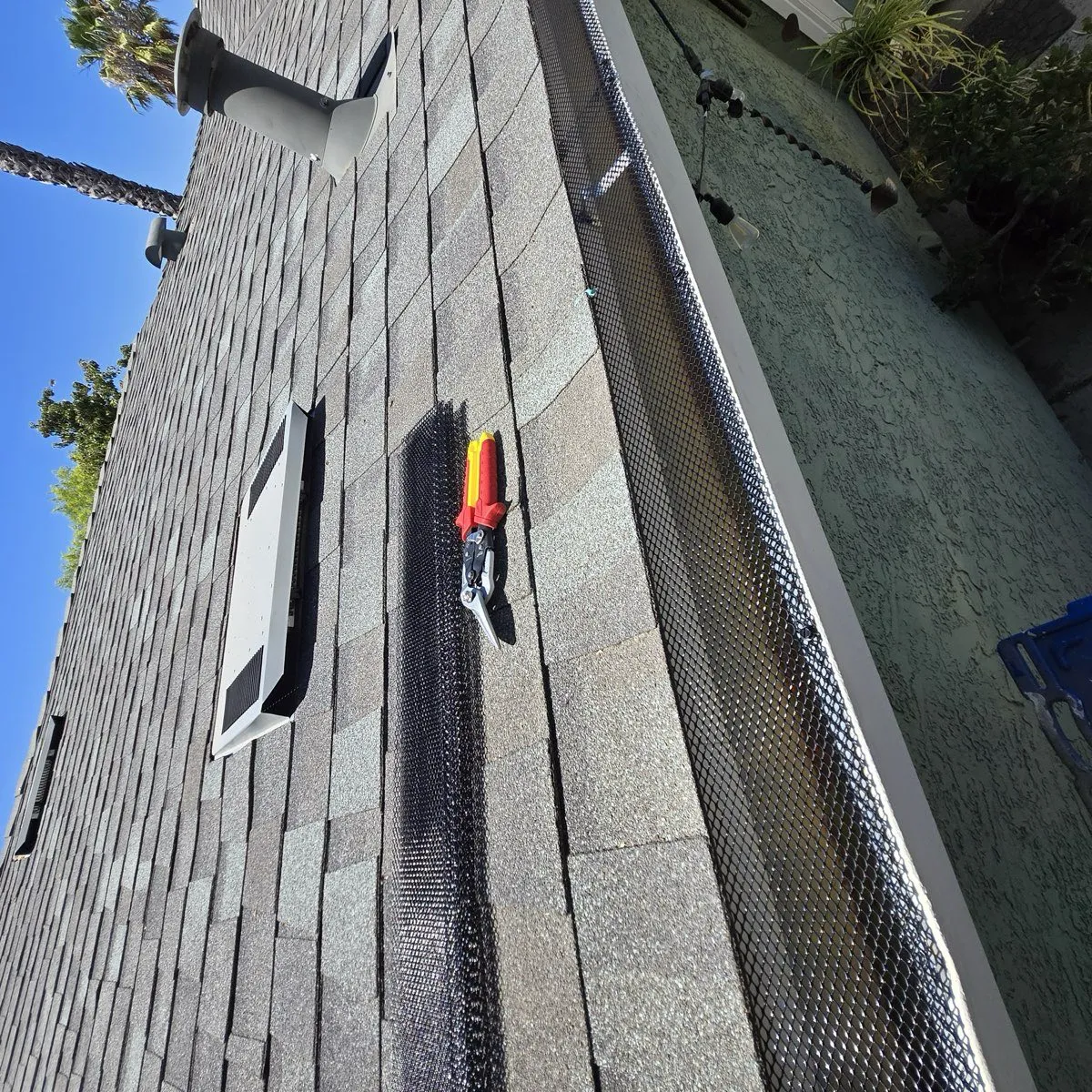
Install stainless steel micro-mesh gutter guards with 275-micron openings. Micro-mesh is the only guard type that reliably blocks sweetgum seed pods, their fragments, and the star-shaped leaves. Standard screens, foam inserts, and brush guards all fail within one to two seasons near liquidambar trees. Pair guards with one post-season cleaning in late April (after pod drop ends) for the best long-term protection.
Table of Contents
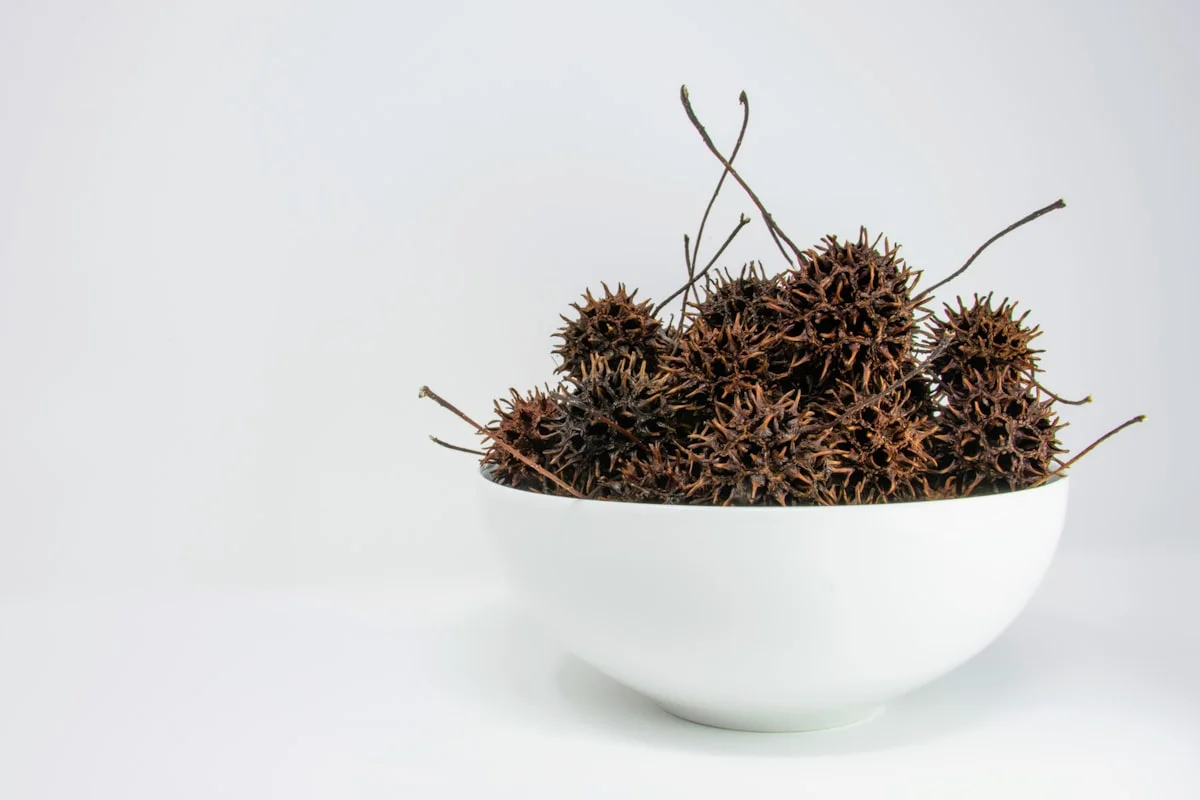
Sweetgum tree gutter problems rank among the top three debris complaints we handle across the Sacramento metro. Those spiky seed pods—officially the fruit of Liquidambar styraciflua—are uniquely destructive to gutter systems. They interlock with other debris, jam downspout openings, and drop during the exact months Sacramento needs its gutters working hardest. If your yard has a sweetgum tree (or a neighbor’s tree overhangs your roof), this guide covers the specific solutions that work and the common fixes that waste money.
Sacramento has planted sweetgum trees as street and park trees since the 1930s, according to the UC Davis urban forestry research archive. They were especially popular in 1950s and 1960s subdivisions, which means mature specimens are now common in established neighborhoods from Land Park to Carmichael to Citrus Heights. A mature sweetgum can reach 60 to 80 feet and produce thousands of seed pods every winter.
TL;DR: Sweetgum seed pods (gum balls) are 1–1.5 inches across with sharp spikes that interlock in gutters and jam downspouts. They fall December through April—Sacramento’s rainy season. Micro-mesh gutter guards with 275-micron openings are the only guard type that reliably blocks them. Standard screens, foam, and brush guards all fail. Budget $15–$32 per linear foot for professional micro-mesh installation and schedule one surface cleaning in late April each year.
Why Sweetgum Trees Are the Worst for Gutters
Every tree drops debris, but sweetgum trees combine four characteristics that make them uniquely destructive to gutter systems. Understanding these helps explain why solutions that work for oak leaves or pine needles often fail with liquidambar.
Spiky Pods Interlock
Each gum ball is covered in sharp, hooked spines. When two or more pods land in a gutter, the spines mesh together like velcro. Unlike flat leaves that water can push along, interlocked gum balls form rigid dams that resist water pressure entirely.
Perfect Downspout Plugs
At 1 to 1.5 inches in diameter, gum balls are almost exactly the size of a standard 2x3 or 3x4 downspout opening. One pod can lodge at the top of a downspout and instantly block all drainage. Two pods wedged together create a seal that withstands significant water pressure.
Slow Decomposition
Oak leaves break down in weeks. Gum balls are woody capsules that resist decomposition for months. Pods that land in gutters in December may still be fully intact in May. This means debris accumulates all season rather than flushing during rains.
Rainy Season Overlap
Sacramento gets roughly 80% of its annual rainfall between November and March. Sweetgum pods drop December through April. The overlap is almost total—your gutters get clogged precisely when they need to be clear for storm drainage.
Sweetgum Debris vs. Sacramento Rainfall by Month
Sacramento rainfall data based on NWS Sacramento averages. Debris timing based on regional arborist observations.
The chart makes the problem obvious: December through March is both peak rainfall and peak pod drop. Gutters without protection face constant clogging during the exact window when Sacramento homes depend on functional drainage to protect foundations, siding, and landscaping.
Where Sweetgum Trees Grow in Sacramento
Sweetgum (Liquidambar styraciflua) has been part of Sacramento’s urban forest since the city began systematic street tree plantings in the 1930s. According to research published in Arboriculture & Urban Forestry, sweetgum was one of 15 species Sacramento residents could choose for neighborhood planting as early as 1936. The tree became especially popular in postwar subdivisions.
Today, you’ll find mature sweetgum trees in concentrations across several Sacramento neighborhoods:
- • Land Park and Curtis Park — Original 1940s–1960s plantings now 50–70 feet tall
- • Carmichael and Fair Oaks — Mixed with oaks in established residential streets
- • Citrus Heights — Common street tree in 1960s–1970s subdivisions
- • Arden-Arcade — Frequent in older residential areas along Watt Avenue corridor
- • Roseville and Rocklin — Present in 1980s–1990s neighborhoods, less common in newer developments
- • Elk Grove — Scattered in older sections near Elk Grove Boulevard
Sacramento’s 2018 Urban Tree Canopy Assessment measured the city’s total canopy at 19.1%. Sweetgum is among the more prevalent species contributing to that canopy, particularly in neighborhoods developed before 1980 when fruitless cultivars became available.
Pro Tip: Identify Your Tree First
Not sure if that problem tree is actually a sweetgum? Look for star-shaped leaves with five to seven pointed lobes (they resemble maple leaves but with sharper points). The bark develops deep, corky ridges on mature trees. And of course, the signature spiky gum balls on the ground are unmistakable. If your neighbor’s tree is the culprit, the same gutter guard solutions apply—the debris lands on your roof regardless of property lines.
Gutter Guard Comparison: What Works Against Spiky Gum Balls
Not all gutter guards handle sweetgum debris equally. We’ve installed every major guard type on sweetgum-adjacent homes across Sacramento and tracked the callbacks. Here’s what actually performs. For a broader comparison of all guard types, see our brand comparison guide.
| Guard Type | Blocks Gum Balls? | Blocks Leaves? | Handles Volume? | Verdict |
|---|---|---|---|---|
| Micro-Mesh (Stainless) | Yes — 100% | Yes | Excellent | Best Choice |
| Reverse Curve / Solid | Partial — pods pile on surface | Yes | Moderate | Acceptable |
| Aluminum Screen (1/4″) | No — fragments pass through | Partial | Poor | Not Recommended |
| Foam Inserts | No — spines puncture foam | No | Poor | Avoid |
| Brush Guards | No — pods lodge in bristles | No | Poor | Avoid |
Why Micro-Mesh Wins for Sweetgum Trees
Micro-mesh gutter guards use surgical-grade stainless steel mesh with openings around 275 microns—roughly the width of three human hairs. That’s small enough to block every component of sweetgum debris: the pods themselves, the broken spine fragments, the tiny seeds inside each capsule (each gum ball contains 80 to 100 seeds), and the star-shaped leaves.
The mesh works on surface tension. Rainwater molecules cling to the tiny openings and get drawn through into the gutter below, while debris stays on top of the mesh where wind and gravity can carry it off the roof edge. On homes with moderate roof pitch (4/12 or steeper), most gum balls that land on the mesh roll off on their own.
For lower-pitched roofs common in Sacramento ranch homes, pods may accumulate on the mesh surface. This does not block water flow—the mesh still drains freely underneath—but the debris should be brushed off once at the end of pod season. That single annual surface sweep replaces the three to four full gutter cleanings per season that unprotected sweetgum properties typically need.
Annual Gutter Cleanings: With vs. Without Guards
What About Reverse-Curve Guards?
Solid reverse-curve (surface tension) guards work decently against sweetgum leaves but struggle with the seed pods. The pods are heavy enough that they don’t always slide off the curved surface. They collect along the front lip, and when enough accumulate, water overshoots the opening instead of following the curve into the gutter.
We see this most often on homes with large canopy overhang where the pod volume is high. If a reverse-curve guard is already installed, adding a downspout screen and scheduling a mid-winter sweep of the guard surface can improve performance. But for new installations on sweetgum properties, micro-mesh is the better investment.
Guards That Fail Near Sweetgum Trees
Three guard types consistently fail on sweetgum properties in Sacramento. We’ve replaced all three on callback jobs:
- Foam inserts — The spines on gum balls puncture the foam, creating holes that let debris and water into the gutter. Within one season, the foam is shredded. It also absorbs moisture and promotes mold growth, a problem we cover in our gutter guard maintenance guide.
- Brush guards — Gum ball spines mesh with the bristles, making the pods nearly impossible to remove without pulling the entire brush insert out. After one season, the brush is a solid mass of interlocked debris.
- Standard aluminum screens — Screen openings of 1/8 to 1/4 inch block whole gum balls but pass fragments, seeds, and small leaf debris. The screens also dent under the weight of accumulated pods, creating low spots that trap water and accelerate corrosion.
Sweetgum Tree Clogging Your Gutters?
We install micro-mesh gutter guards rated for heavy-debris properties across Sacramento. Free on-site assessment includes tree proximity evaluation and product recommendation.
Cleaning Schedule for Sacramento Sweetgum Properties
Even with micro-mesh guards installed, sweetgum properties benefit from a targeted maintenance schedule. The approach differs depending on whether you have guards or not. For a complete cleaning walkthrough, see our gutter cleaning guide.
Without Gutter Guards
Unprotected gutters on sweetgum properties need three to four cleanings per season:
| When | Why | Typical Cost |
|---|---|---|
| Late November | Clear leaf drop before first major rain | $125–$200 |
| Mid-January | Remove first wave of gum ball accumulation | $125–$200 |
| Early March | Clear second wave of pods before spring rains | $125–$200 |
| Late April | Post-season final clearing and downspout flush | $125–$200 |
| Annual Total | $500–$800 |
With Micro-Mesh Guards Installed
One annual surface maintenance visit handles most sweetgum properties:
- • Late April — After pod drop ends, brush accumulated debris off the mesh surface and flush downspouts. This takes 30–45 minutes for most homes and can be done from a ladder without removing the guards.
- • Optional mid-January check — On homes with trees directly overhanging the roof, a quick visual inspection (and brush-off if pods are piling up) prevents any chance of surface-level water bridging.
- • Annual cost: $0–$150 — depending on whether you DIY the surface sweep or hire a professional.
Does Trimming the Sweetgum Tree Help?
Trimming reduces the volume of gum balls but never eliminates them. Here’s what to know before calling an arborist.
A certified arborist can thin the canopy to reduce pod production by an estimated 30 to 50 percent. Crown reduction—cutting back the outer canopy—removes the branch tips where flowers (and therefore seed pods) form. But even aggressive pruning leaves enough canopy to produce hundreds of gum balls per season.
Sacramento’s city tree ordinance (Sacramento City Code 12.56) restricts pruning of city-owned street trees. If the sweetgum is between the sidewalk and curb, you cannot trim it yourself—you must request service through the city’s Urban Forestry division. Private trees on your property can be pruned freely, though permits may be required for removal depending on the tree’s size and your neighborhood.
Trimming + Guards: The Combined Approach
For properties with sweetgum canopy directly over the roofline, the most effective strategy is:
- Install micro-mesh gutter guards to handle whatever debris reaches the gutters
- Have an arborist raise the crown (remove lower branches) to create clearance between the tree canopy and the roof
- Thin the canopy every 3–5 years to reduce pod volume
- Schedule one annual surface sweep of the guards in late April
This combination reduces gutter debris by roughly 80–90 percent compared to doing nothing, and virtually eliminates the risk of gutter overflow or downspout blockage during Sacramento’s rainy season.
Pro Tip: Fruitless Sweetgum Cultivars
If you’re planting a new tree (or replacing one), Liquidambar styraciflua ‘Rotundiloba’ is a fruitless sweetgum cultivar that produces no seed pods. You get the same stunning fall color—sweetgums turn brilliant red, orange, and purple in Sacramento’s autumn—without the gutter headaches. Several Sacramento nurseries carry this variety.
Cost Analysis: Gutter Guards vs. Repeated Cleaning
The math on gutter guard investment for sweetgum properties is straightforward. Sweetgum homes need more frequent cleaning than average, which means the break-even point for guard installation comes sooner. Our full gutter guards save money analysis covers the general case; here’s the sweetgum-specific calculation.
10-Year Cost: Cleaning Only vs. Micro-Mesh Guards
Based on average Sacramento pricing: $125–$200/cleaning, 3–4 cleanings/year, micro-mesh at $15–$32/LF for 175 LF.
The numbers break down simply:
- • Cleaning-only approach (10 years): 3–4 cleanings per year at $125–$200 each = $5,000–$8,000. Plus potential water damage repairs averaging $1,200–$3,500 per incident if clogs are missed.
- • Micro-mesh guards (10 years): One-time installation of $2,600–$5,600 for an average Sacramento home (175 LF), plus $0–$150 per year for annual surface maintenance = $3,500–$5,500 total.
- • Break-even point: Most sweetgum properties reach break-even within 3–5 years, compared to 5–7 years for homes with less demanding tree coverage.
The break-even comes faster for sweetgum properties than for most other tree types because the cleaning frequency is higher. While a typical Sacramento home might need one or two cleanings per year, sweetgum homes need three or four. That extra $250–$400 per year in cleaning costs accelerates the payback timeline. For a deeper look at cleaning vs. guards economics, see our dedicated comparison.
Cumulative Cost Over 10 Years
The Hidden Cost: Pest Attraction
Sweetgum seed pods attract pests. Squirrels cache gum balls in gutters, and the dense debris creates shelter for insects, spiders, and nesting birds. Rodents use gutter lines filled with debris as protected pathways to attic entry points. Our guide on how clogged gutters attract pests in Sacramento details the full scope of this problem, but the short version is that sweetgum debris in gutters creates an ecosystem that draws pests to your roofline.
Gutter guards eliminate this habitat. No debris accumulation means no food source, no shelter, and no reason for rodents and birds to treat your gutters as real estate. The pest-prevention value alone can justify the guard investment for many Sacramento homeowners.
Carmichael Home: Before and After
A single-story ranch home on a tree-lined street in Carmichael had two mature sweetgum trees within 15 feet of the roofline. The homeowner was paying for four gutter cleanings per year ($175 each) and had experienced two overflow-related foundation dampness events in three years.
After micro-mesh guard installation on 190 linear feet of gutter (plus downspout screens on all four downspouts), the homeowner has done one surface sweep per year—handled as a DIY task in about 40 minutes with a leaf blower from a ladder. Zero overflow events in the two years since installation. Annual gutter maintenance cost dropped from $700 to roughly $0.
Frequently Asked Questions
How to keep sweetgum balls out of gutters?
Micro-mesh gutter guards with openings of 275 microns or smaller are the most effective way to keep sweetgum balls out of gutters. The mesh blocks the spiky seed pods entirely while allowing rainwater through via surface tension. Standard screens with 1/4-inch holes will not work because smaller gum ball fragments, stems, and star-shaped leaves still pass through. Professional-grade micro-mesh installed with reinforced hangers is the recommended long-term solution for Sacramento homes near sweetgum trees.
Do sweetgum seed pods clog gutters?
Yes. Sweetgum seed pods (gum balls) are one of the worst gutter-clogging debris types in Sacramento. Each spiky ball is 1 to 1.5 inches in diameter with sharp points that interlock with other debris, creating dense blockages. A single mature sweetgum tree can drop thousands of seed pods between December and April, and the pods are hard enough that they do not decompose quickly. They also roll into downspout openings, creating complete blockages that cause gutter overflow during rain.
What is the best gutter guard for sweetgum trees?
Stainless steel micro-mesh gutter guards are the best option for homes near sweetgum trees. The mesh openings (around 275 microns) are too small for any part of a gum ball, leaf stem, or star-shaped leaf to enter. Solid reverse-curve guards also work but can struggle with the volume of pods piling on the curved surface. Avoid foam inserts, brush guards, and standard aluminum screens—all three fail within one to two seasons near sweetgum trees because the spiky pods tear foam, lodge in bristles, and pass through larger screen openings.
When do sweetgum trees drop their seed pods in Sacramento?
In Sacramento, sweetgum trees (Liquidambar styraciflua) drop most of their seed pods between December and April. The pods typically stay on the tree through early winter and fall in waves as wind and rain dislodge them. Star-shaped leaves begin falling in November. This means sweetgum gutter debris overlaps directly with Sacramento’s rainy season (November through March), making clogged gutters a high-risk problem since the gutters are needed most when the tree is shedding most.
How much does it cost to install gutter guards for sweetgum tree protection in Sacramento?
Professional micro-mesh gutter guard installation in Sacramento typically costs $15 to $32 per linear foot, depending on the product, roof pitch, and number of stories. For an average Sacramento home with 150 to 200 linear feet of gutter, that works out to $2,250 to $6,400. Homes near sweetgum trees should budget toward the higher end because reinforced hangers and additional downspout screens are often recommended. The investment typically pays for itself within 3 to 5 years through eliminated cleaning costs and prevented water damage.
Can I just trim my sweetgum tree to stop the gutter problems?
Trimming helps reduce the volume but will not eliminate the problem. Even aggressive crown reduction leaves enough canopy to produce thousands of seed pods. Sacramento’s city tree ordinance (Sacramento City Code 12.56) restricts how much you can prune street trees, and many neighborhood sweetgums are city-owned. A certified arborist can thin the canopy to reduce pod production by 30 to 50 percent, but gutter guards remain necessary for reliable protection. Trimming plus guards is the most effective combination.
Ready to Solve Your Sweetgum Gutter Problems?
We install micro-mesh gutter guards engineered for heavy-debris properties across the Sacramento metro. Free on-site assessment, honest product recommendation, and pricing by linear foot—no pressure, no surprises.
Free estimates • Sacramento, Roseville, Folsom & surrounding areas
Related Articles
Best Gutter Solutions for Oak Leaves
How to handle oak leaf debris in Sacramento gutters.
Best Gutter Guards for Pine Needles
Pine needle solutions for Sacramento-area homes.
Best Gutter Guard Brands Compared
Side-by-side product comparison for Sacramento homes.
Sacramento Gutter Guard Cost
Real pricing by product, home size, and linear footage.
Gutter Cleaning vs. Gutter Guards
When guards make sense vs. sticking with cleaning.
Clogged Gutters Attract Pests
How debris in gutters draws rodents and insects.