Quick Answer: The Best Gutter Guard for Oak Trees
Stainless steel micro-mesh is the best gutter guard for oak trees because it is the only type that handles all three kinds of oak debris: broad, waxy leaves in fall, thin pollen catkins in spring, and acorns. Reverse-curve covers shed leaves and acorns but pull catkins into the slot. Standard screens stop leaves but pass catkins. Foam and brush inserts trap everything and clog. For Sacramento and Roseville homes under mature valley oaks, professionally installed micro-mesh is the system that still works in April.
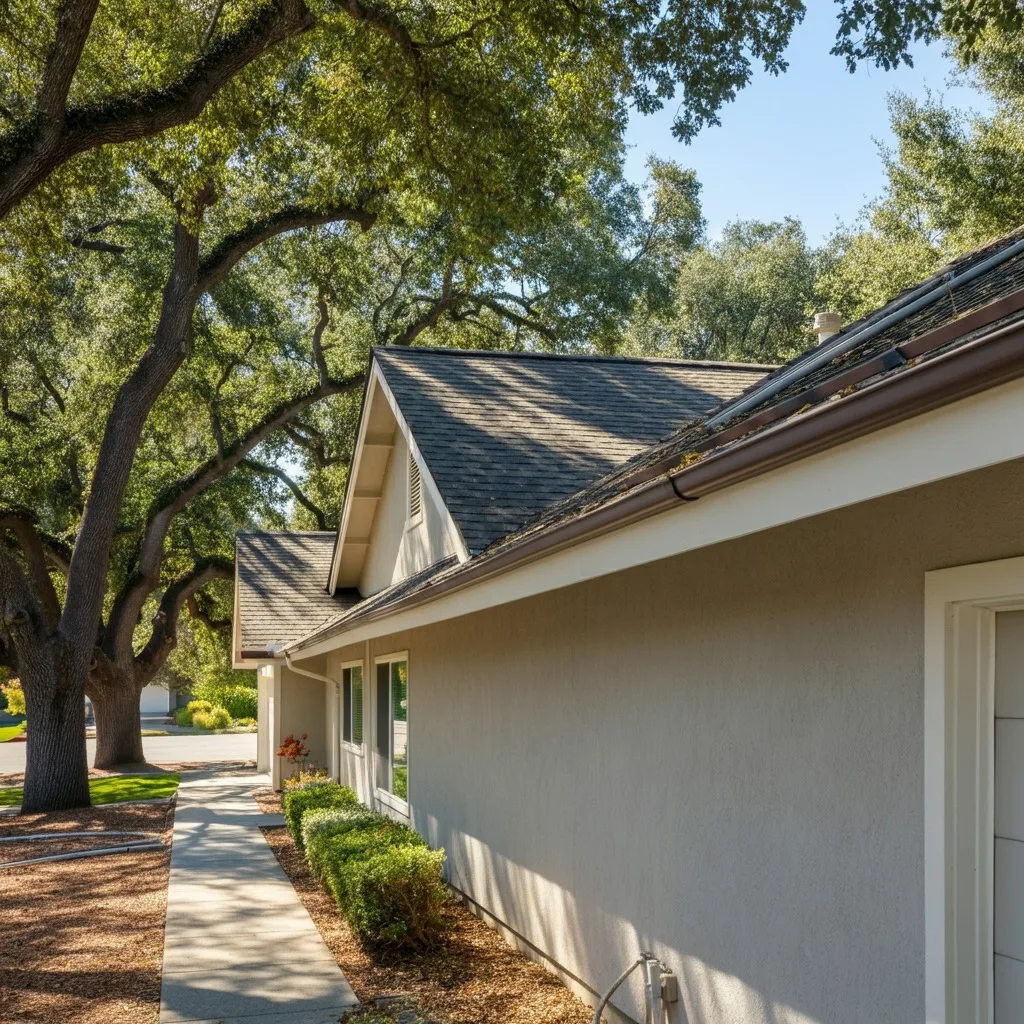
Valley oaks are the reason Carmichael, Fair Oaks, Land Park and the older parts of Roseville look the way they do. They are also the reason those neighborhoods keep us busiest. Leaves are the most-reported gutter debris nationally, cited by 85% of homeowners in a 2025 This Old House survey of 1,000 respondents (This Old House, 2025), and oak leaves are a harder version of the problem: waxy, slow to break down, and dropped over three months instead of three weeks.
But leaves are only a third of it. Oaks also drop acorns in early fall and catkins in spring, and each of those defeats a different guard design. This guide rates every common guard type against all three, explains why micro-mesh is the answer for most oak properties, and covers what it costs installed in the Sacramento area and what maintenance is still left afterward.
TL;DR: Stainless micro-mesh handles oak leaves, catkins and acorns. Reverse-curve handles two of three. Screens handle two of three. Foam and brush handle none. Micro-mesh runs $15-$45 per foot installed in Sacramento and turns two or three cleanings a year into two quick brush-offs. See Sacramento gutter guard installation for what our installs include.
Why Oak Trees Are Three Gutter Problems, Not One
A guard that is tested against "leaves" is tested against one third of what a valley oak drops. The other two thirds arrive in different seasons, in different shapes, and defeat different designs.
Acorns: September-October
Valley oak acorns run roughly half an inch to three quarters of an inch across. They roll down the gutter and wedge in the downspout outlet, and a handful is enough to back up a 40-foot run. Any guard with a front lip stops them; the problem is homes with no guard at all. Our valley oak acorn guide covers the three-week window that kills downspouts.
Leaves: October-December
Oak leaves have a waxy cuticle that helps the tree survive dry summers and makes the leaves stick together in a wet gutter. They form a mat that holds water, decomposes slowly, and leaves behind a dark sediment that is harder to remove than the leaves were. Drop runs about three months, so a single early-October cleaning misses most of it.
Catkins: March-April
Catkins are the 2 to 4 inch pollen tassels oaks drop in spring. They are thin, light and float. They pass through quarter-inch screen openings, ride water around a reverse-curve nose, and mat into a felt on anything they land on. Catkins are the debris that sorts real oak-tree guards from the rest.
Live oaks (interior and coast live oak) add a fourth wrinkle: they are evergreen and shed their old leaves in spring, April through June, on top of the catkins. Heritage-oak lots in Carmichael and Fair Oaks often have both; see our Carmichael and Fair Oaks heritage oak gutter guide. For when each species drops, see the Sacramento gutter maintenance calendar.
Gutter Guard Types Rated Against Oak Debris
Ratings reflect how each design performs on oak properties in our Sacramento service work. Costs are installed per-foot ranges for the Sacramento area in 2026.
| Guard type | Oak leaves | Catkins | Acorns | Cost/ft installed | Verdict |
|---|---|---|---|---|---|
| Stainless steel micro-mesh | Excellent | Excellent | Excellent | $15-$45 | Best for oak |
| Aluminum micro-mesh | Good | Good | Excellent | $10-$30 | Good value, shorter life |
| Reverse-curve (surface tension) | Good | Poor | Good | $15-$40 | Fails in spring |
| Standard screen, perforated | Fair | Fails | Good | $3-$12 | Leaf fragments and catkins get in |
| Foam inserts | Fails | Fails | Fair | $2-$5 | Not for oak |
| Brush inserts | Fails | Fails | Fails | $3-$8 | Not for oak |
Why micro-mesh wins under oaks
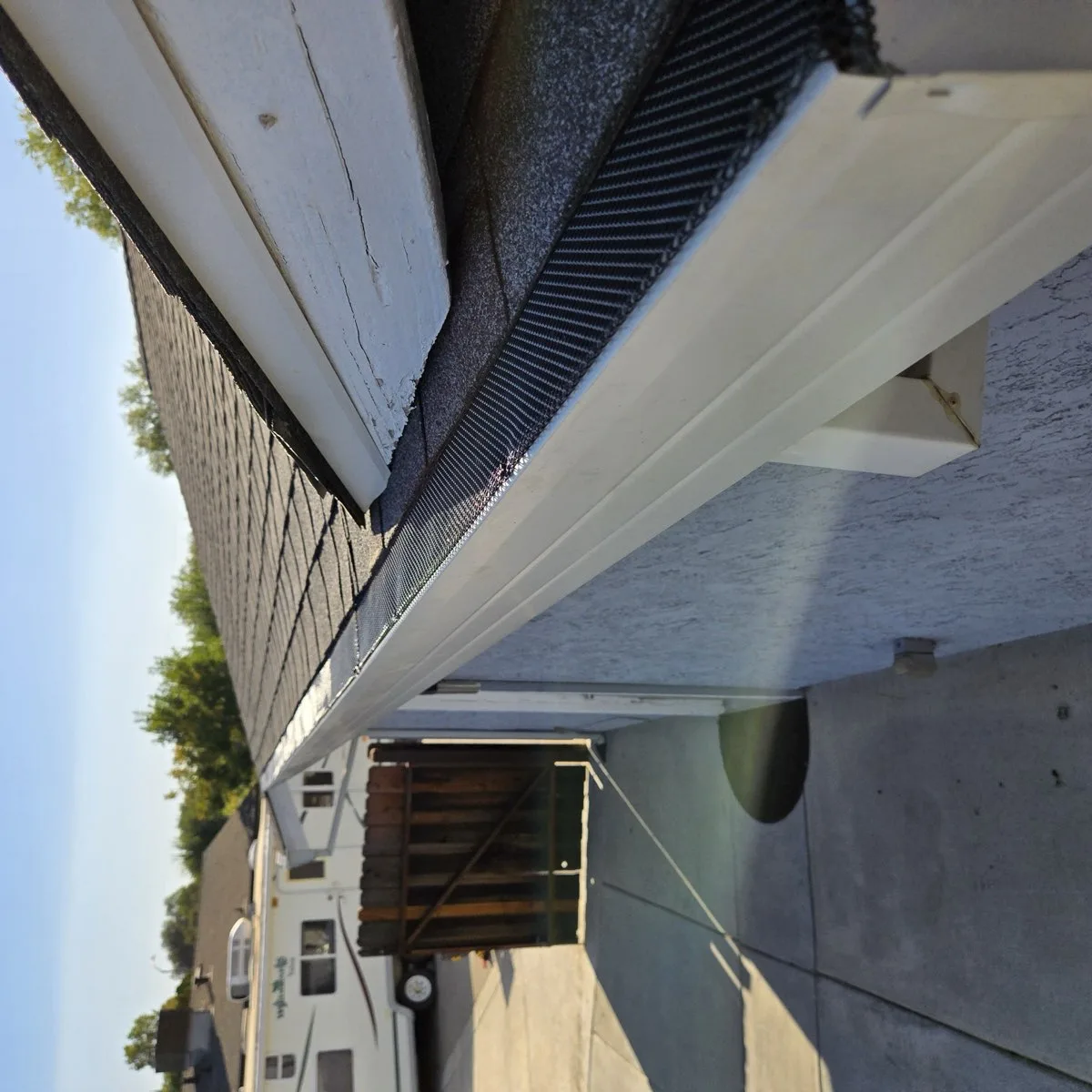
Stainless micro-mesh has openings measured in microns, small enough that a catkin cannot pass and a leaf fragment cannot lodge. Water crosses the mesh by surface tension and drains into the trough; everything else sits on top, where sun dries it and wind clears most of it. The stainless mesh also shrugs off the tannic acid that decomposing oak leaves release, which corrodes aluminum and galvanized steel from the inside. The remaining maintenance is a surface brush-off after leaf drop and after catkins. Our guard materials comparison covers stainless versus aluminum mesh in detail.
The honest case on reverse-curve covers
Reverse-curve guards work by surface tension: water follows the curved nose into a narrow slot, and flat leaves fall off the front. For broad oak leaves and round acorns that works well, and it is why national brands sell so many under oaks. The failure is spring. Catkins are thin and flexible enough to follow the water around the curve, and once inside they sit in a trough you cannot see or reach without removing the cover. On a property with two or more mature oaks we do not recommend them. The full comparison is in reverse-curve vs micro-mesh gutter guards in Sacramento.
Why screens, foam and brush fail
Standard screens: quarter-inch openings stop whole leaves and acorns but pass catkins and the small, brittle leaf fragments oaks shed in December. Within two seasons the gutter is clogged under a screen that looks clean from the ground.
Foam inserts: oak leaves sit on the foam and decompose into it. The foam then holds water against the gutter wall, which is worse for the gutter than no guard at all.
Brush inserts: bristles catch leaves and catkins and hold them, and acorns wedge between the bristles. Cleaning a brush guard packed with a season of oak debris is harder than cleaning an open gutter. Our guide to why gutter guards fail has the field notes.
Which Micro-Mesh Brand for Oak Trees?
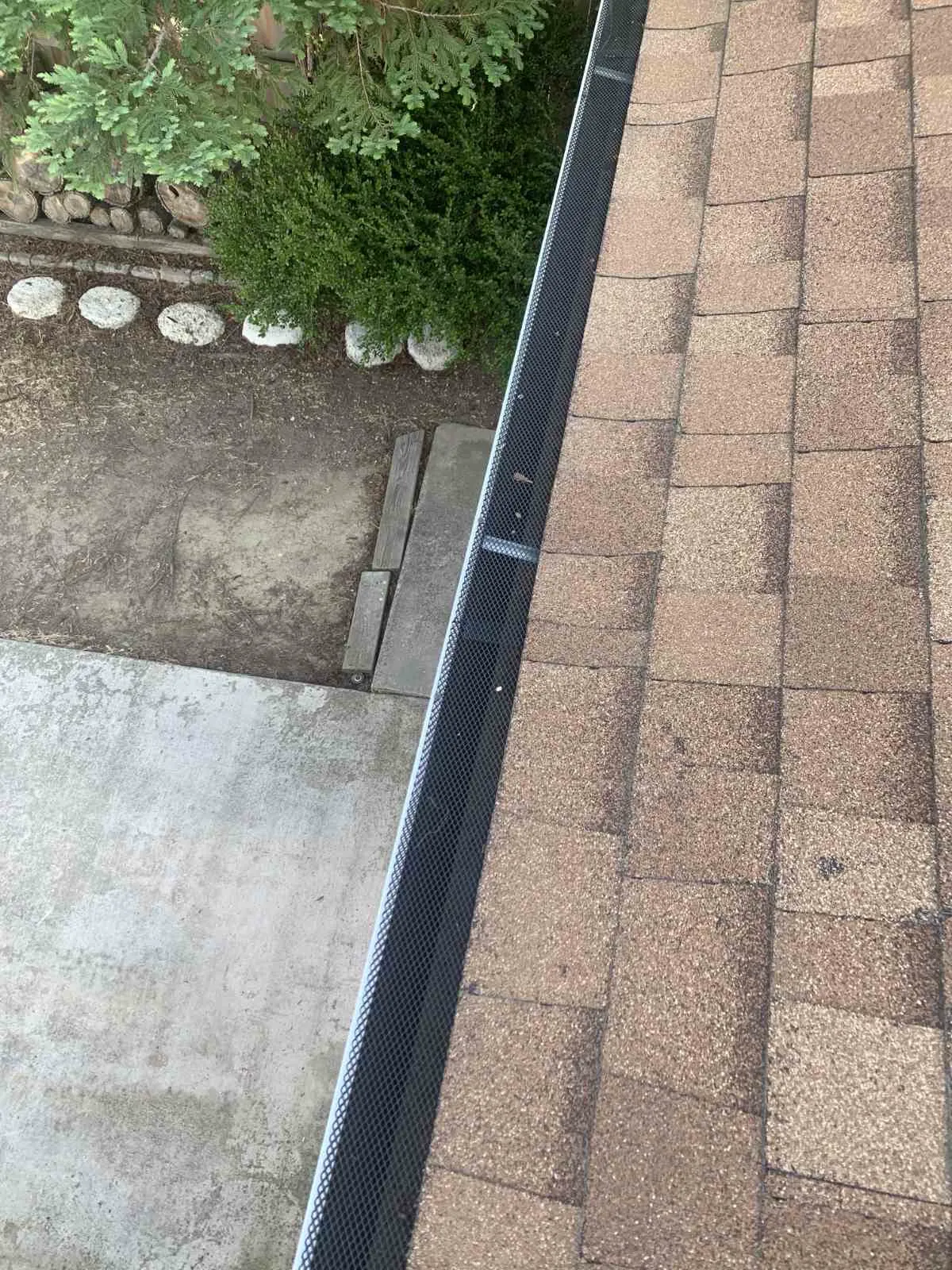
Any stainless micro-mesh with openings well under a millimeter stops catkins; the residential brands range from roughly 275 to 550 microns and all clear that bar. The differences that matter under oaks are frame material (aluminum resists the tannic acid oak litter produces; plastic frames do not), how the mesh is pitched (a slight slope toward the front edge lets dried leaves slide off), and warranty terms. Our best gutter guard brands comparison covers LeafFilter, Raptor and Gutterglove for Sacramento conditions, and LeafFilter vs LeafGuard vs Gutter Helmet compares the national micro-mesh brand against the two reverse-curve brands.
Sacramento Neighborhoods Where Oak Guards Matter Most
Heavy oak canopy: micro-mesh is essential
- Carmichael and Fair Oaks: heritage valley and live oaks over most lots
- Land Park and Curtis Park: mature street oaks and sycamores
- Roseville: Diamond Oaks, Woodcreek Oaks, older Roseville tracts
- Granite Bay and Loomis: oak woodland lots with pine mixed in
- Folsom: oak preserves along the lake and river corridors
Moderate oak coverage: micro-mesh recommended
- East Sacramento and Arden-Arcade: mixed oak, ash and sycamore
- Elk Grove: valley oak preserves inside newer subdivisions
- Citrus Heights and Orangevale: oak and sweetgum
- Newer Roseville and Lincoln tracts with young oaks: plan for growth
What Oak-Tree Gutter Guards Cost in Sacramento
| Quality tier | Cost/linear ft | Total (150 ft) | Warranty | Best for |
|---|---|---|---|---|
| Premium micro-mesh | $30-$45 | $4,500-$6,750 | 20-25 years | Heritage oak lots (Carmichael, Fair Oaks) |
| Mid-range micro-mesh | $20-$30 | $3,000-$4,500 | 15-20 years | One or two mature oaks |
| Economy micro-mesh | $15-$20 | $2,250-$3,000 | 10-15 years | Young oaks, light coverage |
Under heavy oak canopy an unguarded home needs two to three professional cleanings a year, and Sacramento gutter cleaning runs $150-$600 per visit depending on home size and condition (see our gutter cleaning cost guide). Micro-mesh usually pays for itself in avoided cleanings within a few seasons, before counting the California insurance discounts available for metal guards in fire zones. For the full pricing picture across all guard types, see Sacramento gutter guard costs and cost per linear foot.
Maintenance Under Oaks After Guards Go On
With stainless micro-mesh
- December: brush or blow dried leaves off the mesh once the valley oaks are bare
- May: brush off matted catkins and pollen after the spring drop finishes
- October: flush the downspouts before the first rain, same as any gutter
Without guards, or with screens and covers
- Unguarded: full cleaning in December, again in May, and often a January clear-out under heavy canopy
- Screens and reverse-curve: check inside the trough at least once a year for catkins and leaf fragments
If you would rather keep cleaning than install guards, book it after the drop, not before it. Our Sacramento gutter cleaning service schedules oak-canopy homes for late November through December for exactly that reason, and the gutter guard maintenance guide covers the routine by guard type once guards are on.
Frequently Asked Questions
What is the best gutter guard for oak trees?
Stainless steel micro-mesh. It is the only type that handles broad waxy leaves, thin spring catkins, and acorns. Reverse-curve guards handle leaves and acorns but not catkins; screens handle leaves and acorns but pass catkins and fragments; foam and brush inserts trap all three and clog.
Do gutter guards stop acorns?
Yes. Acorns are large and round, so micro-mesh, reverse-curve and standard screens all keep them out. The unguarded failure point is the downspout outlet, where a few acorns wedge and back up the run.
What about oak catkins and tassels?
Catkins are the 2 to 4 inch pollen tassels oaks drop in March and April. Micro-mesh stops them on the surface. Quarter-inch screens pass them. Reverse-curve guards pull them into the slot with the water. They are why oak-canopy homes need spring maintenance as much as fall.
Are reverse-curve gutter guards good for oak trees?
Good for leaves and acorns, weak for catkins. Under two or more mature valley oaks, micro-mesh is the safer choice because catkins that get behind a reverse-curve cover are hard to see and harder to remove.
How much do oak-tree gutter guards cost in Sacramento?
Micro-mesh runs $15-$45 per linear foot installed, or about $2,250-$6,750 for 150 feet of gutter. Reverse-curve runs $15-$40 per foot and standard screens $3-$12 per foot.
Do I still need gutter cleaning under oaks after guards?
With micro-mesh, two or three cleanings a year become two surface brush-offs, in December and May. With screens or reverse-curve covers, the inside still needs checking at least once a year.
Stop Cleaning Oak Leaves Out of Your Gutters Three Times a Year
We install stainless micro-mesh gutter guards built for Sacramento's valley oaks, live oaks and mixed canopy across Carmichael, Fair Oaks, Land Park, Roseville, Granite Bay, Folsom and Elk Grove. Free on-site estimate with per-foot pricing for your roofline.
Related Articles
Valley Oak Acorns and Downspout Clogs
The three-week acorn window and how to get through it.
Carmichael and Fair Oaks Heritage Oak Guide
Gutter strategy for lots under protected heritage oaks.
Sacramento Gutter Maintenance Calendar
When each Sacramento tree drops and when to clean.
Best Gutter Guards for Pine Needles
For mixed oak and pine lots in the foothills.
Best Gutter Guard Brands Compared
LeafFilter vs Raptor vs Gutterglove for Sacramento.
Gutter Cleaning Cost Sacramento
What the cleanings you are avoiding actually cost.
Sources
- This Old House. "Gutter Guards Survey 2025." Survey of 1,000 homeowners, Nov 2025. thisoldhouse.com
- Sacramento Gutter Guard installed pricing tiers for micro-mesh, reverse-curve and screen systems in the Sacramento service area, 2026.