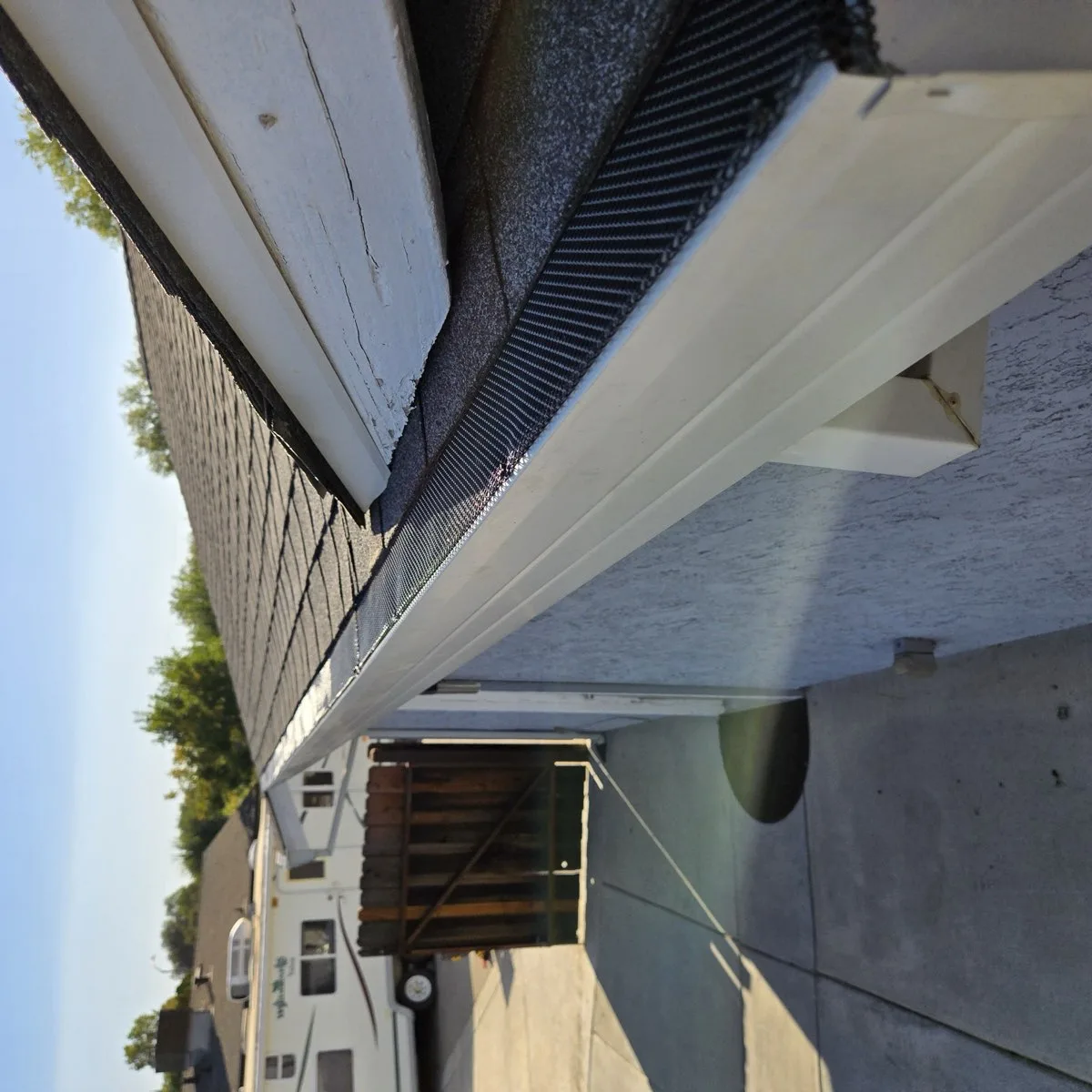

Quick Answer: Class A Fire Rated Gutter Guards Sacramento 2026
Class A fire rated gutter guards for Sacramento homes inside CAL FIRE Fire Hazard Severity Zones come down to three ASTM E2768-documented products in 2026 — FireStorm, Valor, and HomeSafe. All three are stainless steel micro-mesh on aluminum frames with no plastic components, all three meet California Building Code Chapter 7A, and all three qualify under Cal Fire Zone 0 (AB 3074) and Safer from Wildfires insurance discount frameworks. They diverge on mesh aperture (50 to 275 micron), warranty length (15 years to lifetime), and installed price ($9 to $20 per linear foot). FireStorm leads on documentation depth and warranty. Valor leads on installed value. HomeSafe leads on entry-level price.
Table of Contents
- What “Class A Fire Rated” Actually Means
- Why Sacramento WUI Homeowners Need It in 2026
- Side-by-Side Spec Comparison
- FireStorm Gutter Guards Review
- Valor Gutter Guards Review
- HomeSafe Gutter Guards Review
- Mesh Aperture and Sacramento Debris Performance
- Cost vs Coverage Tradeoffs
- Chapter 7A, Zone 0 & ASTM E2768 Alignment
- Verdict by Buyer Profile
- Frequently Asked Questions
If your Sacramento home sits anywhere east of Folsom Lake, in the Auburn corridor, or along the El Dorado County wildland edge, the gutter guard category you actually need to shop in 2026 is not “the best gutter guards” — it is Class A fire rated gutter guards specifically. The CAL FIRE Wildland-Urban Interface map, AB 3074 Zone 0 enforcement, and California insurance carriers operating under Safer from Wildfires have all converged on the same standard: non-combustible construction documented by ASTM E2768. Three products dominate that documented category in the Sacramento market — FireStorm, Valor, and HomeSafe.
We install fire-rated gutter guards on Sacramento foothill homes every week as part of our gutter guard installation service. The questions homeowners ask have shifted hard in the last twelve months. Two years ago, “will it stop pine needles” was the dominant ask. In 2026 it is “does it pass ASTM E2768” and “will my insurance carrier accept the documentation.” The honest answer is that all three products in this comparison can pass both filters — but they price, perform, and warranty differently enough that the right call depends on your specific property, debris load, and budget.
TL;DR: All three products (FireStorm, Valor, HomeSafe) are Class A fire-rated stainless micro-mesh guards that satisfy California Chapter 7A, Cal Fire Zone 0 (AB 3074), and Safer from Wildfires insurance discount documentation. FireStorm wins on warranty depth and ASTM E2768 documentation rigor at $14–$20/lf installed. Valor wins on installed value at $11–$16/lf with comparable mesh and a strong warranty. HomeSafe wins on entry-level fire-rated pricing at $9–$14/lf for budget-constrained foothill homeowners who still need documented Class A. None of these are interchangeable with non-fire-rated stainless mesh products like Raptor or generic LeafFilter knockoffs — the documentation difference is what unlocks the insurance discount and code compliance.
What “Class A Fire Rated” Actually Means
Class A is the highest fire classification given to a roof or roof-edge assembly under ASTM E108 (the standard test method) or UL 790 (the equivalent UL standard). The base Class A roof test runs for 10 minutes of direct flame impingement plus a separate burning brand test. It was developed in the 1950s for residential roof coverings and was the only fire classification gutter guards historically referenced.
ASTM E2768 changed the conversation. After the 2017 Tubbs Fire and the 2018 Camp Fire demonstrated that 10 minutes of flame exposure was nowhere near the real-world ember and direct-flame contact time on WUI structures, the standard was extended. ASTM E2768 is a 30-minute Class A flame spread test specifically calibrated for Wildland-Urban Interface assemblies. A gutter guard that passes ASTM E2768 has been held under flame for three times the duration of the original test without flame spread, sustained underside flaming, or burning brand production.
The reason this matters in gutter guard shopping is that almost every gutter guard sold in California now uses the word “fire” in marketing copy. The actual technical filter that separates legitimate Class A fire rated gutter guards from marketing claims is the test report. A genuine product comes with a published ASTM E2768 (and ASTM E108 / UL 790) test report from a recognized lab — UL, Intertek, or Southwest Research Institute (SwRI). No report, no rating, regardless of what the box says.
The Three Tests That Separate Real From Marketing
- • ASTM E108 / UL 790: Standard Class A roof covering test (10-minute flame, burning brand)
- • ASTM E2768: 30-minute extended Class A test for WUI assemblies
- • SFM 12-7A-1 through 5: California State Fire Marshal listings under Chapter 7A for specific roof, vent, and gutter components
Material composition does most of the work. To pass ASTM E2768, a gutter guard has to be all metal with no polymer fuel load. That means stainless steel micro-mesh, aluminum or stainless frame, and stainless or aluminum hardware. The moment a foam edge, a nylon brush, a plastic snap-in clip, or a PVC reverse-curve element enters the assembly, the polymer ignition point disqualifies the product at the chemistry level — no test pass is possible. This is why our broader foam, brush, and snap-in screen gutter guard analysis is unanimous on the Class A failure point.
Why Sacramento WUI Homeowners Need It in 2026
Three forces are pushing Class A documentation into the gutter guard buying decision for Sacramento foothill homeowners specifically. They are stacking, not competing.
Force one is California Building Code Chapter 7A. Chapter 7A has governed new construction in CAL FIRE-designated FHSZ since 2008, and it requires non-combustible roof and roof-edge components. Folsom east of Empire Ranch Road, El Dorado Hills, the Granite Bay/Loomis Basin band, Auburn, Newcastle, Penryn, Loomis (eastern), Colfax, Grass Valley, and Penn Valley are all predominantly High or Very High FHSZ. Any new build, ADU, reroof, or major remodel in these neighborhoods triggers Chapter 7A material review at permit and final inspection. A non-fire-rated gutter guard will not be signed off.
Force two is Cal Fire Zone 0 under AB 3074. The 5-foot ember-resistant perimeter rule is now in 2026 phased enforcement for existing homes, not just new builds. Our complete walkthrough at Cal Fire Zone 0 gutter compliance Sacramento covers the timeline by parcel, but the gutter line of the rule is simple — any gutter guard within 5 feet of the structure must be non-combustible. Existing FHSZ homes have 2026–2027 to comply. Pulling a Class A fire rated product on the front end is the cleanest way to satisfy both the new-construction Chapter 7A standard and the retrofit Zone 0 standard with a single product decision.
Force three is California insurance. The Safer from Wildfires framework adopted by the California Department of Insurance and applied by admitted carriers and the FAIR Plan now references ASTM E2768 documentation directly in mitigation discount qualification. Carriers want a product spec sheet, an installer invoice, and the test report PDF. A 5 to 20 percent discount on the wildfire portion of the homeowner premium is real money — on a foothill home with a $4,000 to $8,000 annual premium, that lands at $200 to $1,600 a year. Stacked over a 10-year hold, the discount alone often pays for the gutter guard upgrade. Our gutter guard insurance discount California 2026 guide walks the documentation packet end to end.
Sacramento WUI Compliance Stack — Why Class A Documentation Matters
Three regulatory frameworks converge on the same gutter guard standard for FHSZ parcels.
Pro Tip: Pull Your FHSZ Designation First
Before you get quotes on any of these three products, pull your parcel from the CAL FIRE Fire Hazard Severity Zone Viewer at osfm.fire.ca.gov. If your parcel is non-FHSZ, the Class A premium is harder to justify on a pure cost basis — a non-fire-rated stainless micro-mesh product will likely outperform on debris cost-per-foot. If your parcel is High or Very High FHSZ, the Class A documentation is the entire point of the upgrade and the insurance math reverses the comparison. We start every Sacramento foothill estimate with the FHSZ pull because it changes the product recommendation.
Side-by-Side Spec Comparison
Here is the head-to-head spec table for the three Class A fire rated gutter guards we install most often in Sacramento WUI neighborhoods. Pricing reflects 2026 Sacramento metro installed cost on a typical 1,800 to 2,200 square foot single-story home with standard one-story access.
| Spec | FireStorm | Valor | HomeSafe |
|---|---|---|---|
| Mesh material | Stainless 304 micro-mesh | Stainless 304 micro-mesh | Stainless 304 micro-mesh |
| Frame material | Powder-coated aluminum | Powder-coated aluminum | Aluminum |
| Mesh aperture | ~50 micron | ~150 micron | ~275 micron |
| ASTM E108 / UL 790 | Class A documented | Class A documented | Class A documented |
| ASTM E2768 (30-min WUI) | Yes — published | Yes — published | Yes — published |
| Chapter 7A compliant | Yes | Yes | Yes |
| Cal Fire Zone 0 compliant | Yes | Yes | Yes |
| Warranty | Lifetime + transferable | 40 years, transferable | 15–25 years |
| Installed cost / lf | $14–$20 | $11–$16 | $9–$14 |
| Typical 200 lf install | $2,800–$4,000 | $2,200–$3,200 | $1,800–$2,800 |
| Pine needle filtration | Excellent (50µ) | Strong (150µ) | Good (275µ) |
| High-flow capacity | Adequate (slow drain) | Strong | Excellent |
The pattern in the table is the central tradeoff in fire-rated micro-mesh: tighter aperture catches more debris (especially conifer needles and pollen) but slows drain rate during atmospheric river volume. Wider aperture sheds water faster but lets finer organic particles through. All three products are non-combustible — the mesh aperture is a debris and rainfall question, not a fire question.
Mesh Aperture Comparison — What Each Product Filters Out
Smaller aperture (lower micron) blocks more debris; larger aperture handles higher rainfall volume.
FireStorm Gutter Guards Review
FireStorm sits at the top of the documentation stack. Mesh aperture is roughly 50 micron — the tightest of the three — on a powder-coated aluminum frame with stainless hardware. The published test packet includes ASTM E108, UL 790, ASTM E2768, and a California State Fire Marshal listing under the SFM 12-7A series for Chapter 7A compliance. The lifetime transferable warranty is the strongest in the category and survives ownership change, which matters in foothill resale where the gutter guard documentation packet now travels with the disclosure.
In Sacramento foothill installs, FireStorm performs best on properties with heavy conifer canopy — ponderosa pine, gray pine, incense cedar — where the 50-micron mesh blocks even fine pollen and small embers. Auburn, Newcastle, and Colfax are the neighborhoods where we install FireStorm most. The tradeoff shows up in atmospheric river events: the tighter mesh slows the drain rate compared to wider-aperture products. Properly installed with adequate slope and oversized downspout sizing, the issue is manageable, but on undersized 5-inch K-style runs serving 1,200+ square feet of roof catchment, FireStorm can struggle in 1.5+ inch/hour rainfall events.
The price reflects the documentation, warranty, and aperture. $14 to $20 per linear foot installed in Sacramento puts a 200-foot install at $2,800 to $4,000. For a typical High FHSZ home with $4,500 annual insurance carrying a 15 percent Safer from Wildfires discount, recovery on the upgrade lands at roughly four years. The lifetime warranty effectively zeroes out replacement risk over the home's life.
FireStorm Pros & Cons
Pros
- • Tightest mesh aperture (50 micron) blocks pine pollen and embers
- • Lifetime, transferable warranty
- • Full ASTM E108 / UL 790 / E2768 / SFM 12-7A documentation
- • Strongest performance in heavy conifer FHSZ neighborhoods
- • Insurance carriers accept the documentation packet without follow-up
Cons
- • Highest installed cost in the category
- • Slower drain rate in atmospheric river events
- • Requires adequate downspout sizing on heavy roof catchment
- • Premium price harder to justify on non-FHSZ parcels
Valor Gutter Guards Review
Valor is the value pivot in the Class A category. Mesh aperture sits at roughly 150 micron — three times wider than FireStorm but still well below the threshold for ash, fine debris, and most pollen. The frame is powder-coated aluminum, hardware is stainless. Documentation includes ASTM E108, UL 790, and ASTM E2768. The 40-year transferable warranty is shorter than FireStorm's lifetime spec but still longer than most consumers will own the home.
In Sacramento foothill installs, Valor is the product we recommend most often for mixed-canopy properties — oak, eucalyptus, and pine in roughly equal proportion. El Dorado Hills, Granite Bay, and the Folsom east-of-Empire-Ranch corridor sit squarely in this profile. The 150-micron aperture handles the dominant Sacramento foothill debris stack — valley oak acorns, oak leaf litter, eucalyptus bark ribbons, gum nut capsules, and a moderate pine load — while keeping drain rate strong enough to handle 2-inch/hour atmospheric river events without backup on properly sized downspouts.
Pricing at $11 to $16 per linear foot installed puts a 200-foot install at $2,200 to $3,200, roughly 25 to 30 percent below FireStorm at the same installation quality. The 40-year warranty and full ASTM E2768 documentation are the same Class A compliance class — the difference is mesh aperture and warranty tail length, not fire rating.
Valor Pros & Cons
Pros
- • Best installed value in the Class A category
- • Balanced 150-micron aperture handles Sacramento foothill debris stack
- • Strong drain rate in atmospheric river volume
- • 40-year transferable warranty
- • Full ASTM E2768 documentation accepted by California carriers
Cons
- • Wider aperture lets fine pollen through
- • Warranty shorter than FireStorm lifetime spec
- • Slightly fewer authorized installers than FireStorm in metro Sacramento
- • Less effective on pure conifer canopy than 50-micron mesh
HomeSafe Gutter Guards Review
HomeSafe is the entry-level Class A product. Mesh aperture sits at roughly 275 micron, frame is aluminum, hardware is stainless. Documentation includes ASTM E108 / UL 790 and ASTM E2768, which is the line that keeps HomeSafe inside the Class A category. Warranty runs 15 to 25 years depending on the specific HomeSafe product line and installer authorization.
In Sacramento foothill installs, HomeSafe is the right call for budget-constrained homeowners on lighter-canopy lots — mostly oak debris with limited pine exposure — who still need documented Class A for Cal Fire Zone 0 retrofit or insurance discount. The 275-micron aperture handles oak leaves, acorns, and most twig debris cleanly, sheds water at the highest rate of the three products in the comparison, and keeps the per-foot cost competitive with non-fire-rated stainless mesh products.
Pricing at $9 to $14 per linear foot installed puts a 200-foot install at $1,800 to $2,800. The tradeoff against FireStorm and Valor is mesh fineness and warranty tail. For a foothill homeowner planning to hold the property less than 10 years and primarily motivated by Zone 0 compliance plus the Safer from Wildfires discount — not maximum debris filtration — HomeSafe often delivers the best total cost of ownership.
HomeSafe Pros & Cons
Pros
- • Lowest entry price in Class A category
- • Highest drain rate of the three products
- • Full ASTM E2768 and Chapter 7A documentation
- • Strong fit for oak-dominant foothill lots
- • Fast install on standard K-style 5-inch and 6-inch runs
Cons
- • Wider mesh lets pollen and fine ash through
- • Shorter warranty than FireStorm or Valor
- • Less effective in heavy conifer FHSZ neighborhoods
- • Some product lines not transferable on resale
Need a Class A install with documentation packet?
We install FireStorm, Valor, and HomeSafe across the Sacramento foothills and hand off a complete documentation packet — ASTM E2768 test report, manufacturer spec sheet, installer invoice, and FHSZ designation printout — for your insurer or fire district inspector. Free Zone 0 perimeter walk included.
Request a Class A gutter guard quote →Mesh Aperture and Sacramento Debris Performance
The mesh aperture difference between FireStorm (50µ), Valor (150µ), and HomeSafe (275µ) is roughly five-fold, but the practical performance difference depends heavily on the dominant debris type on the specific property. Sacramento foothill debris falls into four categories that each interact differently with these mesh sizes.
- • Conifer needles (gray pine, ponderosa pine, incense cedar, redwood): Roughly 400 to 800 micron diameter at the base. All three products block whole needles. Where they diverge is on broken needle fragments and pollen. FireStorm wins decisively. Read more in our best gutter guards for pine needles Sacramento guide.
- • Oak debris (valley oak, blue oak, interior live oak, coast live oak): Acorns 10–30 mm, leaves 50–150 mm, twigs variable. All three products handle oak debris equivalently. The oak debris gutter solutions guide covers the cleaning frequency math.
- • Eucalyptus debris (blue gum, red gum): Bark ribbons up to 1.5 m long, sickle leaves, gum nut capsules 5–15 mm. All three products block whole bark and capsules. Fine eucalyptus oil residue passes all three meshes regardless of aperture. See our eucalyptus gutter problems Sacramento breakdown.
- • Wildfire ash and ember debris: 50–500 micron particle distribution. FireStorm blocks the upper 80% of the ash distribution; Valor blocks 60%; HomeSafe blocks 40%. None blocks 100%. Post-event cleanup procedure covered in post-wildfire gutter cleanup Sacramento.
The right mesh aperture is property-specific. A pine-canopy Auburn lot favors FireStorm. A mixed-canopy El Dorado Hills lot favors Valor. An oak-dominant Granite Bay lot favors HomeSafe. The fire rating is constant across all three — the debris fit is the variable.
Cost vs Coverage Tradeoffs
Pure installed cost is one variable. Total cost of ownership over a 10-year hold is a different calculation, and it usually flips the FireStorm price premium into a defensible ROI when the warranty tail and insurance discount are folded in.
Cost vs. Filtration Performance — Sacramento Foothill Install
Each product's installed cost plotted against debris filtration score (10 = blocks everything except ultra-fine pollen).
Layering the insurance discount into the comparison: a $4,500 annual foothill premium with a 15 percent Safer from Wildfires discount returns $675 per year. Over 10 years that is $6,750, which exceeds the FireStorm price premium over HomeSafe by roughly 3x. The discount alone does not pick the winner because all three products trigger it, but the dollar size demonstrates why optimizing on per-foot install price alone misses the bigger lever.
For a deeper Sacramento-specific cost workup including labor, story count, and access factors, our gutter guard cost per linear foot Sacramento guide breaks the bid line by line, and the gutter guard ROI calculator Sacramento models payback against cleaning frequency saved.
Chapter 7A, Zone 0 & ASTM E2768 Alignment
All three products satisfy all three California regulatory frameworks — Chapter 7A (new construction), Zone 0 / AB 3074 (existing home retrofit), and Safer from Wildfires (insurance discount). The differences are documentation depth, listing path, and how easily the paperwork moves through a carrier review.
| Framework | FireStorm | Valor | HomeSafe |
|---|---|---|---|
| CBC Chapter 7A | Compliant + SFM 12-7A listing | Compliant | Compliant |
| AB 3074 / Zone 0 | Compliant (non-combustible) | Compliant | Compliant |
| ASTM E108 / UL 790 | Class A passed | Class A passed | Class A passed |
| ASTM E2768 (30-min) | Passed, full report | Passed, full report | Passed, full report |
| Safer from Wildfires | Carrier-accepted | Carrier-accepted | Carrier-accepted |
| FAIR Plan documentation | Direct submission accepted | Direct submission accepted | Direct submission accepted |
CAL FIRE WUI maps and the California State Fire Marshal Chapter 7A material listings are the source-of-truth references that local building departments and insurance underwriters check. FireStorm carries the explicit SFM 12-7A series listing, which is the cleanest single reference for permit review on new construction in an FHSZ. Valor and HomeSafe satisfy Chapter 7A through the underlying ASTM E2768 documentation, which is the same compliance pathway but adds one more document to the submission packet.
For homeowners assembling the Zone 0 documentation packet covered in our Cal Fire Zone 0 gutter compliance Sacramento walkthrough, all three products fill the gutter line item identically. Your installer should hand you the manufacturer spec sheet, the ASTM E2768 test report PDF, the installer invoice with C-43 license and bond information per our licensed and bonded gutter contractor Sacramento CSLB C-43 guide, and a written gutter cleaning schedule covering the next 12 months.
Warranty Tail by Product (Years)
Transferability noted. Lifetime warranties capped at 50 years for chart scaling.
Verdict by Buyer Profile
All three products are Class A fire-rated, ASTM E2768-documented, Chapter 7A-compliant, and Zone 0-qualified. The right pick is property-driven, not brand-driven. Here is how we route Sacramento-area homeowners on the install desk.
Heavy conifer canopy + Very High FHSZ + long hold
Auburn, Newcastle, Colfax, Grass Valley, Penn Valley, upper El Dorado County. Pine pollen, fine ash, and lifetime ownership horizon make the FireStorm 50-micron mesh and lifetime transferable warranty the right call.
Pick: FireStorm
Mixed canopy + High FHSZ + 10-20 year hold
Folsom east of Empire Ranch, El Dorado Hills, Granite Bay, Loomis Basin, Cameron Park. Oak/eucalyptus/pine debris in roughly equal mix, atmospheric river drain capacity matters, 40-year warranty horizon is sufficient.
Pick: Valor
Oak-dominant lot + High FHSZ + budget-constrained
Sloughhouse, Rancho Murieta, Wilton, lower Granite Bay, Fair Oaks edge, Carmichael edge. Oak debris dominates, conifer load is light, primary motivation is Zone 0 retrofit and Safer from Wildfires discount qualification.
Pick: HomeSafe
Non-FHSZ Sacramento Valley
Land Park, Curtis Park, East Sac, Pocket-Greenhaven, Natomas, downtown. Class A documentation premium is harder to justify because Chapter 7A and Zone 0 do not apply. Most homeowners are better served by the products in our best gutter guard brands comparison Sacramento.
Pick: Standard stainless micro-mesh (Raptor, Gutterglove Pro non-fire-rated, etc.)
Pro Tip: Sequence the Install With a Reroof or Defensible Space Sweep
The single cheapest moment to install Class A fire rated gutter guards is during a planned reroof. Trades are already on the roof, scaffolding access is staged, the drip edge can be flashed correctly under the gutter line, and the entire roof-edge ember assembly gets signed off in a single inspection. The second-cheapest moment is during a CAL FIRE or fire district defensible space sweep year, when neighbors are already pricing the same upgrade and installer routes are dense in your zip code. Sacramento foothill homeowners with a reroof on the calendar inside the next 18 months should bundle the gutter guard upgrade into the same project window.
Frequently Asked Questions
What is a Class A fire rated gutter guard?
A Class A fire rated gutter guard is a gutter cover that has been tested under ASTM E108 or UL 790 (the standard roof covering fire test) and ASTM E2768 (the 30-minute extended Class A flame spread test) and earned the highest fire classification available for an exterior assembly. In gutter guard terms, that means the product resists flame spread, ember ignition, and burn-through for the duration of the test cycle without contributing fuel back to the assembly. Almost all true Class A gutter guards are stainless steel micro-mesh on aluminum or stainless frames with no plastic, foam, or nylon components. Plastic snap-in screens, foam inserts, and nylon brushes never qualify as Class A regardless of marketing claims, because the polymer fuel load disqualifies them at the material level.
Are FireStorm gutter guards worth it?
FireStorm gutter guards are worth the premium for Sacramento foothill and Wildland-Urban Interface homes inside CAL FIRE High and Very High Fire Hazard Severity Zones, where the ASTM E2768 documentation directly supports California Building Code Chapter 7A compliance, AB 3074 Zone 0 enforcement, and Safer from Wildfires insurance discounts. For Sacramento Valley homes outside an FHSZ, the value is narrower because most non-fire-rated stainless micro-mesh products handle Sacramento debris loads at a lower price. The decision pivots on FHSZ designation. Pull your parcel from the CAL FIRE FHSZ Viewer first, then compare. Most Folsom, El Dorado Hills, Auburn, and Granite Bay homeowners get measurable insurance savings on top of the fire protection, which closes the cost gap inside three to five renewal cycles.
Which gutter guards meet California Chapter 7A?
California Building Code Chapter 7A governs Wildland-Urban Interface construction and requires roof and roof-edge assemblies to use ignition-resistant materials. For gutter guards specifically, Chapter 7A requires non-combustible construction at the gutter assembly level, which means all-metal products. The three product families that consistently meet or exceed the standard are stainless steel micro-mesh on aluminum frames (FireStorm, Valor, HomeSafe, Gutterglove Pro), all-aluminum reverse-curve covers (Gutter Helmet, LeafGuard with verified all-metal hardware), and stainless steel expanded-metal covers used on commercial roofs. Plastic snap-in screens, foam inserts, nylon brushes, and PVC reverse-curve covers do not meet Chapter 7A and are not allowed on new construction in an FHSZ. Existing homes are governed by Cal Fire Zone 0 under AB 3074, with phased compliance running through 2026 and 2027.
What is ASTM E2768?
ASTM E2768 is the 30-minute extended duration Class A flame spread test for roof coverings, developed specifically to address Wildland-Urban Interface ember exposure scenarios where the original 10-minute Class A roof test was insufficient. A product passes ASTM E2768 when it sustains direct flame impingement for the full 30-minute test cycle without flame spread beyond the test boundary, without sustained flaming on the underside, and without producing flaming brand particles that could ignite secondary fuels. ASTM E2768 became the de facto specification for serious WUI gutter guards after the 2017 to 2020 California wildfire seasons, and California insurance carriers under the Safer from Wildfires framework now reference it directly in mitigation discount qualification documentation. Chapter 7A and Cal Fire Zone 0 do not require ASTM E2768 by name, but products that pass it satisfy both regulations and most carrier discount programs simultaneously.
How much do Class A fire rated gutter guards cost in Sacramento?
Class A fire rated gutter guards in Sacramento run $9 to $20 per linear foot installed depending on product, story count, and roof complexity. FireStorm typically prices at $14 to $20 per linear foot installed, Valor at $11 to $16, and HomeSafe at $9 to $14. A typical 2,000 square foot single-story Sacramento home carries 180 to 220 linear feet of gutter, which puts a complete fire-rated install in the $1,800 to $4,400 range for most foothill homeowners. Two-story homes add roughly 25 to 35 percent for ladder access. Stack the upgrade with the California Safer from Wildfires insurance discount (5 to 20 percent of the wildfire portion of the premium) and any active county home hardening grant, and net cost recovery typically lands inside three to seven years.
Are FireStorm and Valor really fire rated, or is that marketing?
Real Class A fire ratings come with documentation. A genuine fire-rated gutter guard has a published test report referencing ASTM E108 (or UL 790) for the standard Class A roof test, and ASTM E2768 for the extended 30-minute WUI test. The report names the testing laboratory (typically UL, Intertek, or SwRI), lists the specific product configuration tested, and is dated. FireStorm, Valor, and HomeSafe all publish ASTM E2768 documentation on their manufacturer sites or through authorized installers. Marketing claims like “fire resistant,” “fire safe,” or “fights embers” without an ASTM number behind them are not equivalent and do not satisfy California Chapter 7A, Cal Fire Zone 0, or Safer from Wildfires discount qualification. Always request the test report PDF before purchase if the product is positioned as fire-rated.
Get Class A Fire-Rated Gutter Guards Installed in Sacramento
We install FireStorm, Valor, and HomeSafe across the Sacramento foothills and WUI zones, deliver a complete documentation packet for your insurer and fire district, and walk the Cal Fire Zone 0 perimeter with you before any quote is written. Free estimates, written FHSZ assessment, no obligation.
Free estimates • Class A documentation packet included • Serving Sacramento, Folsom, El Dorado Hills, Auburn, Granite Bay & the foothills
Related Articles
Cal Fire Zone 0 Gutter Compliance
The 5-foot ember-resistant rule under AB 3074 and what it means for Sacramento gutters.
Gutter Guards & Wildfire Protection
The full Sacramento home hardening playbook for foothill ember exposure.
CA Wildfire Hardening Rebates
Stack Safer from Wildfires, FAIR Plan discounts, and county grants.
Gutter Guard Insurance Discounts
How to document the discount with your California carrier in 2026.
Mesh Gutter Guards Sacramento
Stainless vs aluminum micro-mesh for fire-rated installs.
Best Gutter Guards for Pine Needles
Why fine-aperture mesh matters most in Sacramento foothill FHSZ neighborhoods.