Quick Answer: Cal Fire Zone 0 Gutters Sacramento 2026
Cal Fire Zone 0 is the 5-foot ember-resistant perimeter around your home created by AB 3074 and codified into Public Resources Code § 4291 and Title 14 CCR § 1299. For Sacramento-area gutters, compliance comes down to two things: the gutter trough must stay clear of combustible debris within that perimeter, and any gutter cover, screen, or guard must be non-combustible (stainless or aluminum micro-mesh). New construction in High and Very High Fire Hazard Severity Zones is enforced now. Existing homes in foothill Sacramento, Placer, and El Dorado County zones are inside the 2026–2027 phased compliance window.
Table of Contents
If your Sacramento home sits anywhere east of Folsom Lake, in the foothills around Auburn, or in the El Dorado County wildland edge, the Cal Fire Zone 0 gutters Sacramento rule is the most consequential code change you will deal with in 2026. AB 3074 finally has teeth, the 5-foot ember-resistant zone is now an enforceable standard, and your gutters — both the trough and any cover product on top of them — sit squarely inside the perimeter the law cares about most.
We install gutters and non-combustible gutter guards across the Sacramento metro and the foothill counties every week. In the last twelve months the share of homeowners citing Zone 0 or AB 3074 specifically when they call has gone from near zero to roughly one in three. That signal is real. CAL FIRE inspectors, fire districts, and especially insurance carriers are all leaning on the same standard, and the gutter line is one of the easiest line items to flag during a defensible space inspection.
TL;DR: Cal Fire Zone 0 is the new 5-foot ember-resistant perimeter created by AB 3074 (2020) and adopted by the California Board of Forestry and Fire Protection in 2024. It amends PRC § 4291 and 14 CCR § 1299. Gutters within the perimeter must be kept clear of combustible debris, and any gutter cover or guard must be non-combustible (metal). New construction in CAL FIRE FHSZ is enforced now; existing homes phase in through 2026–2027. Sacramento-area foothill homeowners should plan on a non-combustible micro-mesh upgrade, a documented annual cleaning schedule, and a written record retained for insurance and inspection.
What Is Cal Fire Zone 0?
Zone 0 is the new innermost defensible space tier in California. Before AB 3074, defensible space law (PRC § 4291) required two zones around a structure in a Fire Hazard Severity Zone. Zone 1 covered 0–30 feet and Zone 2 covered 30–100 feet. AB 3074 added Zone 0 as the most restrictive ring — the 0 to 5-foot perimeter immediately surrounding the structure.
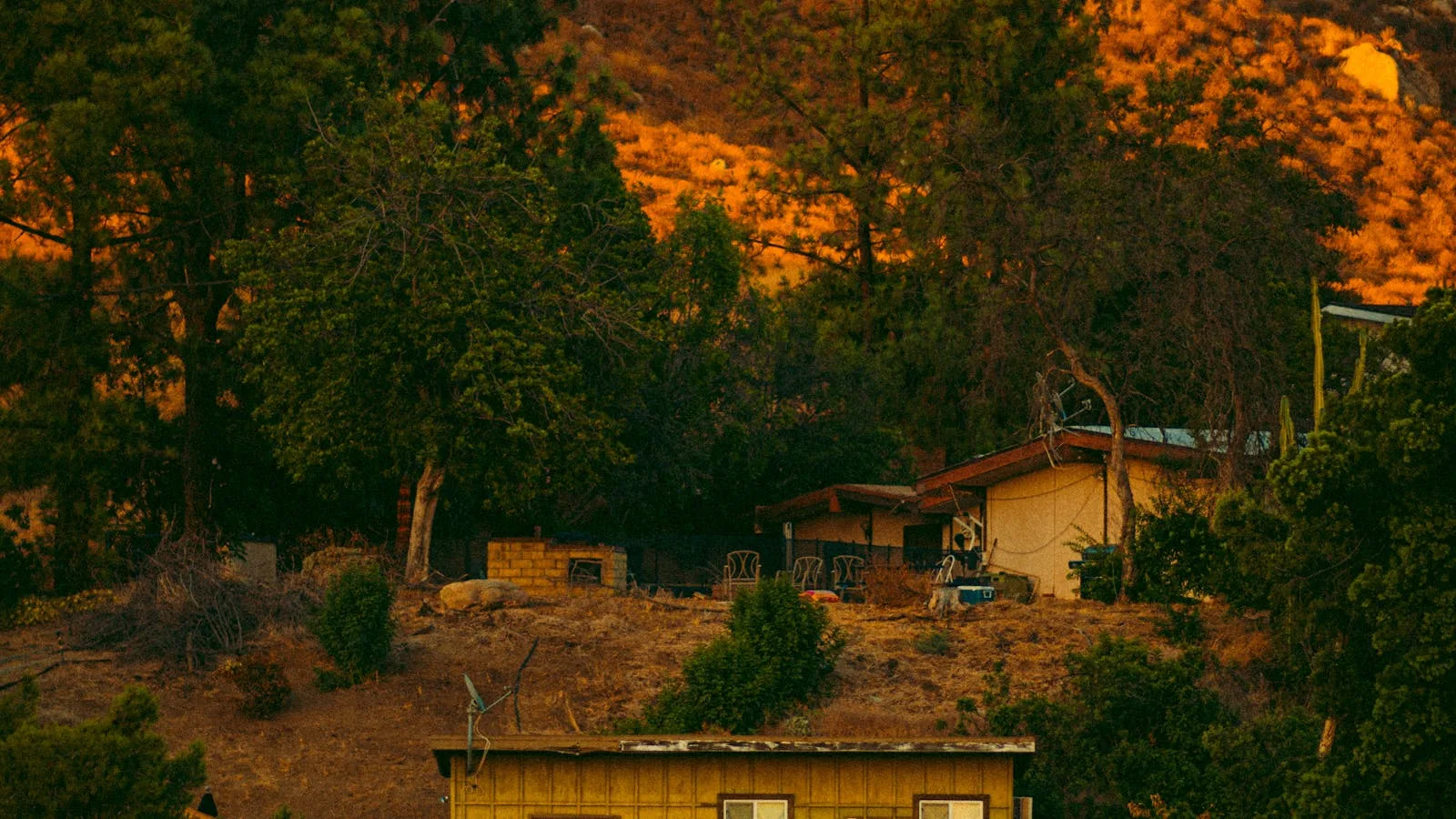
The Zone 0 standard is built around a single physical fact established by the Insurance Institute for Business & Home Safety (IBHS) and CAL FIRE post-fire investigations: the 5 feet closest to a structure is where wind-blown embers most often find ignition fuel that then climbs onto the building itself. Gutters, decks, mulch beds, fence segments attached to the home, stored firewood, and combustible siding accents in that band are repeatedly identified as primary structure-loss pathways.
Inside Zone 0, the rule prohibits combustible mulch, dry vegetation, dead plant material, stored combustibles, and any unattached combustible accumulation. It also restricts the materials used for any structure or assembly inside the perimeter. Applied to a roofline, the rule reaches the gutter trough (because the trough overhangs and drains into Zone 0) and any product mounted to the gutter or roof edge.
The Three Defensible Space Zones (Post AB 3074)
- • Zone 0 (0–5 ft): Ember-resistant. No combustibles, non-combustible materials only.
- • Zone 1 (5–30 ft): Lean, clean, and green. Vegetation managed and irrigated.
- • Zone 2 (30–100 ft): Reduced fuel. Spacing between trees and shrubs, ladder fuels removed.
AB 3074 Timeline & Statutory Path
AB 3074 was authored by Assemblymember Laura Friedman and signed by Governor Gavin Newsom in September 2020. The bill amended Public Resources Code § 4291 and directed the California Board of Forestry and Fire Protection to adopt implementing regulations under Title 14 of the California Code of Regulations § 1299. The regulatory adoption process took longer than originally projected because of stakeholder negotiation around mulch, fence, and landscaping provisions.
Here is the simplified statutory and regulatory timeline that Sacramento-area homeowners are working from in 2026:
| Year | Milestone | What Changes for Homeowners |
|---|---|---|
| 2020 | AB 3074 signed | Statutory authority for Zone 0 created; no immediate enforcement |
| 2022–23 | Board of Forestry rulemaking | Public comment, draft regulation, stakeholder negotiation |
| 2024 | 14 CCR § 1299 adopted | Zone 0 standard formally codified |
| 2025 | New construction in FHSZ | Zone 0 required at certificate of occupancy |
| 2026 | Phase 1 existing-home compliance | Very High FHSZ homes under enforcement |
| 2027 | Phase 2 existing-home compliance | High FHSZ homes added to enforcement |
Two pieces of the timeline are worth flagging. First, the regulation does not require homeowners to receive a personal notice before enforcement begins — the deadline is automatic by zone designation. Second, individual jurisdictions can move faster. Sacramento Metro Fire, Folsom Fire, and the El Dorado County Fire Protection District have all signaled a 2026 enforcement posture for both High and Very High zones, which compresses the runway for Phase 2 homeowners in those service areas.
How Zone 0 Applies to Gutters
Three gutter-specific compliance points come out of the Zone 0 rule. They sound simple, but the second and third are where most Sacramento homeowners trip.
- Material of the gutter assembly itself. The trough must be non-combustible. Aluminum, steel, copper, and zinc all qualify. Plastic and vinyl gutters do not.
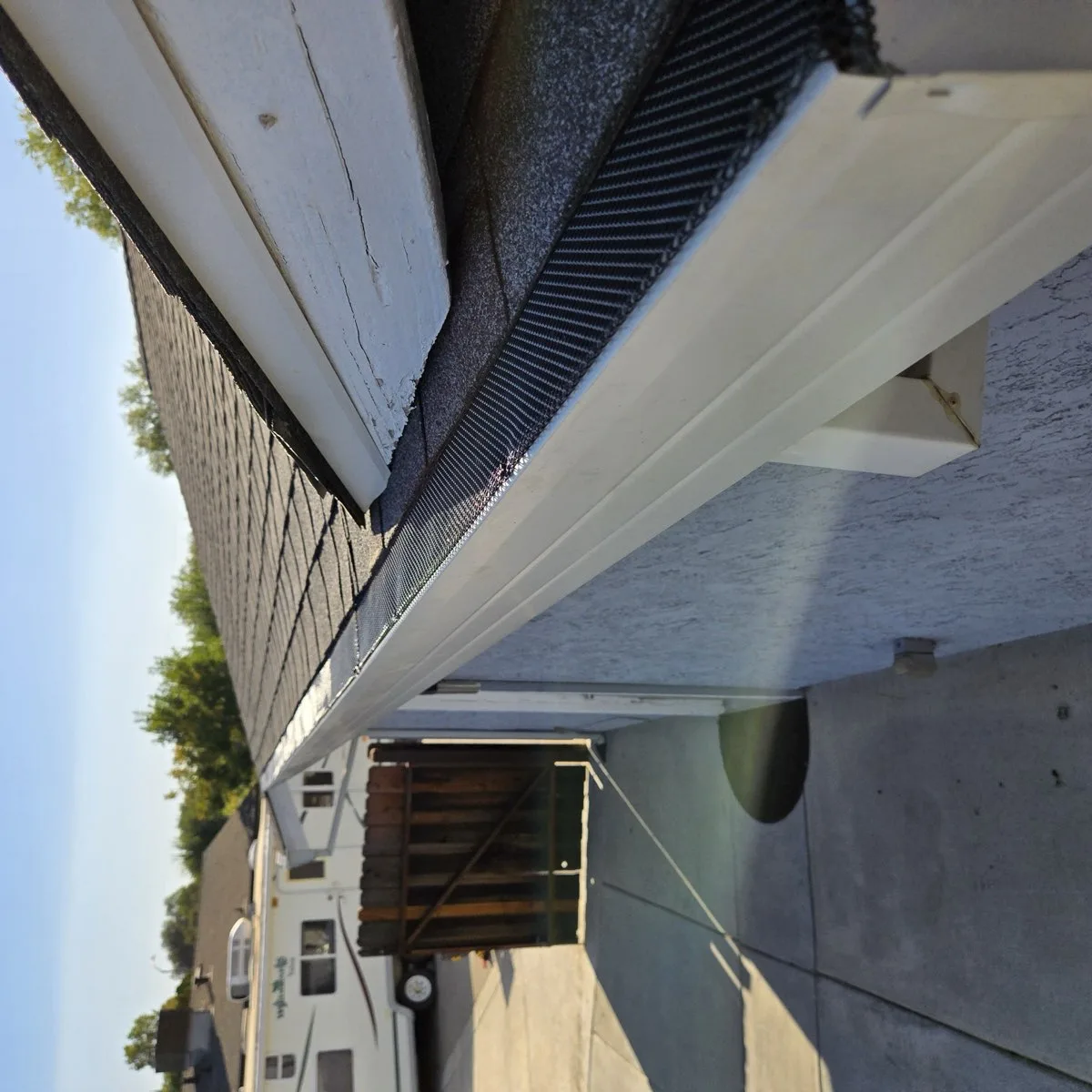
- Material of any cover, screen, or guard. If a gutter cover is installed, it must be non-combustible. Stainless steel and aluminum micro-mesh both qualify. Foam, nylon brush, plastic snap-in screens, and PVC reverse-curve products do not. This is the most common material upgrade we are running on Sacramento-area Phase 1 homes in 2026.
- Combustible debris inside the trough. A clean aluminum gutter is compliant. The same gutter packed with dry oak leaves, conifer needles, or palm fronds is a Zone 0 violation regardless of what the trough is made of, because dry organic accumulation in the 5-foot perimeter is exactly what the rule prohibits. This is why a documented annual cleaning schedule has become part of compliance, not just maintenance.
Our deeper coverage of gutter guards and wildfire protection in Sacramento walks through the IBHS post-fire imagery that drove the regulation, and our breakdown of the California wildfire home hardening rebates that cover gutter guards is the other half of the financial picture — you can stack rebates against the same upgrade you are required to do.
Pro Tip: The Drip Edge Gap Counts
On older Sacramento foothill homes, the gap between the back of the gutter and the drip edge is wide enough to admit embers and dry needles into the under-shingle area. Even with a non-combustible micro-mesh guard installed, that gap can fail an inspection if it is not closed. We add a roof-edge flashing detail or apron retrofit on most Zone 0 jobs precisely because the gutter line is only as ember-resistant as its weakest joint.
Sacramento Neighborhoods Inside the Rule
Zone 0 only applies inside CAL FIRE-designated Fire Hazard Severity Zones. The bulk of urban Sacramento — downtown, Land Park, Curtis Park, East Sacramento, Pocket-Greenhaven — is not inside an FHSZ and is not directly subject to Zone 0 enforcement. The rule starts to bite at the foothill edge and at the Wildland-Urban Interface.
Here is the practical Sacramento metro map for 2026, based on the most recent CAL FIRE FHSZ designations and local responsibility area updates:
- • Eastern Sacramento County: Sloughhouse, Rancho Murieta, parts of Wilton, and the Folsom Lake watershed edge fall inside FHSZ designations. The fall gutter maintenance checklist is the right starting point for homeowners here.
- • Folsom & El Dorado Hills: Most of the Folsom city limits east of Empire Ranch Road, and the entire EDH unincorporated band, are in High or Very High FHSZ. These are Phase 1 enforcement neighborhoods.
- • Placer County foothills: Auburn, Newcastle, Penryn, Loomis (eastern), and Colfax are predominantly Very High FHSZ. The Auburn gutter cleaning guide covers debris loads driven by oak and pine canopy that directly affect Zone 0 compliance.
- • Granite Bay & Loomis Basin: Heavy oak canopy and proximity to the American River drainage push much of this area into FHSZ. Roof-edge debris loads here are among the highest in the metro.
- • Nevada County entry corridor: Grass Valley, Penn Valley, and the Highway 174 corridor between Colfax and Grass Valley are uniformly Very High FHSZ. Our Grass Valley gutter cleaning guide details the seasonal debris pattern.
- • Sierra foothill freeze-thaw band: Above 1,500 ft elevation the freeze-thaw cycle interacts with debris and ice loading; our freeze-thaw gutter damage breakdown covers why guard material choice matters even more above the snow line.
If you do not know your current FHSZ designation, the CAL FIRE Fire Hazard Severity Zone Viewer at osfm.fire.ca.gov is the authoritative source. Search by parcel address, and the map returns the zone classification (Moderate, High, Very High, or Non-FHSZ) and identifies whether the parcel is in State Responsibility Area or Local Responsibility Area, which determines the inspecting agency.
Not sure which zone your home falls into?
We pull the CAL FIRE FHSZ designation, walk the perimeter, and give you a written Zone 0 compliance assessment for your gutters and roof edge before any work is quoted. No charge, no obligation.
Request a Zone 0 gutter assessment →Qualifying Gutter & Guard Materials
The materials standard under Zone 0 lines up tightly with California Building Code Chapter 7A, which has governed Wildland-Urban Interface construction since 2008. If a product is acceptable under Chapter 7A for an FHSZ new build, it is acceptable for Zone 0 retrofit. The two regulations are compatible by design — one for new construction, one for the perimeter around any existing structure.
| Component | Material | Zone 0 Compliant? |
|---|---|---|
| Gutter trough | Aluminum (most common) | Yes — non-combustible |
| Gutter trough | Galvanized or stainless steel | Yes — non-combustible |
| Gutter trough | Copper or zinc | Yes — non-combustible |
| Gutter trough | Vinyl or plastic | No — combustible, replace |
| Gutter guard | Stainless micro-mesh | Yes — preferred |
| Gutter guard | Aluminum micro-mesh | Yes |
| Gutter guard | Aluminum reverse-curve | Yes — verify all-metal construction |
| Gutter guard | Plastic snap-in screen | No — combustible |
| Gutter guard | Foam or nylon brush insert | No — combustible |
| Gutter guard | PVC reverse-curve | No — combustible |
For a deeper material comparison, our Sacramento gutter guard materials guide walks through aluminum, stainless, and reverse-curve options with longevity and cost data, and the mesh gutter guards Sacramento breakdown covers stainless versus aluminum micro-mesh specifically — the two products that dominate the Zone 0-compliant category.
One material nuance that catches homeowners: an aluminum reverse-curve guard with a plastic insert or plastic clip set is not fully non-combustible. Some hybrid products use plastic only at fastening points, which may or may not pass an inspector’s scrutiny depending on the volume of plastic exposed. The safest call is all-metal construction with stainless or aluminum hardware — no plastic clips, no foam edge, no nylon trim.
Zone 0 Gutter Compliance Checklist
Print this and walk it. The seven items below are what we use on Sacramento-area site assessments and what we hand off to homeowners as a documentation packet for their insurer or fire district inspector.
Seven-Point Zone 0 Gutter Compliance Walk
- FHSZ designation confirmed. Pull the parcel from the CAL FIRE FHSZ Viewer; record the zone (High, Very High, or non-FHSZ) and the responsibility area.
- Gutter trough material. Confirm aluminum, steel, copper, or zinc on every elevation. Flag any vinyl or plastic sections for replacement.
- Gutter guard material. If installed, confirm all-metal construction. Flag any foam, nylon brush, plastic screen, or hybrid plastic-clip product for upgrade.
- Trough debris. Inspect every gutter run; trough must be free of dry leaves, needles, and combustible accumulation. Photograph cleared condition.
- Drip edge gap. Verify roof-edge flashing closes the gap between roof deck and gutter back; ember-tight closure is required at the assembly level.
- Downspout discharge zone. Confirm the 5-foot perimeter at each downspout is non-combustible (gravel, decomposed granite, hardscape) and clear of combustible mulch or stored items.
- Documentation packet. Date-stamped photos of each elevation, installer invoice with product spec sheet, written cleaning record, and FHSZ designation printout. Retain digitally.
Two of the seven items — trough debris and the documentation packet — are not one-time work. Trough debris must stay clear, which is why we recommend pairing the non-combustible guard install with a documented annual professional cleaning. The documentation packet renews at every insurance renewal cycle and at any inspection trigger.
Enforcement, Inspections & Penalties
Enforcement of Zone 0 in 2026 is splitting into three lanes, and Sacramento-area homeowners should expect to encounter at least one of them.
Lane one is CAL FIRE and local fire district inspections. In State Responsibility Area parcels, CAL FIRE conducts defensible space inspections under PRC § 4291. In Local Responsibility Area parcels, local fire authorities — Sacramento Metro Fire, Folsom Fire, El Dorado County Fire Protection District — carry that responsibility. Both have expanded annual sweep programs into 2026 and Zone 0 is now part of the standard inspection scope.
Lane two is permit-driven enforcement. Any new construction, ADU permit, reroof, or major remodel in an FHSZ parcel triggers Chapter 7A material review and, increasingly, a Zone 0 perimeter sign-off at certificate of occupancy or final inspection. Our coverage of verifying a licensed and bonded gutter contractor in Sacramento matters here because only properly licensed installers can sign the work into the inspection record.
Lane three is insurance. California admitted carriers and the FAIR Plan are leaning hard on Zone 0 documentation as part of mitigation discount qualification under the Safer from Wildfires framework. Our deeper read on gutter guard insurance discounts in California for 2026 covers the carrier-side process. In practice, an insurer is more likely to discover non-compliance than a fire district is, because the documentation request comes at every renewal.
Penalty exposure is jurisdiction-specific. The most common path is a notice of violation with a 30 to 60-day correction window, followed by a re-inspection fee that runs $200 to $500 in most Sacramento-area districts, followed by daily penalties if non-compliance persists. Insurance non-renewal is the larger practical risk, especially for foothill homeowners already in the FAIR Plan, where a documented Zone 0 deficiency can flag the policy at renewal.
Cost, Rebates & Insurance Impact
The pure cost of bringing a typical Sacramento foothill home into Zone 0 gutter compliance is smaller than most homeowners expect. The work usually breaks down into three line items.
- • Non-combustible micro-mesh gutter guard install: $1,200 to $3,500 for a 2,000 sq ft home depending on linear footage, story count, and product (stainless commands a premium over aluminum). Lifetime, single-job upgrade.
- • Documented annual gutter cleaning: $200 to $400 per year for a single-story home, $300 to $600 for two-story. Required as part of compliance even with guards installed because no guard eliminates 100 percent of debris.
- • Drip edge / roof edge flashing retrofit (if needed): $400 to $1,200 depending on linear feet and roofing material. Often combined with a partial reroof or done as part of the guard install.
On the credit side of the ledger, the same upgrade qualifies for multiple existing rebate and discount programs. Insurance premium credit under Safer from Wildfires typically runs 5 to 20 percent of the wildfire portion of the premium, which is $100 to $600 per year for a foothill home. Direct grant reimbursement through programs like the El Dorado County Home Hardening grant has covered $500 to $3,000 of qualifying gutter and vent upgrades in recent funding rounds. Our California wildfire home hardening rebate breakdown covers the full stack of programs and how to qualify.
There is also a soft-cost factor worth naming: post-fire cleanup. Our work on post-wildfire gutter cleanup in Sacramento details the hazardous waste handling required when ash and fire retardant settle into gutters. Zone 0 compliance does not just reduce ignition risk — it reduces the cleanup bill if fire passes through. A non-combustible guard with a clear trough is dramatically easier to remediate than a combustible product fused into a partially burned gutter line.
HOA-controlled communities add a coordination step. Sacramento HOA gutter guard approval is its own process and several fire-hardened master-planned communities — Serrano in El Dorado Hills is the cleanest example — already have architectural standards that align with Zone 0, but the approval paperwork still has to be filed before installation.
Pro Tip: Sequence Compliance With Reroof or Repaint
The single cheapest moment to do Zone 0 gutter compliance is during a planned reroof or exterior paint cycle. Trades are already on site, scaffolding or ladder access is staged, and you can roll the drip edge retrofit into a single permit. Sacramento foothill homeowners with a reroof on the calendar inside the next 18 months should sequence the gutter guard upgrade to land in the same project window.
Frequently Asked Questions
What does Zone 0 require for gutters?
Zone 0 is the 5-foot ember-resistant zone immediately around your home. For gutters, the rule has two parts. First, the gutter trough and downspouts within the 5-foot perimeter must be kept free of accumulated combustible debris such as dry leaves, conifer needles, and twigs. Second, any gutter covers, screens, or guards installed on the structure must be made of non-combustible material — generally stainless steel or aluminum micro-mesh. Plastic, vinyl, foam, and nylon guards do not meet the standard. Sacramento-area homes in CAL FIRE designated High and Very High Fire Hazard Severity Zones are the first to be enforced under the rule, with broader application phasing in through 2026 and beyond.
When does the Zone 0 rule take effect in California?
AB 3074 was signed into law in 2020 and directed the California Board of Forestry and Fire Protection to develop the Zone 0 regulation. The Board adopted the regulation in 2024, and the standard amends Public Resources Code Section 4291 and Title 14 Cal. Code of Regulations Section 1299. New construction in High and Very High Fire Hazard Severity Zones is subject to Zone 0 requirements at certificate of occupancy. Existing homes in those zones have a phased compliance window running through 2026 and into 2027 depending on county. Sacramento County and Placer County foothill homes — including parts of Folsom, El Dorado Hills, Auburn, and Colfax — are inside the first compliance phase.
Do I need to remove combustible debris within 5 feet of my house?
Yes, if your home is in a designated Fire Hazard Severity Zone. Within the 5-foot Zone 0 perimeter, the rule prohibits combustible mulch, dry vegetation, leaf litter, stored firewood, and combustible storage. The same standard applies to any combustible material that lands in or on your gutter system inside that perimeter. A roofline filled with dry oak leaves, pine needles, or eucalyptus debris is treated the same as a combustible mulch bed at ground level — both are ember ignition risks and both are out of compliance. The most reliable way to keep gutters compliant is to install non-combustible micro-mesh guards and add a documented annual cleaning to the maintenance schedule.
Are aluminum gutters Zone 0 compliant?
Aluminum gutters are non-combustible and meet the structure-side material requirement under Zone 0 and California Building Code Chapter 7A. The compliance question is not the trough itself but what fills it. An empty aluminum gutter is fine. The same gutter packed with dry conifer duff is a Zone 0 violation and an active ember hazard. Adding non-combustible aluminum or stainless micro-mesh guards converts the gutter from a debris collector into a compliant ember-resistant assembly. Galvanized steel and copper gutters are also non-combustible. Plastic or vinyl gutters do not meet the standard.
Will Sacramento County inspect my Zone 0 compliance?
Inspection authority for Zone 0 sits primarily with CAL FIRE and local fire districts in State Responsibility Area parcels, and with local fire authorities in Local Responsibility Area parcels. Sacramento Metro Fire, Folsom Fire, and the El Dorado County Fire Protection District have all expanded defensible space inspection programs. New construction is reviewed at permit and certificate of occupancy. For existing homes, inspections are typically complaint-driven, insurer-driven, or part of routine annual defensible space drives in foothill neighborhoods. A failed inspection can trigger a notice of violation, a re-inspection fee, and in some jurisdictions a daily penalty until corrected.
Does AB 3074 require me to replace my gutters?
Not for most homes. AB 3074 and the Zone 0 regulation are about the 5-foot perimeter and the materials used in that zone. If you already have aluminum, steel, or copper gutters, replacement is rarely required. The two compliance moves most Sacramento homeowners need are upgrading to non-combustible gutter guards if you have plastic, foam, or nylon inserts in place today, and committing to documented annual debris removal so the gutter trough itself does not become a combustible accumulation point. Gutter replacement is only triggered if you have vinyl or plastic gutters, which are uncommon on Sacramento-area homes built since the 1990s but do appear on some older retrofits and ADUs.
Get Your Sacramento Home Zone 0 Compliant in 2026
We install all-metal stainless and aluminum micro-mesh gutter guards across the Sacramento metro and foothills, retrofit drip edges to close ember gaps, and hand off a complete Zone 0 documentation packet for your insurer and fire district. Free estimates, written FHSZ assessment, no obligation.
Free estimates • Zone 0 documentation included • Serving Sacramento, Folsom, El Dorado Hills, Auburn & the foothills
Related Articles
Gutter Guards & Wildfire Protection
The full Sacramento home hardening playbook for foothill ember exposure.
CA Wildfire Hardening Rebates
Stack Safer from Wildfires, FAIR Plan discounts, and county grants.
Post-Wildfire Gutter Cleanup
Safe ash, smoke, and retardant removal after a fire event.
Gutter Guard Insurance Discounts
How to document the discount with your California carrier in 2026.
Best Gutter Guards for Pine Needles
Why debris load matters most in Sacramento foothill FHSZ neighborhoods.
Mesh Gutter Guards Sacramento
Stainless vs aluminum micro-mesh compared for fire-rated installs.