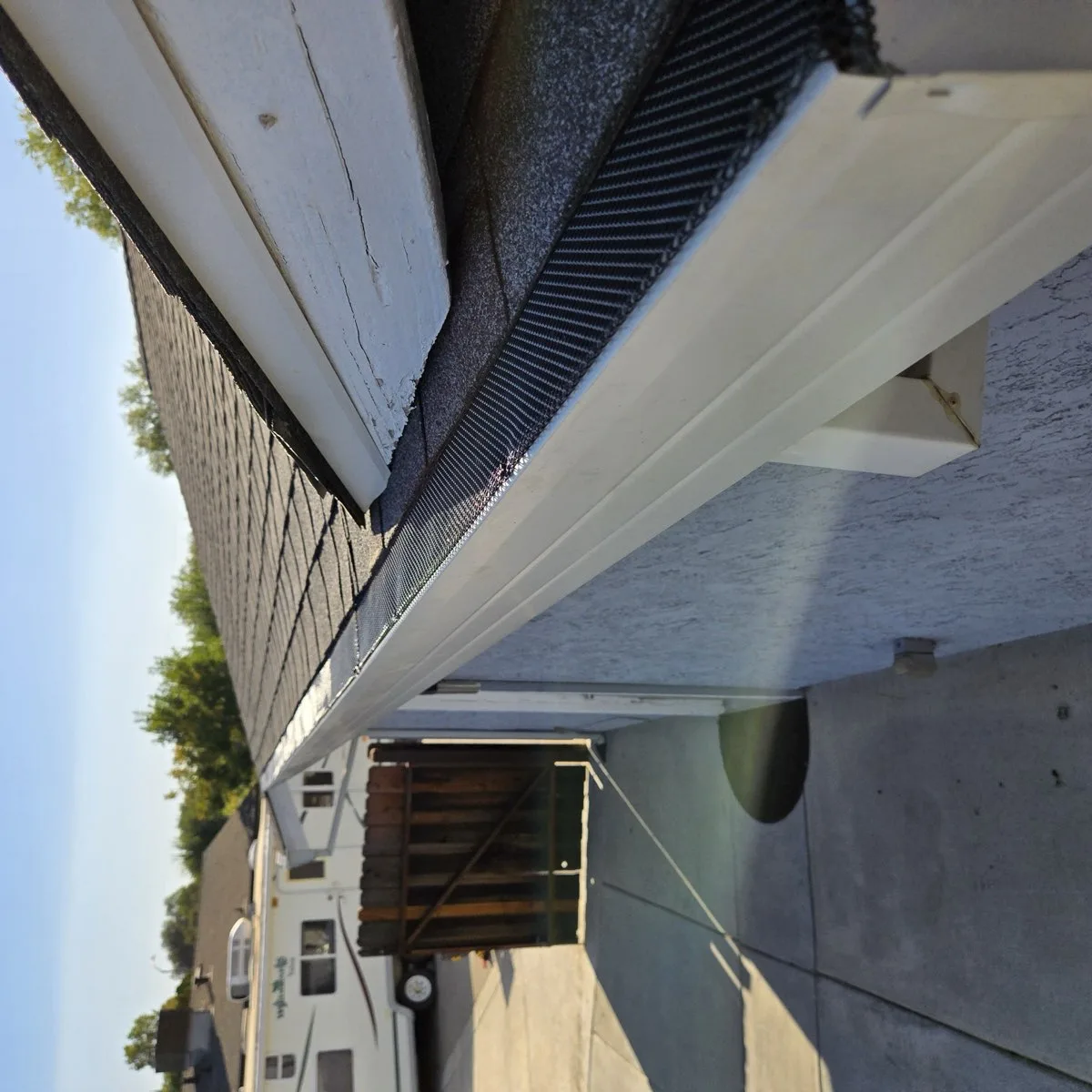
Quick Answer: Do I Need HOA Approval for Gutter Guards in Sacramento?
Yes—almost every master-planned community in the Sacramento metro requires an Architectural Review Committee (ARC) application before you can install gutter guards. Under California’s Davis-Stirling Act (Civil Code § 4765), your HOA has a maximum of 60 days to respond in writing. Most Sacramento-area HOAs approve micro-mesh guards in black or bronze within 2–4 weeks when you submit a complete application with manufacturer spec sheets and color documentation.
Table of Contents
- Why Sacramento HOAs Care About Gutter Guards
- What Davis-Stirling Actually Says About Exterior Modifications
- Sacramento-Area Community Rules at a Glance
- The 4-Document HOA Application Checklist
- Color-Matching Rules That Actually Get Approved
- What to Do If Your HOA Denies the Application
- Realistic Timeline From Application to Installation
- Frequently Asked Questions
If you live in a Sacramento master-planned community, gutter guards are rarely a “buy them and schedule install” decision. The CC&Rs almost certainly require architectural review first. Homeowners who skip this step get stop-work letters, fines, and sometimes forced removal. This guide walks you through the Sacramento-specific rules, the California law that controls the process, and the exact documents your HOA expects.
We install gutter guards across Sacramento, Roseville, Rocklin, Folsom, El Dorado Hills, Elk Grove, Lincoln, and Natomas every week. Roughly one in three of those homes is in an HOA that requires an ARC application. After handling hundreds of these, the process is predictable—if you know what boards are actually looking for.
TL;DR: Check your CC&Rs under “Architectural Review” or “Exterior Modifications.” Submit a one-page ARC application with the manufacturer spec sheet, product photo, color code, and a drawing of where the guards will go. Use black or bronze micro-mesh to match most existing gutters. Under Davis-Stirling, the HOA has 60 days to respond in writing (Cal. Civ. Code § 4765). No response within 60 days generally means approved by default.
Why Sacramento HOAs Care About Gutter Guards
Gutter guards look like a simple interior upgrade, but they trigger architectural review for three reasons. Understanding these reasons is half the battle, because your application needs to address each one directly.
First, gutter guards are visible from the street on most single-story and two-story homes. Reverse-curve and surface-tension guards change the profile of the gutter lip, creating a rounded edge that reflects light differently. Micro-mesh guards sit flush and are less visible, but the top surface still catches sunlight. HOAs in communities like Folsom, Rocklin, and Roseville care about street-facing uniformity. One bright silver guard on an otherwise bronze-trimmed block is the kind of detail their ARC exists to prevent.
Second, gutter guards can alter the perceived color of the gutter. A black micro-mesh guard on top of a white gutter reads darker from the street. A copper-finish guard on a bronze gutter reads warmer. CC&Rs typically lock in the approved color palette for fascia, trim, and gutters—and any change to that palette needs board sign-off.
Third, some master-planned communities have fire-hardened or wildfire-overlay rules because of proximity to grasslands and oak woodland. Communities in the foothills like Serrano in El Dorado Hills and parts of Granite Bay fall into CAL FIRE’s Wildland-Urban Interface. For those homes, the HOA may require that gutter guards be non-combustible (aluminum or stainless mesh, not plastic or foam). We cover the fire angle more deeply in our guide on gutter guards and wildfire protection.
The 3 Questions Every Sacramento ARC Is Actually Asking
- • Will this be visible from the street? (If yes, does it match the approved color palette?)
- • Does it change the roofline or gutter profile? (Minor change = usually approved; major visible change = scrutiny)
- • Is the material compliant with community-specific rules? (Fire-hardened areas, copper restrictions, or age-restricted community guidelines)
What Davis-Stirling Actually Says About Exterior Modifications
The Davis-Stirling Common Interest Development Act governs every HOA in California, including every master-planned community in the Sacramento region. Two sections matter for gutter guard approvals.
California Civil Code § 4765 sets the rules for architectural review. It requires HOAs to have a written architectural review procedure, make decisions in good faith, respond to applications in a reasonable time, and provide written reasons for any denial. It also gives homeowners the right to request a hearing before the board if they disagree with a denial.
California Civil Code § 4760 allows homeowners to make modifications to their exclusive-use areas (which includes the exterior of a single-family home in most Sacramento planned communities) subject to reasonable architectural guidelines. It specifically protects improvements that enhance accessibility, energy efficiency, or water conservation—which is worth knowing because a well-argued application can frame gutter guards as a water management improvement.
Pro Tip: The 60-Day Silent-Approval Rule
Civil Code § 4765(a)(4) effectively sets a ceiling on HOA response times. Many Sacramento HOAs have their own 30-day or 45-day internal deadlines written into the CC&Rs. If you submit a complete application and hear nothing by day 60, document the lack of response in writing (certified mail or email receipt) and consult the CC&Rs on default approval language. This is the homeowner’s strongest leverage in a stalled review.
Sacramento-Area Community Rules at a Glance
Every HOA is different and your CC&Rs are the authoritative source. But after installing gutter guards across most of the major master-planned communities in the region, here’s the general pattern we see. Use this as a starting point, not a substitute for reading your own governing documents.
| Community / Area | ARC Review? | Typical Color Rule | Notes |
|---|---|---|---|
| Serrano (El Dorado Hills) | Required | Must match gutter color | Fire-hardened material required; no plastic/foam |
| Whitney Ranch (Rocklin) | Required | Match fascia or gutter | Strict ARC; photos of installed product requested |
| Stanford Ranch (Rocklin) | Required | Match gutter | Micro-mesh usually approved quickly |
| Natomas Park | Required | Match gutter | Drainage documentation helpful in flood overlay zone |
| Laguna West (Elk Grove) | Required | Match gutter | Reverse-curve profiles scrutinized |
| Empire Ranch (Folsom) | Required | Match gutter or trim | Typical 2–3 week ARC response |
| Sun City Lincoln Hills | Required | Match gutter | Age-restricted; very detail-focused ARC |
| Anatolia (Rancho Cordova) | Required | Match gutter | Standard micro-mesh approval is routine |
| Older East Sac / Land Park | Rare | N/A | Most pre-1970s neighborhoods have no HOA |
| Curtis Park / Oak Park | Rare | Historic district rules may apply | Historic overlay can limit copper/visible changes |
The pattern is consistent: master-planned communities built after 1990 almost always require ARC review. Older Sacramento neighborhoods generally do not. Historic overlay districts operate under city historic preservation rules rather than HOA rules, which is a different process entirely (and one that affects gutter material more than it affects guards).
The 4-Document HOA Application Checklist
Most Sacramento HOAs accept gutter guard applications on a standard Architectural Change Request form. You can usually download it from your HOA management company’s portal (FirstService Residential, Associa, PMP, and The Management Trust handle the majority of Sacramento-area communities). The form itself is one page. What matters is the packet of attachments you submit with it.
Here are the four documents every complete application needs. Submit all of them up front and you skip the back-and-forth that stretches review from 2 weeks to 6 weeks.
Manufacturer Spec Sheet
A one-page PDF from the manufacturer showing the product name, dimensions, material (aluminum, stainless mesh, etc.), and color options. For micro-mesh guards, include the mesh aperture size in microns. Your installer should have this on hand—it is part of their standard sales package. If you are comparing products, our Sacramento gutter guard brand comparison covers the major options.
Product Photo on a Similar Home
A real-world install photo on a home with a similar color palette to yours. This is the single most persuasive document in the packet. Boards approve what they can visualize. We keep a portfolio of install photos from Roseville, Folsom, Rocklin, and Elk Grove specifically to include in these applications.
Color Specification
Explicitly state the guard color and confirm it matches (or is one shade within) the existing gutter color. For black micro-mesh on a bronze gutter, note that the guard sits below the gutter lip and is not visible from street level. For homes with white gutters, specify a white or silver guard. See our guide on how to choose gutter colors in Sacramento for the standard palette.
Installation Plan / Site Diagram
A simple roof plan or elevation drawing showing which gutter runs will receive guards. “All linear feet of existing gutters” is acceptable phrasing for most boards. If you are only doing the front and sides (common to save cost), note that clearly. Our gutter guard installation checklist walks through how to document scope.
Soft CTA
We prepare the application packet for Sacramento HOA customers at no extra charge. Manufacturer spec sheets, install photos on similar homes, color documentation, and scope drawings—all in one PDF you can submit to your ARC. Request a free estimate and mention your HOA, and we’ll include it with your quote.
Color-Matching Rules That Actually Get Approved
Color is where most applications succeed or fail. The good news is that Sacramento HOA palettes are predictable, and the gutter guard market has standardized its color options around the most common residential gutters.
Here is what gets approved on the first pass in Sacramento master-planned communities, based on typical CC&R language:
- • Black micro-mesh on bronze or dark brown gutters. The mesh sits below the lip and reads as shadow from the street. Nearly universal approval.
- • Black micro-mesh on white gutters. Usually approved but occasionally flagged. Mitigate by noting the guard is flush-mounted and not visible from below.
- • Bronze or copper-finish guards on bronze gutters. Approved consistently. Match the existing finish.
- • White guards on white gutters. Approved but shows dirt faster. Micro-mesh handles this better than solid guards.
- • Stainless micro-mesh (natural finish). Reads as silver. Only approve-able on silver/aluminum gutters, which are rare in modern Sacramento planned communities.
And here is what tends to trigger denials or requests for modification:
- • Raw aluminum or shiny silver guards on dark gutters. Visible color mismatch, almost always denied.
- • Reverse-curve guards with visible rounded lip on flat-roof or contemporary homes. Changes the roofline profile.
- • Copper guards in communities that restrict copper exposure. Some HOAs prohibit copper on non-historic homes to maintain uniformity.
- • Foam inserts visible through the gutter. Boards often dislike the appearance and foam has other performance issues anyway (see foam vs brush vs snap-in gutter guards).
Pro Tip: Submit the Color Swatch
If your HOA has a published color palette, pull the specific color code (Sherwin-Williams, Dunn-Edwards, or Kelly-Moore) from the community design guidelines and cite it in your application. “Guard color matches approved gutter color SW 7048 Urbane Bronze” gives the ARC one less thing to verify and pushes the decision toward yes.
What to Do If Your HOA Denies the Application
Denials happen. Most are fixable. Under Civil Code § 4765(a)(3), the HOA must give you the denial in writing and cite the specific rule the application violates. “The board doesn’t like it” is not a legal denial. If the written denial is vague, request clarification in writing before you respond substantively.
Here are the five most common denial reasons in Sacramento communities and how to handle each:
- “Color does not match.” Resubmit with a different color option and include a manufacturer color chart showing the available options. Most boards approve the second submission.
- “Visible change to gutter profile.” Switch from reverse-curve to flush-mount micro-mesh. This usually solves it.
- “Non-compliant material (fire-hardened communities).” Switch to stainless or aluminum mesh. Document non-combustible rating on the spec sheet.
- “Incomplete application.” Resubmit with all four documents from the checklist above. This is the most common denial and the easiest to fix.
- “Not permitted under CC&Rs.” This one is rare and usually wrong. Request the specific CC&R section in writing, then schedule a board hearing under Civil Code § 4765(a)(5). Boards almost always approve on appeal when the product clearly complies.
Do Not Install Without Written Approval
We see this mistake every month. A homeowner gets verbal approval from a board member, installs the guards, and then receives a formal violation letter and fine 30 days later. Verbal approvals mean nothing. Wait for the written approval letter, keep it with your home records, and provide a copy to whoever installs the guards.
Realistic Timeline From Application to Installation
Here is the realistic timeline for most Sacramento HOA gutter guard approvals, assuming you submit a complete application on the first try.
| Week | What Happens | Your Action |
|---|---|---|
| Week 1 | Prep and submit application packet | Gather 4 documents, submit via HOA portal or email |
| Week 2 | ARC reviews packet | Respond quickly to any clarification requests |
| Week 3–4 | Board meeting / ARC decision | Most approvals land here for typical communities |
| Week 4–5 | Written approval letter issued | Save letter with home records; schedule installer |
| Week 5–6 | Installation | Typically 4–6 hours on-site |
| Week 7+ | Optional post-install photo submission | Some HOAs request confirmation photo |
Total realistic timeline: 4–6 weeks from first application to installed guards. If you are trying to get installed before storm season, start the application by early September at the latest. Many Sacramento homeowners make the mistake of waiting until the first atmospheric river forecast in November, which puts them behind the scheduling queue and into crisis mode. Our guide on atmospheric river gutter preparation explains why that lead time matters.
On cost: HOA approval itself is almost always free. The gutter guard installation runs the same whether you live in an HOA or not. If you want a quick estimate on what guards actually cost in the Sacramento market, the Sacramento gutter guard cost guide breaks it down by linear foot, product type, and home size, and the ROI calculator shows payback timelines.
Three Real Sacramento HOA Scenarios
Pattern-matching helps. Here are three recent-style scenarios that cover the most common situations Sacramento homeowners run into.
Scenario 1: Whitney Ranch, Rocklin
Home: Single-story, bronze K-style gutters, moderate oak canopy
Application: Black aluminum micro-mesh, flush-mount, all linear feet
Timeline: Submitted week 1, approved week 3, installed week 4
Outcome: Standard path. The complete packet with install photos from a similar Rocklin home got it through the ARC on the first submission.
Scenario 2: Serrano, El Dorado Hills
Home: Two-story, bronze gutters, wildfire overlay zone
Application: Initially a polymer-framed mesh product; denied for non-combustible material rule
Resubmission: Stainless steel micro-mesh with aluminum frame; approved
Outcome: Total 6 weeks instead of 4 because of the material swap. This is why the fire-zone question matters in the original product selection.
Scenario 3: Natomas Park
Home: Two-story, white gutters, Natomas flood overlay zone
Application: Black micro-mesh, all linear feet, noted flood-zone drainage benefit
Timeline: Approved week 2
Outcome: Framing the application as a water management improvement sped it up. The Natomas flood zone drainage guide explains why that angle holds weight in this specific community.
What If the CC&Rs Don’t Mention Gutter Guards?
This is the most common question we get. The CC&Rs will not mention “gutter guards” specifically. They will instead have a section titled “Architectural Control,” “Exterior Modifications,” or “Architectural Review” that covers any exterior change. Read that section carefully. If it says the ARC must approve “any exterior modification visible from the street or from common areas,” gutter guards are covered.
If the section only covers specific items (roofs, paint, fences, landscaping) and is silent on gutters and downspouts, you may have a legitimate case that gutter guards do not require approval. Even then, we recommend a short courtesy notification to the HOA management company. A one-paragraph email saying “we are installing gutter guards on X date, matching existing gutter color, pursuant to the CC&Rs which do not restrict this modification” creates a paper trail that protects you if the rules are later interpreted differently.
When in doubt, file the application. Forty-five minutes of paperwork is cheaper than a removal order.
What About Non-HOA Sacramento Neighborhoods?
Most of central Sacramento, including East Sacramento, Land Park, Curtis Park, Midtown, and Oak Park, has no HOA governance. If your home is in one of these neighborhoods, you can usually install gutter guards without architectural review. The exception is homes in historic preservation districts, which have separate city-level rules that can restrict visible gutter and downspout changes. For historic homes more broadly, our guide on gutters on older Sacramento homes covers what to watch for.
Even without HOA rules, choosing the right product matters. The gutter guard materials comparison walks through the tradeoffs between aluminum, stainless, and polymer framing. And if you want to avoid the most common installation errors, our installation mistakes guide is worth reading before you hire anyone.
Frequently Asked Questions
Do I need HOA approval to install gutter guards in Sacramento?
In most Sacramento-area master-planned communities, yes. If your CC&Rs require architectural review for exterior modifications, gutter guards almost always fall under that rule because they are visible from the street, change the roofline profile, and may alter the color of the existing gutter. Communities like Serrano, Natomas Park, Whitney Ranch, Stanford Ranch, and most Elk Grove and Folsom HOAs require an ARC application before installation.
How long does Sacramento HOA architectural review take for gutter guards?
California Civil Code § 4765 (Davis-Stirling Act) gives HOAs a maximum of 60 days to approve or deny an architectural application, with written reasons required for denial. Most Sacramento HOAs respond in 2 to 4 weeks. If the ARC fails to respond within 60 days, the application is generally deemed approved by default under California law.
What color do gutter guards need to be for HOA approval?
Most Sacramento HOAs require the guard to match the existing gutter color or the roof color. Micro-mesh guards in black or bronze typically read as invisible from the street and get approved easily. Reverse-curve guards that change the visible gutter profile face more scrutiny. Always submit the manufacturer spec sheet and a photo of the product installed on a similar home with your application.
Can an HOA actually deny gutter guards?
Yes, but only for reasons stated in the CC&Rs and architectural guidelines. Under Davis-Stirling, the denial must be in writing and cite the specific rule violated. Common legitimate reasons include color mismatch, visible profile change, or non-approved materials. An HOA cannot deny gutter guards arbitrarily, and you have the right to a hearing before the board if you disagree with the denial.
What Sacramento-area HOAs are strictest about gutter guard approvals?
Serrano in El Dorado Hills, Whitney Ranch in Rocklin, Stanford Ranch in Rocklin, Natomas Park, Laguna West in Elk Grove, Empire Ranch in Folsom, and most age-restricted communities like Sun City Lincoln Hills have strict ARC processes. These communities typically require a formal application, neighbor notification in some cases, and manufacturer documentation. Older communities and smaller HOAs often have lighter processes or none at all.
Do I need to notify my neighbors before installing gutter guards?
Most Sacramento HOAs do not require neighbor notification for gutter guards because they do not affect shared walls, views, or common area boundaries. However, a few communities with strict architectural guidelines ask for neighbor sign-offs on any exterior modification. Check your specific CC&Rs under the architectural review section before you file.
What happens if I install gutter guards without HOA approval?
The HOA can issue a violation letter, impose fines (typically $100–$500), and in rare cases require removal at your expense. Even if the product would have been approved, skipping the process creates a paper trail that affects future approvals and home resale. Always wait for written approval before scheduling installation.
Need Help With Your Sacramento HOA Application?
We prepare the ARC packet at no extra charge for every HOA customer. Manufacturer spec sheets, install photos on homes in your community, color documentation, and scope drawings—ready to submit. Tell us your community and we handle the rest.
Free estimates • HOA application support • Serving Greater Sacramento
Related Articles
Best Gutter Guard Brands Compared
LeafFilter vs Raptor vs Gutterglove, side-by-side for Sacramento homes.
How to Choose Gutter Colors
Matching gutters to Sacramento-area home palettes.
Gutter Guard Installation Checklist
Step-by-step installation prep and what to expect day-of.
Sacramento Gutter Guard Cost
Real pricing by product, home size, and linear footage.
Gutter Guards & Wildfire Protection
Fire-hardened material rules for foothill communities.
Installation Mistakes to Avoid
The errors that cost Sacramento homeowners thousands.