
Quick Answer
Foam gutter guards, brush inserts, and snap-in plastic screens are the three most popular DIY gutter guard options -- and all three fail in Sacramento within 1-4 years. Foam absorbs water and grows mold. Brush bristles trap debris instead of shedding it. Snap-in screens have holes too large to block pine needles, seeds, and shingle grit. Sacramento's atmospheric rivers deliver 1-2 inches of rain per hour, overwhelming these cheap designs. Micro mesh gutter guards cost more upfront but last 20-25 years and handle heavy rain without overflow -- making them the only gutter guard type worth installing in this climate.
Why Sacramento's Climate Destroys Cheap Gutter Guards
Foam gutter guards, brush gutter guards, and snap-in screens were designed for mild climates with light, steady rainfall. Sacramento is not that climate. The Sacramento region received approximately 28.8 inches of precipitation during the 2025-2026 water year through February -- 116% of the historical average, driven largely by back-to-back atmospheric rivers in December and January (California Department of Water Resources, 2026).
The problem is not just how much rain Sacramento gets. It is how that rain arrives. Instead of gentle, evenly distributed rainfall, Sacramento receives its annual precipitation in concentrated bursts during atmospheric river events that can dump 1-2 inches per hour for several hours. Then the city goes bone-dry for 5-6 months with temperatures regularly exceeding 100 degrees.
This wet-then-scorching cycle creates three conditions that cheap DIY gutter guards Sacramento homeowners buy simply cannot survive:
- Intense rainfall: Flow rates during atmospheric rivers exceed 45 gallons per minute on a typical 2,000 sq ft roof. Foam, brush, and basic screens restrict flow and cause overflow.
- Heavy organic debris: Sacramento is the City of Trees with over 5 million trees in the urban canopy (Sacramento Tree Foundation). Oak leaves, pine needles, and seed pods overwhelm simple guard designs.
- UV and heat degradation: With 45+ days above 100 degrees, Sacramento's summers break down foam, warp plastic, and accelerate material fatigue on every cheap guard type.
Sacramento Climate vs Cheap Gutter Guard Limits
Peak rainfall intensity vs maximum guard capacity (gallons per minute per 10-ft section)
Foam Gutter Guards: The Worst Option for Sacramento
Foam gutter guards are open-cell polyurethane or polyether inserts that sit inside the gutter channel. Water is supposed to flow through the porous foam while debris stays on top. In reality, foam gutter guards in Sacramento fail faster than any other guard type -- typically within 1-3 years.
How Foam Guards Fail in Sacramento
The core problem is simple: foam absorbs water instead of filtering it. According to Home Defender USA, foam inserts retain 34% humidity even 72 hours after rainfall. In Sacramento, where winter storms arrive back-to-back during atmospheric river sequences, foam inserts never fully dry out between rain events. They stay saturated for weeks at a time from November through March.
That trapped moisture triggers a cascade of failures:
- Mold and algae colonize the foam. By month six, 78% of foam installations in shaded areas show visible biological growth (Home Defender USA). Sacramento's north-facing roof sections and tree-shaded gutters are especially vulnerable.
- Seeds germinate inside the foam. Sacramento's prolific oak, maple, and ash trees drop seeds that embed in the porous foam material. Combined with trapped moisture, the foam becomes a planting medium -- homeowners find actual seedlings sprouting from their gutters.
- Pores clog with fine debris. Pollen, shingle grit, and dust fill the tiny pores over time, reducing water flow from marginal to near-zero. Once clogged, foam inserts cannot be cleaned -- they must be replaced.
- UV degrades the foam. Sacramento's 5-6 months of intense summer sun breaks down the cellular structure of polyurethane foam. The material crumbles, fragments clog the gutter, and pieces wash into downspouts causing secondary clogs.
Foam Guard Cost Analysis: Cheap Upfront, Expensive Long-Term
Foam gutter guard inserts cost $1-$4 per linear foot at home improvement stores. For a typical Sacramento home with 150 linear feet of gutters, that is $150-$600 in materials. Installation is straightforward -- just press the foam into the gutter channel.
But the math changes when you factor in replacement cycles. Replacing foam inserts every 2 years over a 20-year period costs $1,500-$6,000 in materials alone, plus the time and ladder risk of 10 separate installations. A one-time professional micro mesh gutter guard installation costs $1,800-$3,000 for 150 feet at our published $12-$20 per foot and lasts the entire 20 years with minimal maintenance.
A Carmichael homeowner installed GutterStuff foam inserts in October 2024, thinking they would handle the upcoming rainy season. By February 2025, the foam had absorbed so much water and debris that water was sheeting over the front of the gutters during every storm. When they pulled the inserts out, the foam had turned green with algae and had seedlings growing from oak acorns trapped in the material. They called us for micro mesh installation in March -- a job that would not need repeating for 20+ years.
Brush Gutter Guards: Debris Traps Disguised as Protection
Brush gutter guards are cylindrical bristle inserts (think oversized pipe cleaners) that sit inside the gutter channel. The concept is that bristles allow water to flow around them while leaves and debris sit on top and blow away. GutterBrush is the most recognized brand. They cost $3-$5 per linear foot and install without tools -- just drop them into the gutter.
Why Brush Guards Fail in Sacramento
The bristle design has a fundamental flaw: debris does not blow away. It gets trapped between the bristles and decomposes. Sacramento's heavy tree canopy generates enormous volumes of organic debris -- oak leaves, pine needles, maple seeds (helicopters), cottonwood fluff, and pollen. All of it gets caught in the bristles.
- Pine needles weave between bristles and cannot be removed without pulling the entire brush out of the gutter.
- Maple helicopter seeds embed in bristles and germinate during the rainy season, creating rooted plants inside the gutter.
- Decomposing leaves create a sludge that coats bristles and lines the gutter bottom, reducing flow capacity by 40-60% within one season.
- Birds and rodents nest in bristles. The tangled bristle structure creates ideal nesting material -- a problem California MBTA regulations make difficult and expensive to address once nests are active.
Brush Guards Still Require Regular Gutter Cleaning
The selling point of brush gutter guards is reducing cleaning frequency. In practice, Sacramento homeowners with brush guards report needing to clean their gutters 3-4 times per year -- nearly the same as unprotected gutters. The only difference is that cleaning takes longer because you must pull out the brushes, clean the gutter, clean the brushes, and reinstall them.
Brush guards last 3-5 years before the bristles flatten, the wire spine bends, and the inserts lose their shape. At that point, they sit flat in the gutter bottom and do nothing but collect debris. The cost of professional cleaning over 5 years ($935-$1,055 at Sacramento averages) nearly matches the cost of the brush guards themselves plus your time installing and maintaining them.
Snap-In Screen Gutter Guards: Better Than Foam, Still Not Enough
Snap-in gutter screens are perforated plastic or aluminum panels that clip onto the gutter lip. They are the most common DIY gutter guard type at hardware stores, with brands like Amerimax, Frost King, and E-Z-Gutter available at $0.50-$3.50 per linear foot. Of the three cheap options, snap-in screens are the least bad -- but they still fall short in Sacramento.
The Hole Size Problem
Standard snap-in screens have openings between 1/8 inch and 1/4 inch. That is large enough to block full leaves but allows through:
- Pine needles -- Sacramento's Ponderosa and Monterey pines drop needles that slide right through 1/4-inch openings.
- Shingle granules -- Asphalt roof grit passes through any screen coarser than micro mesh (roughly 275-550 microns). These granules accumulate in the gutter bottom and create sludge.
- Seeds and seed casings -- Oak tree catkins, ash samaras, and small seeds pass through standard screens freely.
- Roof grime and pollen -- Sacramento's extreme pollen season (March through July) deposits fine particles that wash through screens into gutters.
The result is that snap-in screens block large leaves while allowing everything else through. Within one season, the gutter beneath the screen fills with fine debris -- and now you have the same clog problem, but with a screen on top making it harder to clean.
Structural and Durability Issues
Plastic snap-in screens warp in Sacramento's summer heat. Temperatures on a south-facing roof surface easily exceed 150 degrees on a 105-degree day. Thin plastic screens buckle, lose their snap-in grip, and either fall into the gutter or blow off entirely during fall storms.
Aluminum snap-in screens resist heat better but often lack the rigidity to hold their shape under debris loads. A layer of wet oak leaves on a lightweight aluminum screen can push the screen down into the gutter, creating a debris sandwich that is worse than having no guard at all.
Gutter Guard Lifespan in Sacramento's Climate
Expected years before replacement is needed
Pro Tip: The "Just Try It" Trap
Sacramento homeowners often buy foam or brush guards thinking "it is only $100-$200, so I will try it and upgrade later if it does not work." The hidden cost is the damage that happens while the cheap guard is failing. Overflowing gutters during a single atmospheric river event can cause $5,100+ in foundation damage or $1,500-$15,000 in mold remediation. The "cheap trial" can end up costing 10-50 times the price of doing it right the first time.
Done Wasting Money on Cheap Gutter Guards?
We install professional-grade stainless steel micro mesh gutter guards that handle Sacramento's worst atmospheric rivers. Every installation includes a full gutter cleaning, slope assessment, and downspout capacity check. One installation, 20+ years of protection.
Cheap DIY Gutter Guards vs Micro Mesh: Full Comparison
The table below compares all three cheap gutter guard types against professional micro mesh across the metrics that matter most for Sacramento homeowners. Every data point reflects Sacramento's specific conditions -- heavy rain, extreme heat, and dense tree coverage.
| Feature | Foam | Brush | Snap-In Screen | Micro Mesh |
|---|---|---|---|---|
| Cost per linear ft | $1-$4 | $3-$5 | $0.50-$3.50 | $12-$20 installed |
| 150-ft home cost | $150-$600 | $450-$750 | $75-$525 | $1,800-$3,000 |
| Sacramento lifespan | 1-3 years | 3-5 years | 2-4 years | 20-25 years |
| 20-year total cost | $1,500-$6,000 | $1,800-$3,000 | $375-$2,625 | $1,800-$3,000 |
| Heavy rain handling | Fails | Poor | Marginal | Excellent |
| Pine needle blocking | No | No | No | Yes |
| Mold/algae risk | Very High | Moderate | Low | Very Low |
| Pest nesting risk | Moderate | High | Low | None |
| Cleaning reduction | Minimal | Minimal | 30-50% | 90-95% |
| Warranty | None/1 year | 1-3 years | 1-5 years | 20-25 years |
The 20-year total cost row tells the real story. When you factor in replacement cycles, foam inserts can cost as much as a one-time micro mesh installation -- except you get 20 years of failures and water damage risk instead of 20 years of reliable protection. For a deeper cost analysis, see our gutter cleaning vs gutter guards cost comparison.
Why DIY Installation Compounds the Problem
Even if foam, brush, or screen guards performed well as products (they do not), DIY installation introduces additional failure points. According to industry data analyzed by NGutter, 73% of gutter guard failures result from installation errors, not material defects. Professional installation reduces failure rates by 91%.
Common DIY gutter guard installation mistakes in Sacramento include:
- Ignoring gutter slope. Guards must maintain the existing gutter pitch of 1/4 inch per 10 feet toward downspouts. Foam and brush inserts can compress unevenly and alter drainage angles.
- Leaving gaps. Snap-in screens often leave 1/8 to 1/4 inch gaps at connection points where leaves wedge in and create dams.
- Not cleaning gutters first. Installing any guard over debris-filled gutters seals in the existing problem. The gutter clogs faster because debris now has nowhere to go.
- Skipping downspout protection. Most DIY installations protect the gutter channel but leave the downspout entrance unguarded, creating a concentrated clog point.
For a comprehensive list, see our guide on gutter guard installation mistakes that void warranties. Most of these errors apply specifically to DIY installations using cheap products.
True 20-Year Cost: Cheap Guards vs Micro Mesh
Includes product cost, replacements, extra cleaning, and one average water damage event
When Cheap Guards Might Work (Not Sacramento)
Foam, brush, and snap-in screen guards are not universally terrible products. They can provide some value in specific situations:
- Rental properties where the goal is temporary leaf diversion rather than long-term protection
- Homes in arid climates with minimal rainfall and sparse tree coverage
- Short-term use before a planned roof replacement (when new gutters and guards will be installed anyway)
- Climates with light, steady rain -- not concentrated bursts
Sacramento meets none of these criteria for most homeowners. The combination of atmospheric rivers, heavy tree canopy, extreme summer heat, and clay soil (which makes foundation damage from gutter overflow especially severe) creates conditions that demand professional-grade protection.
What Actually Works: Micro Mesh Gutter Guards for Sacramento
Micro mesh gutter guards solve every problem that makes cheap DIY gutter guards Sacramento homeowners try fail. Here is why the technology works where foam, brush, and screens do not:
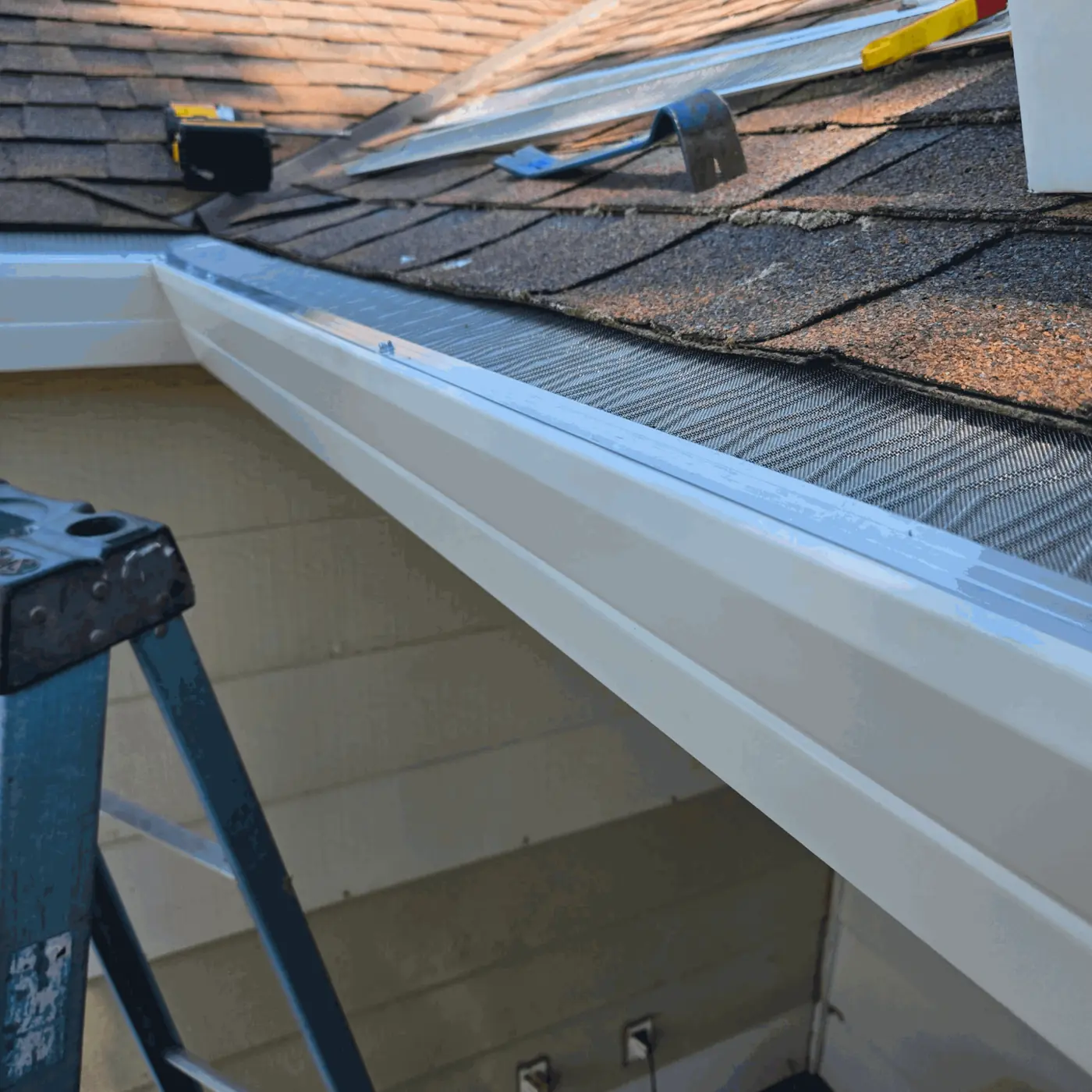
- Stainless steel mesh does not absorb water. Unlike foam, water passes through the mesh by gravity alone. No saturation, no mold, no degradation.
- Openings of roughly 275 to 550 microns stop what clogs gutters. Pine needles, shingle grit and seeds stay on top of a stainless steel micro mesh, while pollen and water pass through instead of caking over.
- Debris sits on top and dries. Unlike brush bristles that trap debris, micro mesh creates a smooth surface where debris dries and blows off or rinses off with a garden hose.
- Handles 55-60 GPM per section. Sacramento atmospheric rivers generate roughly 45 GPM on a typical roof. Micro mesh handles that with capacity to spare. Foam handles 5 GPM. There is no comparison.
- Rigid aluminum frames resist heat. Unlike plastic screens that warp at 150+ degrees, extruded aluminum frames hold their shape through Sacramento's hottest summers.
For specific product recommendations, see our brand comparison and materials guide.
Debris Filtration by Guard Type
Percentage of common Sacramento debris types blocked
Pro Tip: If You Insist on DIY, Choose the Right Product
If budget constraints force a DIY approach, skip foam, brush, and basic screens entirely. Instead, look at DIY-grade stainless steel micro mesh products like Raptor ($2-$4/ft materials only). They will not match professional installation quality, but they outperform every other DIY option by a wide margin. Just know that installation quality is half the equation -- even a good product installed poorly will underperform.
Choosing the Right Gutter Guard for Your Sacramento Home
If this comparison has convinced you to skip the cheap options (and for Sacramento homes, you should), here is what to look for in a professional micro mesh system:
- Mesh material: surgical-grade stainless steel. 304 or 316 grade. Aluminum mesh corrodes. Nylon mesh degrades in UV. Stainless steel is the only mesh material that survives Sacramento's climate long-term.
- Frame material: extruded aluminum. Rigid, corrosion-resistant, and holds its shape at 150+ degrees. Avoid uPVC frames -- they warp in Sacramento's summer heat.
- Installation method: no shingle lifting. The guard should tuck under the drip edge without modifying your roof. Read our roof warranty guide to understand why this matters.
- Pre-installation gutter cleaning included. Any installer who skips this step is cutting corners. Debris under new guards guarantees early failure.
- Warranty: 20+ years, transferable. Cheap guards come with 0-5 year warranties. Professional systems come with 20-25 years. The warranty comparison details what to read in the fine print.
Frequently Asked Questions
Do foam gutter guards work in Sacramento?
Foam gutter guards do not work well in Sacramento. They absorb water like a sponge, retain 34% humidity even 72 hours after rainfall, and develop mold and algae growth within 6 months in shaded areas. Sacramento's concentrated rainy season saturates foam inserts repeatedly, causing them to degrade and clog. Most foam guards in Sacramento need replacement within 1-3 years. Micro mesh gutter guards are a far more effective long-term solution.
Are brush gutter guards worth it?
Brush gutter guards are not worth it for most Sacramento homes. While they cost only $3-$5 per linear foot, their bristle design traps debris rather than shedding it. Sacramento oak leaves, pine needles, and helicopter seeds get caught between bristles and decompose into sludge that restricts water flow. Brush guards also create nesting habitat for birds and rodents, and require cleaning 3-4 times per year.
How long do cheap gutter guards last?
Cheap gutter guards have short lifespans. Foam inserts last 1-3 years before degrading from UV exposure and moisture saturation. Brush guards last 3-5 years before bristles flatten. Snap-in plastic screens last 2-4 years before warping in Sacramento's extreme heat. Professional micro mesh gutter guards last 20-25 years by comparison.
What is the best gutter guard for DIY installation?
If you insist on DIY, stainless steel micro mesh snap-in guards like Raptor ($2-$4/ft materials) are the best option. They outperform foam, brush, and basic screen guards in every category. However, 73% of gutter guard failures result from installation errors rather than material defects (NGutter), so professional installation significantly improves performance regardless of product.
Why do DIY gutter guards fail in Sacramento?
DIY gutter guards fail in Sacramento for three reasons: the products themselves cannot handle 1-2 inch per hour atmospheric river rainfall, installation errors create gaps that admit debris, and Sacramento's extreme climate -- wet winters plus 100+ degree summers -- accelerates material degradation. The city receives its annual rainfall in concentrated bursts that overwhelm cheap guard designs built for gentler climates.
The Bottom Line: Cheap Gutter Guards Cost More Than Professional Ones
Foam gutter guards, brush inserts, and snap-in screens share one attractive trait: low upfront cost. But for Sacramento homes, that low price tag is deceptive. When you add replacement cycles, continued cleaning costs, and the risk of water damage from guard failure during atmospheric rivers, cheap DIY gutter guards Sacramento homeowners install end up costing more than professional micro mesh -- and deliver dramatically worse protection along the way.
The numbers do not lie. A professional micro mesh installation at $1,800-$3,000 for 150 feet protects your home for 20-25 years with 90-95% cleaning reduction. Ten rounds of foam replacement over the same period costs $1,500-$6,000 in materials alone -- before you count the cleaning costs, your time, the ladder risk, and the one storm event where the foam failed and water cascaded behind your fascia boards.
Start with a free estimate to assess your home's specific needs. We will measure your gutters, evaluate your tree coverage, check your downspout capacity, and recommend the right micro mesh system for your roof. No foam, no brushes, no snap-in screens -- just the guard that actually works in Sacramento.
Ready to Install Gutter Guards That Actually Work?
Sacramento Gutter Guard installs professional stainless steel micro mesh systems across the Sacramento metro area. Free estimates, no high-pressure sales, and a warranty that outlasts cheap guards by a factor of 5.
Related Articles
Mesh Gutter Guards Sacramento
Complete guide to micro mesh gutter guards for Sacramento homes.
Gutter Guard Cost Sacramento
Full pricing breakdown and ROI calculator for Sacramento installations.
Best Gutter Guards for Heavy Rain
Every guard type ranked for Sacramento atmospheric river performance.
Why Gutter Guards Fail
Common problems, installation errors, and how to fix them.
Reverse Curve vs Micro Mesh
Head-to-head comparison with flow rate data and cost analysis.
Gutter Guard Materials Comparison
Stainless steel vs aluminum vs nylon -- durability and cost data.
Sources
- California Department of Water Resources. "California Hydrology Update, March 2026." cww.water.ca.gov
- Home Defender USA. "Why Foam Gutter Guards Fail: Issues & Smarter Alternatives." homedefenderusa.com
- LeafFilter. "The Pros and Cons of Foam Gutter Guards." leaffilter.com
- NGutter. "Gutter Statistics: The Data You Need to Know for 2026." ngutter.com
- Bob Vila. "The Best Micro-Mesh Gutter Guards, Tested and Reviewed (2025)." bobvila.com
- Angi. "Pros and Cons of Foam Gutter Guards." angi.com
- Sacramento Tree Foundation. "Sacramento Urban Forest Statistics." sactree.com
- Clean Gutter Protection. "Micro Mesh vs Screen Gutter Guards: 2024 Testing." cleangutterprotection.com