TL;DR: Birds in Your Sacramento Gutters
Birds nesting in gutters cause complete blockages, water overflow, and structural damage. In California, active nests of native birds are legally protected under the Migratory Bird Treaty Act and Fish & Game Code 3503 — you cannot remove them once eggs or chicks are present. The only reliable solution is preventing nesting before it starts, and gutter guards are the most effective method.
Table of Contents
- Why Birds Choose Your Sacramento Gutters
- Common Gutter-Nesting Birds in Sacramento
- Damage Bird Nests Cause to Gutters and Homes
- California Bird Nest Removal Law: What You Can and Cannot Do
- How to Safely Remove Bird Nests from Gutters
- 7 Ways to Prevent Birds Nesting in Gutters
- Gutter Guards: The Permanent Bird Nesting Solution
- Sacramento Bird Prevention Calendar
- Frequently Asked Questions
Every spring, Sacramento homeowners discover the same problem: birds nesting in their gutters, blocking water flow and creating a mess that is both difficult and — in many cases — illegal to clean up. The combination of California's strong bird protection laws and our region's 7-month nesting season means the wrong move can cost you a $5,000 fine on top of the water damage you are already dealing with.
After servicing thousands of gutter systems across Sacramento, Roseville, and Folsom, we have removed hundreds of bird nests from gutters — and had to leave dozens more untouched because protected species were actively nesting. This guide covers the legal landscape, the damage timeline, and the prevention methods that actually work in the Sacramento region.
Why Birds Choose Your Sacramento Gutters
From a bird's perspective, a gutter is ideal nesting real estate. It is elevated, predator-resistant, weather-protected, and often filled with ready-made nesting material. Sacramento's mature tree canopy — especially in neighborhoods like East Sacramento, Land Park, and Curtis Park — drops leaves, twigs, and seeds directly into gutters, creating a pre-furnished nursery.
Shelter and Height
Gutters sit 10-25 feet off the ground, safe from cats, dogs, and most ground predators. The channel shape creates a protected cavity that mimics the tree hollows many species prefer.
Nesting Material On-Site
Decomposing leaves, twigs, pine needles, and moss accumulate in neglected gutters. Birds do not need to fly far to build — the construction materials are already there.
Warmth from the Roof
Metal gutters absorb solar heat and radiate warmth from the attic below. During Sacramento's cooler early-spring nights, this warmth helps incubate eggs and protect chicks.
Water Access
Gutters with partial clogs hold standing water — a drinking source steps away from the nest. This is especially valuable during Sacramento's dry summers when ground-level water is scarce.
Pro Tip: The Repeat-Nesting Problem
Birds return to successful nesting sites year after year. If a pair of house sparrows raised chicks in your gutter last spring, they will be back this February scouting the same spot. Removing the old nest after the season ends (September-January) breaks this cycle — but only if you also install a physical barrier before they return.
Common Gutter-Nesting Birds in Sacramento
Not every bird that visits your roof will nest in your gutters, but several Sacramento-area species are repeat offenders. Knowing which species you are dealing with matters because it determines whether you can legally remove the nest.
Gutter Nesting Frequency by Species in Sacramento
| Species | Nesting Behavior | Broods/Year | Legal Status |
|---|---|---|---|
| House Sparrow | Builds bulky nests from grass, feathers, and trash. Completely blocks gutter sections. Aggressive — drives out other species. | 3-4 | Not protected — remove any time |
| European Starling | Cavity nester that stuffs gutters with massive debris loads. Noisy colonies can overwhelm a roofline. | 2-3 | Not protected — remove any time |
| Mourning Dove | Builds flimsy platform nests in corners and downspout junctions. Common in Sacramento suburbs. | 2-3 | Protected when nesting |
| House Finch | Small cup nests in gutter corners and behind downspout brackets. Quiet and hard to notice. | 1-3 | Protected when nesting |
| American Robin | Mud-and-grass nests on flat surfaces. Prefers gutter elbows and wide gutter sections. | 2-3 | Protected when nesting |
House sparrows and European starlings are the most common gutter nesters in Sacramento and, fortunately, are not protected under the Migratory Bird Treaty Act because they are non-native invasive species. Their nests can be removed at any time. Every other species on this list is federally protected once eggs or chicks are present.
Damage Bird Nests Cause to Gutters and Homes
A bird nest is not just an inconvenience — it is the start of a chain reaction that can cost thousands. One nest can completely dam a gutter section, and the damage escalates fast during Sacramento's rain events.
Bird Nest Damage Cost Escalation Over Time
The Damage Chain Reaction
Complete Gutter Blockage
Bird nests — especially from sparrows and starlings — fill entire gutter sections with grass, twigs, feathers, and debris. A single nest can weigh 1-3 pounds and extend 12-18 inches along the channel.
Water Overflow and Fascia Damage
Blocked gutters overflow during rain, sending water cascading down your siding and behind the gutter. This saturates fascia boards and starts wood rot within weeks during Sacramento's wet season.
Mold Growth
Moisture from gutter overflow creates mold colonies in as little as 24-48 hours. Mold remediation in Sacramento typically costs $1,500-$15,000 depending on severity.
Foundation Erosion
Overflowing water pools at your foundation. Sacramento's expansive clay soil absorbs this water, swells, and cracks foundations — repairs that run $3,000-$10,000+.
Secondary Pest Infestations
Bird nests harbor mites, lice, and fleas. After chicks fledge, these parasites leave the nest seeking new hosts — often migrating into your attic and living spaces through soffit and fascia gaps.
Water damage restoration from prolonged gutter overflow typically costs $1,300-$6,300, according to industry restoration data. When you add potential mold remediation and foundation repair, a single bird nest left unchecked through one nesting season can generate $5,000-$15,000 in damage to a Sacramento home.
California Bird Nest Removal Law: What You Can and Cannot Do
This is where most Sacramento homeowners get tripped up. California has some of the strictest bird protection laws in the country, layering state regulations on top of federal protections. Here is the legal framework that applies to bird nests in your gutters.
Two Laws You Need to Know
1. Federal: Migratory Bird Treaty Act (MBTA)
Makes it illegal to take, possess, or destroy any migratory bird, its eggs, or its active nest. Covers over 1,000 species. Penalties: up to $15,000 fine and 6 months imprisonment per violation.
2. State: California Fish & Game Code Section 3503
States: "It is unlawful to take, possess, or needlessly destroy the nest or eggs of any bird." Penalties: up to $5,000 fine and 6 months in county jail. California's Migratory Bird Protection Act (renewed via AB 454) extends protections beyond the federal list.
Sacramento Gutter Bird Nests: Legal Removal Status
What You CAN Legally Remove
- Inactive nests of any species (no eggs, no chicks, no adult sitting on the nest)
- House sparrow nests at any stage — invasive, non-native, not protected
- European starling nests at any stage — invasive, non-native, not protected
- Rock pigeon (common pigeon) nests at any stage — non-native, not protected
- Old/abandoned nests outside nesting season (September through January is safest)
What You CANNOT Legally Remove
- Active nests with eggs or chicks of any native bird species
- Nests being actively built by native species during breeding season (some debate, but the safe play is to leave them)
- Any raptor nest (hawks, owls, falcons) — protected year-round under FGC 3503.5, even when inactive
- Cliff swallow nests — while they nest on walls more than gutters, they are strictly protected under both state and federal law
When In Doubt: The Safe Decision Tree
- Can you identify the species? If it is a house sparrow, starling, or pigeon, removal is legal at any stage.
- If native: are there eggs or chicks? If yes, do not touch the nest. Wait until all chicks have fledged (typically 2-4 weeks after hatching).
- If native but no eggs/chicks yet: removal is legal but must be done immediately. Once the first egg is laid, the nest is protected.
- If unsure about the species: treat it as protected. Contact Sacramento County Animal Control or a licensed wildlife rehabilitator for guidance.
Need Bird Nests Removed from Your Gutters?
Our team knows which species are protected and which are not. We handle removal safely and legally, then install gutter guards to prevent future nesting.
Get a Free EstimateHow to Safely Remove Bird Nests from Gutters
Once you have confirmed the nest is either inactive or belongs to a non-protected species, here is the safe removal process. If you are not comfortable working on a ladder, ladder safety risks are real — consider hiring a professional.
Step-by-Step Nest Removal
Confirm Legal Status
Identify the species if possible. Check for eggs or chicks by carefully looking into the nest from a ladder. If you see eggs, chicks, or an adult sitting on the nest (and it is not a sparrow, starling, or pigeon), stop here.
Wear Protective Gear
Bird nests carry mites, lice, bacteria, and dried droppings that can cause histoplasmosis (a respiratory fungal infection). Wear gloves, a dust mask or N95 respirator, and safety glasses.
Remove the Nest Material
Gently lift the nest out of the gutter and place it in a sealed plastic bag. Remove all remaining debris, twigs, and droppings from the gutter section. Bag everything for trash disposal — do not compost bird nest material.
Flush and Inspect
Run a hose through the gutter section to flush remaining debris. Check the downspout for clogs — nest material often washes down and blocks the drain. Inspect the gutter for damage from the nest weight.
Install Prevention
This is the critical step most people skip. Without a physical barrier, the same birds (or new ones) will rebuild within days. Jump to the gutter guard section for permanent solutions.
Pro Tip: Timing Your Removal
The best window for nest removal and prevention installation in Sacramento is September through January — after the nesting season ends and before birds start scouting next year's sites. If you are reading this in February or March, act fast: once a native bird lays its first egg, you could be waiting 4-8 weeks before you can legally touch the nest.
7 Ways to Prevent Birds from Nesting in Gutters
Prevention is the only strategy that works long-term. Once birds establish a successful nesting site, they return season after season. These methods are ranked by effectiveness based on what we see working (and failing) across Sacramento homes.
Bird Nesting Prevention Methods: Effectiveness Ranking
1. Install Micro-Mesh Gutter Guards (Most Effective)
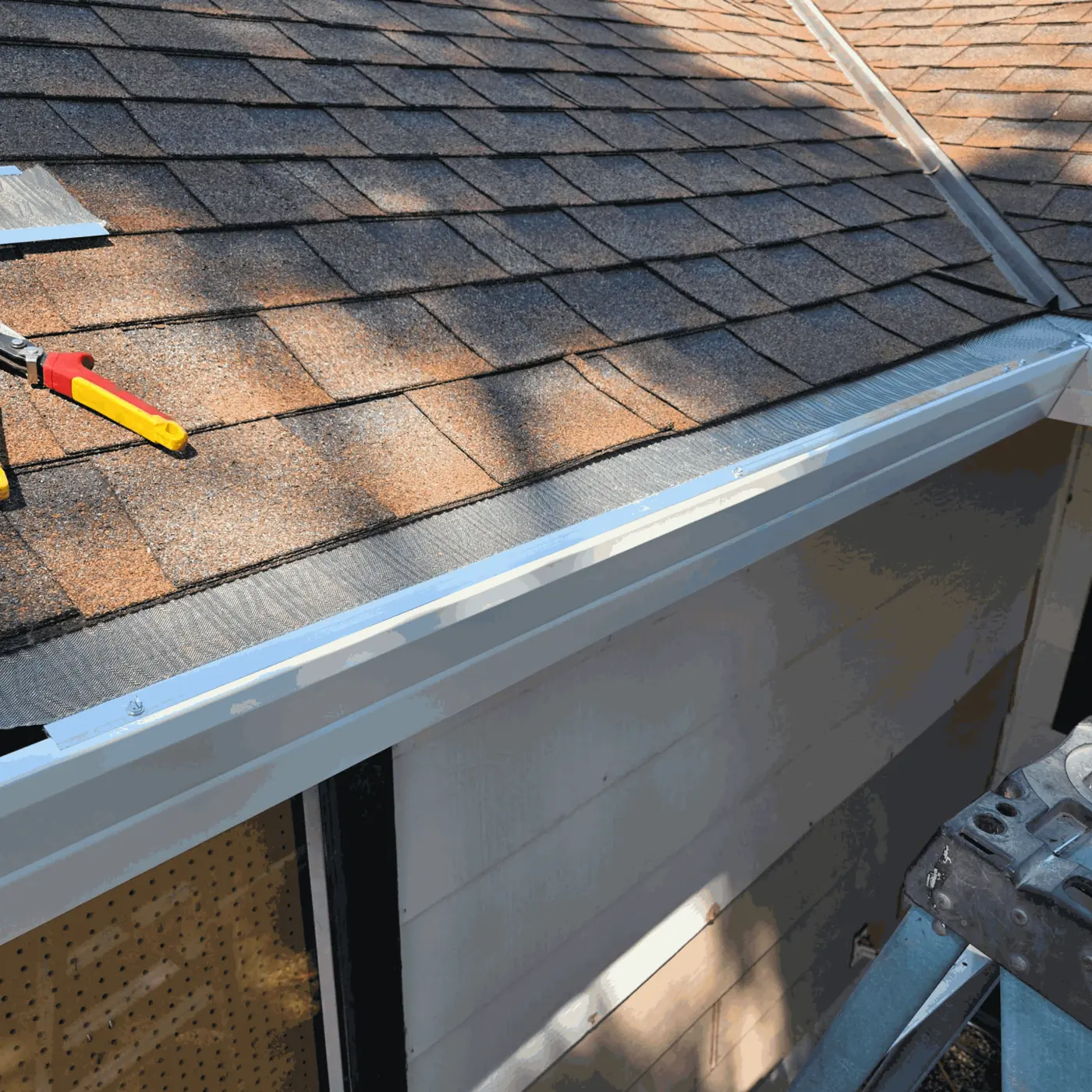
Micro-mesh gutter guards are the gold standard for bird nesting prevention. The fine stainless mesh blocks leaves and needles and physically prevents birds from accessing the gutter channel. No bird can nest in a gutter it cannot enter.
Professional installation runs $12-$20 per linear foot in Sacramento at our published rate. For a typical 150-200 linear foot home, that is $1,800-$4,000 — a one-time investment that eliminates the problem permanently. Compare that to annual cleaning costs and potential water damage.
2. Solid-Top or Reverse-Curve Guards
Reverse-curve guards use surface tension to direct water into the gutter while keeping debris (and birds) out. They are highly effective at preventing nesting, though small birds occasionally build on top of the curved surface. Professional installation is necessary.
3. Bird Spikes Combined with Regular Cleaning
Anti-roosting spikes attached to the gutter lip and fascia edge deter birds from landing. They are less expensive than gutter guards ($1-$3 per linear foot) but need to be combined with regular gutter cleaning because debris still enters the gutter. Effective against larger species (doves, robins) but sparrows often build around them.
4. Regular Gutter Cleaning Schedule
Cleaning gutters in early spring (before March) removes old nests and nesting material, making gutters less attractive. Combined with a fall cleaning, this reduces nesting by removing the building materials birds need. However, it does not physically prevent access.
5. Trim Overhanging Branches
Tree branches touching or overhanging gutters give birds a direct landing pad. Maintaining 3-5 feet of clearance between branches and gutters reduces both debris accumulation and bird access. In Sacramento neighborhoods with mature oaks and elms, this can make a significant difference.
6. Seal Fascia and Soffit Gaps
Birds enter through gaps between the gutter and fascia, especially where water damage has created openings. Sealing these gaps eliminates cavity-nesting opportunities and the bonus route into your attic. Check for hidden gutter damage that creates entry points.
7. Visual and Scent Deterrents (Limited Effectiveness)
Fake owls, reflective tape, pinwheels, and scent-based repellents are the cheapest options. They work briefly — sometimes a few days to a couple weeks — before birds figure out there is no real threat. These are not reliable as a standalone solution for Sacramento homes where bird pressure is high.
Gutter Guards: The Permanent Bird Nesting Solution
We have installed thousands of gutter guard systems across Sacramento, and the data is clear: homes with quality gutter guards have a near-zero bird nesting rate. Here is why guards work and which types are best for bird prevention specifically.
| Guard Type | Bird Prevention | Debris Protection | Cost (per LF) | Best For |
|---|---|---|---|---|
| Micro-mesh | Excellent | Excellent | $12-$20 | All-around best choice |
| Reverse curve | Excellent | Good | $8-$20 | Heavy leaf areas |
| Screen/perforated | Good | Moderate | $4-$10 | Budget-friendly option |
| Foam inserts | Poor | Poor | $2-$5 | Not recommended |
| Brush inserts | Poor | Poor | $3-$6 | Not recommended |
Warning: Foam and Brush Inserts Can Make Bird Problems Worse
Foam and brush-style gutter inserts are sometimes marketed as bird deterrents, but we have seen the opposite in practice. Birds treat the brush bristles as a nesting framework and build directly into them. Foam inserts retain moisture and organic material that attracts insects — which in turn attracts birds. If bird prevention is your goal, skip these products entirely.
The installation process matters as much as the product choice. Gaps between guard panels, loose edges, and improperly secured sections all create entry points that birds will find. Professional installation ensures a tight, continuous barrier with no access points.
For a detailed cost breakdown and brand comparison, see our Sacramento gutter guard cost guide and best leaf guards comparison.
Sacramento Bird Prevention Calendar
Timing is everything when it comes to bird nest prevention. Here is the month-by-month action plan for Sacramento homeowners.
Sacramento Nesting Season Timeline and Action Windows
| Month | Bird Activity | Recommended Action |
|---|---|---|
| September - November | Nesting season over. Old nests abandoned. | Best time to remove nests, clean gutters, and install gutter guards. No legal risk. |
| December - January | Birds scouting nest sites for spring. Some early nesters (raptors) may begin. | Last window to install prevention before nesting begins. Schedule installation. |
| February | Early nesters begin building. Sparrows and starlings start first. | Act immediately. Remove any unprotected nests and install guards before eggs are laid. |
| March - June | Peak nesting season. Multiple species active. Eggs and chicks present. | Only remove non-protected species nests. Leave native bird nests with eggs/chicks undisturbed. Monitor for damage. |
| July - August | Late broods fledging. Some species on second/third brood. | Check gutters as broods fledge. Remove nests once confirmed empty. Plan fall installation. |
A Sacramento Case: The East Sacramento Starling Problem
One East Sacramento homeowner called us after finding five separate starling nests along 40 feet of gutter on their 1920s Craftsman. The nests had been building up over three seasons. The gutters were completely blocked, the fascia had water damage on both sides of the house, and bird mites had migrated into the upstairs bedrooms through a soffit gap. Total repair cost: gutter replacement ($2,800), fascia repair ($1,200), pest treatment ($350), and gutter guard installation ($2,400). Had guards been installed after the first nest was noticed, the total cost would have been $2,400 — the guard installation alone.
Frequently Asked Questions
How do I prevent birds from nesting in my gutters?
The most effective prevention is installing micro-mesh gutter guards, which physically block birds from accessing the gutter channel. Additional methods include bird spikes on the gutter lip, trimming overhanging branches, and removing old nests before February when nesting season begins in Sacramento.
Is it legal to remove bird nests from gutters in California?
It depends on the species and nest status. Inactive nests of most species can be removed legally. Active nests of native birds are protected under both the federal Migratory Bird Treaty Act and California Fish & Game Code Section 3503. House sparrows, European starlings, and pigeons are non-native and not protected — their nests can be removed at any time. Penalties for disturbing protected active nests can reach $5,000 and six months in jail.
What birds commonly nest in Sacramento gutters?
The most common gutter nesters in Sacramento are house sparrows, European starlings, mourning doves, American robins, and house finches. House sparrows and starlings are the most prolific, often raising 3-4 broods per year in the same gutter location. According to the Sacramento Audubon Society, both starlings and sparrows are among the most abundant species in the region.
When is bird nesting season in Sacramento?
Bird nesting season in the Sacramento region typically runs from February 1 through August 31, with peak activity from March through June. Some species like great horned owls begin nesting as early as January. Prevention measures like gutter guard installation should be completed before February to avoid legal complications with active nests.
Do gutter guards prevent birds from nesting?
Yes — solid-top and micro-mesh gutter guards are the most effective long-term solution for preventing bird nesting in gutters. They create a physical barrier that blocks access to the gutter channel. Screen-style guards with larger openings may still allow smaller birds to nest on top of them. Professional installation ensures no gaps that birds can exploit.
How much damage can bird nests cause to gutters?
A single bird nest can completely block a gutter section, causing water overflow that leads to fascia rot, foundation damage, landscape erosion, and mold growth. Water damage restoration from prolonged gutter overflow typically costs $1,300-$6,300. Nest material also attracts secondary pests like bird mites, which can enter the home after chicks leave.
Stop Birds from Nesting in Your Gutters — Permanently
Do not wait until nesting season makes removal illegal. Get gutter guards installed now and protect your Sacramento home from bird nesting damage, overflow, and legal risk.
Same-day estimates available • Bird-safe removal • Professional gutter guard installation
Related Articles
Gutter Pest Prevention Guide
Complete guide to preventing all pests in your gutters — mosquitoes, rodents, wasps, and more.
Micro-Mesh Gutter Guards
Why micro-mesh is the top choice for bird prevention and overall gutter protection.
Gutter Guard Installation Checklist
Everything to prepare before your gutter guard installation.
Spring Gutter Inspection Checklist
Catch bird nests and other problems before the season starts.
Gutter Guard Maintenance Guide
Keep your gutter guards working effectively year after year.
Benefits of Gutter Guards
All the ways gutter guards protect your Sacramento home.