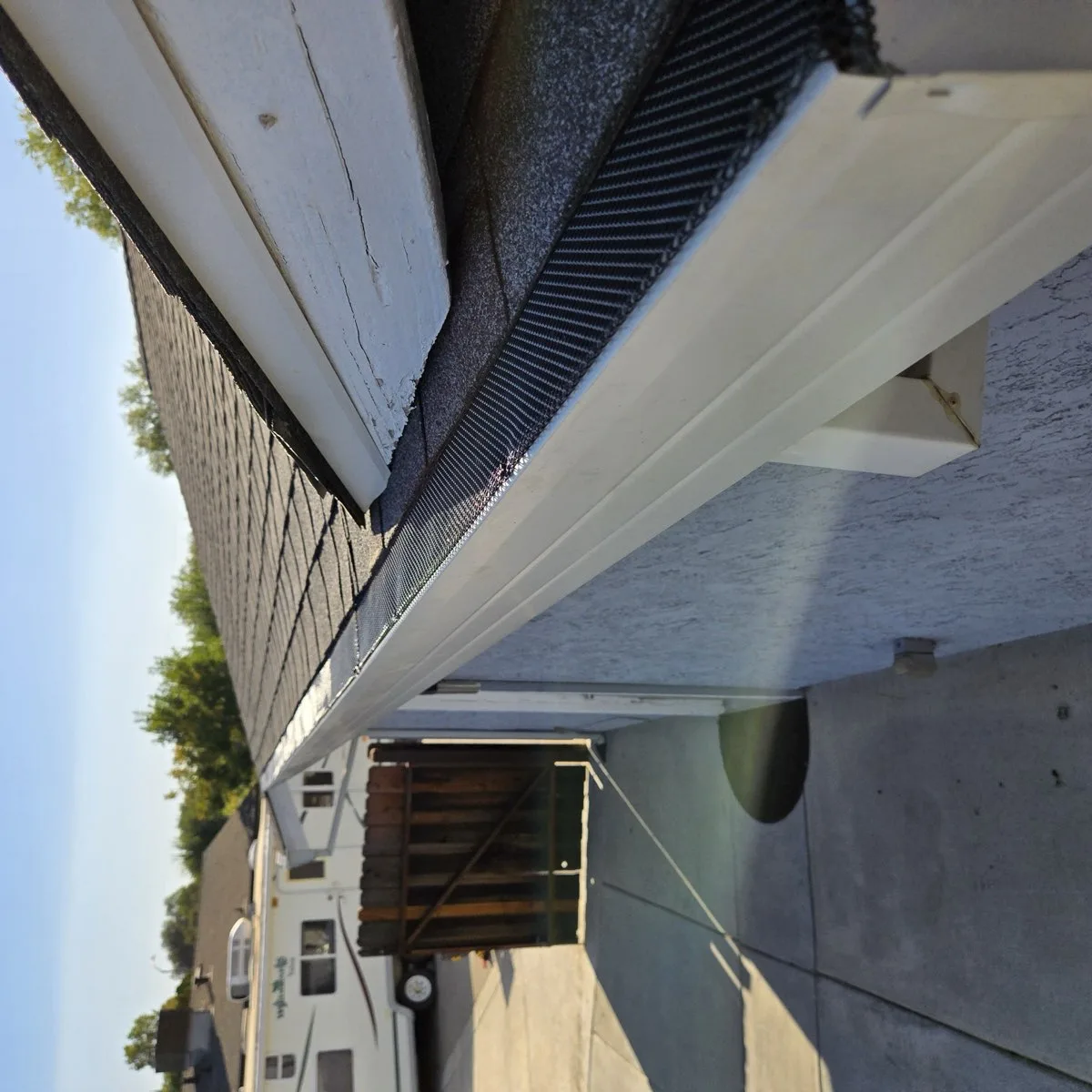

Quick Answer: Pre Fire Season Gutter Cleaning Sacramento
Pre fire season gutter cleaning Sacramento should happen between mid-May and mid-June — the narrow window after spring debris has finished dropping but before the first red flag warning of the year. CAL FIRE has issued first-of-year red flag warnings in the Sacramento region as early as April in recent years, and peak ignition risk in the foothills now runs May through November. A documented clean during this window aligns with AB 3074 Zone 0 compliance, qualifies for the Safer from Wildfires insurance discount, and removes the textbook ember-receptive fuel load — dry oak leaves, conifer needles, and seed debris — from your roofline before fire weather begins.
Table of Contents
- Why May-June Is the Right Window
- Sacramento Fire Season Start Dates (Historical Data)
- Foothill Debris Loads by Tree Species
- The 9-Step Pre-Fire Season Checklist
- How the Checklist Aligns With AB 3074 Zone 0
- DIY vs. Professional Pre-Fire Season Clean
- Insurance Documentation & Safer From Wildfires
- The August Touch-Up Most Homeowners Skip
- Frequently Asked Questions
If your Sacramento home sits anywhere with an oak, pine, or eucalyptus overhead — which covers most of Auburn, Granite Bay, El Dorado Hills, the eastern Folsom city limits, and the Loomis Basin — the six weeks between May 1 and June 15 are the most important maintenance window of your year. Miss it, and the next reasonable opportunity to handle pre fire season gutter cleaning Sacramento risk is November.
We have been installing gutter guards and running pre-fire season cleans across the Sacramento metro and the foothill counties for years. The pattern is consistent: homeowners who book the clean by April are scheduled before the rush, homeowners who wait until July are pushed into August or later, and homeowners who call after the first red flag warning of the year are dealing with a different conversation entirely — ignition risk that should already be neutralized.
TL;DR: Pre-fire season gutter work in Sacramento has a 6-week optimal window: mid-May to mid-June. By then, spring catkin drop, oak flowers, and the last of the leaf drop are complete, but red flag warning frequency is still low. The 9-step checklist below covers FHSZ confirmation, full debris removal, downspout flushing, drip-edge ember sealing, Zone 0 perimeter clearing, non-combustible guard verification, photo documentation for insurance, and an early-August touch-up. Foothill homes with valley oak, gray pine, or eucalyptus canopy should plan two cleans per fire season.
Why May-June Is the Right Window
Three signals converge on the May-June window. Spring debris has finished dropping. Red flag warning frequency is still low. And professional cleaning crews have not yet hit peak fire-season scheduling pressure.
The spring debris point is the one homeowners underestimate. Sacramento-area valley oaks shed catkins (male flowering structures) in early spring, then drop a thick layer of small, papery debris through April. Live oaks shed old leaves in March and April as new growth pushes the previous year off the canopy. By early May, that load has settled into your gutters along with any winter debris that overflowed past a clogged downspout. A clean done before May 1 misses the catkin layer entirely; a clean done after June 15 means you are working under tightening fire weather constraints.
Our deeper coverage of spring gutter inspection in Sacramento walks through what to look for when winter rain damage and spring debris overlap. The pre-fire season clean we are talking about here is the next stage — what comes after the spring inspection has identified any structural repairs.
The Three Signals That Define the Window
- • Spring debris complete: Catkins, oak flowers, and last leaf drop have settled by early May.
- • Red flag frequency low: Most years see fewer than 3 red flag days before mid-June.
- • Crew availability: Professional schedules tighten dramatically once the first red flag warning of the year is issued.
Sacramento Fire Season Start Dates (Historical Data)
The single biggest shift in Sacramento-area fire prep over the last decade is the disappearance of a fixed fire season start date. CAL FIRE used to formally declare peak fire season around June 1 each year, with seasonal hires and equipment staging keyed to that calendar marker. Starting in 2017, the agency moved to a year-round staffing posture in the most fire-prone zones, and the first red flag warning of the year has crept earlier almost every season since.
Here is the practical Sacramento-area pattern for first red flag warnings, drawn from National Weather Service Sacramento office records:
| Year | First Red Flag (Sacramento Region) | Notable Context |
|---|---|---|
| 2020 | May | Dry winter, early Diablo wind episode |
| 2021 | June (early) | Severe drought; Dixie Fire ignites in July |
| 2022 | May | Below-normal rainfall, early heat dome |
| 2023 | June (mid) | Wet winter delayed first warning |
| 2024 | May | Park Fire (Butte/Tehama) began late July |
| 2025 | April-May | Foothill grass fires by mid-May |
| 2026 (projected) | May | Average winter precipitation; standard pattern |
The consistent pattern: a first red flag warning somewhere in May or early June, then escalating frequency through August, September, and October. The most consequential structure-loss fires in Northern California history — Tubbs in 2017, Camp in 2018, the 2020 LNU/CZU/SCU lightning complexes, Dixie in 2021, Park in 2024 — all ignited after July 1 and all benefited from the cumulative ember-receptive fuel that accumulates on rooflines through the dry summer.
For Sacramento foothill homeowners, the operational lesson is simple. Plan the clean for May. Treat the first red flag warning as the deadline, not the trigger.
Foothill Debris Loads by Tree Species
What is in your gutter at the end of April depends almost entirely on the tree canopy directly overhead. Sacramento-area homeowners deal with five high-impact species, each with a different drop pattern and a different ignition profile.
| Tree Species | Peak Drop Period | Ignition Risk |
|---|---|---|
| Valley oak | Apr (catkins) + Sep-Oct (acorns) | High — dry leaf litter ignites readily |
| Live oak (interior & coast) | Mar-May (year-round trickle) | High — small leaves pack tight |
| Gray pine | Year-round needle drop | Very high — resinous, fast-igniting |
| Eucalyptus | Year-round bark + summer leaf | Very high — volatile oils, ember source |
| Liquidambar / sweetgum | Nov-Feb (heavy seed pods) | Moderate — large pods clog downspouts |
The species mix on your specific lot drives the cleaning frequency math. A Curtis Park craftsman under a single liquidambar has different needs than an Auburn ranch under three valley oaks and a gray pine. Our breakdowns of valley oak acorn drop patterns, eucalyptus debris and gutter risk, and London plane and sycamore problems walk through the species-specific maintenance schedule for each.
Pro Tip: Gray Pine Trumps Everything
If you have a gray pine (also called foothill pine or digger pine) within 50 feet of your house, treat that as the dominant signal regardless of what other species are present. Gray pine drops resinous needles year-round, and a single mature tree can lay down a half-inch of needle duff in a gutter trough between cleanings. Sacramento foothill homeowners with gray pine canopy should run the May clean and an early-August touch-up at minimum, and seriously consider non-combustible micro-mesh guards to neutralize the year-round drop pattern.
The 9-Step Pre-Fire Season Checklist
Print this and walk it. Each step has a clear pass-fail standard. The checklist below is what we use on Sacramento-area pre-fire season service calls and what we hand off to homeowners as a documentation packet for their insurer.
9-Step Pre-Fire Season Gutter & Roof-Edge Walk
- Confirm your FHSZ designation. Pull the parcel from the CAL FIRE Fire Hazard Severity Zone Viewer at osfm.fire.ca.gov. Record the zone (Moderate, High, Very High, or Non-FHSZ) and whether you sit in State Responsibility Area or Local Responsibility Area.
- Schedule the clean before June 15. Book the appointment by April. Mid-May to mid-June is the target window. Calling after the first red flag warning of the year is too late for optimal scheduling.
- Clear all combustible debris from troughs. Hand-clear leaves, conifer needles, seed pods, and accumulated dirt from every linear foot of gutter. Pay extra attention to roof valleys, behind dormers, and gutter corners where debris compacts.
- Flush every downspout to verify free flow. Run a hose at full pressure into each downspout and confirm water exits the bottom freely. Rod or snake any that back up. A clogged downspout with full troughs above is a fire-season emergency waiting to happen during the first July thunderstorm.
- Inspect and close drip edge gaps. Verify that the gap between roof deck and gutter back is closed with metal flashing. This is the seam embers exploit during a fire event — even a clean gutter with a non-combustible guard fails if the drip edge gap admits embers under the shingle.
- Verify guard material is non-combustible. Confirm any installed guard is metal (stainless or aluminum micro-mesh, or all-aluminum reverse curve). Replace foam, brush, plastic snap-in screen, or PVC reverse curve guards. Why cheap DIY guards fail in Sacramento covers the swap-out math.
- Clear the 5-foot Zone 0 perimeter. Remove combustible mulch, stored items, dry vegetation, and stacked firewood within 5 feet of the foundation under each downspout discharge point. AB 3074 makes this an enforceable standard for FHSZ parcels.
- Document the clean for insurance. Take date-stamped photos of each elevation showing cleared troughs and the Zone 0 perimeter. Retain the cleaning invoice and any guard product spec sheet. Most California carriers ask for this documentation at renewal under the Safer from Wildfires framework.
- Set the August touch-up reminder. Add a calendar reminder for the first week of August. Foothill homes with valley oak, gray pine, or eucalyptus canopy accumulate enough summer debris to warrant a second light clean before peak fire weather (late August through October).
Two of the nine steps are not one-time work. Trough debris must stay clear, and the documentation packet renews at every insurance renewal cycle. The August touch-up step is the one most Sacramento foothill homeowners skip and the one that closes the largest remaining gap.
Need a documented pre-fire season clean before mid-June?
We run pre-fire season cleans across the Sacramento metro and the foothill counties with date-stamped photo documentation, FHSZ assessment, and an insurance-ready packet at handoff. May and early June calendars fill fast.
Book your pre-fire season gutter clean →How the Checklist Aligns With AB 3074 Zone 0
The 9-step checklist is not a generic spring maintenance routine. Every step is calibrated against the AB 3074 Zone 0 standard codified at 14 CCR Section 1299, which became enforceable for Phase 1 Sacramento-area FHSZ parcels in 2026. Our deeper coverage of Cal Fire Zone 0 gutter compliance Sacramento walks through the full regulatory picture; what follows is the pre-fire season subset.
Zone 0 sets two structural rules for gutters. First, the 5-foot ember-resistant perimeter immediately around the home cannot contain combustible accumulation. A gutter trough overhanging that perimeter, packed with dry oak leaves, is treated the same as a combustible mulch bed at ground level — both are out of compliance. Second, any gutter cover or guard installed must be non-combustible.
The pre-fire season clean handles both rules simultaneously. Step 3 (debris clearing) addresses the trough accumulation rule. Step 6 (guard material verification) addresses the cover rule. Step 8 (documentation) is what an insurer or fire district inspector will actually review. Skip any of those three and the home is technically out of compliance even if the rest of the checklist is complete.
The pre-fire season clean also intersects with the California wildfire home hardening rebate framework, which reimburses qualifying gutter and vent upgrades through county-level grant programs. A clean and documentation packet by itself does not unlock the rebate — the upgrade does — but the documentation produced during the May clean becomes part of the rebate paperwork if you proceed with a guard install.
DIY vs. Professional Pre-Fire Season Clean
Single-story homes with simple roof geometry, no overhead canopy, and an able-bodied homeowner who is comfortable on a ladder can reasonably handle a DIY pre-fire season clean. Most other Sacramento-area homes should hire a professional, and the calculation tightens further when fire weather is in play.
- • Two-story or steep-pitch roofs. Ladder-based work above 15 feet drives the bulk of the gutter cleaning ladder accident rate. Our breakdown of gutter cleaning safety and ladder accident statistics covers the data. Two-story foothill homes are not a DIY project.
- • Tile or metal roofs. Tile cracks under boot traffic and metal panels crease. Tile roof gutter installation covers the access constraints; the same constraints apply to cleaning.
- • Documented insurance compliance. A professional invoice and date-stamped photo set is the documentation packet most California carriers want. A DIY clean is harder to defend at renewal.
- • Fire weather windows. Once red flag warnings begin, professional crews adjust ladder work and equipment use to reduce ignition risk. A DIY homeowner with a metal ladder and a string trimmer has no such protocol.
- • Solar panel arrays. Cleaning around solar requires careful staging. Gutter guards and solar panels walks through the access and warranty considerations.
For homeowners who do choose the DIY path, the DIY gutter cleaning guide for Sacramento covers the safety equipment, ladder placement, and trough-clearing technique that produce a clean comparable to professional work. The non-negotiable is the photo documentation step — do that first, before you start clearing, and again when the work is complete.
Insurance Documentation & Safer From Wildfires
The California Department of Insurance Safer from Wildfires framework is the rulebook every California admitted carrier and the FAIR Plan now use to grant wildfire mitigation discounts. The framework lists annual gutter cleaning as a foundational mitigation action under the building category, alongside roof material, vent screens, deck and patio cover material, and the Zone 0 perimeter.
Practically, that means three documentation pieces should sit in a folder on your computer or in your insurer’s app for every renewal cycle:
- Date-stamped photos of cleared troughs. One photo per elevation. The phone camera timestamp is sufficient for most carriers.
- Service invoice or receipt. Professional invoice with date, address, and scope of work. For DIY cleans, a dated photo of the trash bag of debris and a written log entry counts but is weaker.
- Product spec sheet for any installed guard. Confirms non-combustible material. Required for the larger discount tiers under Safer from Wildfires.
Our deeper coverage of gutter guard insurance discounts in California for 2026 walks through the carrier-side process, including how to file documentation with State Farm, Mercury, Allstate, and the FAIR Plan, and what the practical premium credit looks like. The wildfire portion of the premium credit typically runs 5 to 20 percent for Sacramento foothill homes — meaningful money against a $200 to $400 annual cleaning.
The August Touch-Up Most Homeowners Skip
The May-June clean is the structural one. The August touch-up is what closes the gap between a foothill home that survived peak fire season and one that did not.
Between June 15 and August 1, a typical Sacramento foothill home accumulates a measurable second debris layer. Live oaks continue trickling old leaves through the summer. Gray pine drops needles year-round. Eucalyptus sheds bark strips and gum nuts continuously. Valley oak begins dropping early acorns by late July in some years. By the first week of August, a roofline that was clean on June 1 typically has a quarter-inch to a half-inch of dry, ember-receptive duff back in the trough.
The touch-up is faster and cheaper than the May clean. There is less material to remove, the focus is on debris rather than full inspection, and a homeowner with a non-combustible guard installed can often handle the surface sweep with a soft broom from the ground or a low ladder. The goal is not a deep clean — it is preventing the accumulation from becoming a fuel load before the September and October fire weather windows arrive.
Skip the touch-up and you arrive at September with the worst possible fuel-load profile: dry summer debris layered into a clean trough, with red flag warning frequency rising and Diablo wind events on the forecast. Our fall gutter maintenance checklist picks up the seasonal sequence from there, but the fall clean is a different posture — preparation for the rainy season, not for fire.
Pro Tip: Bundle the August Touch-Up With Solar Cleaning
Most Sacramento solar arrays benefit from a summer cleaning to remove dust and pollen accumulation that suppresses output during peak generation months. Booking the gutter touch-up and the gutter guards with rooftop solar in a single August service call cuts mobilization cost on both sides and gets one ladder set up doing two jobs. We bundle these in early August for foothill homeowners every year.
For homeowners on the fence about the second clean, the cost-benefit math is straightforward: a $150 to $300 August touch-up versus the cleanup, ash remediation, and insurance exposure documented in post-wildfire gutter cleanup in Sacramento. The asymmetry is enormous.
Frequently Asked Questions
When should I clean gutters before fire season in Sacramento?
The optimal window for pre fire season gutter cleaning in Sacramento is mid-May through mid-June. By that point spring catkin drop, oak flower debris, and the first round of dried leaves have accumulated, but red flag warning frequency is still low. Cleaning during this window gives you a clean trough heading into the high-risk July through October period. Foothill homes in Auburn, Granite Bay, and El Dorado Hills should plan a follow-up touch-up in early August because oak and pine debris builds quickly through summer. Waiting until July or later means you are working under fire weather restrictions, and any spark from metal-on-metal ladder contact during a red flag event is a serious liability exposure.
What month does fire season start in Sacramento?
CAL FIRE no longer treats fire season as a fixed start date. Historically the agency declared peak fire season around June 1 in the Sacramento region, but the 2020 through 2025 fire years have repeatedly seen the first red flag warnings issued in late April or May. The practical answer for homeowners is that the high-risk window now runs from May through November, with the most consequential ignitions clustering in late August through October when fuel moisture is lowest and Diablo wind events arrive. Treat May 1 as the latest reasonable date to start your pre-fire season home prep work, and June 15 as the latest reasonable date to have gutters fully cleaned and documented.
Is May too late to clean gutters before fire season?
May is the right time for most Sacramento homes, not too late. Cleaning earlier than May means catkin drop, oak flower debris, and the last of the spring leaf drop will partially refill the trough before peak summer. Cleaning in May captures all of the spring debris in one pass. The concern is not May itself but waiting past mid-June. Once red flag warnings begin and ambient temperatures push past 95 degrees, professional crews limit ladder work during fire weather windows, scheduling tightens, and any ignition risk from the work itself rises. The cleanest plan is to schedule your pre-fire season clean for the third or fourth week of May.
Do I need to clean gutters twice during fire season?
For most foothill Sacramento homes, yes. A single late-May clean is the minimum standard. Homes with overhanging valley oak, blue oak, gray pine, or eucalyptus canopy benefit from a second light cleaning in early August. Acorns, gum nuts, and pine needles drop steadily through the summer in those species, and a half-clogged trough is a worse ignition risk than a fully clogged one because partial debris dries faster and ignites more readily. Homes with non-combustible micro-mesh gutter guards installed can usually run a single annual cycle, but the guard surface itself still needs a soft brush sweep to clear surface debris before it builds up enough to overflow during a thunderstorm.
Does pre-fire season gutter cleaning qualify for an insurance discount?
Pre-fire season gutter cleaning by itself is part of the documentation packet under the California Department of Insurance Safer from Wildfires framework. Carriers require evidence of an annual cleaning when granting the wildfire mitigation premium credit, which typically runs 5 to 20 percent of the wildfire portion of the premium. Pairing the cleaning with a non-combustible micro-mesh gutter guard upgrade is what unlocks the larger discounts and aligns the home with AB 3074 Zone 0 compliance. Keep date-stamped photos of cleared troughs, the installer or service invoice, and a copy of any product spec sheet for installed guards. Most carriers ask for the documentation at renewal.
What happens if I skip pre-fire season gutter cleaning?
The two consequences are ignition risk and code exposure. Dry oak leaves, conifer needles, and palm fronds inside a roof-edge gutter are textbook ember-receptive fuel. CAL FIRE post-fire investigations from the 2017 Tubbs, 2018 Camp, and 2025 Sierra foothill fires all document gutter-line ignitions as a primary structure-loss pathway. Code exposure follows. Within an FHSZ parcel, accumulated combustible debris in the trough is a Zone 0 violation under AB 3074 and 14 CCR Section 1299. A failed defensible space inspection produces a notice of violation, a re-inspection fee in the $200 to $500 range, and in some jurisdictions a daily penalty until corrected. The compounding risk is insurance non-renewal, which is significantly more expensive than the cleaning itself.
Book Your Sacramento Pre-Fire Season Gutter Clean Before June 15
We run documented pre-fire season cleans across the Sacramento metro and the foothill counties — full debris removal, downspout flush, drip-edge inspection, FHSZ assessment, and an insurance-ready photo packet at handoff. May and early June calendars fill fast.
Free estimates • Documented pre-fire season clean • Serving Sacramento, Folsom, El Dorado Hills, Auburn, Granite Bay & the foothills
Related Articles
Cal Fire Zone 0 Gutter Compliance
The full AB 3074 picture and Phase 1 enforcement timeline for Sacramento foothills.
Gutter Guards & Wildfire Protection
Sacramento home hardening playbook for foothill ember exposure.
CA Wildfire Hardening Rebates
Stack Safer from Wildfires, FAIR Plan discounts, and county grants.
Post-Wildfire Gutter Cleanup
Safe ash, smoke, and retardant removal after a fire event.
Spring Gutter Inspection Checklist
Post-winter inspection steps that feed into the May clean.
Gutter Guards Granite Bay & Loomis
Pine needle, oak leaf, and wildfire debris guide for the basin.