Detailed Answer
Pine needles are the hardest debris type for gutter guards to manage. Individual needles from Ponderosa, Monterey, and Italian Stone pines are 1–2mm in diameter — thin enough to slip through standard screen openings or wedge into brush inserts. The only guard type with openings fine enough to block them is micro-mesh.
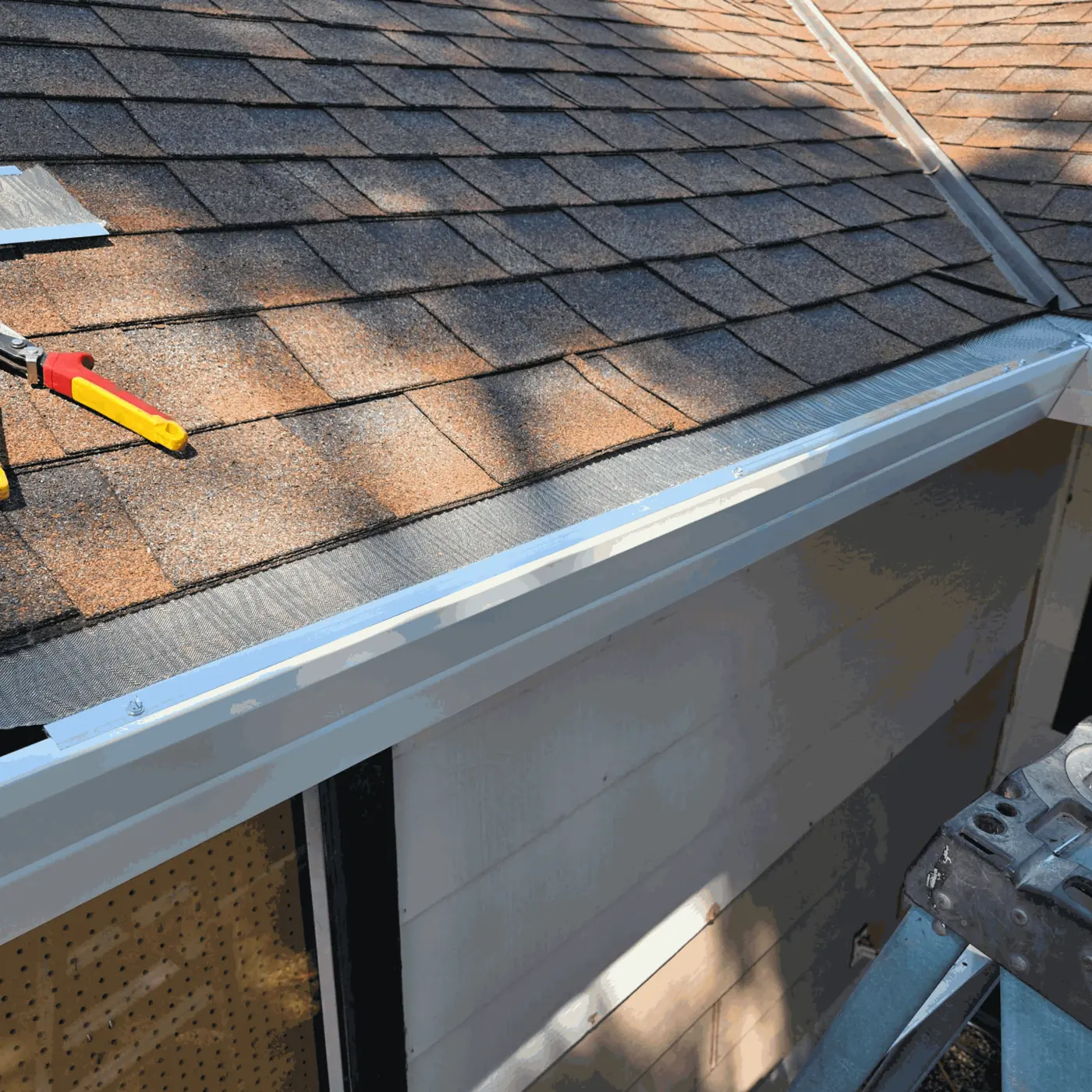
Premium micro-mesh guards use a stainless steel mesh with openings that brands publish at roughly 275 to 550 microns, bonded to an aluminum frame. Water surface tension allows rain to pull through the mesh while debris including pine needles, pollen clusters, and shingle grit stays on top. With proper installation pitch, wind and water sheet debris off the surface rather than allowing it to accumulate.
The key performance differentiator is mesh quality. Budget micro-mesh guards sold at home improvement stores often use plastic mesh or larger openings that work for leaves but allow needles through. Professional-grade systems use 316 surgical stainless mesh that maintains its opening size over time without rust, deformation, or UV degradation. These systems carry 20-25 year warranties.
Pine needle performance also depends on installation. Guards installed with insufficient pitch allow needles to lie flat on the mesh surface and eventually work their way through over time. Professional installers account for this by setting the guard angle to maximize drainage across the mesh face.
For Sacramento-area homes in Fair Oaks, Orangevale, El Dorado Hills, Auburn, and Folsom where pine trees are common, expect to pay $12–$20 per linear foot installed for a system that actually performs. Cheaper options at $3–$8/lf will require partial cleaning within 1–2 years and often make the pine needle problem worse by trapping them in a partially obstructed channel.