Detailed Answer
The short answer is yes for budget guard types, and not recommended for premium systems. Understanding the difference matters more than the DIY vs. professional question itself.
Foam inserts and snap-in screen guards sold at home improvement stores are designed for homeowner installation. They require no tools beyond a ladder and fit into standard 5-inch and 6-inch K-style gutters without fasteners. The installation is genuinely simple. The problem is performance: foam inserts become saturated with fine debris within 1–2 seasons and often trap seeds that germinate inside the gutter. Snap-in screens handle large leaves but allow pine needles, shingle grit, and small debris through freely. Many homeowners who have tried these products end up removing them after a season because they created maintenance problems rather than solving them.
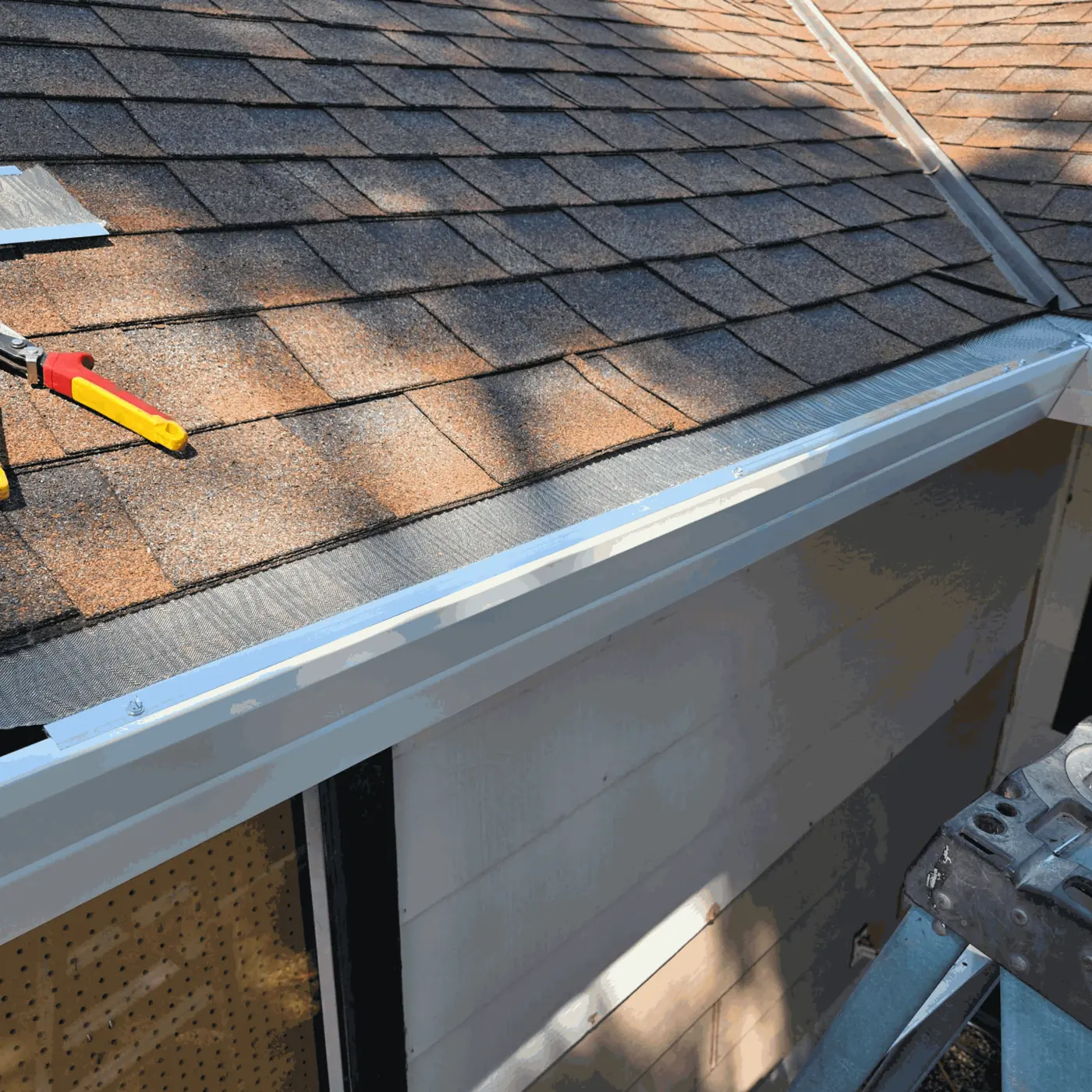
Premium micro-mesh guard installation involves significantly more complexity. The guards must be set at a specific angle relative to the gutter lip and roof shingles to ensure water flows through rather than over the surface. Incorrect pitch is the single most common cause of overflow during heavy rain. Many systems also require cutting the guard to fit at corners, valleys, and end caps, which needs the right tools and experience to get clean, watertight results. Most manufacturer warranties are void on DIY installations.
Height safety is also a real factor. Two-story gutter work requires ladder positioning on pitched roofs and working at heights that cause serious falls if approached casually. Professional gutter companies use standoff ladder stabilizers, roof jacks, and fall protection on steep pitches.
For homeowners who want to evaluate before spending on professional installation: a professional cleaning followed by a guard estimate is often the better starting point. You'll know the actual condition of your gutters, get a firm price, and understand what type of guard is appropriate for your specific debris environment.