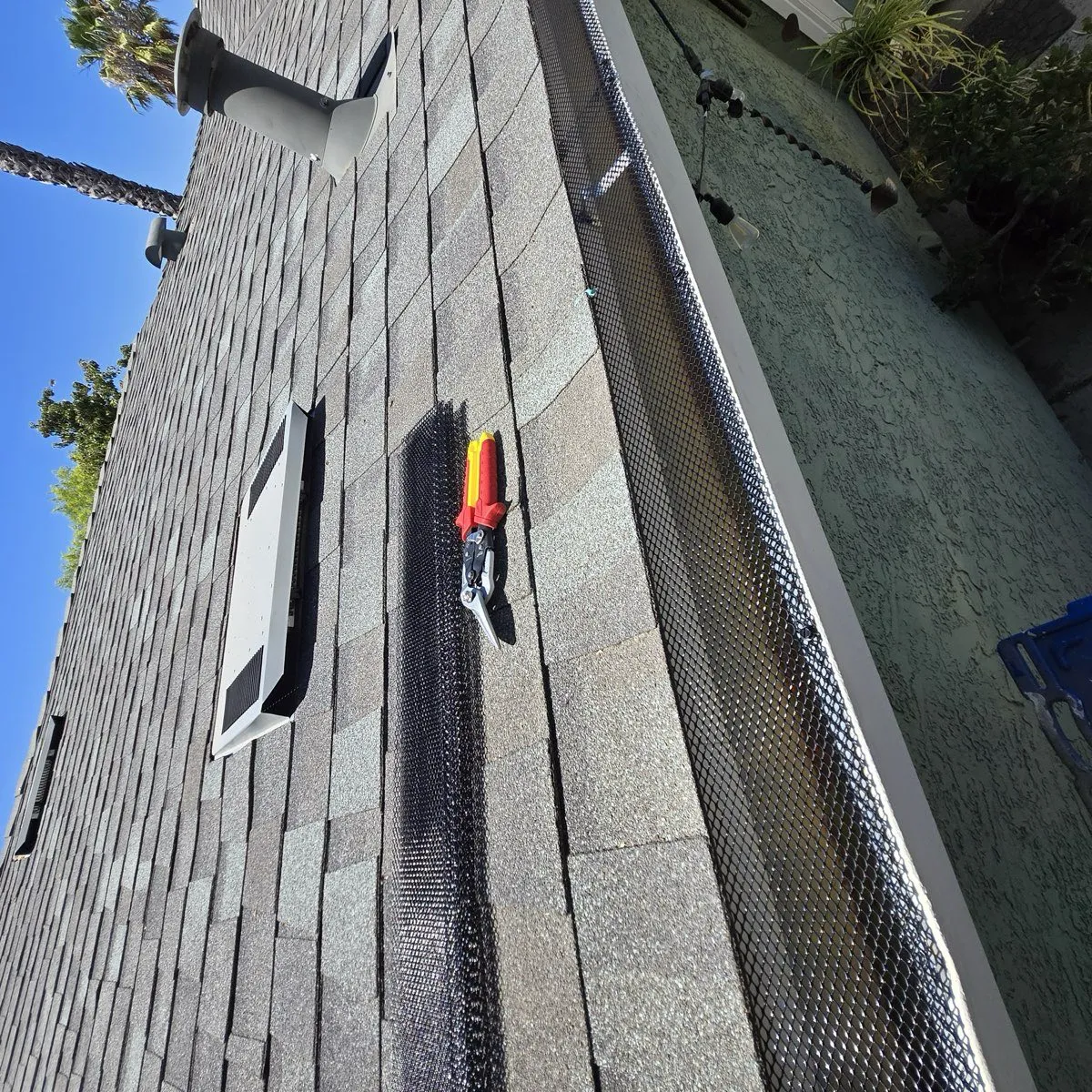

The Short Answer: Your Gutters Are a Rodent Highway
Rodents in gutters are a serious and growing problem across Sacramento. Roof rats climb downspouts and run along gutter channels to reach soffit gaps, fascia openings, and attic vents. Squirrels use overhanging branches and gutter lips as launch points. Clogged gutters accelerate the problem by providing nesting material, standing water, and cover from predators — all within inches of your attic entry points.
If you hear scratching in the walls at 2 a.m. or find chewed wiring in your attic, there is a good chance the problem started at your gutters. Sacramento's combination of mature tree canopy, mild winters, and abundant roof rat populations makes rodents in gutters one of the most common — and most underestimated — entry routes into local homes.
The National Pest Management Association (NPMA) estimates that 21 million U.S. homes are invaded by rodents each winter. In the Sacramento region, clogged gutters attracting pests is a year-round issue because our mild climate keeps rodent populations active in every season. This guide covers exactly how rodents use your gutter system, what damage they cause, and how to shut them out permanently.
Why Sacramento Is a Rodent Hotspot
Sacramento is not just any city when it comes to rodent pressure. Several factors specific to our region make gutters an especially attractive entry point for rats and squirrels.
- Mature tree canopy: Sacramento is called the "City of Trees" for a reason. The dense canopy of valley oaks, coast live oaks, and ornamental trees gives roof rats and squirrels direct branch-to-roof access across most neighborhoods — East Sacramento, Land Park, Curtis Park, Arden-Arcade, and Carmichael in particular.
- Mild winters: Unlike colder climates where rodent populations crash in winter, Sacramento's mild Central Valley winters keep rat and squirrel colonies active year-round. Rodents do not hibernate here — they just move indoors when temperatures drop below 50°F at night.
- Older housing stock: Many Sacramento homes built before 1980 have unsealed soffit gaps, deteriorating fascia, and original vent screens with rust holes — all easy entry points once a rodent reaches the roofline via the gutter.
- Agricultural proximity: Sacramento County borders active agricultural land. Crop harvesting displaces field rodent populations into residential neighborhoods, particularly in Natomas, Elk Grove, and south Sacramento.
Sacramento Gutter Rodents: Species Comparison
According to UC IPM (University of California Integrated Pest Management Program), roof rats are the dominant climbing rodent species in the Sacramento Valley. Unlike Norway rats, which stay at ground level and burrow near foundations, roof rats are agile climbers that use gutters, fascia boards, and rooflines as travel corridors to reach eaves and attic openings.
How Rats and Squirrels Use Your Gutters to Reach the Attic
Your gutter system was designed to move water. Rodents have turned it into a transportation network. Here is the step-by-step path rodents take from ground level to your attic, and why clogged gutters make every step easier.
Climbing the Downspout
Roof rats climb vertical downspouts by bracing their backs against one side and their feet against the other. A standard 3×4-inch rectangular downspout is the perfect width for this "chimney climbing" technique. Round downspouts are harder but still climbable using exterior brackets as footholds.
Running the Gutter Channel
Once at the roofline, rodents run along the gutter channel like a sidewalk. Clean gutters offer less cover, but clogged gutters full of debris give rodents cover from raptors and cats. The debris also provides nesting material they can pull directly into nearby entry points.
Exploiting Gaps at the Roofline
The gutter meets the fascia. The fascia meets the soffit. The soffit meets the roof sheathing. Each junction is a potential gap. According to UC IPM, rats can squeeze through openings as small as half an inch — roughly the size of a quarter. Deteriorating fascia and soffit widen these gaps over time.
Entering the Attic
Once through the roofline gap, the rodent is in your attic. Roof rats nest in insulation, chew wiring, and contaminate the space with droppings. Squirrels gnaw larger entry holes and store food caches. Both species establish scent trails that attract more rodents to the same entry point.
Pro Tip: The Branch-to-Gutter Bridge
UC IPM recommends trimming all tree branches to at least 6 feet from your roofline. In Sacramento neighborhoods like East Sacramento, Land Park, and Carmichael, overhanging oak and elm branches often rest directly on the gutter — giving squirrels and roof rats a step-free bridge to your roof. Branch trimming alone will not solve the problem if your gutters are clogged (rodents have other climbing routes), but it eliminates the easiest access path.
Why Clogged Gutters Are Rodent Magnets
A clean, empty gutter is still a potential rodent highway. But a clogged gutter? That is a fully furnished rodent habitat. Here is what debris-filled gutters provide to rodents that clean ones do not.
| Rodent Need | Clean Gutter | Clogged Gutter |
|---|---|---|
| Water source | None — water drains | Standing water pools |
| Nesting material | None available | Abundant leaves, twigs, shingle grit |
| Food source | None | Seeds, insects, decomposing organic matter |
| Cover from predators | Exposed — visible to hawks | Hidden under debris layer |
| Fascia/soffit damage | Minimal — no moisture trap | Overflow rots wood, creating larger gaps |
This is the compounding effect that makes clogged gutters so dangerous for rodent entry. The debris clogs attract rodents. The standing water sustains them. The overflow from clogged channels damages fascia boards, which creates the gaps they squeeze through to enter the attic.
Every season you skip gutter cleaning, the problem compounds. The gutters clog further, the fascia deteriorates more, the gaps widen, and the rodent population using that entry route grows.
Sacramento Rodent Activity by Season
Roof rat attic intrusions peak from October through January in Sacramento, when nighttime temperatures drop and rodents seek warm shelter. Squirrel gutter activity spikes in spring during nesting season and again in fall when they cache acorns and walnuts. Sacramento pest control companies report that the majority of attic rodent calls come within 3 months of the fall leaf drop — the same window when gutter clogs are at their worst.
Rodent-Proof Your Gutters Before Fall
Gutter guards eliminate the debris, standing water, and cover that attract rodents to your roofline. Get a free estimate on professional gutter guard installation for your Sacramento home.
Warning Signs of Rodents in Your Gutters and Attic
Rodent infestations usually start small and grow fast. A single pair of roof rats can produce 40+ offspring per year. Here are the signs Sacramento homeowners should watch for, organized by where you will spot them.
Signs Visible from the Ground
- Droppings on the roof or patio: Roof rat droppings are dark, spindle-shaped, and about half an inch long. Squirrel droppings are slightly larger and more rounded.
- Gnaw marks on gutter edges: Both rats and squirrels chew aluminum and vinyl gutter lips. Look for fresh, light-colored bite marks along the top edge.
- Grease trails along the gutter run: Roof rats leave dark grease marks (sebum from their fur) along surfaces they travel repeatedly. A dark streak along your gutter's exterior is a strong indicator.
- Debris packed into the gutter: Squirrels actively pack leaves, bark strips, and twigs into gutters as nesting material — different from the random leaf accumulation of natural debris.
- Fruit or nut shells on the roof: Squirrels carry acorns, walnuts, and citrus onto rooflines. Shells scattered near the gutter line indicate active travel routes.
Signs Inside the Home
- Scratching or scurrying at night: Roof rats are nocturnal. If you hear activity in the walls or ceiling between 10 p.m. and 4 a.m., roof rats are the most likely cause.
- Scratching or thumping during the day: Squirrels are diurnal. Daytime attic noise, especially heavy thumping, typically indicates squirrel activity.
- Urine odor from the attic: Rodent urine has a strong, musky ammonia smell. If the odor is strongest near the eaves or roofline vents, the entry point is likely at the gutter-fascia junction.
- Chewed wiring or insulation disturbance: Check your attic for exposed copper wiring (a fire hazard), compressed or shredded insulation, and droppings concentrated near eave areas.
Rodent Damage Cost Breakdown: Gutter-Entry Infestation
Roof Rats vs. Squirrels: How Each Species Uses Your Gutters Differently
Both roof rats and squirrels use gutters as access routes, but their behaviors — and the damage they cause — differ in important ways. Understanding the difference helps you identify which pest you are dealing with and choose the right response.
| Behavior | Roof Rats | Squirrels |
|---|---|---|
| Active hours | Nocturnal (10 PM - 4 AM) | Diurnal (dawn - dusk) |
| Gutter climbing method | Chimney-climb inside downspouts; run along channel | Leap from branches to gutter lip; grip exterior |
| Entry hole size | Squeeze through 1/2-inch gaps | Gnaw 2-3 inch holes through wood/aluminum |
| Primary gutter damage | Grease contamination, droppings, gnawing plastic | Gnawing aluminum edges, packing nesting debris |
| Attic damage | Chews wiring (fire risk), contaminates insulation | Gnaws structural wood, stores food caches |
| Reproduction rate | 4-6 litters/year, 6-8 pups each | 1-2 litters/year, 2-4 pups each |
| Sacramento peak season | October - January (cold drives them in) | March - May (nesting) and September - November (caching) |
Fire Hazard Warning: Roof Rat Wiring Damage
Roof rats gnaw constantly to keep their teeth filed down. Electrical wiring in attics is a frequent target. The National Fire Protection Association (NFPA) identifies rodent-damaged wiring as a contributing factor in structure fires. If rats have entered your attic through the gutter-fascia junction, have an electrician inspect attic wiring before simply addressing the pest issue. The entry point and the wiring damage both need remediation.
How Gutter Guards Prevent Rodents from Using Your Gutters
Gutter guards work against rodents on multiple levels. They are not just a physical barrier — they eliminate the entire ecosystem that makes your gutters attractive to rats and squirrels in the first place.
Physical Barrier
Micro-mesh gutter guards cover the gutter channel with stainless steel mesh (typically 50-mesh or finer). Rodents cannot enter the gutter to run along it, nest in it, or use it as a staging area. The mesh is too fine for rat teeth to grip and too tough for squirrels to gnaw through.
Eliminates Nesting Material
Without debris accumulating in the gutter, there is nothing for rodents to build nests with at the roofline. Leaves, twigs, and seed pods shed off the mesh surface instead of collecting inside the channel.
Removes Standing Water
Clog-free gutters drain completely, removing the water source that sustains rodent populations at the roofline. No standing water also means no mosquito breeding — addressing two pest problems simultaneously.
Prevents Fascia Deterioration
By keeping gutters flowing, guards prevent the overflow that rots fascia boards. Intact fascia means no widening gaps at the roofline — the primary entry points rodents exploit after traveling the gutter channel.
Removes Predator Cover
A clean gutter with a visible mesh surface offers no concealment. Hawks, owls, and cats can spot rodents on the roofline far more easily than when debris provides a hiding layer.
Gutter Guard Rodent Prevention Effectiveness
Pro Tip: Why Installation Quality Matters More Than Product Choice
We have seen high-quality gutter guards fail at rodent prevention because of sloppy installation. A single gap between guard panels wider than half an inch gives a roof rat a front door. Edges that are not sealed to the fascia give squirrels a pry point they can widen with their teeth. Professional gutter guard installation ensures a continuous, sealed barrier with no entry points. If you are comparing options, see our installation mistakes guide to understand what separates a rodent-proof installation from one that just looks good.
For a full comparison of guard types and their performance across different criteria, see our reverse curve vs. micro-mesh comparison and why cheap DIY guard options fail.
Complete Gutter Rodent-Proofing Checklist for Sacramento Homes
Gutter guards are the single most impactful step, but a thorough rodent exclusion plan addresses the full system. Here is the complete checklist we recommend to Sacramento homeowners.
- Install micro-mesh gutter guards — Covers the gutter channel entirely, blocking entry and eliminating debris habitat. This is the foundation of any rodent-proofing plan.
- Seal fascia-to-soffit gaps — Use galvanized steel mesh or sheet metal to close any opening larger than 1/4 inch at the roofline. Wood putty alone will not stop rodents — they chew through it.
- Cap downspout openings — Install wire mesh caps on the top and bottom of all downspouts to prevent chimney-climbing entry. The mesh must be fine enough to block rats (1/4-inch hardware cloth).
- Trim trees to 6+ feet from the roofline — Eliminate the branch-to-gutter bridge. Pay special attention to oak, walnut, and elm branches that overhang the gutter.
- Replace damaged fascia and soffit — Rotted or water-damaged wood at the roofline is where rodents break through most easily. Repair or replace before installing guards.
- Screen all attic vents — Use 1/4-inch hardware cloth over gable vents, soffit vents, and ridge vents. Standard window screen is too weak — rodents chew through it in minutes.
- Remove existing nests and droppings — Have any current infestation professionally remediated before sealing entry points. Trapping rodents inside your attic is worse than leaving the entry open.
- Schedule annual gutter guard maintenance — Even quality guards benefit from an annual check. Our maintenance guide covers what to inspect and when.
A Sacramento Case: The Arden-Arcade Roof Rat Highway
An Arden-Arcade homeowner called us after a pest control company found roof rats nesting in the attic directly above the master bedroom. The pest crew traced the entry to a 3/4-inch gap where the fascia board had pulled away from the soffit — right behind a clogged section of gutter. The gutter had not been cleaned in over two years. Decomposing oak leaves had trapped moisture against the fascia, softening the wood until it sagged away from the soffit. The rats used the clogged gutter as a travel lane and the rotted gap as a door. Total remediation: pest exclusion ($850), attic cleanup and insulation replacement ($2,800), fascia repair ($600), and gutter guard installation ($2,200) — about $6,450 total. The gutter guards alone would have prevented the entire chain of events for $2,200.
Gutter Guards vs. Other Rodent Prevention Methods
Homeowners often try other solutions before investing in gutter guards. Here is an honest comparison of how each method performs specifically for gutter-entry rodent prevention.
| Method | Effectiveness | Duration | Cost | Limitation |
|---|---|---|---|---|
| Micro-mesh gutter guards | Excellent | 20+ years | $7-$18/ft | Requires professional installation |
| Regular gutter cleaning | Moderate | 3-6 months | $150-$350/visit | Does not block gutter as travel route |
| Ultrasonic repellers | Poor | Temporary | $20-$80 | Rodents habituate within days; no scientific support |
| Peppermint oil / repellent sprays | Poor | Days | $10-$30 | Evaporates quickly; no barrier effect |
| Snap traps on roof | Moderate | Ongoing | $5-$15/trap | Reactive, not preventive; must rebait and reset |
| Pest exclusion (sealing only) | Good | 5-10 years | $300-$1,500 | Does not address gutter habitat; new gaps form as fascia deteriorates |
The most effective approach combines gutter guards with targeted exclusion work. Guards eliminate the habitat and travel route; exclusion seals the remaining entry points. For a full cost-benefit analysis of gutter guards vs. repeated cleaning, see our gutter cleaning vs. gutter guards comparison.
Frequently Asked Questions
Can rats climb up gutters to get into my attic?
Yes. Roof rats are exceptional climbers that scale vertical surfaces including downspouts, gutter brackets, and the gutter channel itself. According to UC IPM, roof rats use gutters, fascia boards, and rooflines as travel corridors to reach eaves and attic openings. They can squeeze through gaps as small as a quarter — about half an inch.
Do gutter guards keep rodents out of gutters?
Yes — micro-mesh and solid-top gutter guards physically block rodents from nesting inside gutters and eliminate the debris buildup that attracts them. By removing standing water and leaf litter from the gutter channel, guards also cut off the food and water sources rodents seek. Professional installation with sealed edges is critical, as rats can exploit gaps as small as half an inch.
What are the signs of rodents living in my gutters?
Common signs include scratching or scurrying sounds along the roofline (especially at night for rats, daytime for squirrels), droppings on the roof or near downspouts, gnaw marks on fascia boards or gutter edges, visible nesting material in gutters, grease marks along gutter runs, and damaged or chewed soffit screens. Roof rats leave dark, spindle-shaped droppings about half an inch long.
How do squirrels damage gutters in Sacramento?
Squirrels cause gutter damage by gnawing on aluminum and vinyl gutter edges, packing gutters with nesting material (leaves, twigs, bark strips) that causes clogs, chewing through plastic downspout connections, and loosening gutter hangers by running along the gutter lip. Their nesting debris blocks water flow and leads to overflow, fascia rot, and foundation damage during Sacramento rainy seasons.
What rodents are most common in Sacramento gutters?
The three most common rodent species found in or around Sacramento gutters are roof rats (Rattus rattus), Eastern fox squirrels, and Western gray squirrels. Roof rats are the primary concern because they are nocturnal climbers that use gutters as highways to reach attic entry points. Norway rats are also present in Sacramento but typically stay at ground level near foundations rather than climbing gutters.
How much does rodent damage from gutter entry cost to repair?
Rodent damage that originates from gutter-level entry typically costs $1,500 to $8,000+ to fully remediate in Sacramento. This includes pest control and exclusion ($300-$1,500), attic insulation replacement ($1,500-$3,500), soffit and fascia repair ($400-$1,200), and gutter repair or replacement if chewed through ($500-$2,000). Rodent-damaged electrical wiring — a fire hazard — adds $500-$2,000 for rewiring.
Stop Rodents at Your Gutters — Before They Reach Your Attic
Gutter guards eliminate the debris, standing water, and cover that attract rats and squirrels to your Sacramento roofline. One installation protects your home for 20+ years. Get a free, no-pressure estimate today.
Free estimates • Rodent-proof installation • 20+ year warranty options
Related Articles
Gutter Pest Prevention Guide
Complete guide to preventing all pests in your gutters — mosquitoes, rodents, wasps, and more.
Birds Nesting in Gutters
Prevention, removal, and California law for birds nesting in your Sacramento gutters.
Benefits of Gutter Guards
All the ways gutter guards protect your Sacramento home — including pest prevention.
Micro-Mesh Gutter Guards
Why micro-mesh is the top choice for rodent prevention and overall gutter protection.
Soffit & Fascia Repair
Repair the roofline gaps that rodents exploit after climbing your gutters.
Gutter Guard Cost Guide
Complete pricing for gutter guard installation in Sacramento.