Quick Answer
First-rain overflow almost always means a summer of debris built up in a gutter with no water to reveal it, and the first storm hits a system that is already blocked. Watch where it overflows: along the whole run points to a clog or undersized gutter; a single low spot points to slope or a sag; overflow only at the downspout end points to a blocked drop.
Fastest path: clear the clog first, then run a hose test to expose any slope problem underneath.

In This Guide
TL;DR: First-rain overflow has four causes: a summer debris clog (most common), a blocked downspout, a slope or sag error, or gutters undersized for Sacramento storm intensity. Diagnose by watching where the water spills. Clean first, then hose-test for slope. A one-time re-slope or a set of gutter guards ends the annual overflow cycle. Overflow is not cosmetic — it dumps water at your foundation in expansive clay soil.
There is a specific Sacramento moment every fall: the first atmospheric river rolls in after five bone-dry months, you look out the window, and a sheet of water is pouring over the front of your gutter like it is not even there. It feels sudden. It is not.
Our climate sets this up perfectly. Sacramento gets roughly 80% of its rain between November and March and almost none over the summer. That means debris accumulates in your gutters for months with no water moving through to show you there is a problem. The first heavy storm simply reveals what has been building since spring.
The good news is that first-rain overflow is one of the most diagnosable gutter problems there is, because the water itself tells you the cause. This guide walks the diagnosis from the ground up, matched to what Sacramento homes actually deal with. If your gutters overflow during every heavy rain, not just the first, our gutters overflowing in heavy rain guide goes deeper on the capacity side.
Why the First Storm Exposes Everything
In a wetter climate, gutters get flushed regularly and small problems reveal themselves gradually. Sacramento does not work that way. Our rain arrives in concentrated bursts after a long dry spell, so three things stack up at once when the first storm hits:
- A full summer of debris has settled and compacted in the trough with no water to carry it out.
- The heaviest debris drop often coincides with the first storms, as fall leaves and seeds come down right as the rain starts.
- The storms themselves are intense. An atmospheric river can drop 1 to 3 inches in a day, so the very first test of your gutters is also one of the hardest all year.
That is why a gutter that looked fine all summer fails on day one of the wet season. Nothing changed suddenly; the water just finally arrived to expose it. Getting ahead of it is the whole point of a fall gutter preparation for storm season routine.
Read the Overflow: Where the Water Spills
The single most useful diagnostic step is free: put on a jacket and watch your gutters during the next steady rain. Where the water spills tells you which of the four causes you have. Here is the decision guide.
| What You See | Most Likely Cause |
|---|---|
| Water spills over the whole length of the run | Debris clog or undersized gutter |
| Overflow at one specific low spot; rest of the run is fine | Slope error or sagging section |
| Overflow builds up near the downspout end and backs up | Blocked downspout or outlet |
| Water shoots over the outside edge at a roof valley in heavy rain only | Valley volume overshoot (capacity) |
| Water runs behind the gutter, down the fascia | Missing drip edge / gutter apron |
That last one — water running behind the gutter rather than over the front — is a different problem entirely, covered in our water dripping behind gutters guide. The rest of this article walks the four true overflow causes in order of how common they are.
Cause 1: Summer Debris Clog (Most Common)
This is the cause in the large majority of first-rain overflow calls we get. Over the dry months, leaves, seeds, twigs, roof grit, and pollen settle into a compacted layer in the bottom of the trough. Water arriving from the roof cannot get past it, so it rides up and over the front lip.
How to confirm: overflow along the whole run, and when you scoop the gutter you find a packed mat of debris. The fix: a full cleaning of the trough and a flush of the downspouts. In Sacramento this runs $150 to $250 for a single-story home ($250 to $400 for two stories) through our professional gutter cleaning service, or a DIY afternoon if you are comfortable on a ladder — our complete gutter cleaning guide walks the technique. If the run is overflowing right now and more rain is on the way, our emergency gutter cleaning guide covers what to do from the ground and how same-day visits work.
Pro Tip
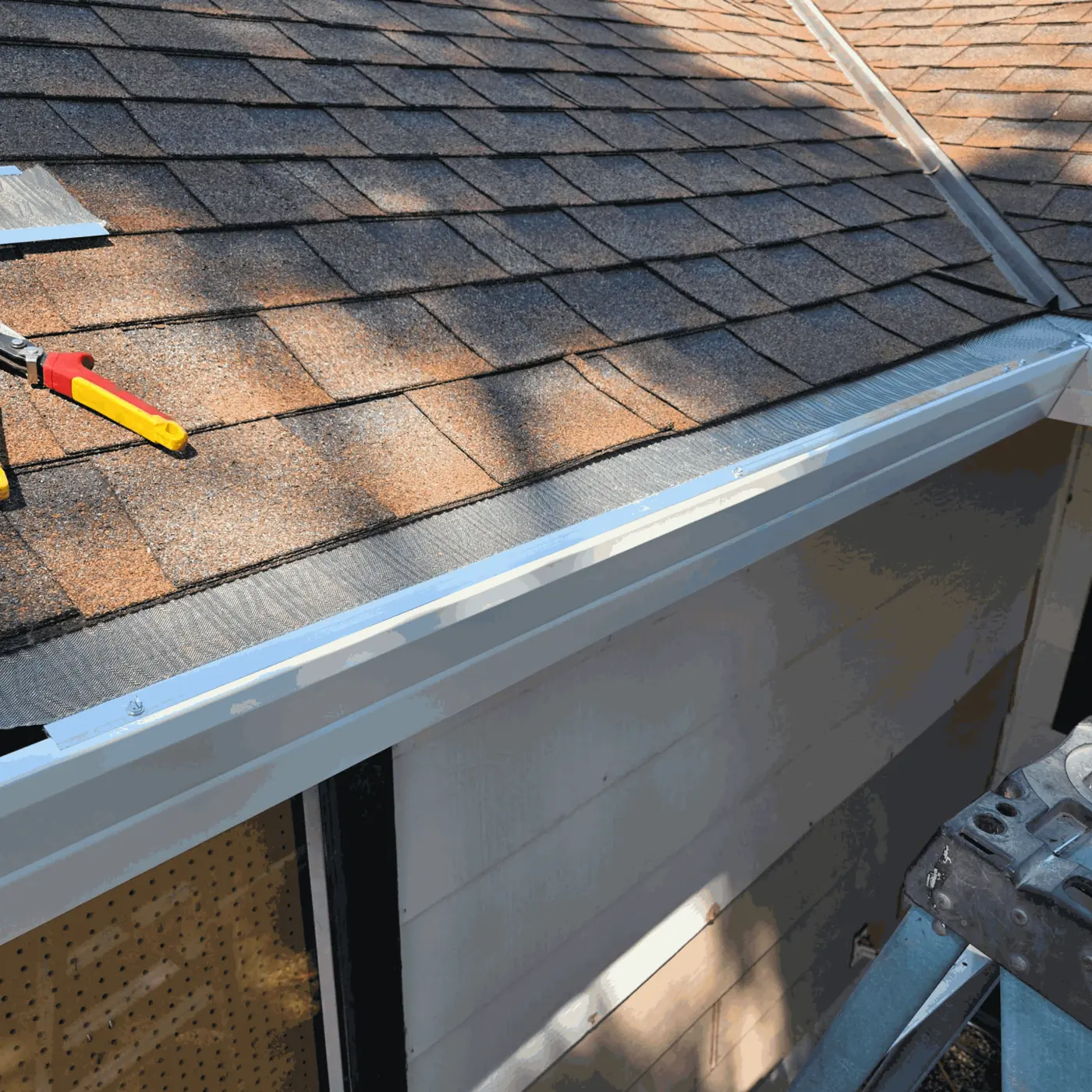
If you clean the gutters every fall and still get first-rain overflow every year, the debris is your permanent condition, not a one-off. That is the exact case gutter guards are built for — they stop the annual clog cycle so the trough is clear when the first storm arrives.
Cause 2: Blocked Downspout
A gutter can be perfectly clean and still overflow if the downspout is plugged. Debris that made it into the drop — especially compact debris like acorns, seed pods, or matted pine needles — lodges at the top elbow or at the reducer and stops flow. The trough fills, then overflows, usually worst near the downspout.
How to confirm: the overflow concentrates near the downspout and the water visibly backs up toward it. Tap the downspout — a solid, dull sound instead of a hollow ring means it is packed. The fix: flush from the top with a hose, or run a plumber's snake up from the bottom. Our downspout clog signs and solutions guide covers the full clearing process and the warning signs.
Cause 3: Slope or Sag Problem
If the overflow happens at the same single spot every storm even when the gutter is clean, the trough is not draining toward the downspout at that point. Either the original pitch was wrong, or a section has sagged as hangers loosened over years of thermal cycling in Sacramento's hot summers.
How to confirm: clean the gutter fully, then run a hose in at the far end and watch. If water pools instead of running to the downspout, the slope is the issue. A gutter should drop about a quarter inch for every 10 feet toward the outlet. The fix: re-hanging or re-pitching the section, roughly $150 to $400 depending on length, through our gutter repair service. Our gutter slope and pitch guide explains the measurement and DIY adjustment. If the metal itself is sagging or deformed, see gutter sagging causes and fixes.
Cause 4: Undersized for the Storm
Sometimes the gutter is clean, sloped correctly, and the downspout is clear — and it still overflows in the heaviest bursts. This is a capacity problem: the system is too small for the volume Sacramento's intense storms deliver, especially where two roof planes funnel water into one gutter at a valley.
How to confirm: overflow only in the hardest downpours, often at valleys, with no clog or slope issue found. The fix: more downspouts to move water out faster, larger 6-inch gutters, or splash guards at active valleys. Our 5-inch vs 6-inch gutter guide covers the upsizing decision, our gutter system design and capacity guide covers sizing the whole system, and our roof valley overflow guide handles the valley-specific case. A capacity upgrade is a job for our gutter installation service.
What Each Fix Costs in Sacramento
Because the cause determines the fix, the cost range is wide. Here is what each solution typically runs for a Sacramento single-story home, so you can match the diagnosis to a budget.
| Cause | Fix | Typical Sacramento Cost |
|---|---|---|
| Debris clog | Professional cleaning | $150–$350 |
| Blocked downspout | Flush / snake the drop | Often included in a cleaning |
| Slope / sag | Re-hang & re-pitch section | $150–$400 |
| Undersized | Add downspouts / upsize to 6" | Varies by linear footage |
| Recurring annual clog | Micro-mesh gutter guards | One-time upgrade |
The cheapest mistake is ignoring it. Overflow concentrates roof runoff at the base of your foundation, and Sacramento's clay soil swells when saturated and shrinks when dry, cycling pressure against foundation walls. Our foundation damage prevention guide covers why a $200 fix now prevents a five-figure repair later.
Not sure which cause is yours? We diagnose overflow on site, clear the immediate problem, and tell you exactly what it will take to stop it recurring.
Frequently Asked Questions
Why do my gutters overflow on the first rain of the season in Sacramento?
Because Sacramento's long dry summer lets debris accumulate for months with no water to reveal it. The first heavy rain hits a gutter that is already packed and cannot move water, so it overflows immediately. The most common cause is accumulated leaves, seeds, and grit blocking the flow, followed by clogged downspouts, incorrect slope, and gutters undersized for the storm intensity.
How can I tell if my gutter overflow is a clog or a slope problem?
Watch where the water overflows. If it spills over the entire length of the run, it is usually a clog or an undersized gutter. If it pools and overflows in one specific low spot while the rest drains, that is a slope or sag problem. Confirm by cleaning fully and running a hose test — if water still pools in the same spot after cleaning, the slope is wrong.
Is gutter overflow actually a problem or just annoying?
It is a real problem. Overflow dumps concentrated water at the base of your foundation, and Sacramento clay soil expands when saturated, putting pressure on foundation walls. It also rots fascia, feeds mold, and erodes landscaping. Unmanaged roof runoff is a leading contributor to Sacramento-area foundation repairs, so first-rain overflow is worth diagnosing before the next storm.
How much does it cost to fix gutter overflow in Sacramento?
It depends on the cause. A cleaning to clear a clog runs about $150 to $350 for a typical single-story home. Re-sloping or re-hanging a sagging section is roughly $150 to $400. Adding downspouts or upsizing to 6-inch gutters is a larger job. Installing micro-mesh guards to prevent the annual clog cycle is a one-time upgrade that eliminates the most common cause.
When should I clean my gutters to avoid first-rain overflow in Sacramento?
Clean in early to mid fall, before the first significant storm, which in Sacramento typically arrives in October or November. Because many trees drop debris right through the first storms, the ideal timing is a cleaning after the initial leaf drop but before the rain. Homes under heavy canopy benefit from a mid-season check or from gutter guards that remove the timing problem entirely.
Diagnose It Before the Next Storm
First-rain overflow feels like a crisis, but it is one of the most readable gutter problems you will ever have — the water shows you the cause. Watch where it spills, clear the clog, hose-test for slope, and you will know within one storm whether you need a cleaning, a repair, or a capacity upgrade.
And if you clean every fall and overflow every first storm anyway, stop fighting the calendar. Guards or a proper re-slope turn a recurring seasonal headache into a solved problem, and they do it before the water reaches your foundation.
Beat the First Storm
Sacramento Gutter Guard diagnoses and fixes overflow before the rainy season arrives — cleaning, repair, re-slope, or guards, matched to your actual cause. Free on-site assessment.