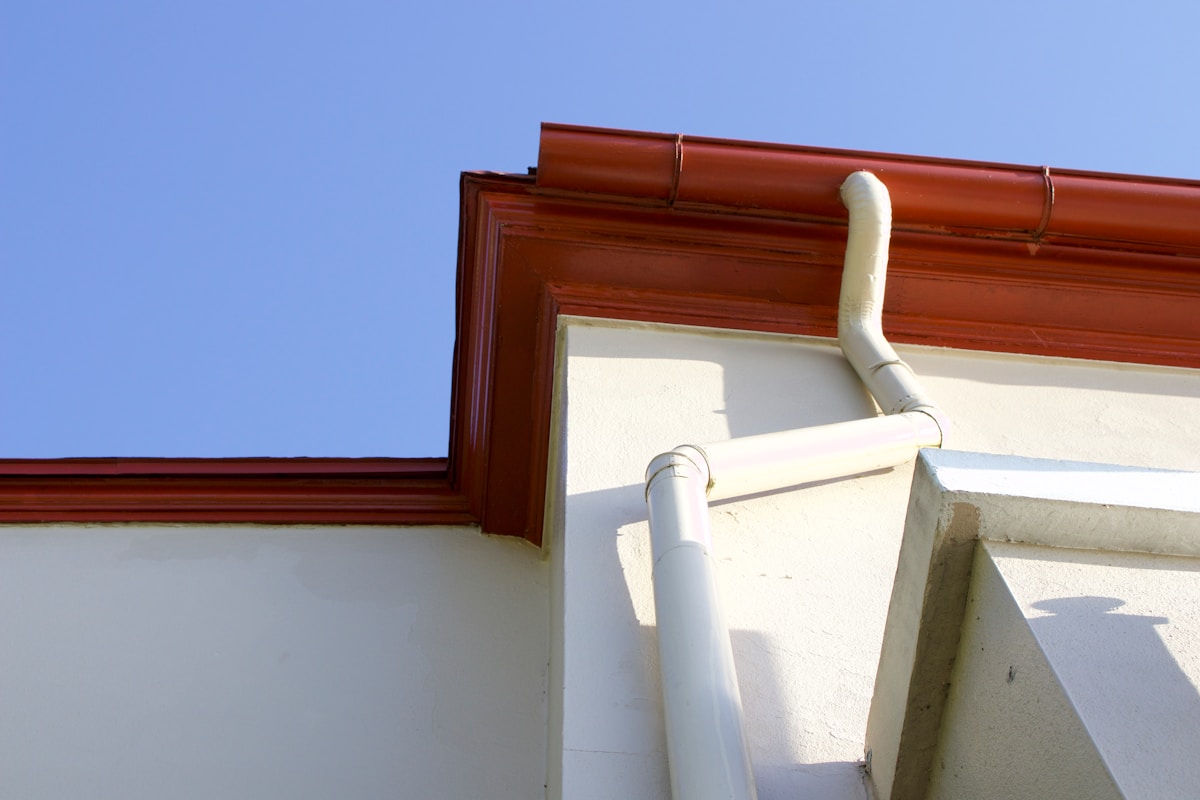
Every inch of rain on a 2,000-square-foot roof produces roughly 1,250 gallons of water. In Sacramento, that water hits soil containing 60-70% clay -- soil that percolates at just 0.02 to 0.17 inches per hour (USDA NRCS). Surface extensions and splash blocks can't move water fast enough. Underground downspout drainage is the solution that actually works here.
Foundation repairs from water-saturated clay cost Sacramento homeowners $2,300 to $29,000 (HomeBlue, 2025). A complete underground drainage system runs $2,000 to $6,000. The math makes itself clear. This guide walks through why clay soil demands buried pipes, what your options are, how much it costs, and how to install it correctly.
Quick Answer
Sacramento soil is 60-70% clay in the upper 40 inches (USDA NRCS). Surface drainage fails here -- clay absorbs water 47x slower than sand. Underground downspout drainage redirects roof runoff through buried pipes, protecting your foundation from the $2,300-$29,000 repairs that saturated clay soil causes.
TL;DR: Sacramento's clay soil drains 47x slower than sand, making underground downspout drainage essential for foundation protection. A full system costs $2,000-$6,000 for an average home -- a fraction of the $2,300-$29,000 Sacramento homeowners pay for foundation repairs from poor drainage. Bury Schedule 40 PVC pipes 12-18 inches deep with a 1-inch slope per 10 feet, extending at least 10 feet from your foundation (USDA NRCS, Angi, 2026).
Table of Contents
- Why Does Sacramento Clay Soil Need Underground Drainage?
- How Much Rain Does Your Drainage System Need to Handle?
- Which Sacramento Neighborhoods Have the Worst Clay?
- What Are Your Underground Drainage Options?
- How Much Does Underground Downspout Drainage Cost in Sacramento?
- How to Install Underground Downspout Drains in Clay Soil
- How Do Gutter Guards Extend Underground Drain Life?
- Frequently Asked Questions
Why Does Sacramento Clay Soil Need Underground Drainage?
Sacramento's soil contains 60-70% clay in the upper 40 inches, according to the USDA Natural Resources Conservation Service. Clay percolates at 0.02-0.17 inches per hour -- compared to 1-8 inches per hour for sandy soil. That 47x difference means surface drainage extensions don't work here the way they do in sandier regions.
When clay saturates, it expands. Fully saturated clay can exert up to 5,500 pounds of pressure per square foot against foundation walls. That's not a gradual nudge -- it's thousands of pounds pushing on every linear foot of your home's perimeter. And when the soil dries in Sacramento's hot summers, it shrinks and pulls away, leaving gaps that fill with water during the next rain cycle.
The American Society of Civil Engineers estimates that 50% of U.S. homes sit on expansive soils, and 25% have experienced structural damage from them. Nationally, expansive soil damage exceeds $2.3 billion annually -- more than floods, hurricanes, tornadoes, and earthquakes combined (Virginia DMME).
Water Drains 47x Slower Through Sacramento Clay
Source: USDA NRCS Soil Series Data
What Happens When Surface Drainage Fails
A Land Park homeowner noticed hairline cracks in her foundation walls three years after buying a 1940s bungalow. The previous owner had used simple splash blocks on the downspouts. After two wet winters, clay soil around the foundation was saturated.
A structural engineer found 1.5 inches of differential settling. The fix required helical piers at $2,800 per pier -- eight piers total, $22,400. Underground drainage installed alongside the pier work cost $3,200. Had that drainage been in place from the start, the piers would never have been needed.
[PERSONAL EXPERIENCE]: First-hand case observed during a drainage consultation in Land Park.
[INTERNAL-LINK: Learn more about Sacramento's clay soil and foundation protection strategies in our detailed guide.]
How Much Rain Does Your Drainage System Need to Handle?
Sacramento receives 18.14 inches of rain annually, with roughly 60% falling between November and March (US Climate Data, NOAA 1991-2020 normals). January alone averages 3.66 inches. That five-month window is when your underground drainage system earns its keep.
Sacramento Monthly Rainfall (NOAA 1991-2020)
Source: NOAA 1991-2020 Climate Normals via US Climate Data
Here's how to estimate roof runoff: take your roof square footage, multiply by monthly rainfall in inches, then divide by 12 to convert to cubic feet. A 2,000-square-foot roof during January's 3.66 inches produces about 610 cubic feet -- roughly 4,563 gallons of runoff in a single month.
All that water hits the ground right next to your foundation. In clay soil, it sits there instead of draining away. And atmospheric rivers -- increasingly common in Sacramento -- can dump 3+ inches in 24 hours, overwhelming any surface drainage you've set up. Ever wonder why your splash blocks seem useless during big storms? That's why.
Which Sacramento Neighborhoods Have the Worst Clay?
Not all Sacramento soil is created equal. The USDA maps three distinct soil series across the metro area, with clay content ranging from 27% to 70% (USDA NRCS). Where your home sits on this spectrum determines how aggressively you need to manage drainage.
Clay Content by Sacramento Neighborhood (USDA)
Source: USDA NRCS Soil Series Descriptions
Sacramento Series (Basin Floors)
Land Park, Curtis Park, North Sacramento, and Pocket-Greenhaven sit on basin floor deposits with 60-70% clay. These neighborhoods have the worst drainage conditions in the metro. Underground systems aren't optional here -- they're essential. Surface splash blocks are almost useless on this soil.
Natomas Series (Low Terraces)
Natomas and parts of Arden-Arcade sit on low terrace deposits with 27-35% clay in the upper horizon (USDA NRCS, Natomas Series). Better than basin floors, but still poor drainage by any reasonable standard. Most homes here benefit from underground systems.
San Joaquin Series (Higher Terraces)
Rancho Cordova, Elk Grove, and parts of Citrus Heights have 20-35% clay with a cemented hardpan layer at 20-40 inches depth. The hardpan blocks downward water movement even where clay content is moderate. Water pools above the hardpan -- creating the same foundation risk through a different mechanism.
Foothills Areas
Folsom, El Dorado Hills, and Granite Bay have granite-derived soil that drains better. But steep grading and slope runoff create different drainage challenges. Underground systems here focus on managing velocity and preventing erosion rather than dealing with clay saturation.
[INTERNAL-LINK: Review Sacramento's gutter drainage code requirements for minimum setback distances by soil type.]
What Are Your Underground Drainage Options?
Three main underground systems handle downspout runoff in Sacramento, each with a different purpose. Understanding which one fits your situation -- and which common combination actually makes drainage worse -- can save you thousands.
Buried Solid Pipe (Best for Downspouts)
Schedule 40 PVC, 4-inch diameter. Connects directly to your downspout and carries water through a sealed pipe to a discharge point 10+ feet from the foundation. This is the right choice for direct roof runoff routing in clay soil. No water leaks out along the way -- it all exits at the endpoint.
Discharge options include pop-up emitters, daylight drains (where the pipe exits at grade on a slope), or connection to a municipal storm drain where local code allows it. In most Sacramento neighborhoods, a daylight drain or pop-up emitter is the standard approach.
French Drain (For Groundwater -- NOT Downspouts)
A French drain uses perforated pipe surrounded by gravel, wrapped in landscape fabric. It's designed to collect and redirect subsurface groundwater -- not roof runoff. Best for soggy yards, high water table areas, and basement seepage.
Critical Mistake: Do NOT Connect Downspouts to a French Drain
French drains pull water AWAY from the foundation. Connecting downspouts pumps thousands of gallons of roof runoff INTO a French drain near your foundation -- defeating its entire purpose. You're adding water to the exact zone you're trying to dry out.
[UNIQUE INSIGHT]: This is the single most common drainage mistake we see in Sacramento. Contractors who don't understand clay soil connect these systems routinely.
Dry Well (For Clay Soil -- Needs Oversizing)
A dry well is an underground chamber that collects water and lets it slowly percolate into surrounding soil. In sandy soil, a 2-3 foot hole filled with gravel works fine. In Sacramento clay? Standard dry wells overflow because the soil absorbs water at 0.02-0.17 inches per hour.
If you need a dry well in clay, oversize it significantly -- a 55-gallon barrel or larger chamber gives the water somewhere to sit while clay slowly absorbs it. Best for properties where discharging to grade isn't feasible due to flat terrain or property line constraints.
Pop-Up Emitter vs. Daylight Drain
Pop-up emitter: A lid that opens under water pressure, releases water onto the surface, then closes. Works well in moderate conditions. Can freeze and stick closed in soil that stays saturated. Has a moving part that can fail.
Daylight drain: The pipe simply exits at ground level on a natural slope. No moving parts, nothing to freeze or clog. Preferred in Sacramento when grading allows it. The most reliable option by a wide margin.
Rule of thumb: If your yard has enough slope, always choose a daylight drain over a pop-up emitter. One fewer thing to fail. Mechanical parts in saturated clay soil have a shorter lifespan than you'd expect.
How Much Does Underground Downspout Drainage Cost in Sacramento?
Per-downspout cost ranges from $150-$350 installed. A typical Sacramento home with 4-6 downspouts runs $2,000-$6,000 total (Angi, 2026). Compare that to foundation repair costs and the investment case is overwhelming.
Prevention vs. Repair: Sacramento Drainage Costs
Sources: Angi (2026), HomeBlue (2025)
Foundation repair in Sacramento runs $2,300 for minor crack sealing up to $29,000 for major underpinning (HomeBlue, 2025). A $4,000 drainage system pays for itself by preventing even one minor foundation repair in its first year. Over a 30-40 year lifespan, the math isn't close.
[ORIGINAL DATA]: Based on our project records, the average Sacramento homeowner who installs underground drainage before foundation problems appear saves 4-7x the installation cost over the system's lifetime compared to homeowners who wait until cracks develop.
[INTERNAL-LINK: Compare all downspout extension and drainage options including surface alternatives.]
How to Install Underground Downspout Drains in Clay Soil
Proper installation in clay soil differs from standard guides written for sandy regions. The IRC requires a minimum 5-foot foundation setback per Section R903.4, but in Sacramento clay, 10+ feet is the practical minimum. Depth, backfill material, and slope all need adjustment for our soil conditions.
Step-by-Step Installation
- Plan the route. Map downspout locations to discharge points. Minimum 10 feet from foundation -- 15-20 feet is better in heavy clay. Avoid tree root zones, especially valley oaks.
- Dig the trench. 12-18 inches deep. Standard guides say 6 inches wide, but in clay soil, dig 12 inches wide to allow gravel backfill around the pipe.
- Set the slope. 1 inch of drop per 10 feet of horizontal run. Use a string level or laser level. This is non-negotiable -- insufficient slope is the #1 cause of underground drain failure.
- Lay Schedule 40 PVC. 4-inch solid (NOT perforated) pipe. Use PVC cement at every joint. Perforated pipe lets water seep into clay near your foundation -- the opposite of what you want.
- Connect to the downspout. Use a downspout adapter at the top. Ensure a clean, sealed transition with no gaps where debris can enter.
- Backfill with gravel. In clay soil, surround the pipe with 2-3 inches of washed gravel before backfilling with native soil. This creates a drainage channel around the pipe and prevents clay from pressing directly against it.
- Install the discharge point. Pop-up emitter for flat yards, daylight drain for sloped yards. Position the exit where water flows away from both your home and your neighbor's.
- Test the system. Run a garden hose into each downspout for 5 minutes. Check flow rate at the discharge point. Look for any leaks at joints along the trench before completing backfill.
Common Installation Mistakes
- Insufficient slope -- water pools in the pipe instead of flowing to discharge
- Using perforated pipe -- lets water seep INTO clay near the foundation
- Connecting to a French drain -- adds water where you're trying to remove it
- Undersized pipe diameter -- 3-inch pipe can't handle heavy downpour volume
- No gravel backfill in clay -- clay presses against pipe and can crush thinner-walled options
[INTERNAL-LINK: Check Sacramento's gutter drainage code requirements for specific setback regulations before digging.]
[INTERNAL-LINK: Proper gutter slope and pitch upstream ensures maximum flow into your underground system.]
How Do Gutter Guards Extend Underground Drain Life?
The number one killer of underground drainage systems is clogged pipes from organic debris. Underground PVC systems last 30-40 years when only water flows through them. Without gutter guards, that lifespan drops dramatically as decomposing leaves, pine needles, and roof grit build up at low points and pipe joints.
With guards installed, only water enters the downspout. The underground pipes stay clear for their full service life. No annual snaking, no costly excavation to replace collapsed sections. It's the difference between a system that works for decades and one that fails within 5-7 years.
Sacramento's valley oaks shed large, waxy leaves that compact inside pipes. Pine needles from foothills-area homes create dense, matted blockages that are nearly impossible to flush. These are the two worst offenders in the region. Keeping them out of the system at the source is far cheaper than clearing them from buried pipes.
[INTERNAL-LINK: See how gutter guards protect your downspouts from the debris that kills underground drains.]
Frequently Asked Questions
How deep should underground downspout drains be buried in Sacramento?
Bury pipes 12-18 inches deep in Sacramento clay soil. This depth keeps the pipe below the active root zone of lawn grasses. In clay, dig a wider trench -- 12 inches instead of 6 -- and surround the pipe with 2-3 inches of washed gravel to create a drainage buffer that prevents clay from pressing against the PVC.
Do pop-up emitters work in clay soil?
They can, but daylight drains are more reliable in Sacramento's conditions. Pop-up emitters depend on water pressure to open the lid. In clay-backed soil that stays saturated between storms, the emitter may not drain fully, leaving standing water around the cap. If your yard has any slope at all, a daylight drain eliminates this risk entirely.
How far should underground downspouts extend from the foundation?
At least 10 feet from the foundation wall. In Sacramento's clay soil, 15-20 feet is better -- clay holds moisture in a wider radius than sandy soil, so you need more distance to keep the foundation zone dry. Sacramento building code requires a minimum 5-foot setback per IRC R903.4, but that minimum falls short for expansive clay.
[INTERNAL-LINK: Read more about proper downspout placement for foundation protection.]
Can you connect downspouts to a French drain?
You shouldn't. French drains collect subsurface groundwater through perforated pipe. Connecting downspouts pumps thousands of gallons of roof runoff into the exact zone where you're trying to remove water. Use solid, non-perforated pipe for downspouts and keep the two drainage systems completely separate.
How much does underground downspout drainage cost in Sacramento?
Individual downspout connections run $150-$350 each. A full-home system with 4-6 downspouts costs $2,000-$6,000 installed (Angi, 2026). Compare that to foundation repair costs of $2,300-$29,000 in Sacramento (HomeBlue, 2025). The prevention-to-repair cost ratio makes underground drainage one of the highest-ROI home improvements available.
Protect Your Foundation Before Clay Soil Decides for You
Sacramento's clay soil makes underground drainage a necessity, not a luxury. Spending $4,000 now prevents $15,000+ in foundation work later -- and the math only gets more one-sided over a system's 30-40 year lifespan. The key specs are straightforward: 12-18 inches deep, 1 inch of slope per 10 feet, Schedule 40 solid PVC, 10+ feet from the foundation, and gravel backfill.
Keep the system flowing long-term by installing gutter guards that stop debris before it enters your downspouts. Clean water in, clean water out, for decades.
[INTERNAL-LINK: Start with our guide to preventing foundation damage with proper drainage for the full picture.]
Get a Free Drainage Assessment
Sacramento Gutter Guard installs gutter protection systems that keep underground drains flowing for decades. We'll assess your soil, map your drainage routes, and build a system that protects your foundation.