Quick Answer
Hidden gutter damage shows up as interior water stains, exterior paint bubbling below the roofline, foundation hairline cracks, and unexplained mold or musty smells. Sacramento homeowners filed an estimated $4.2 million in preventable gutter-related damage claims in 2025, and the average claim was $4,200 (Insurance Institute for Business & Home Safety). Most of that damage started with signs homeowners either missed or dismissed as cosmetic.
Catching these 8 warning signs early drops your repair cost from $5,000-$40,000 down to $150-$500. Below is what to look for, where to look, and when to call a Sacramento gutter professional.
Sacramento's climate creates a unique damage cycle for gutters. The region receives 75-80% of its 20 inches of annual rainfall between November and March (National Weather Service Sacramento), then bakes under 45+ days above 100 degrees from June through September. That wet-winter, extreme-summer pattern accelerates every type of gutter failure -- from rust and seal degradation to fascia rot and foundation erosion.
The problem is visibility. You cannot see inside your gutters from your driveway. You cannot see behind your gutters without a ladder. And you cannot see what's happening under your foundation slab from anywhere. So gutter damage compounds silently until it announces itself as a ceiling stain, a cracked slab, or a mold remediation bill.
This guide covers the 8 hidden damage indicators every Sacramento homeowner should check, organized by where you can spot them: inside your home, outside at ground level, and during a close-range inspection. Each sign includes the likely cause, the repair cost range, and the timeline before minor damage becomes a major expense.
TL;DR: Check for ceiling stains near exterior walls, peeling paint behind gutters, foundation cracks near downspouts, granule piles at drain outlets, and unexplained mold smells. Early gutter repair costs $150-$500. Delayed repairs average $4,200+ in Sacramento. Gutter guards prevent 80% of the debris buildup that causes hidden damage in the first place.
What's in This Guide
- The Sacramento Gutter Damage Timeline (and Cost Escalation)
- Signs 1-3: Interior Warning Signs
- Signs 4-6: Exterior Red Flags at Ground Level
- Signs 7-8: Close-Range Inspection Findings
- Repair Cost Chart: Early vs. Late Detection
- Sacramento Seasonal Inspection Schedule
- How to Prevent Hidden Gutter Damage
- What to Do If You Spot These Signs
The Sacramento Gutter Damage Timeline: How $150 Problems Become $40,000 Emergencies
Gutter damage in Sacramento follows a predictable escalation pattern. Understanding this timeline helps you estimate how urgently you need to act based on which signs you're seeing.
Signs 1-3: Interior Warning Signs You Can Spot Without a Ladder
These signs show up inside your home, often in rooms directly below the roofline. They indicate water has already bypassed your gutter system and entered the building envelope.
Sign 1: Water Stains on Ceilings Near Exterior Walls
Yellowish-brown rings or discoloration on ceilings within 3 feet of an exterior wall are a strong indicator of gutter overflow or behind-gutter water intrusion. In Sacramento, these stains typically appear in January or February during the heaviest rain months and may dry out (but not disappear) by summer.
What's Happening
Clogged or overflowing gutters push water under the roof edge, into the soffit cavity, and along ceiling joists. The water wicks through drywall and leaves mineral stains on the paint surface. If the stain feels damp during or after rain, the problem is active. If it feels dry, the damage occurred during a previous storm but the underlying cause is likely still present.
Cost if caught early: $150-$350 (gutter cleaning + ceiling paint touch-up)
Cost if ignored: $2,000-$8,000 (ceiling drywall replacement + mold remediation)
Sign 2: Musty Smell in the Attic or Upper-Floor Closets
A persistent musty or earthy odor in the attic, upstairs closets, or rooms with cathedral ceilings often signals moisture intrusion from failed gutter drainage. Sacramento's combination of winter moisture and summer heat creates ideal conditions for mold and mildew growth in enclosed spaces.
Mold begins growing within 24-48 hours of moisture exposure on organic surfaces like wood sheathing and drywall paper (EPA). Once established in an attic space, it can spread through HVAC ducts to the rest of the house. The EPA estimates that indoor mold affects 21% of asthma cases in the United States.
Action Required
If you smell mold, do not wait for visible evidence. Have your gutters inspected immediately and check your attic for any signs of moisture on the underside of the roof deck. Sacramento gutter cleaning plus a $150-$300 attic inspection can prevent $5,000-$15,000 in mold remediation.
Sign 3: Peeling or Bubbling Interior Paint on Walls Below the Roofline
Paint that bubbles, peels, or develops a rough texture on interior walls -- especially on the upper portion of walls near the ceiling -- indicates moisture migrating through the wall cavity from the exterior. In multi-story Sacramento homes, this often appears in second-floor bedrooms and hallways.
The mechanism: overflowing gutters saturate the fascia and soffit, water enters the wall cavity behind the exterior cladding (stucco in most Sacramento homes), and moisture migrates inward to the drywall. Sacramento's stucco-heavy housing stock (an estimated 65% of homes built after 1960 feature stucco exteriors, according to regional building data) is particularly vulnerable because stucco traps moisture behind it once saturated.
Signs 4-6: Exterior Red Flags Visible from Ground Level
These indicators are visible without climbing a ladder, but most homeowners walk past them daily without recognizing them as gutter-related warning signs.
Sign 4: Vertical Staining or Green Algae Streaks Below the Gutter Line
Dark vertical streaks, green algae growth, or white mineral deposits running down your exterior walls directly below the gutter indicate chronic overflow. In Sacramento, this is most visible on north-facing and east-facing walls where less sun exposure allows algae to establish.
The staining itself is cosmetic, but it signals that water has been consistently bypassing your gutters and running down the exterior wall surface. On stucco homes (the majority of Sacramento's housing stock), this water enters weep screeds at the base of the wall and saturates the building paper behind the stucco -- a pathway to interior wall damage and potential structural issues.
What to check: Walk around your home and look at the exterior wall surface directly below each gutter run. If you see vertical staining that aligns with the gutter edge, your gutters are overflowing at that point. Common causes include clogged sections, insufficient gutter slope, or undersized gutters for that roof area. A professional gutter slope assessment can identify the exact issue.
Sign 5: Soil Erosion, Mulch Displacement, or Foundation Splash Marks
Uneven soil levels near your foundation, mulch that migrates away from planting beds, or visible splash marks on the lower 12 inches of your exterior wall all indicate that water is hitting the ground too close to your foundation. This happens when gutters overflow, downspouts are disconnected, or downspout extensions are missing or inadequate.
Sacramento's expansive clay soil makes this sign especially dangerous. When saturated, Sacramento clay can exert 5,000-15,000 pounds of lateral pressure per square foot against a foundation wall (American Society of Civil Engineers). When it dries in summer, it contracts and creates voids. This swell-shrink cycle is the primary driver of foundation damage in Sacramento County, and uncontrolled roof runoff from failed gutters accelerates it dramatically.
Sacramento Foundation Risk by Neighborhood
- High risk (heavy clay): Natomas, Elk Grove, South Sacramento, West Sacramento, Rancho Cordova
- Moderate risk: Midtown, East Sacramento, Arden-Arcade, Carmichael, Fair Oaks
- Lower risk (sandy/loam): Folsom, El Dorado Hills, Granite Bay, Auburn, Grass Valley (but slope adds runoff velocity)
For more on how Sacramento's clay soil interacts with gutter drainage, see our clay soil foundation protection guide.
Sign 6: Hairline Cracks in the Foundation Near Downspout Locations
Hairline cracks in your concrete foundation or slab, particularly within 4 feet of downspout discharge points, are a late-stage indicator of gutter-driven water damage. These cracks often run vertically or at a 45-degree angle from corners and are most visible on the exterior stem wall.
Not every foundation crack signals gutter failure -- settling cracks are normal in the first 2-5 years after construction. But cracks that appear after years of stability, widen after rain events, or concentrate near downspout areas strongly suggest uncontrolled water saturation of the soil around your foundation.
When Foundation Cracks Require Immediate Action
- Cracks wider than 1/4 inch
- Horizontal cracks (indicating lateral soil pressure)
- Cracks with visible water seepage during rain
- Doors or windows that suddenly stick or won't close properly
- Uneven or sloping floors in rooms near the affected wall
Sacramento foundation repair costs: $5,000-$15,000 for pier underpinning, $15,000-$40,000 for severe settling. A functioning gutter and proper downspout placement are the first line of defense.
Signs 7-8: Close-Range Inspection Findings
These signs require getting close to the gutter -- either from a ladder, a second-story window, or during a professional inspection. They reveal damage that is invisible from the ground but critical to catch early.
Sign 7: Roofing Granules Accumulating in Gutters or at Downspout Outlets
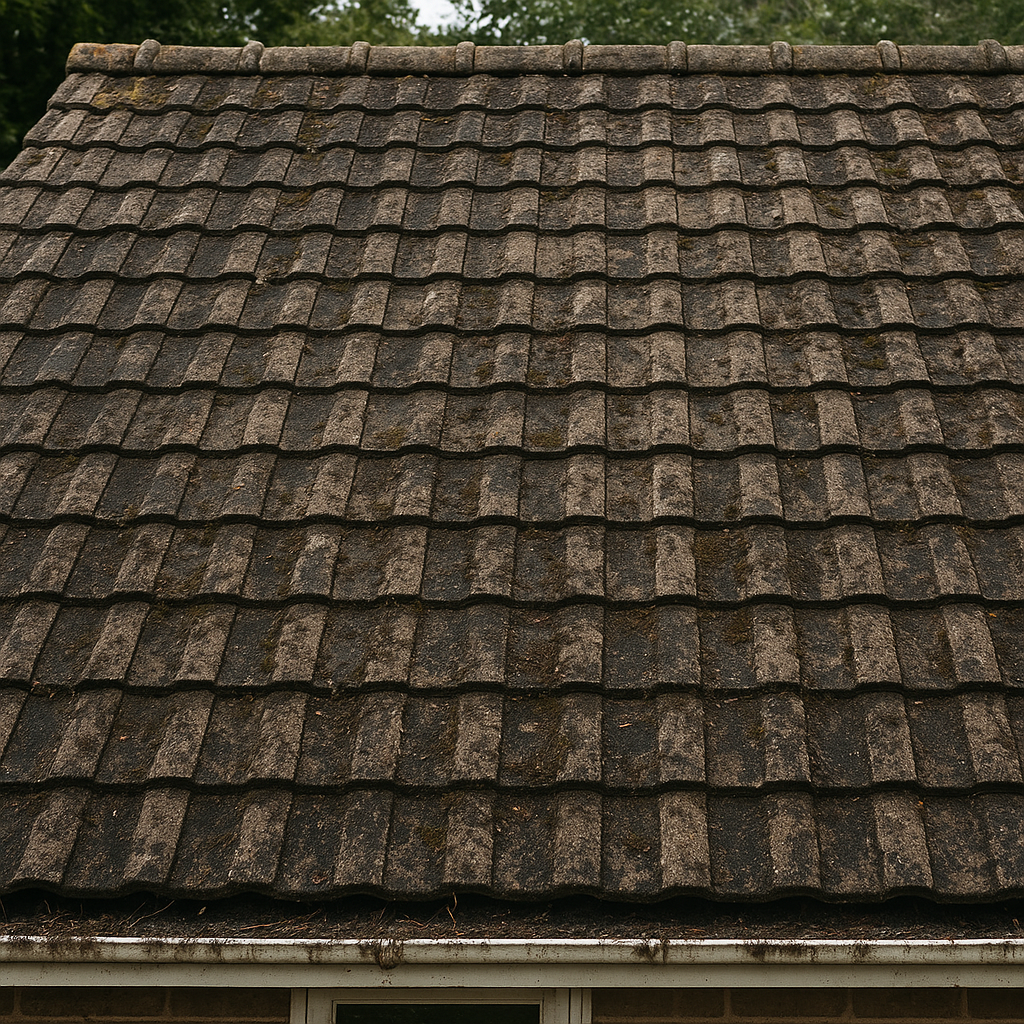
Asphalt shingle granules in your gutters are normal in small quantities, especially on new roofs (shedding excess granules in the first 1-2 years). But heavy granule deposits -- enough to form a gritty layer in the gutter channel or visible piles at downspout discharge points -- indicate accelerated shingle wear.
What makes this a gutter damage sign: granule buildup in gutters adds weight, reduces water flow capacity, and creates a sediment layer that traps moisture against the gutter metal, accelerating corrosion. In Sacramento, the 45+ days above 100 degrees in a typical summer cause thermal expansion that loosens granules, which then wash into gutters during the first fall rains. This creates a compounding problem -- the roof is degrading AND the gutters are clogging with debris that accelerates their own deterioration.
The connection: Heavy granule loss often means your roof is approaching end of life (typically 20-30 years for asphalt shingles in Sacramento). When you address the gutter issue, evaluate whether roof replacement and gutter reinstallation should be done together for cost efficiency.
Sign 8: Visible Gap Between the Gutter Back and the Fascia Board
A gap between the back edge of the gutter and the fascia board means the gutter is pulling away from the house. This happens when gutter spikes or hangers loosen, when debris weight pulls the gutter forward, or when the fascia board itself is rotting and losing its ability to hold fasteners.
You can sometimes spot this from the ground by standing directly below the gutter and looking up -- daylight visible between the gutter and the wall is a confirmed gap. A gap as small as 1/4 inch allows water to run behind the gutter during every rain event, initiating the fascia rot cycle described in our water dripping behind gutters guide.
Why Gaps Accelerate in Sacramento
Sacramento's extreme temperature range -- from mid-30s in December to 110+ in July -- causes continuous thermal expansion and contraction of aluminum gutters. Over 15-20 years, this cycling loosens spike and ferrule fasteners. Modern hidden hanger systems resist this better, but older Sacramento homes (the median home age is 39 years per U.S. Census data) often still have original spike installations. If you see gaps forming, upgrading to hidden hangers during sag repair prevents recurrence.
Repair Cost Comparison: Catching Damage Early vs. Waiting
The financial case for early detection is overwhelming. Every sign listed above has a low-cost intervention if caught within the first few months, and a dramatically more expensive consequence if ignored.
| Damage Sign | Early Fix Cost | Delayed Cost (12+ mo) | Savings |
|---|---|---|---|
| Ceiling water stains | $150-$350 | $2,000-$8,000 | 93-96% |
| Musty attic smell | $150-$450 | $5,000-$15,000 | 97% |
| Interior paint peeling | $200-$500 | $3,000-$12,000 | 93-96% |
| Wall staining below gutters | $150-$400 | $1,500-$5,000 | 90-92% |
| Soil erosion at foundation | $200-$600 | $5,000-$40,000 | 96-99% |
| Foundation cracks | $300-$800 | $5,000-$40,000 | 94-98% |
| Granule buildup in gutters | $150-$300 | $800-$3,000 | 81-90% |
| Gutter pulling from fascia | $200-$500 | $1,500-$4,000 | 87-88% |
Across all 8 signs, early detection saves an average of 90-95% on repair costs. The math is unambiguous: a twice-yearly gutter inspection costing $100-$200 is the highest-ROI home maintenance investment Sacramento homeowners can make.
Sacramento Seasonal Gutter Inspection Schedule
Sacramento's distinct seasons create specific damage risks at different times of year. This schedule tells you what to look for and when.
For homeowners with heavy tree coverage -- particularly live oaks (Midtown, East Sacramento, Land Park), valley oaks (Fair Oaks, Orangevale), or Ponderosa pines (Auburn, Grass Valley, Cameron Park) -- a third inspection in June after pollen season catches seasonal buildup before summer heat bakes it into a hardened crust that is more difficult and expensive to remove. See our best time for gutter cleaning guide for neighborhood-specific schedules.
See Any of These Signs? Get a Free Gutter Inspection
Our Sacramento gutter specialists identify hidden damage before it becomes an emergency. Every inspection includes a written report with photos, repair recommendations, and transparent pricing.
Schedule Free InspectionHow to Prevent Hidden Gutter Damage in Sacramento
Prevention is straightforward: keep water flowing through your gutters and away from your foundation. The three most effective measures for Sacramento homes are:
1. Install Micro-Mesh Gutter Guards
Gutter guards prevent the debris accumulation that causes 80% of gutter failures (home improvement industry estimates). Micro-mesh guards with stainless steel filtering are the best fit for Sacramento because they block oak leaves, pine needles, pollen, and the small seed pods that finer screens miss. Guards eliminate or drastically reduce the need for professional gutter cleaning and prevent the standing water that corrodes metal and rots fascia.
Sacramento gutter guard installation costs $8-$18 per linear foot installed depending on home size and complexity, with most homes ($1,200-$3,000 total) breaking even within 3-5 years through eliminated cleaning costs and prevented damage. For a full cost breakdown, see our gutter guard cost guide.
2. Extend Downspouts 4-6 Feet from the Foundation
Sacramento building code (IRC R903.4) requires downspout discharge at least 5 feet from the foundation. But many Sacramento homes, especially those built before 2000, have downspouts that terminate right at the foundation wall. Adding downspout extensions or connecting to underground drainage is one of the lowest-cost, highest-impact gutter improvements ($50-$200 per downspout for surface extensions, $300-$800 for buried drain lines).
3. Schedule Biannual Professional Inspections
Even with gutter guards, a professional inspection in October and March catches issues that guards cannot prevent: seal degradation, hanger loosening, slope settling, and fascia deterioration. A $100-$200 inspection twice a year is the cheapest insurance against $4,200+ in average damage claims.
For property managers or owners with multiple homes, our property management gutter maintenance guide covers fleet-level inspection schedules and volume pricing.
What to Do If You Spot These Signs
If you recognized any of the 8 signs above in your Sacramento home, here is the action plan prioritized by urgency:
- Foundation cracks or active water intrusion: Call a gutter professional and a foundation specialist this week. Do not wait for the next rain event. Request a free inspection.
- Ceiling stains, mold smell, or paint peeling: Schedule a gutter inspection within 2 weeks. Check your attic for visible moisture or mold on the underside of the roof deck.
- Exterior staining or soil erosion: Schedule an inspection within 30 days. These signs indicate ongoing overflow that will worsen with the next rain season.
- Granule buildup or gutter gaps: Address during your next seasonal maintenance window. Clean gutters and assess whether repair or replacement is the right call.
- No signs found: Schedule preventive maintenance and consider gutter guard installation to keep it that way.
The single best investment for preventing hidden gutter damage is ensuring water never backs up in your gutters in the first place. Clean gutters drain. Guarded gutters stay clean. Protected foundations stay intact.
Frequently Asked Questions
What are the first signs of gutter damage on a Sacramento home?
The earliest signs are often interior: water stains on ceilings near exterior walls, bubbling or peeling paint in rooms below the roofline, and musty odors in attics or upper-floor closets. Exterior signs include vertical staining on stucco below the gutter line and hairline cracks in the foundation near corners.
How much does it cost to fix hidden gutter damage in Sacramento?
Early-stage repairs cost $150-$500. Fascia damage runs $800-$2,500. Foundation remediation ranges from $5,000-$40,000. The average Sacramento gutter damage insurance claim was $4,200 in 2025.
How often should Sacramento homeowners inspect gutters?
At minimum, twice per year: late October (before rainy season) and March (after heaviest rainfall). Homes with heavy tree coverage should add a June inspection after pollen season.
Can gutter guards prevent hidden gutter damage?
Yes. Guards prevent the debris accumulation that causes 80% of gutter failures (home improvement industry estimates). Micro-mesh guards block leaves, pine needles, and pollen from entering the gutter channel, eliminating standing water, overflow, and the weight overload that causes sagging and fascia pulling.
Should I repair or replace gutters with hidden damage?
Apply the 50% rule: if damage affects less than half the system, repair. If more than 50% shows damage or gutters are 20+ years old with multiple problem areas, full replacement with gutter guards is the better long-term investment. See our full repair vs. replacement decision guide.
Sources
- Insurance Institute for Business & Home Safety. "Water Damage Risk Research." 2024. ibhs.org
- Insurance Information Institute. "Facts + Statistics: Homeowners and Renters Insurance." 2025. iii.org
- U.S. Environmental Protection Agency. "Mold and Health." epa.gov
- ConsumerAffairs. "Water Damage Statistics 2025." consumeraffairs.com
- Sacramento County Assessor. Median home age and housing stock data. 2025.
- National Weather Service Sacramento. Annual precipitation and temperature records. 2025-2026.