
Quick Answer: Are You Liable for Gutter Water Damage to a Neighbor?
Yes, in most cases. California follows a "reasonable use" doctrine for surface water drainage. If your gutters overflow or your downspouts direct water onto a neighbor's property and cause damage, you can be held liable under California Civil Code Section 3479 (nuisance) and general negligence law. Sacramento's expansive clay soils amplify this risk because concentrated water discharge causes outsized foundation damage.
Table of Contents
- California Drainage Law: The Basics
- How Gutters Create Legal Liability
- Why Sacramento Clay Soil Makes This Worse
- Common Gutter Liability Scenarios
- How to Protect Yourself from Liability
- What to Do If a Neighbor's Gutters Damage Your Property
- Insurance Coverage for Gutter Water Damage
- Frequently Asked Questions
Your gutters can get you sued. That is not an exaggeration. In Sacramento, where winter atmospheric rivers can dump 2 to 3 inches of rain per hour (National Weather Service) onto homes with aging gutter systems, overflowing gutters and misdirected downspouts regularly cause thousands of dollars in damage to neighboring properties. Under California drainage law, the homeowner whose gutters cause that damage is typically the one who pays. Sacramento Gutter Guard sees this play out every storm season when homeowners call after receiving demand letters from neighbors over water damage tied directly to neglected or poorly designed gutter systems.
This guide breaks down California's drainage liability framework, explains how it applies specifically to gutter systems in Sacramento, and details the concrete steps you can take to protect your home and your wallet.
California Drainage Law: The Basics Every Homeowner Must Know
California follows what legal scholars call the "modified civil law rule" for surface water disputes. The California Supreme Court established this standard in Keys v. Romley (1966), and it remains the governing framework. In plain terms: every property owner has a duty to use reasonable care so that water leaving their property does not injure neighboring properties.
This is not an absolute liability standard. The key word is reasonable. Natural water flow following the existing contour of the land generally does not create liability. But when you install gutters, grade your yard, or build structures that concentrate and redirect water onto a neighbor's property, you have altered the natural flow. That alteration triggers the reasonableness test.
Critical Legal Distinction
Natural runoff following the lay of the land = generally not your liability. Concentrated discharge from gutters, downspouts, or grading changes = your liability if it causes damage. Gutters by definition collect and concentrate water, which means they transform diffuse roof runoff into a focused stream. That concentration is exactly the type of "alteration" California courts scrutinize.
The Two Laws That Apply to Gutter Disputes
Sacramento homeowners facing gutter drainage disputes typically encounter two areas of California law.
Negligence
A property owner who fails to maintain gutters or properly direct downspout discharge may be found negligent. The test: did you act as a reasonable property owner would?
- • Clogged gutters causing overflow = potential negligence
- • Downspouts aimed at neighbor's property = potential negligence
- • Failed gutter system during foreseeable storm = potential negligence
Nuisance (Civil Code 3479)
California Civil Code Section 3479 defines a nuisance as anything "injurious to health" or "an obstruction to the free use of property." Chronic gutter overflow qualifies.
- • Ongoing water intrusion from your property = nuisance
- • Neighbor can seek an injunction forcing you to fix it
- • Applies even if the act causing damage is not illegal (CC 3482)
For a detailed breakdown of local gutter codes, read our Sacramento gutter drainage code requirements guide. The code requirements and liability exposure overlap significantly, and understanding both is essential.
How Gutters Create Legal Liability for Sacramento Homeowners
Gutters are a legal paradox. Installing them is responsible homeownership. But they also concentrate water that would otherwise sheet off your roof as diffuse runoff. A 2,000 square foot roof in Sacramento collects approximately 1,250 gallons of water during a 1-inch rainstorm (USGS rainfall-to-runoff conversion). Your gutters funnel all of that water to a few downspout discharge points.
When those discharge points are poorly placed, undersized, or clogged, the concentrated water flow hits neighboring property with far more force and volume than natural runoff ever would. Courts have specifically found that gutters and downspouts directing water onto neighboring property constitute an "unreasonable" alteration of natural drainage, according to analysis by Schorr Law, a California real estate litigation firm.
Three Ways Gutters Trigger Liability
- Clogged gutters cause overflow. When debris blocks your gutters, water cascades over the edge and pools at your foundation or flows toward your neighbor's property. Sacramento's oak and pine trees produce heavy debris loads that clog unprotected gutters quickly. Our guide on clogged gutters and mold growth details how this escalates.
- Downspouts discharge toward property lines. Downspouts that terminate near or at property lines concentrate hundreds of gallons per storm directly at the boundary. IRC Section R903.4 requires a 5-foot discharge distance from foundations, but there is no statewide setback from property lines. The reasonableness test applies instead.
- Undersized gutters fail during heavy rain. Standard 5-inch K-style gutters handle a maximum rainfall rate of approximately 1.5 inches per hour. Sacramento atmospheric rivers regularly exceed that. When gutters overflow during these events, the concentrated overflow can cause significant damage. See our gutter overflow guide for sizing solutions.
Why Sacramento's Clay Soil Amplifies Gutter Liability
Sacramento sits on some of the most expansive clay soil in California. This matters enormously for gutter liability because clay soil amplifies the damage caused by concentrated water discharge. When water from your gutters saturates your neighbor's clay soil, the soil expands with tremendous force, enough to crack foundations, buckle driveways, and push retaining walls out of alignment.
The reverse is equally destructive. When the soil dries during Sacramento's long summer months, it contracts and pulls away from foundations. This wet-dry cycle creates a progressive cracking pattern that worsens year after year. A neighbor who can document that your gutter discharge is the source of their soil saturation has a strong negligence claim, because the damage mechanism is well documented and entirely foreseeable.
Pro Tip: Document Your Drainage
Photograph your downspout discharge points, gutter condition, and drainage routes at least twice per year (before and after storm season). This documentation establishes that you maintained your system in good working order. If a neighbor later claims damage, your records demonstrate reasonable care, which is the legal standard California courts apply. Sacramento Gutter Guard provides photo documentation with every service call for exactly this reason.
Our detailed Sacramento clay soil and foundation protection guide covers the technical relationship between gutter drainage and clay soil behavior. For homeowners concerned about liability, that guide provides the engineering context behind the legal risk.
Common Gutter Liability Scenarios in Sacramento
These are the situations Sacramento Gutter Guard encounters most frequently when homeowners call about drainage disputes with neighbors. Each one carries real legal risk.
Scenario 1: The Overflowing Gutter
A homeowner in the Pocket-Greenhaven neighborhood has oak trees overhanging their roof. Leaves clog the gutters every fall. During a January atmospheric river, water cascades over the gutters and pools along the shared fence line. The neighbor's garage foundation starts showing cracks by spring. The clogged-gutter homeowner is likely liable because they failed to maintain their gutters, a foreseeable maintenance obligation in a tree-heavy neighborhood.
Scenario 2: The Misdirected Downspout
A Roseville homeowner replaces their gutters and the installer positions a downspout to discharge directly toward the neighbor's fence and yard. Storm after storm, concentrated water erodes the neighbor's landscaping and saturates the soil along their foundation. Both the homeowner and potentially the installer bear liability. The discharge direction was an artificial alteration that concentrated water on the neighbor's property. Proper downspout placement prevents this entirely.
Scenario 3: The Undersized System
An older Citrus Heights home has original 4-inch gutters with only two downspouts serving the entire roof. During any moderate-to-heavy rain event, the system overflows. The homeowner knows about the problem but has not addressed it. Knowing about a drainage deficiency and failing to act strengthens the negligence argument. A court may find this particularly unreasonable because the fix, upgrading to properly sized gutters, is relatively affordable.
Real-World Cost Example
According to the Sacramento Gutter Damage Claims Study covering Sacramento County data, preventable gutter-related property damage totaled $4.2 million in documented insurance claims in a single year. The average claim exceeded $8,000. Compare that to the $150 to $250 cost of annual gutter cleaning or the one-time $1,500 to $3,000 investment in gutter guard installation.
How to Protect Yourself from Gutter Drainage Liability
The good news is that gutter-related liability is entirely preventable. California courts apply a reasonableness standard, which means homeowners who take ordinary maintenance steps and ensure proper drainage design are protected. Here is a concrete action plan.
Step 1: Maintain Your Gutters Consistently
Clean gutters twice per year at minimum: once in late fall after leaves drop and once in spring after storm season. Homes near oaks, pines, or other heavy-shedding trees may need three or four cleanings. The point is to prevent overflow during storms. Our gutter cleaning frequency guide details the schedule based on your specific tree coverage.
Step 2: Verify Downspout Discharge Direction
Walk your property during a rainstorm and observe where each downspout discharges. Water should flow at least 5 feet away from both your foundation and your property line. If any downspout directs water toward a neighbor's property, add downspout extensions or connect to an underground drainage system that routes water to the street.
Step 3: Size Your System Correctly
Standard 5-inch K-style gutters handle approximately 1.5 inches of rainfall per hour. Sacramento atmospheric rivers routinely exceed that threshold. If your home has a large roof area, steep pitch, or valley intersections that concentrate flow, a 6-inch gutter system may be necessary. Our gutter system design guide covers capacity calculations.
Step 4: Install Gutter Guards to Prevent Overflow
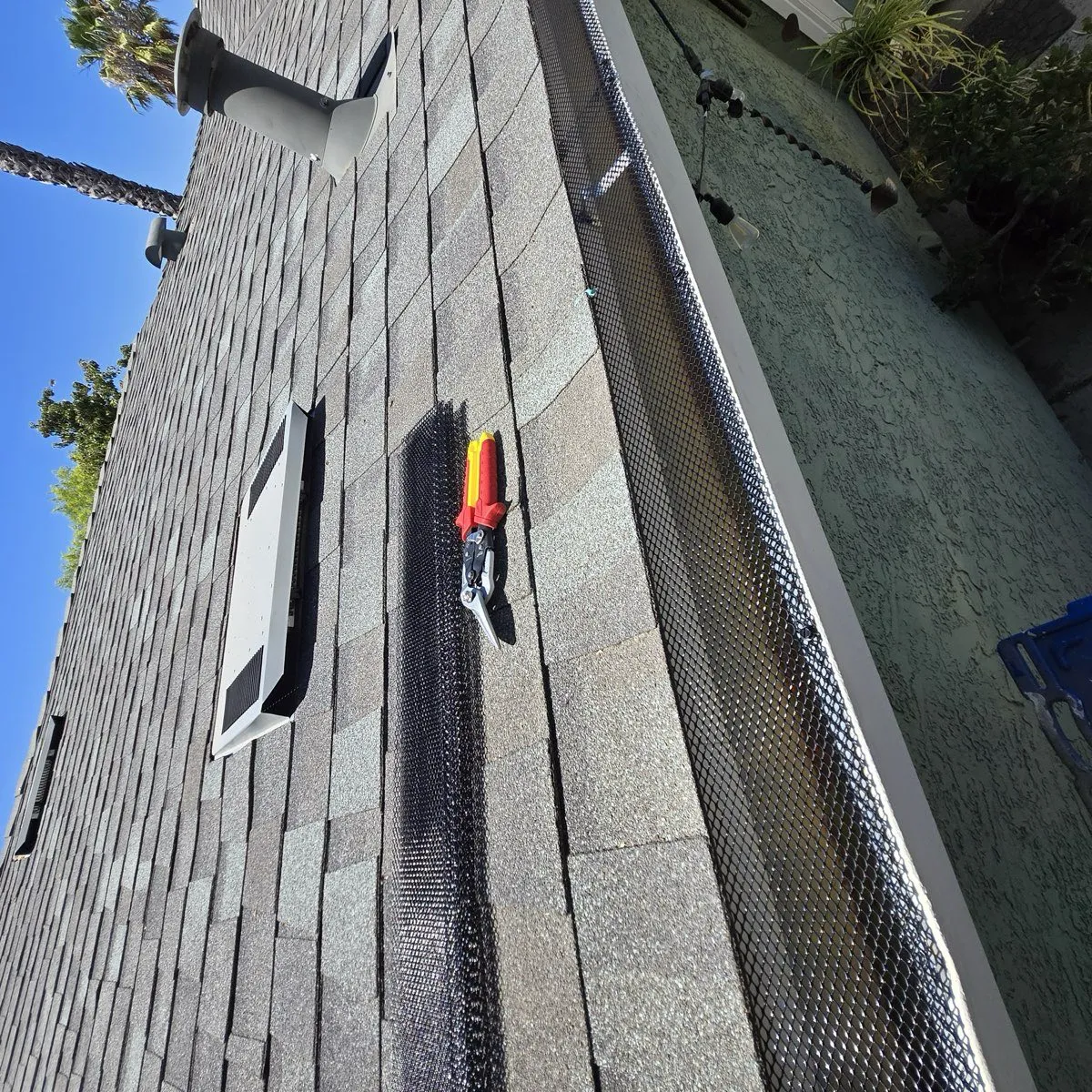
Gutter guards prevent the debris accumulation that causes overflow in the first place. For Sacramento homes, stainless steel micro-mesh guards offer the best protection because they block even small debris like pine needles and shingle grit while maintaining full water flow capacity. This single investment eliminates the most common cause of gutter-related neighbor liability.
Step 5: Document Everything
Keep records of every gutter cleaning, repair, and inspection. Save invoices. Take photos of your gutters and downspout discharge points before and after storm season. If a neighbor ever claims damage, your documentation demonstrates reasonable care under California's legal standard. This documentation can be the difference between paying a claim and having it dismissed.
Concerned About Your Gutter Drainage?
Sacramento Gutter Guard provides free drainage assessments with photo documentation. We identify liability risks and recommend specific fixes.
Schedule Free AssessmentWhat to Do If a Neighbor's Gutters Are Damaging Your Property
If you are on the receiving end of gutter water damage from a neighboring property in Sacramento, you have legal options. But the smartest approach starts with communication, not litigation.
- Document the damage thoroughly. Photograph the damage after every storm. Record dates, rainfall amounts (use Weather.gov Sacramento data), and the source of the water. Video of active overflow during a storm is particularly compelling evidence.
- Send a written notice to your neighbor. A polite but documented letter or email describing the problem and requesting a fix establishes the timeline. Include photos. Keep a copy. This letter is critical if the dispute later goes to court because it shows your neighbor was aware of the problem.
- Suggest specific solutions. Most gutter drainage problems have straightforward fixes: adding downspout extensions, cleaning clogged gutters, or redirecting discharge. Suggesting affordable solutions shows you are being reasonable, which matters under California's reasonableness standard.
- Escalate if necessary. If your neighbor refuses to act, your options include mediation through Sacramento County's dispute resolution services, a small claims court filing (up to $10,000 in California), or a superior court nuisance action under Civil Code 3479 for larger damages.
Sacramento-Specific Resource
The Sacramento County Bar Association operates a lawyer referral service at (916) 856-5400 for residents who need help with property damage disputes. Initial consultations for neighbor drainage disputes are typically $35 to $50. For claims under $10,000, small claims court does not require an attorney and filing fees are under $100.
Insurance Coverage for Gutter Water Damage Claims
Homeowners insurance is not a reliable backstop for gutter drainage liability. Here is why.
Standard homeowners policies cover sudden and accidental damage. A gutter that fails during an unexpected storm event may be covered. But insurers routinely deny claims for gradual damage caused by maintenance neglect: clogged gutters that overflow repeatedly, downspouts that have discharged toward a neighbor for years, or a known drainage problem that was never addressed. Insurance adjusters classify these as maintenance failures, not covered events.
Typically Covered
- • Gutter collapse from ice/snow (rare in Sacramento)
- • Storm damage that breaks a gutter or downspout
- • Tree limb falls and destroys gutter system
- • Sudden and accidental water damage to neighbor
Typically NOT Covered
- • Gradual water damage from chronic overflow
- • Damage from known drainage deficiencies
- • Clogged gutters causing water intrusion
- • Mold from ongoing moisture exposure
- • Foundation damage from years of poor drainage
For deeper coverage on gutter-related insurance issues, including how documentation affects claim outcomes, read our homeowners insurance and gutter damage guide and our analysis of Sacramento gutter damage claims data.
Frequently Asked Questions
Can my neighbor sue me for gutter water damage in California?
Yes. Under California's modified civil law rule, property owners who alter natural water flow and cause damage to neighboring properties can be held liable for negligence. If your gutters or downspouts direct water onto a neighbor's property and cause damage, you may be responsible for repair costs. California Civil Code Section 3479 defines this type of damage as a potential nuisance, and courts have specifically found gutters and downspouts that send rainwater onto neighboring property to be "unreasonable."
What is California Civil Code 3479 and how does it apply to gutter drainage?
California Civil Code Section 3479 defines a nuisance as anything "injurious to health" or "an obstruction to the free use of property." Gutter overflow or improperly directed downspouts that cause water damage, erosion, or flooding on neighboring property qualify as a nuisance. The affected neighbor can seek an injunction forcing you to fix it and sue for monetary damages.
Am I liable if rainwater naturally flows from my property to my neighbor?
Generally no. California law distinguishes between natural water flow and artificially altered drainage. You are not liable for damage caused by natural surface water runoff following the natural contour of the land. However, gutters by definition collect and concentrate water. That concentration is an artificial alteration, and if it causes damage, you may be liable under the reasonableness standard from Keys v. Romley (1966).
How far must downspouts discharge from my property line in Sacramento?
There is no specific statewide code mandating a setback from property lines. IRC Section R903.4 requires a 5-foot setback from foundations. For property lines, the reasonableness standard applies. In practice, Sacramento contractors recommend directing downspouts at least 5 feet from your property line, or connecting to underground drainage that routes water to the street.
What should I do if my neighbor's gutters are damaging my property?
Document the damage with photos and dates. Send a written notice to your neighbor requesting a fix. Most issues have affordable solutions like downspout extensions or gutter cleaning. If they refuse, you can pursue mediation, small claims court (up to $10,000), or a nuisance action under Civil Code 3479.
Does homeowners insurance cover gutter-related water damage to a neighbor's property?
It depends. Your liability coverage may pay for sudden, accidental damage like a gutter failure during a storm. But insurers routinely deny claims for gradual damage from neglected gutters or known drainage problems, classifying these as maintenance issues. Documented maintenance history significantly improves claim approval rates. Read our insurance and gutter damage guide for details.
Eliminate Your Gutter Liability Risk
Sacramento Gutter Guard provides complete drainage assessments, gutter guard installation, and downspout solutions that protect your property and your neighbor's. Every service includes photo documentation for your records.
Free estimates • Photo documentation included • Serving Greater Sacramento