Quick Answer
A gutter replacement during a reroof in Sacramento should follow a strict sequence: tear-off, deck repair, underlayment, drip edge (installed by the roofer), shingles, then gutters mounted by the gutter installer with the gutter back lip tucked beneath the drip edge kickout. The roofer warrants the roof system through the drip edge. The gutter installer warrants the gutter and its position. The handoff -- the 1/4-inch overlap where drip edge meets gutter -- is where both contractors must coordinate, and it is the single most common warranty dispute on bundled reroof + gutter projects in the Sacramento metro. Get a written sequencing plan signed by both contractors before any work starts. For background on why this pairing matters, see our replace gutters with new roof Sacramento guide.
Why Reroof Gutter Sequencing Matters in Sacramento
Sacramento gets roughly 18.7 inches of rain per year (NOAA Sacramento Executive Airport climate normals 1991-2020), and almost all of it falls between November and April. When a reroof and gutter replacement happen together, the system that handles those 18.7 inches has to be assembled in the right order or the components do not integrate.
Three problems show up when sequencing goes wrong:
- Gutters installed before drip edge. The drip edge has nothing to overlap into, so the roofer either skips the back lip overlap entirely or pries the gutter out of position to slide drip edge behind it. Both options leave gaps where water runs onto the fascia.
- Gutters installed before tear-off cleanup. Roofing nails, granules, and shingle fragments end up inside the new gutters during the next phase of the roofing project. The gutter installer is gone, the roofer says it is the gutter contractor's problem, and the homeowner pays for a third cleaning visit.
- Drip edge profile that does not match the gutter. If the roofer chooses a drip edge with a 3/8-inch kickout but the gutter installer plans a system that needs a 3/4-inch kickout (common with reverse-curve gutter guards), the two pieces will never align cleanly. This is a coordination failure, not a craftsmanship failure.
Correct Reroof + Gutter Replacement Sequence
Sacramento roofer and gutter installer phase order
The sequence above is non-negotiable for any Sacramento reroof + gutter project. Phases 1 through 4 must be 100 percent complete before gutter work starts. Phase 5 -- the handoff inspection -- is the most-skipped step on bundled projects, and it is the step that prevents 90 percent of warranty disputes.
The Drip Edge Handoff: Where Two Contractors Have to Cooperate
The drip edge is a thin metal flashing strip installed along the eave that directs water off the roof and into the gutter. It is the literal interface between the roof system and the gutter system, and California Residential Code (CRC R905.2.8.5) and California Building Code (CBC 1503.2) both require it on asphalt shingle roofs.
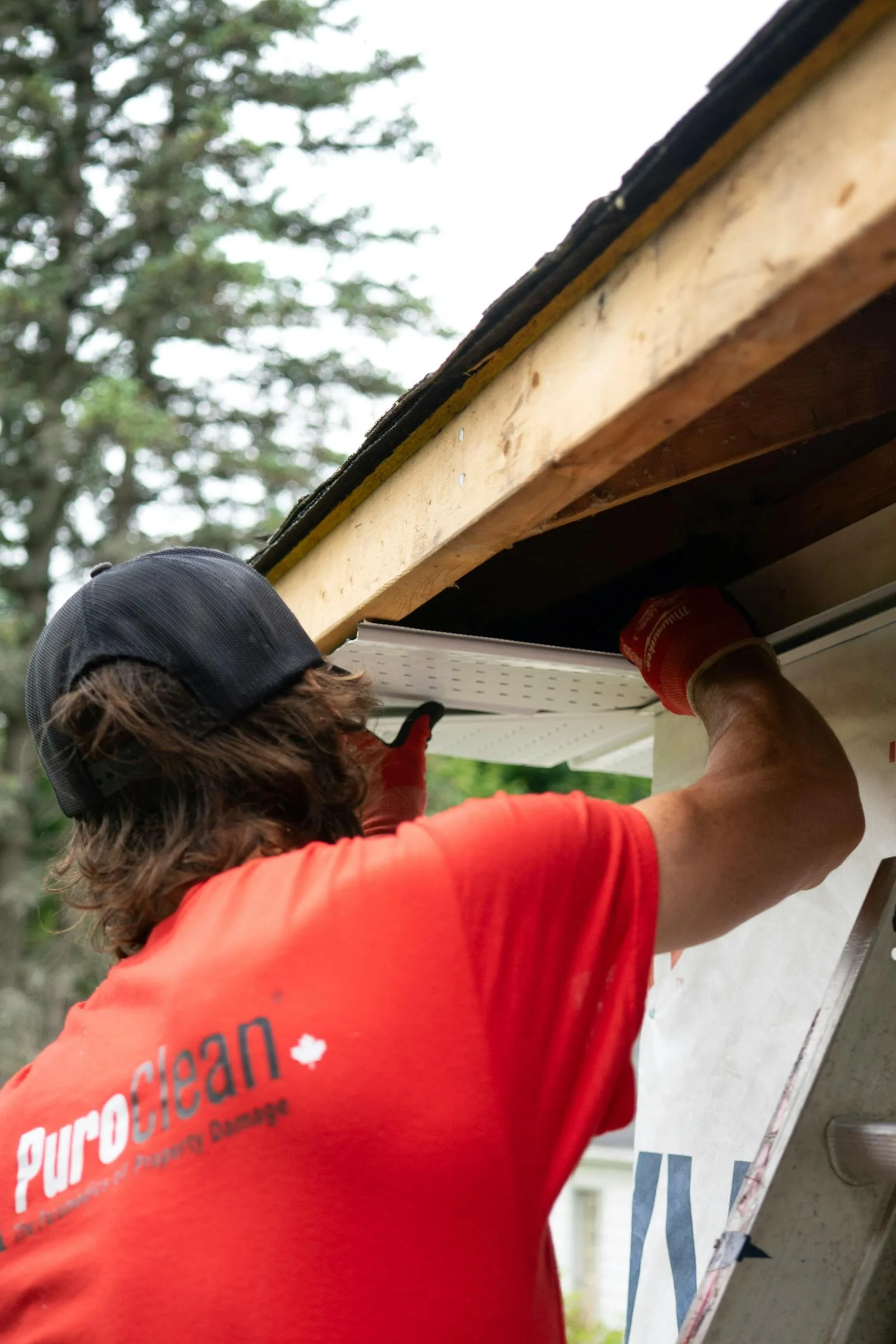
Here is the handoff in plain language: the roofer installs drip edge along the eave with a kickout extending forward (away from the fascia). The gutter installer mounts the gutter so the gutter's back lip slides under the drip edge kickout by approximately 1/4 inch. Water runs down the shingle, hits the drip edge, drops off the kickout, and lands inside the gutter channel. No gap. No water on the fascia. For deeper detail on this connection, see our gutter apron vs drip edge Sacramento breakdown.
Drip Edge to Gutter Handoff (Cross-Section)
How the back lip overlap should look at the eave
In the diagram above, the red-circled overlap zone is where most warranty disputes happen. The roofer says the drip edge is installed correctly. The gutter installer says the gutter is positioned correctly. Water still gets behind the gutter because the two pieces are off by 1/8 inch. Without a written sequencing plan and a joint handoff inspection, no one is responsible.
Pro Tip: The Drip Edge Photo
Before the gutter installer arrives, take phone photos of the drip edge along the entire eave from a ladder. Get the kickout dimension visible in at least one shot. Send the photos to the gutter installer the same day. If there is a problem with the drip edge profile, you find it before the gutter goes up -- not after, when the only fix is reopening the work the roofer already finished. This single 5-minute habit prevents the most expensive warranty dispute on a typical Sacramento reroof + gutter project.
Warranty Coordination: Who Covers What When Something Leaks
Reroof and gutter projects come with three layers of warranty coverage, and they overlap in places that confuse homeowners. Understanding the layers before signing any contract is how you avoid the "not my problem" runaround.
The Three Warranty Layers
| Warranty Type | Issued By | Typical Term | What It Covers |
|---|---|---|---|
| Manufacturer (roof) | GAF, Owens Corning, CertainTeed, etc. | 25-50 years (limited) | Shingle defects, granule loss, premature wear |
| Workmanship (roof) | Roofing contractor | 2-10 years | Installation defects, drip edge, flashing, deck |
| Manufacturer (gutter guards) | LeafFilter, Gutterglove, Raptor, etc. | 10-Lifetime (limited) | Mesh integrity, structural failure |
| Workmanship (gutter) | Gutter contractor | 1-10 years | Gutter seams, slope, hangers, downspouts |
Manufacturer warranties on roofing materials are surprisingly strict about installation by other contractors. GAF, Owens Corning, and CertainTeed all include language requiring that any work near the roof system -- including gutter guard installation -- not interfere with shingle integrity, ventilation, or the drip edge. Reading the manufacturer warranty document before authorizing gutter guard installation is the homeowner's job, not the contractor's. For specifics on this, our do gutter guards void roof warranty Sacramento guide walks through the four most common warranty triggers.
Where Workmanship Warranties Overlap (and Where They Do Not)
Workmanship warranties are written by the contractor, which means there is no industry-standard language. Two roofers in Sacramento may issue 5-year workmanship warranties with completely different exclusions. Read the document, and pay attention to these specific clauses.
- Drip edge installation. The roofer's workmanship warranty should explicitly include drip edge. If the contract says "roofing materials and workmanship" without naming drip edge, ask for it to be added. This is the single most-disputed component on bundled projects.
- Water entry definition. Most roofing workmanship warranties cover "water penetration through the roof system." What counts as "the roof system" varies. Confirm in writing that the drip edge is part of the roof system for warranty purposes.
- Modifications by other contractors. Almost every roofing warranty has a clause voiding coverage if other contractors modify the roof. This usually targets satellite dish installers and HVAC contractors but can be used against gutter installers if the gutter scope is not pre-approved.
- Gutter installer's scope on the fascia. The gutter contractor's warranty should specify that hangers attach to the fascia (not the roof deck) and that no roof penetration is required. This protects both the gutter installer's warranty and the roofer's warranty.
Who Warrants What at the Roof-Gutter Interface
Sacramento reroof + gutter scope boundaries
Coordinating a Sacramento Reroof? We Handle the Gutter Side.
We coordinate directly with your roofing contractor, attend the drip edge handoff inspection, and document the integration in writing. Free estimates and same-week scheduling for reroof projects across the Sacramento metro.
One Contractor or Two? The Sacramento Licensing Reality
California licenses roofing and sheet metal work separately. A roofing contractor holds a Contractors State License Board (CSLB) C-39 license. A gutter contractor holds a CSLB C-43 sheet metal license. A general contractor holding a B license can hire either or both as subcontractors but typically does not self-perform either trade. To verify a contractor's license type, see our CSLB C-43 verification guide.
This means your reroof + gutter project always involves at least two trades, even if one contractor "handles everything." The questions are: how many companies are involved, and how is the coordination documented?
Option 1: One Roofer Subcontracts the Gutter Work
Many Sacramento roofers maintain a relationship with a specific gutter contractor and offer the gutter scope as part of the reroof package. This is the cleanest accountability model -- the roofer is the prime contractor and is responsible for the integrated system, including their subcontractor's work.
The trade-offs: you pay a markup on the gutter portion (typically 10-20 percent), and you do not get to choose the gutter installer or the gutter system. If the roofer's preferred gutter sub uses 5-inch gutters and you need 6-inch, you may have to push for it.
Option 2: Two Specialty Contractors With a Coordination Plan
Hiring a roofer and a gutter installer separately gives you more control over both systems but requires a written sequencing plan. Both contractors should sign a single document covering: phase order, mobilization dates, who installs drip edge and to what specification, the joint handoff inspection date, and warranty boundaries.
This is the model most Sacramento Gutter Guard projects use because it produces better outcomes when the documentation is in place. The risk -- and the reason it goes wrong without coordination -- is that two independent contractors with no shared agreement will each prioritize their own scope and ignore the handoff.
Option 3: General Contractor Manages Both
A licensed general contractor (B license) hires both the roofer and the gutter installer as subs and is responsible for coordination. This is common on full-house remodels but unusual for standalone reroof + gutter projects in Sacramento because the GC markup (15-25 percent) does not pencil out for a relatively small scope.
When to Schedule a Reroof + Gutter Project in Sacramento
Sacramento's rainfall is concentrated in the November-April window. Roofing and gutter contractors are busiest from August through October as homeowners rush to finish before storm season, then quiet from December through February when rain limits exterior work.
The ideal scheduling window for an integrated reroof + gutter project in Sacramento is May through early September. Here is why each window matters.
- May - early July: Best window. Dry weather, full crew availability, time to address any deck repairs uncovered during tear-off, and 4+ months of buffer before storm season. Pricing is typically 5-10 percent better than fall rush rates.
- Late July - September: Good but hot. Sacramento summers regularly exceed 100 degrees Fahrenheit (NOAA Sacramento Executive Airport averages 17 days at or above 100 degrees Fahrenheit per year). Roofing crews start at sunrise and stop by early afternoon to avoid heat illness, which extends project timelines by 1-2 days.
- October: Risky. First atmospheric river typically arrives mid-to-late October. If your reroof finishes October 1 and the gutter installer is scheduled for October 15, you may end up with bare fascia during a 2-inch rain event. Move both crews up if possible.
- November - February: Avoid for reroofs. Active rainfall stops roofing work for days at a time, and gutter installation on a wet roof is unsafe. Most Sacramento reroof contractors will not even quote reroofs during this window.
- March - April: Possible but tight. Last storms of the season can still produce significant rain. Schedule with weather buffer days built into the contract.
Sacramento Reroof + Gutter Project Timing
Best months by weather, contractor availability, and risk
Tile Roof Reroofs: A Special Sacramento Case
Tile roof reroofs are common in Sacramento neighborhoods built between 1990 and 2010, including Natomas, Elk Grove, parts of Folsom, and most of Roseville. Tile reroofs change the gutter sequencing in three ways. Our tile roof gutter installation Sacramento guide covers the mounting and flashing in detail.
- Tile overhang requires gutter offset. Concrete and clay tiles extend further past the fascia than asphalt shingles. The gutter must sit 1-2 inches further out than it would on a comp shingle roof to catch water leaving the tile edge. This affects the bracket dimension the installer uses.
- Drip edge profile is different. Tile roofs use a tile-specific drip edge with a higher kickout to clear the tile bullnose. If the gutter installer plans for a standard L-profile drip edge, the bracket geometry will not work.
- Weight requires heavy-duty hangers. Tile reroofs do not change the gutter weight, but tile debris during the reroof can damage existing gutters. Installing new gutters after the tile work is finished avoids this entirely.
For a tile reroof in Sacramento, the case for replacing gutters during the project is stronger than for an asphalt shingle reroof. The coordination cost between roofer and gutter installer is higher, but the alternative -- trying to fit a new gutter to old brackets after a tile system change -- almost never works cleanly.
The Joint Handoff Inspection: A 30-Minute Step That Prevents 90 Percent of Disputes
The single most-skipped step on a Sacramento reroof + gutter project is the joint handoff inspection. The roofer finishes shingles on a Tuesday, the gutter installer arrives Friday, and no one looks at the drip edge together. Every problem with the integration shows up months later when it rains.
A proper joint handoff inspection involves the roofer (or roofing project manager) and the gutter installer walking the eave together for approximately 30 minutes. They confirm:
- Drip edge is continuous along the entire eave. No gaps, no missing sections at corners, no overlap reversals (drip edge sections must overlap in the direction of water flow).
- Drip edge kickout dimension matches the gutter system. Standard k-style gutters need a 3/8-inch to 1/2-inch kickout. Reverse-curve gutter guards may need 3/4 inch. Confirm the as-installed drip edge matches the planned gutter system.
- Fascia is sound and ready for hangers. The roofer should have flagged any soft, rotted, or split fascia during deck inspection. The gutter installer confirms hanger placement points before mounting.
- No roofing debris remains in the gutter zone. Loose nails, granules, and shingle fragments along the drip line will end up inside the new gutters during the next rain. Sweep before mounting.
- Both contractors sign a written handoff sheet. One page documenting that the roofer's scope is complete and the gutter installer is accepting the substrate as ready for gutter work. This is the document that resolves any future warranty dispute.
Pro Tip: The Handoff Sheet Template
A simple handoff sheet has five fields: project address, date, roofing contractor signature, gutter contractor signature, and a single line stating "Roof system, including drip edge, accepted as substrate for gutter installation per CRC R905.2.8.5 and CBC 1503.2." Add a notes section for any flagged issues. Keep one copy with each contractor and one with the homeowner. If a leak ever shows up at the drip edge to gutter interface, this document is the first thing the warranty adjuster asks for.
Five Mistakes That Wreck Reroof + Gutter Projects in Sacramento
Across hundreds of reroof + gutter coordination projects in the Sacramento metro, the same handful of mistakes show up over and over. Avoiding these five is most of the work.
- Scheduling the gutter installer before the roofer is finished. "Stacking" the trades to save days never works -- the gutter installer ends up waiting around or starting on the wrong substrate. Always schedule the gutter crew 2-3 days after the projected roofing completion date.
- Letting the roofer pick a drip edge profile without consulting the gutter installer. If you are installing a specific gutter guard system, the drip edge must be compatible. This is a 5-minute conversation before the roof tear-off starts.
- Skipping the post-roof gutter cleaning. Even with new gutters, the first rain after a reroof will flush roofing granules, nails, and shingle dust into the downspouts. A 30-minute cleaning between gutter installation and the first rain prevents downspout clogs that show up two months later.
- Paying the roofer in full before the gutter work is complete. The roofer's incentive to return for a callback drops dramatically once final payment clears. Hold 5-10 percent of the roofing contract until the joint handoff inspection passes.
- Installing gutter guards the same day as the gutters. Even on a bundled project, gutter guards should go on after the gutters have been tested with a hose flow test and after the system has handled at least one cleaning cycle. Same-day guard installation hides slope problems that only show up under guards.
A Carmichael Reroof That Went Right (and One That Did Not)
Two homes in Carmichael, both built around 1985, both with original 5-inch aluminum gutters and 25-year-old comp shingle roofs. Both homeowners decided to bundle the reroof and gutter replacement in summer 2025.
House A used a single roofing contractor who subcontracted the gutter work. The roofing contract did not name drip edge separately, the gutter sub used 5-inch gutters by default, and no one held a joint handoff inspection. Six months later, after the first atmospheric river, the homeowner noticed water staining on the fascia behind the gutters. The roofer said the gutters were the problem. The gutter sub said the drip edge was misaligned. The homeowner paid a third contractor $1,800 to remove the gutters, fix the drip edge overlap, and remount.
House B used separate roofing and gutter contractors with a written sequencing plan. The drip edge profile was confirmed before roofing started (3/8-inch kickout matching a planned micro-mesh gutter guard system). The gutter installer attended the post-roof handoff inspection on a Tuesday afternoon, signed a handoff sheet, and began gutter installation Wednesday. After the first storm season, both contractors got positive callbacks and the homeowner referred two neighbors. Total project cost was approximately $1,000 less than House A because there was no third-contractor remediation.
The difference was not crew skill. Both gutter subs were competent. The difference was a 30-minute joint inspection and a one-page handoff sheet. For a complete picture of what to expect from the gutter side of the project, see our new gutter installation what to expect Sacramento guide.
Working With Sacramento Roofers: Questions to Ask Before You Sign
Whether you hire one contractor or two, these questions belong on the table before any contract is signed. The answers tell you whether the project will run smoothly or end up in a warranty dispute.
- "What drip edge profile will you install, and is it compatible with the gutter system I plan to use?"
- "Is drip edge listed in your workmanship warranty as part of the roof system?"
- "Are you willing to attend a joint handoff inspection with the gutter installer?"
- "What is your protocol for protecting existing gutters during tear-off if I am keeping them?"
- "Will the roofing crew clean the gutter zone (not the gutters themselves) before demobilizing?"
- "Can I hold 5-10 percent retention until the joint handoff inspection is complete?"
A roofer who agrees to all six is the right partner. A roofer who pushes back on the joint handoff inspection or the retention clause is signaling that coordination is not their strength.
Frequently Asked Questions
When should gutters be installed during a reroof in Sacramento?
After tear-off, deck repair, underlayment, drip edge, and shingles are complete -- but before final cleanup. The proper sequence is: roofing through drip edge by the roofer, then gutters by the gutter installer with the gutter back lip tucked under the drip edge kickout. Most Sacramento reroof + gutter projects span 5-10 days with a 1-3 day gap between phases.
Whose warranty covers a leak between a new roof and new gutters?
Roof leaks (shingles, underlayment, deck) are the roofer's warranty. Gutter leaks (seams, end caps, downspouts) are the gutter contractor's. The drip edge to gutter handoff is the disputed zone. By California convention and most Sacramento contracts, the roofer warrants drip edge installation and the gutter installer warrants gutter position. Get both warranties in writing and document the handoff inspection.
Should the same contractor do both the roof and gutters?
Not necessarily. Roofing requires a CSLB C-39 license, gutters typically require a C-43 license. Two specialized contractors with a written sequencing plan often produce better results than one generalist. Single-contractor projects offer cleaner accountability if there is a leak. Two-contractor projects offer better craftsmanship on each system. Either model works with proper documentation.
How long after a reroof should I wait to install new gutters?
Ideally 1-3 days, with a maximum of 2 weeks. During Sacramento's storm season (November-March), schedule within 7 days of roof completion. May-September gives more flexibility. Waiting longer risks a single atmospheric river dumping rain directly on the fascia and foundation with no gutter system in place.
Will my new roof warranty be voided if I use a different gutter contractor?
No, as long as the gutter installation does not damage the roof. The gutter installer must not penetrate shingles, modify drip edge, or attach hangers through the roof deck. Hidden hangers screwed into the fascia (the standard method) do not affect roof warranties. Read the manufacturer warranty before authorizing gutter guard installation, since some guard systems can void warranties from GAF, Owens Corning, and CertainTeed.
Reroofing Soon? Let Us Handle the Gutter Side of the Project.
We coordinate with your Sacramento roofing contractor, attend the drip edge handoff inspection, and document everything in writing. Seamless 5-inch and 6-inch aluminum gutters, downspout sizing, and optional micro-mesh gutter guards installed in proper sequence. Free estimates across the Sacramento metro.
The Bottom Line: Sequencing and Documentation Beat Crew Skill
A successful reroof + gutter replacement in Sacramento depends less on the individual skill of the crews and more on three documents: a written sequencing plan signed by both contractors before work starts, a one-page joint handoff inspection sheet completed before gutter installation begins, and clear warranty boundaries naming who covers what at the drip edge interface.
Skip these documents and you are betting on luck. Get them right and the integrated system performs the way it should -- 18.7 inches of annual Sacramento rain handled cleanly, no fascia rot, no warranty disputes, and a roof system that actually integrates with the gutter system instead of fighting it.
If you are coordinating a reroof in the Sacramento metro and want a gutter installer who shows up to the handoff inspection and signs the documents, get a free estimate and we will coordinate scheduling directly with your roofer.
Related Articles
Replace Gutters With New Roof
Should you replace gutters during a roof replacement? Decision framework and cost analysis.
Gutter Apron vs Drip Edge
Which roof-edge flashing your Sacramento home actually needs.
Do Gutter Guards Void Roof Warranty?
Manufacturer warranty rules from GAF, Owens Corning, and CertainTeed.
Tile Roof Gutter Installation
Special drip edge, mounting, and overhang considerations for Sacramento tile roofs.
CSLB C-43 Verification
How to verify a licensed and bonded gutter contractor in Sacramento.
New Gutter Installation: What to Expect
Step-by-step guide to the gutter installation process.
Sources
- California Building Code 2022 (CBC). "Section 1503.2 - Flashing."
- California Residential Code 2022 (CRC). "Section R905.2.8.5 - Drip Edge."
- California Contractors State License Board. "Classifications: C-39 Roofing, C-43 Sheet Metal." cslb.ca.gov
- NOAA / National Weather Service Sacramento. "Climate Normals 1991-2020: Sacramento Executive Airport." weather.gov/sto
- GAF. "Golden Pledge Limited Warranty." gaf.com
- Owens Corning. "System Protection Limited Warranty." owenscorning.com
- CertainTeed. "SureStart Plus Roofing Warranty." certainteed.com
- HomeCraft Gutter Protection. "Drip Edge and Gutters 101." homecraftgutterprotection.com