TL;DR: Your Home’s Era Predicts Your Gutter Problems
With 41.4% of Sacramento’s housing stock built before 1970 (U.S. Census ACS via NeighborhoodScout), gutter problems older homes Sacramento homeowners face are rarely random. 1950s ranch homes fail at seams and hangers from decades of thermal cycling. Midtown Craftsman bungalows battle steep rooflines, rafter tail complications, and heavy tree debris. Natomas stucco homes built in the 1990s–2000s deal with undersized builder-grade gutters that overflow and stain exterior walls. Each era needs a different diagnostic approach and fix strategy.
Table of Contents
- Why Your Home’s Build Era Determines Gutter Problems
- 1950s Ranch Homes: The 5 Most Common Gutter Failures
- Midtown Sacramento Craftsman: Gutter Challenges on Pre-1930 Homes
- Natomas Stucco Homes: Why Builder-Grade Gutters Fail
- Side-by-Side: Gutter Problems, Costs & Fixes by Home Era
- Do Gutter Guards Work on Older Sacramento Homes?
- When to Repair vs. Replace: The 50% Decision Rule
- Frequently Asked Questions
A 1952 ranch in South Land Park, a 1912 Craftsman in Midtown, and a 2001 stucco two-story in North Natomas share the same Sacramento climate — but their gutter problems have almost nothing in common. The materials, mounting methods, roofline geometry, and surrounding vegetation differ so much between eras that a fix that works on one home type can actually make problems worse on another.
Sacramento homeowners dealing with gutter problems on older homes often get generic advice that ignores these differences. This guide breaks down the specific failure patterns, root causes, and proven solutions for each of Sacramento’s three most common home eras. If you know when your home was built, you can skip straight to your section.
Why Your Home’s Build Era Determines Gutter Problems
Gutter systems are not one-size-fits-all — they reflect the building standards, materials, and architectural priorities of the decade they were installed. A home built in 1955 used galvanized steel sectional gutters with spike-and-ferrule hangers because that was standard practice. A 1915 Craftsman used half-round copper or built-in box gutters. A 2002 Natomas tract home got the cheapest builder-grade 5-inch aluminum system the developer could spec.
Each of these systems ages differently, fails in different ways, and responds to Sacramento’s climate — 45+ days above 100°F, 20+ inches of rain concentrated in 4-5 winter months (NWS Sacramento) — with different vulnerabilities. Understanding your home’s era is the first step toward diagnosing and permanently fixing gutter issues.
Sacramento Housing Stock by Build Decade
Source: U.S. Census ACS via NeighborhoodScout
1950s Ranch Homes: The 5 Most Common Gutter Failures
Sacramento’s post-war building boom filled neighborhoods like South Land Park, Tahoe Park, North Sacramento, and Arden-Arcade with single-story ranch homes between 1945 and 1965. These homes feature long, low rooflines — often 80 to 120 linear feet of gutter run — with moderate slopes between 3:12 and 5:12 pitch. The original gutter systems on most of these homes have been replaced at least once already, but the replacements often repeated the same design mistakes.
1. Seam Failures From Thermal Cycling
Sacramento ranch house gutters take severe thermal punishment. Summer temperatures regularly exceed 100°F, and winter nights drop into the 30s. That 70°+ temperature swing causes aluminum to expand and contract roughly 1/8 inch per 10-foot section per day during extreme seasons. Multiply that across a 100-foot gutter run with seams every 10 feet, and you get 9 potential leak points that flex thousands of times per year.
Sectional gutters on 1950s ranch homes are the worst offenders because the original spike-and-ferrule mounting allows more movement than modern hidden hangers. If your ranch home has sectional gutters, seamless gutter replacement eliminates every one of those seam failure points.
2. Hanger Failures and Sagging
The spike-and-ferrule system standard on 1950s homes drives a long nail through the gutter and a metal tube (ferrule), into the fascia board. After decades of water exposure, the fascia softens and the spike pulls free. The result: sagging gutters that pool water instead of draining it, which accelerates further damage.
We see this on nearly every 1950s ranch home we inspect in Tahoe Park and Arden-Arcade. The fix is replacing spike-and-ferrule with modern hidden hangers screwed into the rafter tails (not just the fascia) every 24 inches instead of the original 36-inch spacing.
3. Low-Slope Debris Accumulation
Ranch home rooflines sit closer to the ground and have gentler slopes than two-story homes. This means debris lands on the roof and stays there longer — leaves, pine needles, and shingle grit wash into gutters gradually instead of flushing off during heavy rain. The slow accumulation creates dense, compacted clogs that are harder to clear than loose leaf buildup.
Sacramento’s fall leaf drop from October through December is the peak clogging season for ranch homes. A fall maintenance schedule is essential for these homes.
4. Undersized Gutters (4-Inch Originals)
Many 1950s ranch homes were originally built with 4-inch gutters — a size that hasn’t been standard for decades. Even replacement gutters on these homes are sometimes installed as 5-inch when the roof square footage actually warrants 6-inch. For a detailed sizing breakdown, see our 5-inch vs. 6-inch gutter guide.
5. Fascia Board Rot Behind the Gutter
Ranch homes from the 1950s used untreated pine or fir fascia boards. After 70+ years of moisture exposure behind leaking gutters, these boards are often rotted through — but you can’t see the damage until the gutters come off. Any gutter replacement on a 1950s ranch should include a full fascia board inspection and budget for replacement of damaged sections.
Pro Tip: When getting quotes for gutter replacement on a 1950s ranch home, ask the contractor to remove a 2-foot section of the old gutter to inspect the fascia before pricing the job. About 60–70% of the ranch homes we work on in South Land Park and Tahoe Park need at least partial fascia replacement. Knowing that upfront avoids surprise change orders.
Where 1950s Ranch Home Gutters Fail First
Based on Sacramento Gutter Guard service data
Midtown Sacramento Craftsman Gutters: Challenges on Pre-1930 Homes
Midtown Sacramento Craftsman bungalows, built primarily between 1905 and 1930, sit in some of the region’s most established tree-lined neighborhoods. Curtis Park, Boulevard Park, Newton Booth, and Poverty Ridge all feature dense collections of these homes. The combination of steep multi-pitch rooflines, exposed rafter tails, and massive canopy trees creates a gutter environment unlike anything in newer neighborhoods.
Exposed Rafter Tails Complicate Everything
Exposed rafter tails are a signature Craftsman detail — and the single biggest challenge for gutter work on these homes. Standard K-style gutters mount flat against fascia boards, but Craftsman homes often lack a continuous fascia. The rafter tails extend past the wall, and the gutter must mount below and in front of them using strap hangers that attach to the roof deck.
When contractors unfamiliar with Craftsman architecture install K-style gutters over the rafter tails, three things go wrong: moisture gets trapped behind the gutter accelerating wood rot, the flat gutter back conceals the architectural detail, and the mounting points are structurally weaker because they’re screwed into thin rafter tail ends instead of solid framing. Our guide to gutters for older Sacramento homes covers the right profile and hanger choices for these situations.
Heavy Tree Canopy Means Constant Debris
Midtown’s urban forest is a defining neighborhood feature — and a relentless gutter clogger. Mature valley oaks, elms, sycamores, and camphor trees drop leaves, seeds, small branches, and pollen into gutters from September through May. Unlike newer Sacramento neighborhoods where trees are still small, Midtown Craftsman homes sit under canopies that extend 40–60 feet across, often overhanging the entire roof.
The debris volume on a Midtown Craftsman can be 3–5 times higher than on a comparable home in Natomas or Elk Grove. That means cleaning frequency needs to be higher — or leaf guards become a functional necessity rather than a nice-to-have. For homes under heavy oak canopy specifically, see our guide on gutter solutions for oak leaves.
Steep Pitches Accelerate Water Velocity
Craftsman homes typically have steeper roof pitches (6:12 to 8:12) than ranch homes. Water hits the gutters faster and with more force, which causes two problems: the impact loosens hangers over time, and the speed makes it harder for debris to wash through — it gets pushed to the front lip of the gutter and over the edge instead of flowing to the downspout.
Splash guards at valleys and valley accessories are a low-cost addition ($3–$8 each) that prevent overflow at these high-velocity points without replacing the entire system.
Historic District Design Review
Several Midtown neighborhoods fall within Sacramento’s 30 registered historic districts. Changing gutter materials or profiles on a home within these districts may require Preservation Commission approval. Half-round gutters in copper or painted aluminum are generally the safest choice for Craftsman homes in reviewed areas — they’re period-appropriate and rarely trigger compliance issues.
From the field: A Boulevard Park Craftsman we worked on last winter had original box gutters from 1918 that had been covered over with K-style aluminum in the 1980s. The box gutter channels underneath were completely packed with decomposed leaves — over a century of buildup that nobody knew about because the overlay hid it. Water was running behind the walls and had caused significant structural damage to the eave framing. Lesson: if your Midtown Craftsman had gutter work done decades ago, verify what’s actually behind the current system before problems get worse.
Annual Gutter Debris Volume by Sacramento Neighborhood Type
Relative scale — Sacramento Gutter Guard service estimates
Natomas Stucco Home Gutters: Why Builder-Grade Systems Fail
North Natomas exploded with development in the late 1990s and 2000s, producing thousands of two-story stucco tract homes on streets like Arena Boulevard, Del Paso Road, and Truxel Road. These homes are only 20–25 years old, yet their gutter systems are already showing the consequences of cost-driven builder choices. The problems are different from older homes — less about age and more about undersizing and stucco-specific water damage.
Undersized Gutters on Two-Story Rooflines
Most Natomas tract homes were built with 5-inch K-style gutters and 2x3-inch downspouts. For single-story homes, that sizing is adequate. But a two-story Natomas home typically has 2,200–3,000 square feet of roof area, and the steeper second-floor pitch (often 5:12 to 7:12) accelerates water into the gutters faster. During a Sacramento atmospheric river dropping 1–2 inches per hour, these 5-inch gutters overflow.
The fix is upgrading to 6-inch gutters with 3x4-inch downspouts. That increase expands water-handling capacity by roughly 40%, which brings the system in line with what Sacramento’s heaviest rain events demand. See our gutter installation cost guide for current pricing on this upgrade.
Stucco Water Staining and Efflorescence
When gutters overflow on a stucco home, water runs directly down the exterior walls. Unlike wood siding or vinyl that sheds water, stucco is porous — it absorbs moisture through micro-cracks in the paint surface. The result is dark water stains under the eaves and roofline, and white powdery deposits called efflorescence where mineral salts leach to the surface as moisture evaporates (StuccoSafe).
These stains are more than cosmetic. Repeated moisture intrusion through stucco can compromise the wire lath and paper barrier underneath, leading to cracking and potential mold growth behind the wall. Fixing the root cause — gutter overflow — is far cheaper than stucco remediation, which can run $8–$25 per square foot for damaged sections.
Insufficient Downspout Spacing
Builder-grade gutter installs on Natomas homes often skimp on downspouts. We regularly see 40–50-foot gutter runs served by a single downspout when the maximum recommended run per downspout is 20–30 feet. The result is slow drainage, standing water in the gutter channel, and overflow at the midpoint — exactly where stucco staining appears.
Adding a mid-run downspout costs $150–$300 and can solve overflow problems without replacing the entire gutter system. For more on proper downspout placement, see our foundation protection guide.
Builder-Grade Hanger Spacing
Cost-driven builders often space gutter hangers at 36-inch intervals instead of the recommended 24 inches. That extra foot between supports doesn’t matter when gutters are empty, but when 20+ inches of rain concentrate in the winter months and gutters fill with water and debris, the wider spacing allows sagging between supports. The weight of standing water in a clogged 5-inch gutter is roughly 3.3 pounds per linear foot — over 100 pounds across a 30-foot run.
Pro Tip: If your Natomas stucco home has white mineral deposits or dark staining below the roofline, check the gutter directly above the stain first. In about 80% of the cases we see, the staining traces back to a single overflow point — either a clogged downspout or a seam leak. Fixing that one point often stops new staining entirely.
Not Sure What’s Wrong With Your Gutters?
We inspect gutters on ranch homes, Craftsman bungalows, and Natomas stucco homes every week across Sacramento. Free inspections, honest diagnosis, no high-pressure sales.
Side-by-Side: Gutter Problems, Costs & Fixes by Home Era
This comparison summarizes the key differences between Sacramento’s three most common home eras, so you can quickly identify which issues apply to your property.
| Category | 1950s Ranch | Midtown Craftsman | Natomas Stucco |
|---|---|---|---|
| Typical build years | 1945–1965 | 1905–1930 | 1995–2010 |
| Primary gutter failure | Seam leaks, hanger pullout | Debris clogs, rafter tail rot | Overflow, stucco staining |
| Root cause | Thermal cycling, outdated hangers | Heavy canopy, steep pitch | Undersized gutters, few downspouts |
| Best gutter profile | 5–6″ seamless K-style | Half-round w/ strap hangers | 6″ seamless K-style |
| Repair cost range | $250–$600 | $400–$900 | $150–$450 |
| Replacement cost range | $1,500–$3,500 | $2,500–$5,500 | $2,000–$4,500 |
| Key neighborhoods | South Land Park, Tahoe Park, Arden-Arcade, North Sacramento | Midtown, Curtis Park, Boulevard Park, Oak Park | North Natomas, South Natomas, Elk Grove tracts |
Gutter Repair vs. Replacement Cost by Home Era
Do Gutter Guards Work on Older Sacramento Homes?
Gutter guards are effective on all three home eras, but the type and installation method varies. Here is what works best for each:
1950s Ranch Homes
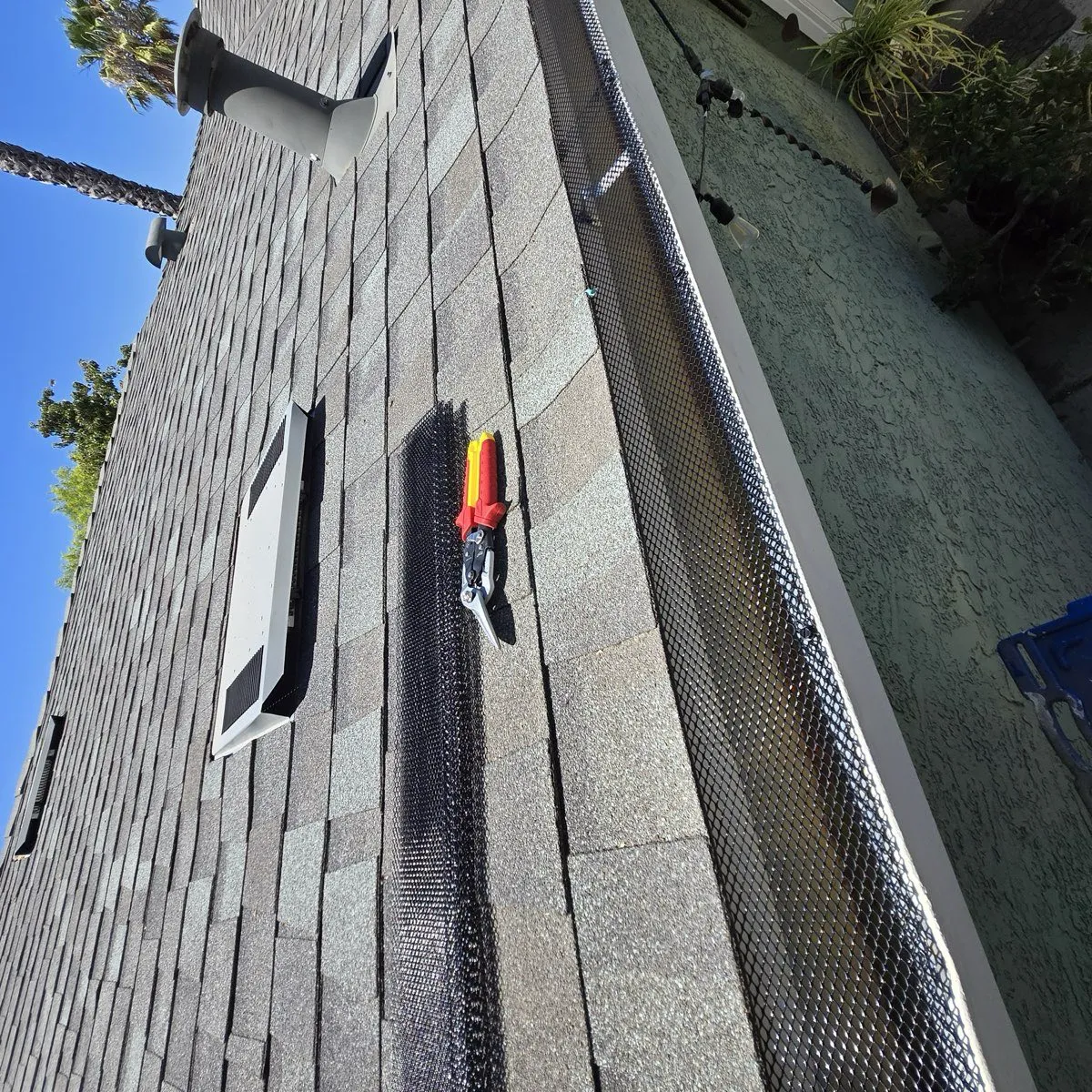
Micro-mesh guards are ideal because low-slope roofs accumulate fine debris (shingle grit, pine needles, seed pods) that coarser screens let through. The mesh must be installed with the existing gutter slope verified first — many ranch home gutters have lost their original pitch due to hanger failure.
Best fit: Micro-mesh, surface tension
Midtown Craftsman
Half-round gutters require guards specifically designed for the rounded profile — flat-top guards won’t fit. Micro-mesh half-round guards exist but have fewer product options than K-style guards. Installation on Craftsman homes with strap hangers requires custom fitting around each hanger mount.
Best fit: Half-round micro-mesh, custom install
Natomas Stucco
Standard high-flow micro-mesh guards work well on Natomas homes. The primary goal is preventing the overflow that stains stucco. If the gutters themselves are undersized, guards alone won’t solve the problem — upgrade to 6-inch gutters first, then add guards.
Best fit: High-flow micro-mesh on 6″ gutters
For a complete cost analysis of gutter guards across all home types, see our gutter guard cost guide for Sacramento. For the broader question of whether guards are worth the investment, our cleaning vs. guards cost comparison breaks down the 10-year math.
When to Repair vs. Replace: The 50% Decision Rule
Regardless of your home’s era, the decision framework for repair vs. replacement follows the same logic. If repair costs exceed 50% of full replacement cost, replacing the entire system is almost always the better investment. Here is how that rule applies to each home era:
- 1950s ranch homes: Average repair is $250–$600; average replacement is $1,500–$3,500. If you need more than 2–3 spot repairs, you are likely past the 50% threshold. Factor in hidden fascia damage that won’t be visible until teardown.
- Midtown Craftsman: Average repair is $400–$900; average replacement is $2,500–$5,500 (higher due to custom profiles and strap hanger labor). The threshold is higher in dollar terms, but the consequence of repeated patch repairs on a 100-year-old home is cumulative wood damage that escalates costs.
- Natomas stucco homes: Average repair is $150–$450; average replacement is $2,000–$4,500. Many Natomas gutter problems can be fixed with targeted interventions (added downspout, re-pitching, guard install) for under $500 — full replacement is usually only needed if the system has sustained physical damage.
For a deeper dive into this decision, including visual inspection checklists, see our repair vs. replacement cost guide. If your gutters are showing multiple warning signs of failure, start there.
Frequently Asked Questions
Why do 1950s ranch homes in Sacramento have so many gutter problems?
Most 1950s ranch homes were built with short, undersized sectional gutters (often 4-inch) that cannot handle modern rainfall expectations. Decades of thermal expansion in Sacramento’s 100-degree summers have cracked seams and loosened hangers. Many also have low-slope rooflines that slow water flow, making clogs worse. The original galvanized steel gutters on these homes typically failed 20–30 years ago, and many replacements were done with budget materials that are now failing again.
What gutter issues are specific to Midtown Sacramento Craftsman homes?
Midtown Craftsman homes face three unique gutter challenges: exposed rafter tails that standard K-style gutters damage or conceal, steep multi-pitch rooflines that accelerate water velocity into gutters, and heavy tree canopy from mature oaks and elms that clogs gutters faster than in newer neighborhoods. Many Midtown Craftsman homes also sit in historic districts where gutter replacements may require design review.
Do Natomas stucco homes need different gutters than older Sacramento homes?
Natomas stucco homes need gutters that prevent water from running down exterior walls, because stucco absorbs moisture and develops staining, efflorescence (white mineral deposits), and eventually cracking. Most Natomas homes built in the 1990s–2000s came with builder-grade 5-inch aluminum gutters that are often undersized for two-story rooflines. Upgrading to 6-inch seamless gutters with properly spaced downspouts prevents the overflow that causes stucco water damage.
How much does it cost to fix gutters on an older Sacramento home?
Gutter repair on older Sacramento homes typically costs $250–$600 for spot fixes like resealing seams, replacing hangers, or patching sections. Full gutter replacement ranges from $1,200–$4,500 depending on home size and material. Older homes often cost 15–25% more than newer homes because of non-standard fascia dimensions, rafter tail complications, and the need for custom mounting solutions.
Should I repair or replace gutters on a 1950s Sacramento ranch home?
If your 1950s ranch home’s gutters show three or more of these signs — sagging sections, multiple leaking seams, visible rust or corrosion, peeling paint from water overflow, or foundation staining — replacement is almost always more cost-effective than repair. The 50% rule applies: if repair costs exceed 50% of replacement cost, replace the entire system. Most 1950s ranch homes benefit from upgrading to 5- or 6-inch seamless aluminum gutters with modern hidden hangers spaced every 24 inches.
Can gutter guards help with older home gutter problems in Sacramento?
Yes — gutter guards address the top cause of gutter failure on older Sacramento homes: debris accumulation. Micro-mesh guards are especially effective on Craftsman homes under heavy tree canopy and on ranch homes with low-slope roofs where debris settles instead of washing off. For Natomas stucco homes, guards prevent the overflow that causes stucco staining and efflorescence. Professional installation is critical on older homes because non-standard fascia and mounting conditions require custom fitting.
Fix Your Gutters the Right Way — For Your Home’s Era
Sacramento Gutter Guard works on ranch homes, Craftsman bungalows, and Natomas stucco homes every week. We know the era-specific problems, stock the right materials, and price honestly. Free inspection and estimate — no obligation.
Free inspections • Era-specific expertise • Licensed & insured
Related Articles
Best Gutters for Older Sacramento Homes
Period-appropriate gutter profiles for Craftsman, Victorian, and Mid-Century homes.
Common Gutter Problems & Solutions
Full guide to the most frequent gutter failures Sacramento homeowners face.
Gutter Repair vs. Replacement
The 50% rule and decision framework for Sacramento homeowners.
Fascia Board Damage & Gutters
How neglected gutters destroy fascia boards and what to do about it.
Gutter Installation Cost Sacramento
Full pricing breakdown by material, home size, and gutter profile.
Half-Round vs. K-Style Gutters
Profile comparison for style, cost, and performance in Sacramento.