Quick Answer: How Do Gutters Affect My Pool?
Gutters that overflow or drain near your pool wash leaves, shingle grit, and organic debris onto the deck and into the water. The fix involves redirecting downspouts at least 10-15 feet from the pool edge, installing gutter guards to prevent clogs, and adding deck drains to capture runoff before it reaches the water.
Table of Contents
Sacramento pool owners face a specific challenge: roof runoff carrying leaves, pollen, and debris can contaminate pool water if gutters overflow or downspouts discharge too close to the deck. Proper gutter drainage near swimming pools requires downspouts routed 10-15 feet away, deck drains to capture runoff, and gutter guards to prevent clogs. Homes with oak trees, fruit trees, or tile roofs need extra attention before storm season.
Why Gutter Drainage Matters for Pool Owners
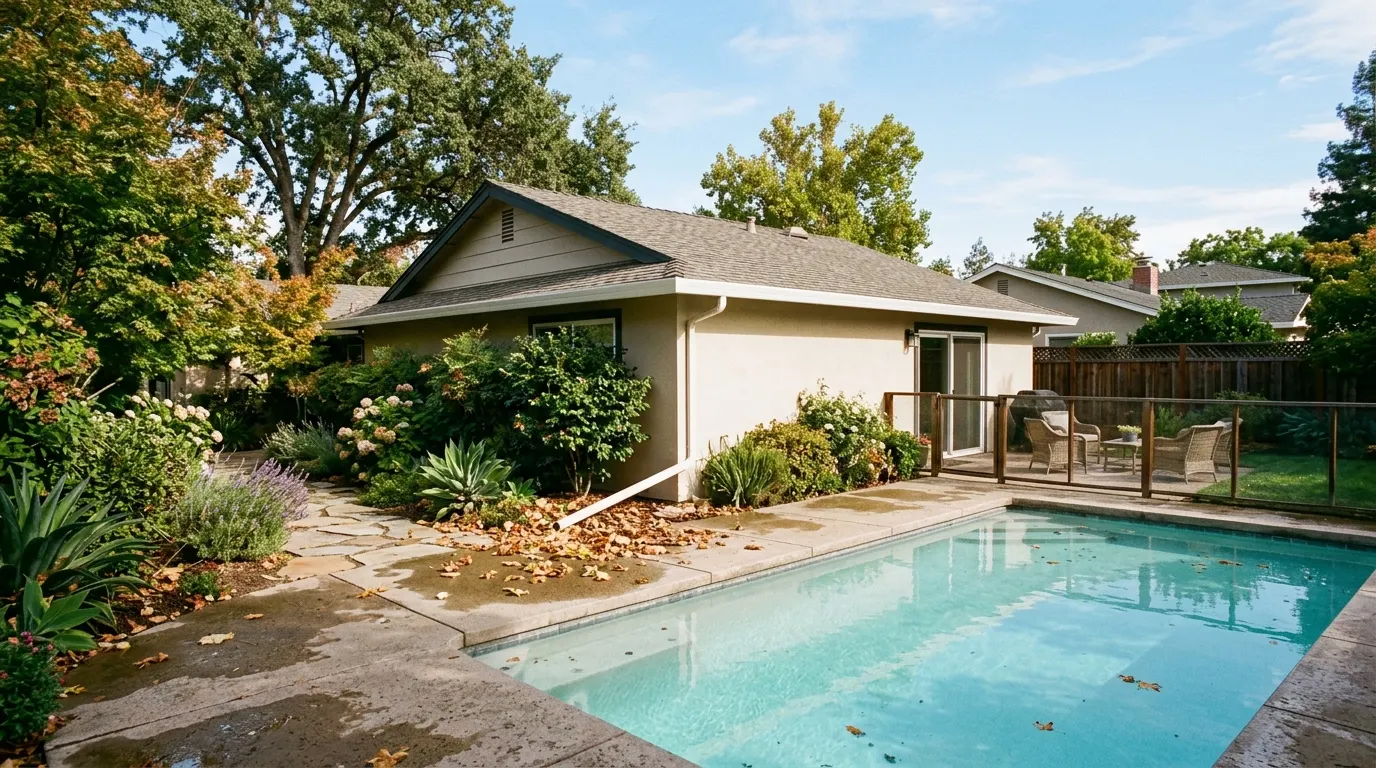
Every roof collects debris—leaves, pollen, shingle granules, bird droppings, and dust. During rain, gutters channel this material toward downspouts. If your downspouts discharge near the pool or your gutters overflow, that debris ends up on your pool deck and eventually in the water.
Pool contamination from roof runoff creates multiple problems. Organic matter increases chlorine demand, clogs filters faster, and can stain pool surfaces. Shingle grit settles on the bottom and requires vacuuming. In Sacramento, where storm season brings heavy, sudden rainfall, one overflow event can dump a significant load of debris into an otherwise clean pool.
Beyond the pool itself, poor gutter drainage near swimming pools creates slip hazards on wet decks, erodes landscaping around the pool area, and can undermine concrete or pavers over time. The foundation risks are similar to any other part of your home—learn more in our foundation damage prevention guide.
How Gutter Debris Ends Up in Your Pool
Understanding the pathways helps you block them. Here are the most common ways gutter-related debris contaminates pools:
- Gutter overflow during storms: Clogged gutters spill water over the edge, often directly onto the pool deck or into landscaping that drains toward the pool.
- Downspouts discharging toward the pool: If a downspout points at the deck or a sloped area that runs toward the pool, runoff carries debris directly into the water.
- Splash-back from downspout exits: Even downspouts that discharge away from the pool can splash debris onto the deck if they exit onto concrete without extensions or drainage.
- Wind-blown debris from overflowing gutters: Decomposing leaves in gutters dry out and blow onto the pool surface during hot Sacramento summers.
- Foot traffic transfer: People walking across a dirty deck track debris into the pool on their feet.
Pro Tip
After a storm, check where water flows across your deck before it evaporates. Wet trails that run toward the pool indicate drainage issues. Mark these spots and plan downspout or deck drain corrections.
Top Sources of Pool Contamination From Roof Runoff
Downspout Placement Near Pools
The most effective way to protect your pool from roof runoff is to route downspouts away from the pool area entirely. Here are the key placement rules:
Downspout Placement Rules for Pool Areas
- 1Minimum 10-15 feet from pool edge: This gives water space to soak in or evaporate before reaching the pool.
- 2Discharge away from deck slope: If your deck slopes toward the pool (common for drainage), route downspouts to the opposite side of the house.
- 3Use buried drain lines: For downspouts that must be near the pool, install a buried line that exits in a landscaped area or street drain.
- 4Add pop-up emitters in safe zones: Pop-ups release water without a visible pipe and can be positioned where runoff won't reach the pool.
For detailed guidance on drainage solutions, see our downspout extensions guide. If you need to relocate downspouts, our downspout placement guide covers the process step by step.
Downspout Distance vs. Pool Debris Reduction
Chart shows relative pool debris load compared to a downspout discharging at the pool edge (100%). Based on our Sacramento installations 2023-2026.
Pool Deck Drainage Options
Even with perfect downspout placement, some water will land on your pool deck during storms. Pool deck drainage systems capture this water before it reaches the pool.
Trench Drains (Channel Drains)
Trench drains are linear grates installed along the deck perimeter, typically between the pool coping and the surrounding deck. They capture splash-out, rainwater, and any runoff flowing across the deck. The collected water routes to a drainage pipe that exits away from the pool and foundation.
Slot Drains
Slot drains are narrower than trench drains and nearly invisible when installed flush with the deck. They work well for modern pool designs where visible grates are undesirable. Slot drains require more frequent cleaning due to their narrow opening.
Area Drains (Catch Basins)
Point drains or catch basins are placed at low spots in the deck where water naturally collects. They're effective for decks with multiple slope directions. Combine with perimeter drains for complete coverage.
For a comparison of drainage solutions, see our yard drainage guide. French drains and catch basins are covered in our drainage comparison article.
How Gutter Guards Help Pool Owners
Gutter guards don't prevent water from flowing—they prevent debris from clogging the system. For pool owners, this translates to several benefits:
Fewer Overflow Events
Guards keep leaves out of gutters, reducing clogs. Fewer clogs mean water flows through the system instead of spilling over—which is the primary way gutter debris reaches pools.
Cleaner Downspout Discharge
Water exiting guarded gutters carries less organic matter. Even if some runoff reaches the pool area, it's cleaner water rather than debris-laden sludge.
Less Decomposing Matter
Leaves decomposing in gutters create a black slurry that stains everything it touches. Guards prevent this buildup from forming.
Reduced Maintenance Frequency
With guards installed, you clean gutters less often. That means fewer opportunities for debris to accumulate and wash toward the pool.
Not all gutter guards perform equally. Micro-mesh guards work well for the mix of oak leaves, pine needles, and pollen common in Sacramento. Review our gutter guard brand comparison to find the right match for your tree coverage.
Keep Your Pool Cleaner with Better Gutter Drainage
We'll assess your downspout locations, recommend routing changes, and install gutter guards to reduce debris reaching your pool area.
Recommended Maintenance Schedule for Pool Owners
Pool owners should follow a more aggressive gutter maintenance schedule than typical homeowners. The goal is to prevent any debris buildup before storm season hits.
| Timing | Task | Why It Matters for Pools |
|---|---|---|
| Late October | Full gutter cleaning | Clears debris before rain season |
| December-January | Mid-season check | Catches late leaf drop from deciduous trees |
| March-April | Spring cleaning | Removes pollen and spring debris before pool season |
| After major storms | Visual inspection | Checks for clogs before next rain event |
| Annually | Downspout flush test | Confirms clear drainage paths |
For a complete seasonal checklist, see our fall maintenance guide. Spring preparation is covered in our spring inspection checklist.
Sacramento-Specific Considerations
Sacramento's climate creates specific challenges for pool owners managing gutter drainage:
Storm Season Intensity
Sacramento's rainfall is concentrated between November and March, often arriving in heavy bursts. A clogged gutter during an atmospheric river event can dump more debris onto your deck in one storm than you'd see all summer. Pre-season cleaning is non-negotiable for pool owners.
Oak Tree Prevalence
Oak trees are common throughout Sacramento neighborhoods. Oak leaves are particularly problematic—they're slow to decompose, curl into gutter-clogging shapes, and release tannins that stain pool surfaces. If oaks overhang your pool or gutter line, expect more aggressive maintenance. See our oak leaf solutions guide for targeted strategies.
Clay Soil Drainage
Much of Sacramento sits on clay-heavy soil that drains slowly. Water that pools near the pool deck takes longer to absorb, increasing the window for debris to wash into the pool. Proper deck drainage is more critical here than in sandy soil areas.
Pollen Season
Sacramento's spring pollen season coats everything, including gutters. Pollen mixed with rainwater creates a yellow-green film that washes into pools and overwhelms filters. A spring gutter cleaning before pool season helps reduce this load.
Pro Tip
Schedule your gutter cleaning to coincide with your pool opening service. Cleaning gutters right before you open the pool for summer ensures the system is clear for any late-spring storms and reduces startup debris.
Common Mistakes to Avoid
These mistakes lead to pool contamination even when homeowners think they've addressed gutter drainage:
- Assuming flat land is fine: Even slightly graded land can direct runoff toward the pool. Test flow paths during rain.
- Ignoring splash-back: Downspouts that hit concrete can splash debris 3-4 feet in every direction. Add extensions or splash blocks.
- Relying on pool covers alone: Covers catch debris but don't prevent it from accumulating on the deck. When you remove the cover, foot traffic tracks debris into the pool.
- Forgetting underground drain lines: Buried drains clog too. Flush them annually and add cleanouts for access.
- Skipping mid-winter checks: Many Sacramento trees drop leaves through January. A single check in October isn't enough.
- Pointing landscape drainage toward the pool: Some homeowners solve foundation drainage by routing water toward the pool area—this trades one problem for another.
For help identifying drainage issues, review our landscaping erosion guide. If water is pooling in unexpected areas, our standing water guide covers diagnostic steps.
Frequently Asked Questions
How far should downspouts be from a swimming pool?
Downspouts should discharge at least 10-15 feet away from pool edges. For homes where this isn't possible, use buried drain lines to route water to a safe discharge area on the opposite side of the property.
Can gutter debris end up in my swimming pool?
Yes. When gutters overflow or downspouts discharge near the pool, leaves, shingle grit, and organic matter wash across the deck and into the water. This increases chemical demand and filter strain.
Do gutter guards help keep pools cleaner?
Gutter guards reduce overflow events by keeping gutters clear, which means less debris washing onto pool decks. They also prevent organic matter from decomposing in gutters and running into drainage paths near the pool.
How do I drain my pool deck without affecting the pool water?
Use trench drains or channel drains along the deck perimeter to capture splash-out and rainwater. Route these drains to landscape areas or a dedicated drainage system away from the pool and foundation.
Should I clean gutters more often if I have a pool?
Pool owners in Sacramento should clean gutters before storm season (late October) and again in spring. Homes with trees near the pool may need a third cleaning in early winter after leaves have fully dropped.
What happens if downspouts drain onto the pool deck?
Roof runoff carries dirt, pollen, shingle granules, and organic debris. When this water flows across the deck, it deposits contaminants that end up in the pool through splash-in, foot traffic, or direct overflow during heavy rain.
Protect Your Pool Investment
Proper gutter drainage keeps debris out of your pool and reduces maintenance costs. Schedule a drainage assessment and get recommendations tailored to your pool layout.