Short answer: in Sacramento, a downspout connected to a storm drain is almost always illegal unless you have a permit from the City of Sacramento Department of Utilities and an approved engineered connection. Roof runoff is allowed to reach the storm drain system eventually, but how it gets there matters. Sacramento City Code Chapter 13.16 treats any unpermitted pipe tied into the municipal separate storm sewer system (MS4) as an illicit connection, and enforcement can include fines, abatement orders, and stop-work notices on home sales.
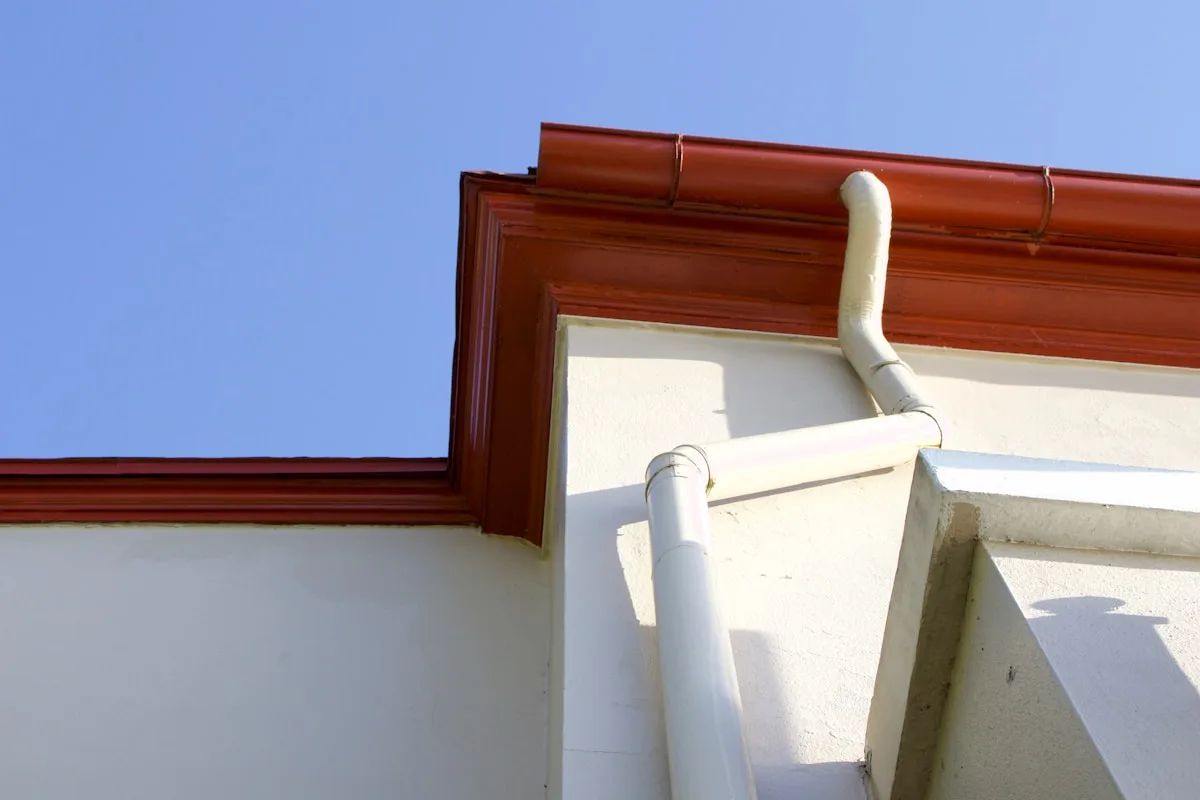
Photo by Taylor Hammersla via Unsplash
TL;DR: You generally cannot hard-pipe a downspout into a Sacramento storm drain inlet or catch basin. Sacramento City Code Chapter 13.16 prohibits illicit connections to the MS4 under the city’s NPDES permit. Clean roof runoff can legally drain onto your yard, into a rain garden or dry well, or through a permitted curb-face outlet into the street gutter. Underground connections to public infrastructure require an encroachment permit from the Department of Public Works and a stormwater review from the Department of Utilities.
Table of Contents
- Quick Answer: Legal or Not?
- How Sacramento’s Storm Drain System Actually Works
- What Counts as an Illicit Connection?
- Sacramento Stormwater Code Reference
- Is Draining Gutters Into the Street Legal?
- Penalties & Enforcement Timeline
- Legal Ways to Drain Your Downspouts
- When You Need a Permit
- Frequently Asked Questions
Quick Answer: Can I Connect My Downspout to a Storm Drain in Sacramento?
No, not without a permit. In the City of Sacramento, any private pipe that ties into a public catch basin or storm drain pipe is an illicit connection under Sacramento City Code Section 13.16.070 unless the Department of Utilities has approved it. Roof runoff from a normal residential home is considered stormwater and is allowed to reach the system, but it must do so through your yard, a curb-face outlet, or another approved discharge point, not through a hidden hard-pipe connection into city infrastructure.
Important
This article reflects Sacramento codes and NPDES requirements in effect as of early 2026. Local amendments, permit procedures, and enforcement thresholds change. Before making any connection, removing an existing one, or touching anything in the public right-of-way, confirm current rules with the City of Sacramento Department of Utilities (stormwater program) and the Department of Public Works (encroachment permits). This is not legal advice.
How Sacramento’s Storm Drain System Actually Works
Sacramento runs what regulators call a municipal separate storm sewer system, or MS4. The storm drain system is separate from the sanitary sewer. Anything that enters a catch basin at the curb travels through pipes and, in most of the city, discharges straight into the Sacramento River, the American River, or one of the regional sloughs without treatment.
Because that water is effectively untreated, it is regulated under the federal Clean Water Act through an NPDES (National Pollutant Discharge Elimination System) permit issued by the Central Valley Regional Water Quality Control Board. The City of Sacramento holds that permit, and it is legally required to make sure only clean stormwater enters the system. That obligation is why the city passed Sacramento City Code Chapter 13.16, the local stormwater management ordinance, and why the Department of Utilities runs a stormwater quality program that inspects, investigates, and abates illicit connections.
From a homeowner’s perspective, this matters because the city cannot allow random private pipes plumbed into its infrastructure. Even if all you are sending down that pipe is clean roof rain, the city has no way to verify that without a permit and inspection, so the default answer is no.
What Counts as an Illicit Connection?
Sacramento City Code Section 13.16.070 prohibits illicit connections to the storm drain system. The term covers two different things, and homeowners often miss the second one.
- Any physical connection that carries non-stormwater into the MS4. Examples: a sump pump discharging groundwater into a storm drain, a graywater line, a pool backwash line, a floor drain from a garage, or an AC condensate line tied into an underground storm drain pipe.
- Any physical connection carrying only stormwater that was made without an approval or permit from the Department of Utilities. This is the category that catches downspouts. Even if the water is 100% clean roof runoff, the unpermitted pipe itself is the violation.
This second category surprises people. A homeowner says, “It is just rainwater, what’s the problem?” The problem is that the city is legally responsible for every pipe tied into its system. If they cannot document and inspect a connection, they have to treat it as non-compliant. That is also why sump pumps, even ones pumping groundwater, are commonly flagged during home inspections and code enforcement sweeps.
In our experience working on older Sacramento properties, the most common illicit connections we find are legacy ones: a downspout buried decades ago and tied straight into a clay storm line running to the curb, or a sump pump in a basement or crawlspace discharging through a hidden pipe. These were often installed by well-meaning homeowners long before the stormwater ordinance existed, but the current code still applies when the property changes hands or is reinspected.
Code reference: Sacramento City Code Chapter 13.16 (Stormwater Management and Discharge Control) prohibits illicit discharges and illicit connections to the municipal separate storm sewer system. Section 13.16.070 specifically addresses illicit connections. The ordinance implements the city’s NPDES MS4 permit issued by the Central Valley Regional Water Quality Control Board.
Sacramento Stormwater Code Reference
Several code layers stack on top of each other when you are dealing with downspout drainage. Here is a consolidated reference for the ones most likely to apply to a single-family home in the City of Sacramento.
| Code / Source | What It Covers | Key Rule for Homeowners |
|---|---|---|
| Sacramento City Code 13.16 | Stormwater management & discharge control | Only stormwater may enter the MS4; illicit discharges prohibited |
| Sac City Code 13.16.070 | Illicit connections | No unpermitted physical connection to the storm drain system |
| NPDES MS4 Permit (CVRWQCB) | State/federal stormwater permit | City must find and remove illicit connections on private property |
| Sac City Code Title 12 | Streets, sidewalks, encroachments | Work in the public right-of-way requires an encroachment permit |
| IRC R903.4 | Downspout discharge location | Minimum 5 ft setback from foundation on expansive soils |
| CA Plumbing Code 1101.12.1 | Roof drainage sizing | Primary drainage sized for 1.5 in/hr rainfall |
If you want the full breakdown of the plumbing-code side (sizing, setbacks, and WUI rules), read our companion piece on Sacramento gutter drainage code requirements. This article focuses on the stormwater layer, which is where most homeowners get tripped up.
Is It Illegal to Drain Gutters Into the Street in Sacramento?
This is the most common question we hear, and the answer is nuanced. Letting clean roof runoff flow across your yard, down your driveway, or through a sidewalk curb-face outlet into the street gutter is generally legal in Sacramento. The street gutter is designed to carry stormwater to the nearest catch basin. Roof rain is stormwater.
What is not legal:
- Piping a downspout directly into a catch basin or storm drain inlet.
- Piping a downspout into an underground storm drain line inside the public right-of-way without an encroachment permit.
- Creating a discharge that floods a neighbor’s property, undermines a sidewalk, or creates an icing hazard on the street.
- Sending anything other than rain through that path, including car-wash runoff, pool drain water, or pressure-washing residue.
Curb-face outlets (sometimes called sidewalk drains or through-curb drains) are the classic legal solution on Sacramento lots where the yard does not slope well. An underground PVC line runs from the downspout, under the sidewalk, and exits through a metal or plastic outlet installed in the curb face. The water drops into the existing street gutter. Because the pipe passes through the public right-of-way, you typically need an encroachment permit from the Department of Public Works, but the actual discharge point (the curb face) is not an illicit connection because it is not tied into the enclosed storm drain system.
For a deep dive on the hardware options and when to pick each one, see our guide on underground downspout drainage for Sacramento clay soil.
Penalties & Enforcement Timeline
Sacramento does not lead with fines. In most cases, the stormwater quality program investigates a complaint, documents the connection, and gives the property owner a written notice with a deadline to remove or permit the connection. If the owner cooperates, there is often no monetary penalty. Where enforcement escalates, Sacramento City Code Chapter 13.16 authorizes a stacking set of remedies.
| Stage | Typical Timeline | Owner’s Exposure |
|---|---|---|
| Notice of Violation | Day 0 | Written notice; typically 10–30 days to correct |
| Administrative Citation | After deadline passes | Fines that can escalate per day of continuing violation |
| Abatement Order | 30–90 days | City may remove the connection and bill the owner |
| Civil & Criminal | Serious or repeat cases | Civil penalties; misdemeanor in egregious cases |
| Property Lien | If abatement costs unpaid | Lien attaches to title; surfaces on home sale |
In practice, the scenario that bites Sacramento homeowners hardest is not the direct fine. It is the unexpected discovery during a real estate transaction. A buyer’s inspector finds a downspout hard-piped into an old clay line heading toward the street, the title company flags it, and suddenly the seller is paying for trenching, removal, and a new code-compliant drainage system under deal pressure. We have seen this delay Sacramento closings by weeks. If you are selling soon, read our pre-listing gutter inspection guide before a buyer’s inspector does it for you.
Pro Tip
If you suspect your older Sacramento home has a legacy downspout-to-storm-drain connection, do not call the city first. Call a licensed drainage contractor to camera the line and document what is actually there. Once you know the scope, you can decide whether to remove it, convert it to a compliant curb-face outlet, or tie into a dry well on your own property. Going in informed is always cheaper than reacting to a notice of violation.
Legal Ways to Drain Your Downspouts in Sacramento
Every one of these options keeps you on the right side of Sacramento City Code Chapter 13.16 and the IRC R903.4 5-foot foundation setback. The right choice depends on your lot slope, soil, roof area, and budget.
Splash Blocks & Downspout Extensions
Cheapest and simplest. Hinged or rigid extensions carry water at least 5 feet from the foundation, then let it soak into your lawn. No permit needed as long as you are not piping anything.
Underground Pipe to Pop-Up Emitter
Buried 4-inch PVC carries roof runoff to a spring-loaded pop-up emitter on your own property, usually near the downhill edge of the lawn. Stays entirely on-site, no encroachment permit required.
Dry Well or French Drain
A gravel-filled pit or perforated pipe line that lets roof runoff infiltrate into the subsoil on your property. Works best where the top layer of clay is thin or where you can excavate below the clay horizon.
Curb-Face (Sidewalk) Outlet
Underground PVC from the downspout, under the sidewalk, exiting through a metal curb outlet into the street gutter. Requires an encroachment permit from Sacramento Public Works, but is a normal, approved configuration.
Rain Garden or Bioswale
A shallow planted depression that captures and slowly infiltrates roof runoff. Good for homes with moderate roof areas and space for landscaping. Supported by Sacramento’s stormwater program.
Rain Barrels & Cisterns
Capture roof runoff for irrigation. Reduces the volume hitting your yard in the first place. Pair with one of the options above for overflow. Our rainwater harvesting guide walks through sizing.
For a side-by-side comparison of the downstream hardware choices, our breakdown of French drain vs catch basin vs pop-up emitter gets specific about Sacramento clay soil performance, cost, and maintenance. If you are weighing splash blocks against buried drainage, our splash blocks vs pop-up emitters comparison breaks down the tradeoffs.
Not sure which option fits your Sacramento lot? We do free on-site drainage assessments and can tell you in about 20 minutes whether your current downspouts are compliant, where water is actually going, and what it would cost to fix it properly. Request a free assessment.
When You Need a Permit
Most on-property drainage work in Sacramento does not require a permit. The moment your work crosses into the public right-of-way or ties into public infrastructure, permits become mandatory.
- Encroachment permit (Public Works): Required for any work in the sidewalk, curb, or street, including trenching under the sidewalk for an underground downspout line and installing a curb-face outlet.
- Stormwater connection approval (Department of Utilities): Required for any physical tie-in to the storm drain system itself. This is rarely granted for a residential downspout because the on-site alternatives above are considered better engineering.
- Building permit (Community Development): Generally not required for like-for-like gutter or downspout replacement, but can be triggered by major re-grading, retaining wall work, or ADU projects.
- Historic review (if applicable): If your property is in a designated historic district (Midtown, Boulevard Park, Alkali Flat, East Sacramento landmark areas), visible exterior drainage changes can trigger additional review.
The easiest way to stay compliant: keep the work on your own property whenever possible, use splash blocks, pop-up emitters, or dry wells, and only reach for a curb-face outlet (with an encroachment permit) when on-site options will not drain the lot. For extra context on what licensed contractors should be telling you about these rules, see our guide to choosing a gutter contractor in Sacramento.
Code reference: Work within the public right-of-way in the City of Sacramento requires an encroachment permit under Sacramento City Code Title 12. Any physical connection to the MS4 requires approval from the Department of Utilities under Chapter 13.16. Contact City of Sacramento 311 or the Department of Utilities stormwater program to confirm current procedures for your address.
Need Code-Compliant Downspout Drainage in Sacramento?
Our downspout and drainage services install gutters, downspouts, and drainage systems that meet Sacramento City Code Chapter 13.16, IRC R903.4, and California Plumbing Code requirements. We inspect for legacy illicit connections, walk you through permit needs, and install compliant solutions end to end. Free estimates for homeowners across Sacramento County.
Frequently Asked Questions
Can I connect my downspout to a storm drain in Sacramento?
In most cases, no. Sacramento City Code Chapter 13.16 prohibits unpermitted physical connections to the municipal storm drain system, even when the pipe only carries clean roof runoff. The Department of Utilities rarely approves residential downspout tie-ins because splash blocks, pop-up emitters, dry wells, and curb-face outlets are all considered better engineering on Sacramento clay soil. Any hard-pipe connection to a catch basin or storm drain line without a permit is treated as an illicit connection.
Is it illegal to drain gutters into the street in Sacramento?
Letting clean roof runoff reach the street gutter by flowing across your yard, down the driveway, or through a curb-face outlet is generally allowed. What is not allowed is piping a downspout directly into a storm drain inlet or underground line. Your discharge also cannot flood a neighbor, damage public sidewalks, or carry anything other than stormwater. A curb-face outlet installed under an encroachment permit is the standard legal way to get roof runoff from your downspout into the street gutter without creating an illicit connection.
What are Sacramento stormwater rules for homeowners?
Sacramento operates under an NPDES MS4 permit from the Central Valley Regional Water Quality Control Board, implemented locally through Sacramento City Code Chapter 13.16. Core rules for homeowners: only stormwater may enter the MS4, illicit connections are prohibited, and runoff from your property cannot harm neighbors, public infrastructure, or waterways. Any work that ties into public drainage infrastructure or enters the public right-of-way requires approval from the Department of Utilities and an encroachment permit from Public Works.
What is an illicit connection under Sacramento code?
Under Sacramento City Code Section 13.16.070, an illicit connection is any physical connection to the storm drain system that either carries non-stormwater or was made without the required approval. A sump pump piped into a storm drain is illicit. A downspout hard-piped into a catch basin without a permit is illicit even though rainwater is clean. The violation is the unpermitted connection itself, regardless of what flows through it.
What is the penalty for an illicit storm drain connection in Sacramento?
Chapter 13.16 authorizes a tiered response: notice of violation with a correction deadline, administrative citation and fines if the deadline passes, abatement order where the city removes the connection at the owner’s expense, civil penalties for continuing or repeat violations, and misdemeanor charges in egregious cases. Unpaid abatement costs can attach as a lien on the property. In most residential cases, early cooperation avoids monetary penalties entirely.
What is the legal way to drain my downspouts in Sacramento?
Legal options include splash blocks and downspout extensions that discharge onto your yard at least 5 feet from the foundation, underground PVC to an on-site pop-up emitter or dry well, a rain garden, a rain barrel system, or a curb-face outlet through the sidewalk under an encroachment permit. The right choice depends on your lot slope, soil, roof area, and budget. Avoid any hard-pipe connection to a public storm drain without explicit Department of Utilities approval.
Related Articles
Sacramento Gutter Drainage Code Requirements
IRC, CPC, CBC and WUI rules that govern gutters and downspouts on Sacramento homes.
Underground Downspout Drainage for Sacramento Clay Soil
How to install buried drainage lines that actually work in expansive clay.
French Drain vs Catch Basin vs Pop-Up Emitter
Compare Sacramento downspout discharge hardware side by side.
Complete Yard Drainage & Gutter Discharge Guide
How to route gutter runoff across a Sacramento yard without flooding.
Gutter Water Draining onto Neighbor’s Property
Sacramento legal and code rules when runoff crosses a property line.
Pre-Listing Gutter Inspection Guide
Catch drainage code issues before a buyer’s inspector does.