Quick Answer
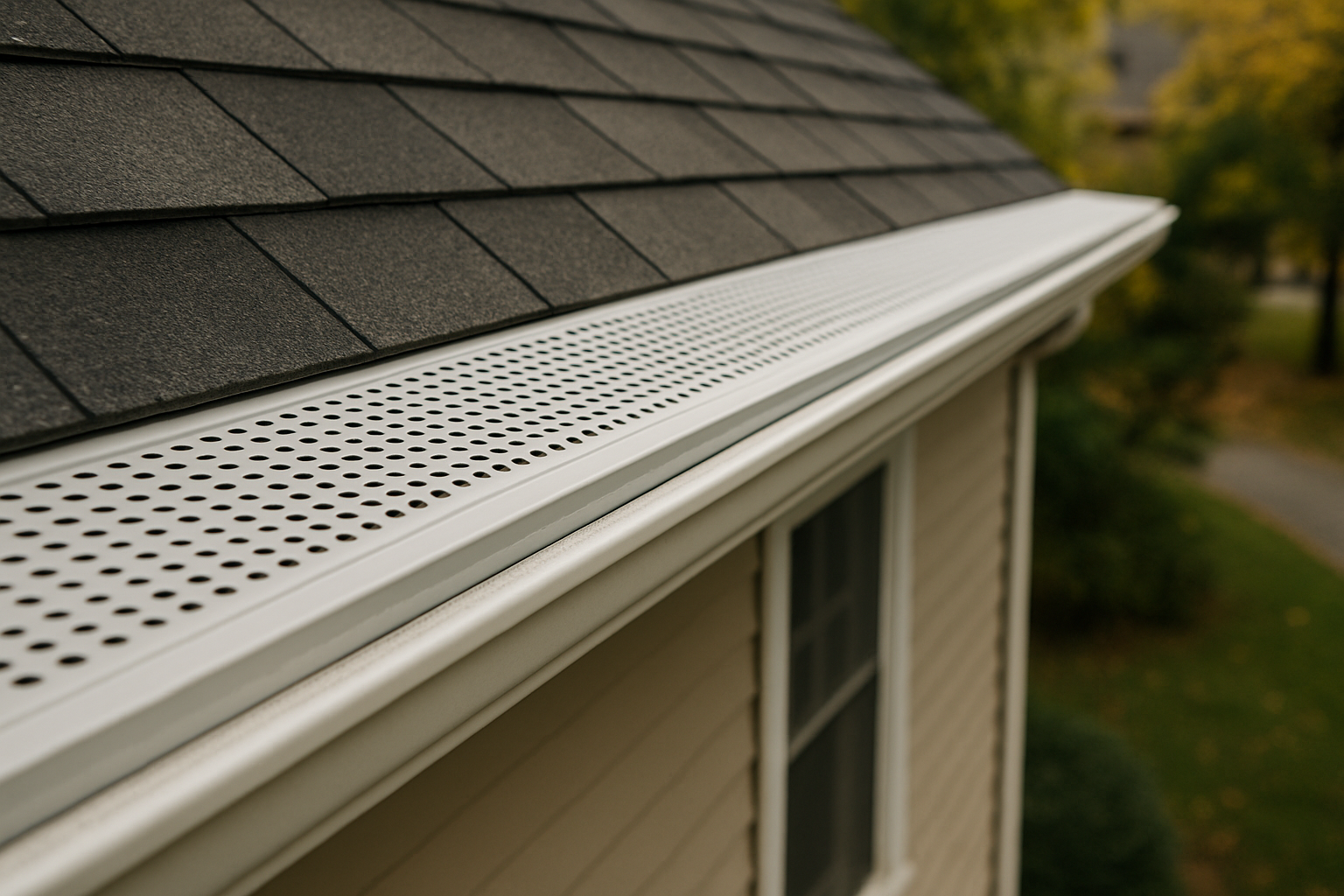
Micro mesh gutter guards outperform reverse curve guards in Sacramento across every metric that matters: heavy rain handling, debris filtration, longevity, and long-term value. Reverse curve guards rely on surface tension to channel water through a narrow slot, which fails when rainfall exceeds about 1 inch per hour. Sacramento's atmospheric rivers regularly hit 1-2 inches per hour, making reverse curve guards a poor fit for this climate. Micro mesh systems use direct filtration through thousands of tiny openings, handling up to 60 GPM regardless of rainfall intensity. For Sacramento homes, micro mesh is the better choice.
How Reverse Curve and Micro Mesh Guards Actually Work
Comparing reverse curve vs micro mesh gutter guards starts with understanding their fundamentally different approaches to the same problem. Both try to let water into the gutter while keeping debris out. They just use completely different physics to do it -- and that difference determines which one works in Sacramento's climate.
Reverse Curve Guards: Surface Tension Design
Reverse curve guards (also called gutter helmets, surface tension guards, or solid-top guards) use a solid metal or vinyl cover with a curved nose at the front edge. Water flows down the roof, hits the curved surface, and follows the curve around and into a narrow slot at the bottom. This works because of the Coanda effect -- water molecules cling to a smooth surface and follow its contour.
Debris, being heavier and less adhesive than water, is supposed to slide off the curve and fall to the ground below. Large leaves and twigs generally do fall off. The problem starts with smaller debris, higher water volumes, and the inevitable accumulation of roof oils on the curved surface.
Micro Mesh Guards: Direct Filtration Design
Micro mesh guards take the opposite approach. Instead of guiding water around a curve, they filter it directly through a tightly woven screen with openings as small as 0.02 inches. The mesh sits on top of a rigid aluminum frame that covers the gutter opening. Water passes straight through the mesh. Debris sits on top and dries out, eventually blowing off or requiring a simple surface brush.
The physics are straightforward: water passes through by gravity. No surface tension tricks, no Coanda effect, no reliance on water behaving a certain way at a certain speed. This is why micro mesh materials perform consistently across different rainfall intensities -- the mechanism does not change when conditions do.
How Each Guard Type Handles Water
Reverse curve relies on surface tension; micro mesh uses direct filtration
Reverse curve guards fail when water velocity exceeds surface tension adhesion. Micro mesh filters by pore size regardless of flow rate.
Heavy Rain Performance: Where Reverse Curve Guards Fall Apart
The single biggest difference between these two guard types shows up during heavy rain -- exactly when you need gutter protection most. Sacramento receives 80% of its 18.14 inches of annual rainfall between November and March (NOAA), with atmospheric rivers regularly delivering 1-2 inches per hour during peak events.
That intensity matters because of what it does to reverse curve performance. At 0.5 inches per hour, a typical 2,176 sq ft Sacramento roof generates about 11 gallons per minute. Surface tension keeps water clinging to the curve. The guard works. At 1.5-2 inches per hour -- standard atmospheric river conditions -- that same roof pushes 34-45+ GPM. Water velocity overwhelms the Coanda effect, and the water shoots straight off the curve instead of following it into the slot.
Micro mesh does not have this problem. Water passes through the mesh by gravity regardless of how fast it arrives. Independent testing from Clean Gutter Protection shows premium micro mesh systems maintain 92% flow capacity even at peak rainfall intensities, processing up to 60 GPM per 10-foot section. Reverse curve systems max out around 15-20 GPM before overflow begins.
Flow Rate Comparison: Reverse Curve vs Micro Mesh
Gallons per minute (GPM) handled per 10-foot section at different rainfall intensities
*Reverse curve guards max out at ~18-20 GPM. Additional water overshoots the guard. Sources: Clean Gutter Protection testing data, manufacturer specifications.
The 6 Problems With Reverse Curve Gutter Guards in Sacramento
Reverse curve guards are not bad products everywhere. In climates with gentle, steady rainfall and minimal debris, they work fine. Sacramento is not that climate. Here are the specific reverse curve gutter guard problems that show up in the Central Valley.
- Overflow during atmospheric rivers. As covered above, surface tension fails at high water velocities. Sacramento gets multiple atmospheric river events per winter, each lasting hours to days. Every overflow event sends water cascading down the fascia and pooling at the foundation -- exactly what gutters are supposed to prevent.
- Roof oil contamination. Sacramento's hot summers (averaging 93 degrees F in July, NOAA) bake oils out of asphalt shingles. When fall rains arrive, these oils wash down the roof and coat the curved guard surface. Once coated, the surface tension that makes reverse curve guards work is compromised. Water no longer follows the curve reliably, even at moderate rainfall rates.
- Small debris penetration. The narrow intake slot on reverse curve guards blocks large leaves but allows pine needles, seed pods, and shingle grit to wash through. Sacramento's pine needle problem is significant -- needles can enter the slot end-first and accumulate inside the gutter over time.
- Difficult maintenance access. When debris does accumulate inside a reverse curve guard, accessing the gutter channel requires removing the solid cover. Most reverse curve systems are screwed or clipped under the roof shingles, making removal and reinstallation a professional-only job. This turns a $150 gutter cleaning into a $400+ service call.
- Potential roof warranty issues. Many reverse curve systems require installation under the first course of shingles or under the drip edge. Lifting shingles can void manufacturer warranties -- a real concern when Sacramento homeowners are already investing $16,000-$20,000 in a new roof (Cobex Construction 2026 Sacramento data).
- Visible from ground level. Reverse curve guards extend outward from the gutter, creating a visible metal lip that changes the roofline profile. For homes in Sacramento neighborhoods with HOA restrictions or homeowners who care about curb appeal, this is a dealbreaker.
Why Micro Mesh Guards Outperform in Sacramento's Climate
Micro mesh gutter guards address every weakness of the reverse curve design. Their performance advantages are not marginal -- they are fundamental to how the product works.
- No overflow at any rainfall rate. Water passes through the mesh by gravity. There is no surface tension threshold to exceed. Premium stainless steel micro mesh handles 60 GPM per 10-foot section -- more than Sacramento's most intense atmospheric rivers produce on a typical residential roof.
- Blocks 97% of all debris types. Mesh openings as small as 0.02 inches reject leaves, pine needles, shingle grit, pollen clusters, and seed pods. The only thing passing through is water and dissolved particles.
- Easy surface maintenance. Debris sits on top of the mesh where it dries and blows off naturally. When buildup occurs (typically oak leaves in November or pollen in March-April), a simple brush or garden hose rinse from ground level restores full flow.
- No shingle lifting required. Quality micro mesh systems install on top of the gutter and tuck under the drip edge without disturbing roof shingles. This preserves roof warranties and simplifies installation.
- Low profile. Micro mesh guards sit flush with the gutter line and are virtually invisible from ground level. No protruding lips or visible metal curves.
Pro Tip
Not all micro mesh is equal. The mesh material matters enormously. Surgical-grade stainless steel (316 grade) resists corrosion, UV degradation, and Sacramento's alkaline water. Cheaper aluminum or nylon mesh stretches, sags, and degrades within 5-10 years. Always ask for the specific mesh material and gauge before comparing prices. A detailed breakdown is in our gutter guard materials comparison.
Full Gutter Guard Types Comparison: How Every Design Stacks Up
Reverse curve and micro mesh are not the only options. Here is how every common gutter guard type compares across the metrics that matter for Sacramento homes. This should help settle the micro mesh vs screen gutter guards question as well.
Gutter Guard Types: Pros and Cons for Sacramento
The table reveals an important pricing trap: reverse curve guards cost nearly as much as micro mesh ($15-$35/ft vs $15-$45/ft) but deliver significantly worse performance in heavy rain, debris filtration, and pine needle blocking. Aluminum screen guards are the budget-friendly middle ground -- good for moderate debris loads, but they let through fine particles and may struggle during peak atmospheric river events.
Real-World Performance in Sacramento Conditions
Lab testing tells part of the story. Real-world performance in Sacramento's specific conditions tells the rest. Three local factors separate Sacramento from most markets when it comes to gutter guard performance.
Valley Oak and Pine Debris Loads
Sacramento's urban canopy includes over 2 million trees (Sacramento Tree Foundation), with valley oaks and Monterey pines among the most common residential species. Oak leaves drop heavily in November -- exactly when the rain season starts. These leaves are large, flat, and sticky when wet, creating a mat on gutter guard surfaces.
On reverse curve guards, leaf mats block the narrow intake slot entirely. The guard cannot function until leaves are manually removed. On micro mesh, wet leaves sit on the mesh surface and block some water temporarily, but the mesh's full width still allows significant water throughput even when partially covered. Once leaves dry, they release and blow off naturally.
Summer Heat and Roof Oil Buildup
Sacramento averages 73 days per year above 90 degrees F (NOAA). This bakes volatile oils out of asphalt shingles, creating a sticky film on any surface the roof water touches. For reverse curve guards, this oil film directly degrades the surface tension mechanism. The curved surface becomes less smooth, water adhesion decreases, and overflow starts occurring at lower rainfall rates than the product was designed for.
Micro mesh guards are also affected by oil buildup -- the mesh can develop a slight film that reduces flow rates. But the impact is far less severe because micro mesh does not rely on surface tension. A spring rinse with a garden hose restores full performance. Reverse curve guards may need professional cleaning and re-polishing to restore proper water adhesion.
Atmospheric River Frequency
The Sacramento Valley receives an average of 5-7 atmospheric river events per winter season (UCLA Center for Climate Science). These are not brief cloudbursts. Atmospheric rivers can deliver sustained rainfall of 1-2 inches per hour for 12-48 hours. A reverse curve guard that overflows at these rates is failing for hours or days at a time -- not minutes.
For a deeper analysis of gutter guard performance during heavy rain, including flow rate calculations based on Sacramento roof sizes, see our dedicated guide.
Debris Handling: Reverse Curve vs Micro Mesh
How each guard type handles Sacramento's most common debris
Cost Comparison: What Each Guard Type Actually Costs in Sacramento
One of the biggest misconceptions about reverse curve guards is that they are the "premium" option. In reality, reverse curve and micro mesh are priced similarly -- but you get very different value for that money.
| Guard Type | Cost/LF (Installed) | 150 LF Home | 200 LF Home | Lifespan |
|---|---|---|---|---|
| Premium Micro Mesh | $25-$45/ft | $3,750-$6,750 | $5,000-$9,000 | 20-25 yrs |
| Mid-Range Micro Mesh | $15-$25/ft | $2,250-$3,750 | $3,000-$5,000 | 15-20 yrs |
| Reverse Curve | $15-$35/ft | $2,250-$5,250 | $3,000-$7,000 | 15-20 yrs |
| Aluminum Screen | $8-$15/ft | $1,200-$2,250 | $1,600-$3,000 | 10-15 yrs |
The pricing overlap is the key insight. A mid-range reverse curve system at $25/ft and a mid-range micro mesh system at $25/ft cost the same -- but the micro mesh handles twice the water volume, blocks 20-30% more debris, and lasts 5+ years longer. For a full breakdown of gutter guard costs in Sacramento, see our pricing guide.
There is also a hidden cost with reverse curve guards: when they fail during heavy rain (and in Sacramento, they will), homeowners often pay to replace them with micro mesh within 3-5 years. That means paying for gutter guards twice. The smarter path is choosing micro mesh from the start.
Want to See Micro Mesh in Action on Your Home?
We install professional-grade micro mesh gutter guards across the Sacramento metro area. Every installation includes a full gutter cleaning, slope assessment, and downspout capacity check. No high-pressure sales.
Popular Brands: Which Use Reverse Curve vs Micro Mesh?
Understanding which brands use which technology helps when comparing quotes. Here is where the major gutter guard brands fall in the reverse curve vs micro mesh debate.
Reverse Curve / Surface Tension Brands
- Gutter Helmet: One of the original reverse curve designs. Solid aluminum cover with a narrow nose slot. Requires installation under shingles.
- LeafGuard: One-piece gutter and guard system with a built-in curved hood. Replaces existing gutters entirely, which adds significant cost ($20-$33/ft installed, HomeGuide 2026).
- Gutter Topper: Solid-top design with a reverse curve nose. Similar performance profile to Gutter Helmet.
Micro Mesh Brands
- LeafFilter: The largest national micro mesh installer. Stainless steel mesh on a uPVC frame. Widely available but premium-priced ($18-$45/ft, This Old House 2026).
- HomeCraft: Stainless steel micro mesh on aluminum frame. Diamond-shaped mesh pattern for improved flow.
- Raptor: DIY-friendly micro mesh option. Stainless steel mesh, lower price point ($2-$4/ft materials only).
- Local installers: Many Sacramento gutter companies install commercial-grade micro mesh from suppliers like FlexxPoint, Gutterglove, or Valor. Often better value than national brands with comparable or superior products.
Pro Tip: Watch for the Reverse Curve Rebrand
Some companies market reverse curve guards as "helmet-style," "solid-top," or "surface tension" guards to avoid the negative associations with the reverse curve name. If a salesperson shows you a guard with a solid cover and a narrow slot at the front, it is a reverse curve design regardless of branding. Ask for the tested flow rate in GPM -- that number does not lie. For more on spotting misleading claims, read our guide on gutter guard scams in Sacramento.
When Reverse Curve Guards Might Make Sense (Not in Sacramento)
Reverse curve guards are not universally bad products. They work reasonably well in specific conditions:
- Climates with gentle, steady rainfall (under 0.75"/hr typical peak intensity)
- Properties with minimal tree coverage (no pine needles or small seeds)
- Low-pitch roofs where water velocity stays lower
- Regions without extended heavy rain events (no atmospheric rivers)
Sacramento meets none of these criteria. The city gets concentrated heavy rainfall, heavy tree debris, a mix of roof pitches from ranch homes to two-story colonials, and multiple atmospheric rivers per season. If you are choosing between reverse curve and micro mesh for a Sacramento home, micro mesh is the correct answer in virtually every scenario.
Choosing the Best Gutter Guard Type for Your Sacramento Home
If you are sold on micro mesh (and for Sacramento homes, you should be), here is what separates a good micro mesh installation from a mediocre one.
- Mesh material. Surgical-grade stainless steel (316 or 304 grade) is the gold standard. Aluminum mesh corrodes in Sacramento's alkaline water. Nylon mesh degrades in UV. Accept nothing less than stainless steel for the mesh itself.
- Frame material. Extruded aluminum is ideal. It is rigid, lightweight, corrosion-resistant, and holds its shape under ladder pressure and snow load. Avoid uPVC frames in hot climates -- they can warp during Sacramento's 100+ degree summer days.
- Installation method. The guard should tuck under the drip edge without lifting shingles. Ask whether installation requires any roof modification. The answer should be no.
- Pre-installation gutter cleaning. Any reputable installer will clean and inspect your existing gutters before installing guards. If the installer skips this step, find a different company. Read our guide to choosing a gutter contractor for the full checklist.
- Warranty terms. Look for 20+ years on the product with transferable coverage. Read the exclusions carefully. Our warranty comparison guide breaks down what to watch for.
Frequently Asked Questions
What type of gutter guard is best?
Micro mesh gutter guards are the best type for most homes, especially in climates with heavy rain or diverse debris. They filter water through thousands of tiny openings while blocking leaves, pine needles, shingle grit, and seeds. Independent testing shows micro mesh systems maintain 92% water flow capacity during heavy rain, compared to roughly 40-50% for reverse curve guards.
Do reverse curve gutter guards work?
Reverse curve gutter guards work in light to moderate rain but frequently fail during heavy downpours. They rely on surface tension to guide water around a curved lip into a narrow slot. When rainfall exceeds about 1 inch per hour, water momentum overcomes surface tension and overshoots the gutter. In Sacramento, where atmospheric rivers regularly deliver 1-2 inches per hour, reverse curve guards overflow during the storms that matter most.
Are micro mesh gutter guards worth it?
Yes. Premium stainless steel micro mesh guards cost $15-$45 per linear foot installed and last 20-25 years. They eliminate 90-95% of gutter cleaning needs, handle heavy rain without overflow, and block virtually all debris types. For a typical Sacramento home, they pay for themselves in 5-8 years through avoided cleaning costs alone -- before factoring in prevented water and foundation damage.
What is the best gutter guard for heavy rain?
Micro mesh gutter guards are the best choice for heavy rain. Premium models handle up to 60 gallons per minute per 10-foot section, compared to 15-20 GPM for reverse curve guards. During Sacramento atmospheric rivers that generate 45+ GPM from a typical roof, micro mesh is the only guard type that consistently avoids overflow.
What are the problems with reverse curve gutter guards?
The main problems include overflow during heavy rain, loss of performance when roof oils coat the curved surface, inability to block pine needles and small debris, difficult maintenance access (requires cover removal), potential to void roof warranties when installed under shingles, and visible protruding profile that affects curb appeal. In Sacramento's climate, these problems are amplified by intense atmospheric river storms and heavy tree debris loads.
Ready to Install the Right Gutter Guards for Sacramento?
We install professional-grade micro mesh gutter guard systems designed for Sacramento's atmospheric river conditions, heavy tree debris, and hot summers. Every installation starts with a full gutter cleaning, slope verification, and capacity assessment. Free estimates across the Sacramento metro area.
The Bottom Line: Micro Mesh Wins in Sacramento on Every Metric
The reverse curve vs micro mesh gutter guards debate has a clear winner for Sacramento homes. Micro mesh outperforms reverse curve in heavy rain handling (60 GPM vs 15-20 GPM), debris filtration (97% vs 70-80%), pine needle blocking, maintenance ease, and long-term durability. The two designs cost about the same installed, making the value gap even wider.
Reverse curve guards work on a clever principle -- surface tension -- that breaks down in exactly the conditions Sacramento homeowners face every winter. When atmospheric rivers deliver 1-2 inches of rain per hour for hours at a time, you need a guard that works by physics that do not change with intensity. That is direct filtration through micro mesh.
Start with a free estimate to assess your roof pitch, tree coverage, and current gutter condition. We will recommend the specific micro mesh product and configuration that matches your home's needs -- no reverse curve upselling, no high-pressure sales, just the right guard for Sacramento's climate.
Related Articles
Mesh Gutter Guards Sacramento
Complete guide to micro mesh gutter guards for Sacramento homes.
Best Gutter Guards for Heavy Rain
Every guard type ranked for Sacramento atmospheric river performance.
Gutter Guard Materials Comparison
Stainless steel vs aluminum vs nylon mesh -- durability and cost data.
Gutter Guard Cost Sacramento
Full pricing breakdown and ROI calculator for Sacramento installations.
Why Gutter Guards Fail
Common problems, installation errors, and how to fix them.
Best Gutter Guard Brands Compared
National and local brands reviewed for Sacramento performance.
Sources
- NOAA / National Weather Service Sacramento. "Climate Normals: Sacramento Executive Airport." weather.gov/sto
- Clean Gutter Protection. "Micro Mesh vs Reverse Curve Gutter Guards Comparison." cleangutterprotection.com
- MasterShield. "Reverse Curve Gutter Guards: The Problems You Can Expect." mastershield.com
- This Old House. "How Much Does LeafFilter Cost? (2026 Guide)." thisoldhouse.com
- HomeGuide. "How Much Does LeafGuard Cost? (2026)." homeguide.com
- Cobex Construction Group. "How Much Does a New Roof Cost in Sacramento? (2025-2026)." cobexcg.com
- Sacramento Tree Foundation. "Sacramento Urban Forest Statistics." sactree.com
- GutterFX. "Best Gutter Covering Options: Micro-Mesh vs Screens vs Reverse Curve." gutterfx.com