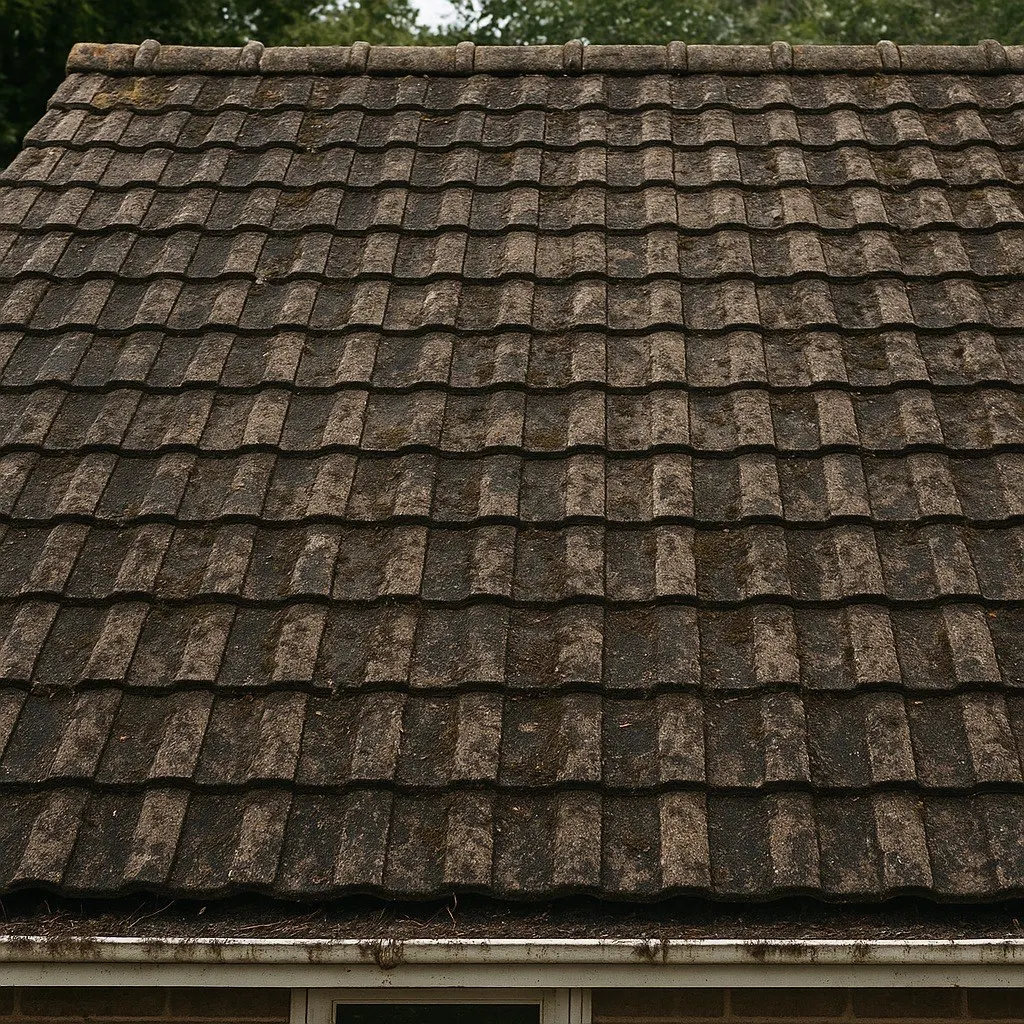
Properly functioning gutters prevent landscaping erosion by collecting roof runoff and directing it through downspouts to designated drainage areas away from planting beds, lawns, and hardscaping. A standard 2,000 square foot Sacramento home generates over 1,200 gallons of water per inch of rainfall. Sacramento received approximately 18 inches of rain during the 2025-2026 water year (US Climate Data), with California precipitation running at 148% of average through January 2026 (NOAA CNRFC). Without gutters channeling this volume, roof runoff hammers the soil directly below the drip line, destroying flower beds, exposing roots, and washing away thousands of dollars in landscaping investment.
TL;DR
Your roof converts every inch of Sacramento rain into 600+ gallons of concentrated runoff per 1,000 sq ft of roof area (USGS Water Science School). Gutters are the only system that controls where that water goes. Without them—or with clogged gutters—runoff erodes soil, drowns plants, washes away mulch, and carves trenches through your landscaping. Downspout extensions, buried drain lines, and rain gardens convert that destructive force into controlled drainage.
The Volume Problem
Every 1,000 sq ft of roof area generates approximately 623 gallons per inch of rainfall. For a typical Sacramento home with 2,000+ sq ft of roof, a single 2-inch December storm produces over 2,400 gallons of runoff that must go somewhere. Gutters determine whether that water destroys your landscaping or drains safely.
How Much Water Actually Hits Your Yard?
Most homeowners underestimate roof runoff volume by an order of magnitude. The USGS formula is straightforward: one inch of rain on one square foot of roof produces 0.623 gallons (USGS Water Science School). That fraction sounds small until you multiply it across your entire roof and Sacramento's full rainy season. The numbers get staggering fast.
| Roof Size | 1" of Rain | 2" Storm | Full Season (~18") |
|---|---|---|---|
| 1,500 sq ft | ~935 gallons | ~1,870 gallons | ~16,830 gallons |
| 2,000 sq ft | ~1,246 gallons | ~2,492 gallons | ~22,440 gallons |
| 2,500 sq ft | ~1,558 gallons | ~3,116 gallons | ~28,050 gallons |
Here is what makes Sacramento particularly challenging. Nearly all of that 18 inches falls between November and April. The Western Regional Climate Center shows Sacramento averages less than 0.1 inches of rain from June through September. Five months carry the entire year's rainfall burden, and your landscaping takes the full hit in that compressed window.
Think about it this way. A 2,000 sq ft roof during a typical Sacramento season dumps roughly 22,400 gallons onto your property. Without gutters, that volume falls in a narrow strip directly below your roofline—right where most homeowners plant their best landscaping.
What Does Uncontrolled Roof Runoff Do to Your Landscaping?
Water falling from a two-story roofline hits the ground at roughly 20 miles per hour, according to erosion research from the USDA Natural Resources Conservation Service (NRCS). That impact energy displaces soil particles, breaks up mulch, and compacts the ground beneath. Without gutters intercepting that water, five types of damage develop progressively over Sacramento's rainy season.
1. Soil Erosion and Trench Formation
The most visible damage comes first. Roof runoff concentrates at the drip line and scours soil away from the foundation and planting beds. After a few storms, shallow channels appear. After a full season, those channels become 3-6 inch trenches that expose landscape fabric, irrigation lines, and plant roots. Once a trench forms, every subsequent rain deepens it.
2. Mulch Washout
Mulch is one of the first casualties. A cubic yard of quality bark mulch costs $30 to $45 at Sacramento garden centers, and most homeowners apply 3-5 cubic yards per round. That is $90 to $225 per application. Uncontrolled runoff washes mulch into the street or piles it against the foundation in a single storm. Homeowners without functioning gutters often replace mulch two to three times per season instead of once.
3. Root Exposure and Plant Damage
As topsoil erodes, root systems lose their protective covering. Exposed roots dry out in summer and freeze during Sacramento's occasional winter frost events. The University of California Cooperative Extension notes that root exposure is a leading cause of premature plant death in residential landscapes (UC ANR). Ornamental trees and shrubs planted within 3 feet of the drip line are especially vulnerable.
4. Soil Compaction Killing Lawn Areas
Water falling from height compacts the soil surface, creating a hard crust that blocks oxygen and future rainfall from reaching grass roots. Compacted soil also increases surface runoff, meaning even light rains flow across the yard rather than soaking in. The result? Brown, dead patches directly below the roofline that don't respond to watering or fertilizer. The problem is mechanical, not nutritional.
5. Foundation Splash-Back and Hardscape Staining
Roof runoff hitting bare soil splashes mud 2-3 feet in every direction. That mud stains vinyl siding, brick, stone veneer, and concrete patios. It also carries soil-borne fungal spores onto lower siding, promoting mold growth. Cleaning splash-back staining often runs $200 to $500 per season in pressure washing—and the staining recurs after every storm until you address the source.
Why Does Sacramento's Clay Soil Make Erosion Worse?
Sacramento Valley soils contain 40-60% clay content in many neighborhoods, according to the USDA Web Soil Survey (NRCS Web Soil Survey). Clay absorbs water at roughly one-tenth the rate of sandy or loamy soils. When gutter runoff hits clay, it pools on the surface and flows sideways, carrying topsoil and mulch with it rather than percolating down.
The worst-hit neighborhoods include Natomas, Rosemont, South Sacramento, and Elk Grove. These areas sit on ancient flood plain deposits where clay layers run 10-20 feet deep. If you live in one of these areas, your landscaping faces a double threat: the water volume itself, and soil that refuses to absorb it.
The Clay Soil Erosion Cycle
- • Winter rains arrive: Clay saturates slowly, so water pools and runs across the surface
- • Surface flow picks up speed: Lateral runoff carries topsoil, mulch, and seeds off planting beds
- • Summer heat cracks the clay: Dried clay shrinks and develops deep fissures
- • First fall rains exploit cracks: Water channels through fissures, causing subsurface erosion and uneven settling
- • Cycle repeats and worsens: Each year removes more topsoil, making the next year's erosion faster
Want to understand how clay soil affects your home's foundation as well? Our Sacramento clay soil foundation protection guide covers the structural risks in detail.
How Does a Properly Designed Gutter System Protect Your Yard?
The International Residential Code (IRC) Section R801.3 requires that roof drainage be directed away from the building foundation, and the principle extends directly to landscaping protection. A complete gutter system works as a chain: roof collection, gutter channeling, downspout transport, and controlled dispersal at a safe distance from your home and planting beds.
Each link in that chain matters. A gutter system with undersized downspouts overflows just like no gutters at all. Extensions that dump water directly into a flower bed relocate the problem rather than solving it. The goal is controlled dispersal across a wide area, far enough from the house that neither your foundation nor your landscaping takes concentrated impact.
Key Components of a Landscaping-Protective Gutter System:
- • Seamless gutters: No joints to leak water onto beds below
- • Properly sized downspouts: 2"x3" minimum for standard roofs, 3"x4" for larger roof areas
- • Downspout extensions (4-6 ft minimum): Move discharge point away from planting beds
- • Splash blocks at discharge points: Spread water flow to prevent concentrated impact
- • Buried drain lines for high-volume areas: Route water underground to safe discharge locations
- • Pop-up emitters: Release water at ground level in lawn areas or gravel beds
What Are the Best Downspout Extension Solutions for Landscaping?
The National Association of Home Builders recommends downspouts discharge at least 6 feet from the foundation on standard soils and 10 feet on clay-heavy soils (NAHB). Where that water ends up after exiting the downspout determines whether your landscaping thrives or erodes. Here are the most common solutions, ranked by cost and effectiveness.
| Solution | Typical Cost | Best For |
|---|---|---|
| Splash blocks | $5–$15 each | Low-volume downspouts, open lawn areas |
| Flexible extensions | $8–$20 each | Quick fix, easy to move for mowing |
| Rigid extensions | $10–$25 each | Permanent installations, sloped yards |
| Buried drain lines | $200–$500 installed | High-volume areas, clay soil, delicate landscaping |
| French drain integration | $1,000–$3,000 | Severe drainage problems, flat yards, heavy clay |
For most Sacramento homes, buried drain lines offer the best balance of cost and performance. They run underground from the downspout to a pop-up emitter or dry well located 6-10 feet from the house. Water exits at ground level in a controlled area—usually a lawn section or gravel bed that can absorb flow without eroding.
For more detail on routing options, see our guides on downspout extensions and drainage solutions and downspout placement for foundation protection.
Can a Rain Garden Turn Gutter Runoff Into an Asset?
Rain gardens capture gutter runoff in a shallow, planted depression and let it filter into the ground naturally. The EPA estimates rain gardens can absorb 30% more water than a conventional lawn area (EPA Soak Up the Rain). In Sacramento, they're one of the smartest ways to handle downspout discharge. Instead of fighting the water, you put it to work.
How Rain Gardens Work
A rain garden is typically 4-8 inches deep, filled with a mix of compost, sand, and native soil that drains far faster than surrounding clay. Downspout extensions or buried drain lines route water into the garden, where it pools temporarily and absorbs within 24-48 hours. The plants tolerate both wet winter conditions and Sacramento's bone-dry summers.
Best Sacramento Rain Garden Plants
The UC Davis Arboretum recommends several California native plants that handle Sacramento's extreme wet-dry cycle (UC Davis Arboretum). Strong choices include deer grass (Muhlenbergia rigens), blue-eyed grass (Sisyrinchium bellum), California fuchsia (Epilobium canum), Pacific coast iris, and yerba mansa. These plants thrive in winter moisture, survive summer drought with no irrigation, and provide pollinator habitat year-round.
Sizing Your Rain Garden
The general rule: size a rain garden at roughly 20% of the roof area draining into it. For a 2,000 sq ft roof with two downspouts, each downspout handles about 1,000 sq ft. A 200 sq ft rain garden (roughly 10 ft by 20 ft) at each discharge point provides adequate absorption for most Sacramento storms. Smaller gardens work too, but they'll overflow more frequently during heavy events.
Sacramento Rain Garden Benefits:
- • Eliminates erosion at downspout discharge points
- • Recharges groundwater instead of sending runoff to storm drains
- • Reduces irrigation needs—plants get winter water for free
- • Creates pollinator habitat with native flowering plants
- • Filters pollutants from roof runoff before they reach groundwater
How Do Clogged Gutters Make Erosion 10x Worse?
Clogged gutters don't just stop working. They create a worse situation than having no gutters at all. The National Center for Healthy Housing identifies overflowing gutters as a primary contributor to residential soil erosion and foundation moisture problems (NCHH). Here's why the damage multiplies.
A properly functioning gutter distributes roof runoff evenly across four to six downspouts. Each handles a manageable portion of the total volume. When debris clogs a section, water can't reach the downspouts. Instead, it overflows at the clog point, and all the water that section was handling pours over the edge in one concentrated stream.
That concentrated overflow hits the same spot every time it rains. While sheet runoff from a roof without gutters spreads across the full drip line, an overflow from a clogged gutter focuses hundreds of gallons into a 6-inch-wide waterfall. The erosion is deeper, faster, and more localized. One bad overflow point can carve a trench 4-6 inches deep in a single season.
Warning
A single clogged gutter section overflowing during a heavy Sacramento storm can wash out a flower bed in one night. If you see mud splatter on your siding, trenches forming below gutter joints, or mulch piled against your foundation, those are signs your gutters need immediate professional cleaning.
Sacramento's tree canopy makes this problem worse. Valley oaks, live oaks, and Deodar cedars drop leaves and needles from October through February—exactly when rain is heaviest. Gutters that were clear in September can be packed solid by November. Without regular maintenance or gutter guards, the timing could not be worse for your landscaping.
Are Gutter Guards Worth It for Landscaping Protection?
Gutter guards eliminate the root cause of overflow-related erosion: debris accumulation that blocks water flow. The Insurance Institute for Business & Home Safety found that homes with maintained gutter systems had significantly fewer water-related exterior damage claims than homes with neglected gutters (IBHS). Guards ensure water reaches the downspouts every time, maintaining the controlled drainage patterns your landscaping depends on.
For Sacramento homeowners, gutter guards address a specific timing problem. Leaf and needle drop peaks in autumn, precisely when the rainy season starts. Without guards, you'd need to clean gutters every 2-4 weeks from October through January to keep them flowing. Most people don't keep that schedule, and the landscaping pays the price.
Which Gutter Guard Types Work Best?
Micro-mesh guards offer the best protection for Sacramento conditions. They block oak leaves, pine needles, seed pods, and even pollen granules while allowing water to flow through at full capacity. Reverse-curve guards handle large leaves well but struggle with pine needles and small debris. Screen-style guards fall in between. All three are better than unprotected gutters when it comes to landscaping protection.
Ready to stop fighting erosion every season? Our gutter guard installation service covers the full Sacramento metro area, including Roseville and Elk Grove. We also offer downspout services including extensions and buried drain line installation.
Protect Your Landscaping Investment
Stop losing mulch, plants, and topsoil to uncontrolled roof runoff. We'll assess your gutters, downspouts, and drainage to build a system that protects your landscaping and your foundation.
Free estimates • Professional service • Serving Sacramento, Roseville, Elk Grove & surrounding areas
Frequently Asked Questions: Gutters, Landscaping & Erosion
Q: How do gutters prevent landscaping erosion?
Gutters collect roof runoff—a 2,000 sq ft roof generates over 1,200 gallons per inch of rain—and channel it through downspouts away from planting beds, lawns, and hardscaping. Without gutters, water sheets off the roof edge and hits the soil directly below at roughly 20 mph, creating trenches, exposing roots, and washing away mulch and topsoil. The key is that gutters convert uncontrolled sheet flow into directed drainage you can route to safe discharge areas.
Q: How far should downspouts direct water from landscaping?
Downspouts should discharge water at least 4-6 feet from your foundation and landscaping beds on standard soils. In Sacramento's clay soil neighborhoods—Natomas, Rosemont, South Sacramento, and Elk Grove—extend that to 6-10 feet because clay drains slowly and holds water near the surface. Use downspout extensions, buried drain lines with pop-up emitters, or splash blocks to redirect flow away from planting areas.
Q: What is a rain garden and can it help with gutter runoff?
A rain garden is a shallow planted depression that captures and filters gutter runoff naturally. In Sacramento, rain gardens work particularly well because they hold winter runoff and let it absorb within 24-48 hours. Native plants like deer grass, blue-eyed grass, and California fuchsia thrive in the wet-dry cycle. Size the garden at about 20% of the roof area that drains into it for adequate capacity during heavy storms.
Q: Why is Sacramento clay soil worse for landscaping erosion?
Sacramento's clay-heavy soil absorbs water at roughly one-tenth the rate of sandy or loamy soils. When gutter runoff saturates clay, water pools on the surface and flows laterally instead of soaking in, carrying topsoil and mulch downstream. Clay also expands when wet and contracts when dry, creating cracks that channel concentrated erosion during the first fall rains. This cycle strips topsoil progressively each year.
Q: Can clogged gutters damage my landscaping?
Absolutely—and clogged gutters are actually worse than no gutters at all for landscaping. Gutterless roofs spread runoff along the entire drip line. Clogged gutters concentrate all of that water into a few overflow points, creating high-volume waterfalls that carve deep trenches, drown plants, wash away mulch, and splash mud onto siding. One heavy Sacramento storm can destroy months of landscaping work if a gutter section is blocked.
Q: Do gutter guards help protect landscaping?
Gutter guards are one of the most effective long-term landscaping protections available. They prevent the debris clogs that cause overflows, ensuring water always flows through downspouts to your designated drainage points. This matters most in Sacramento where oak leaves, pine needles, and pollen can clog unprotected gutters within weeks during the fall-to-winter transition—exactly when rain is heaviest and landscaping is most vulnerable.
Related Drainage & Landscaping Articles
Downspout Extensions & Drainage Solutions
Complete guide to routing water away from your home and landscaping in Sacramento.
Sacramento Clay Soil & Foundation Protection
How expansive clay soil threatens your foundation and what gutters do about it.
Foundation Damage Prevention with Gutters
Prevent costly foundation repairs through proper gutter and drainage maintenance.
Downspout Placement for Foundation Protection
Where to position downspouts to maximize protection for your yard and foundation.
Gutter Guard Maintenance & Cleaning
Keep your gutter guards performing at peak efficiency with proper maintenance.
Common Gutter Problems & Solutions
Identify and fix the most common gutter issues affecting Sacramento homes.