Sacramento’s older neighborhoods hold some of the region’s most beautiful homes — Craftsman bungalows in Curtis Park, Victorians in Midtown, Mid-Century ranches in South Land Park. But when it’s time to replace the gutters on a pre-1970 home, the standard aluminum K-style profile rarely fits. It clashes with period architecture and can even violate historic district guidelines.
According to U.S. Census ACS data via NeighborhoodScout, 41.4% of Sacramento’s housing stock was built before 1970. That’s tens of thousands of homes with unique rooflines, exposed rafter tails, and decorative trim that demand thoughtful gutter choices. This guide walks through the best options for each architectural style, along with material comparisons and tips for finding the right contractor.
TL;DR: With 41.4% of Sacramento homes built before 1970 (U.S. Census ACS), gutter style matters. Craftsman homes pair best with half-round or box gutters. Victorians suit half-round copper with decorative brackets. Mid-Century Moderns work well with clean-line K-style aluminum. Match the gutter profile to your era for both curb appeal and proper drainage.
Table of Contents
- Why Do Older Sacramento Homes Need Special Gutter Solutions?
- Craftsman & Bungalow Homes (1905–1930): Best Gutter Options
- Victorian Homes (1880–1910): Period-Appropriate Gutter Styles
- Mid-Century Modern Homes (1945–1970): Clean-Line Gutter Solutions
- Sacramento Neighborhoods with the Most Historic Homes
- Gutter Material Comparison for Older Homes
- Common Gutter Challenges on Pre-1970 Homes
- How to Choose the Right Gutter Contractor for Historic Homes
- Frequently Asked Questions
Why Do Older Sacramento Homes Need Special Gutter Solutions?
Roughly 41.4% of Sacramento’s housing stock was constructed before 1970, with 10.99% dating to pre-1939 (U.S. Census ACS via NeighborhoodScout). These homes were designed for gutter profiles that haven’t been the industry default for decades, and swapping in modern K-style can undermine both aesthetics and function.
Sacramento homes built before 1970
Historic districts on the Sacramento Register
Properties on historic registers in Sacramento County
Older homes present three challenges that newer construction doesn’t. First, fascia boards and rafter tails are often non-standard widths, making off-the-shelf mounting hardware a poor fit. Second, many pre-1970 homes feature exposed rafter tails, decorative brackets, or ornamental cornices that gutters must work around rather than conceal.
Third, homes within Sacramento’s 30 registered historic districts may face design review requirements. The wrong gutter profile can trigger a compliance issue — or simply make a beautiful home look wrong. So what’s the right approach?
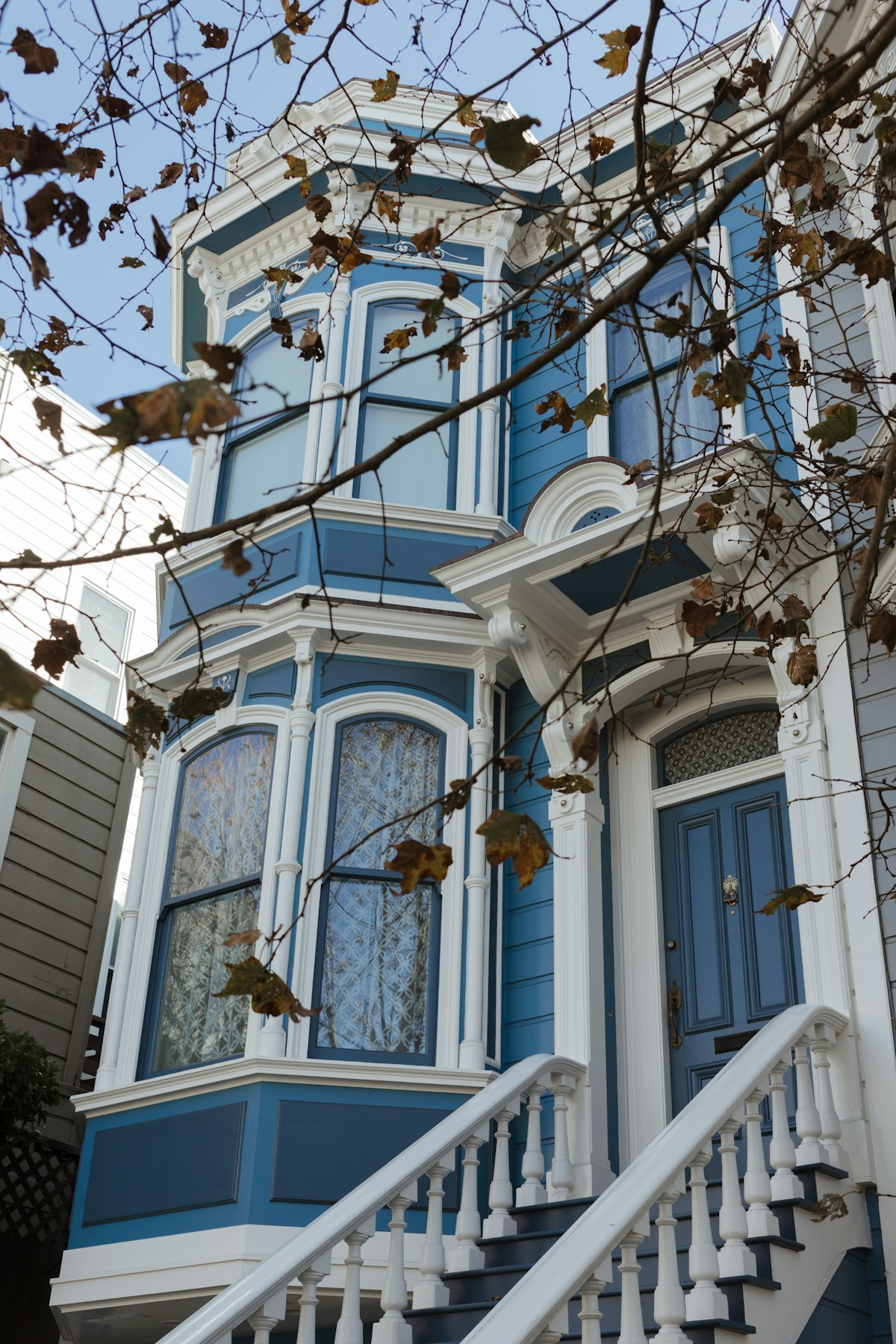
Photo by Nadia Valko via Unsplash
Craftsman & Bungalow Homes (1905–1930): What Are the Best Gutter Options?
Half-round gutters are the most historically accurate choice for Craftsman homes, and they cost $13–$45 per linear foot installed compared to $8–$41 for K-style (Angi, HomeGuide). The rounded profile matches what builders used during the Arts & Crafts era and complements exposed rafter tails without competing visually.
Half-Round Gutters
The U-shaped trough was the standard gutter profile during the Craftsman era. Half-round gutters drain efficiently because debris doesn’t accumulate in corners the way it does in K-style channels. For Sacramento Craftsman homes, copper or painted aluminum half-rounds in earth tones work best. They sit naturally below the roofline and let rafter tails remain visible — a signature Craftsman detail.
Box Gutters
Some larger Craftsman homes originally used built-in box gutters integrated into the roof structure. If your home has these, maintaining or rebuilding them preserves architectural authenticity. Box gutter restoration costs more than surface-mounted systems, but it keeps the roofline clean and eliminates visible hardware. We’ve found that homeowners who restore box gutters typically recoup the cost in preserved curb appeal.
Working Around Rafter Tails
Exposed rafter tails are a defining Craftsman feature. Standard gutter hangers can damage or obscure them. The solution is strap hangers that mount to the roof deck rather than the fascia, holding the gutter below and in front of the rafter tails. This preserves the woodwork while keeping gutters functional. Check out our guide on fascia board damage and gutters for more on protecting the wood behind your gutters.
In our experience working on Curtis Park and Oak Park Craftsman bungalows, the most common mistake we see is K-style gutters mounted directly over rafter tails. The flat-back profile covers the woodwork, traps moisture behind the gutter, and accelerates rot. Half-round gutters with strap hangers avoid all three problems.
Victorian Homes (1880–1910): Which Gutter Styles Are Period-Appropriate?
Copper half-round gutters with decorative brackets are the gold standard for Victorian homes. Copper costs $25–$40 per linear foot installed but lasts 50–100 years (Angi, This Old House). That longevity actually makes copper competitive on a per-decade cost basis, especially when you avoid two or three aluminum replacements over the same period.
Why Copper Works for Victorians
Victorian architecture is ornamental by nature — decorative shingles, corbels, turned spindles, and elaborate trim define the style. Copper gutters complement this richness rather than competing with it. As copper weathers, it develops a green patina that adds character. Bright aluminum, by contrast, looks industrial against Victorian detailing.
For homeowners who want the look without the full copper price, pre-patinated copper or copper-penny painted aluminum offers a middle ground. The painted options won’t develop a natural patina over time, but they cost 60–70% less while achieving a similar first impression. For a deeper comparison of these materials, see our aluminum vs. copper gutters guide.
Decorative Brackets & Hangers
Victorian-era gutters were supported by ornamental brackets, not hidden hangers. Reproducing this detail makes a visible difference. Cast aluminum or copper brackets in scroll or acanthus leaf patterns are available from specialty suppliers. They add $3–$8 per bracket to the project cost but give the installation an authentic finished look that hidden hangers can’t match.
Navigating Complex Rooflines
Victorians are famous for complex rooflines — turrets, dormers, steeply pitched gables, and multiple valleys. Every transition point is a potential leak. Soldered copper joints outperform caulked aluminum seams on these intricate runs because solder creates a permanent waterproof bond. Does your Victorian have an especially complicated roofline? That’s where hiring a contractor with specific older-home experience pays off.
Mid-Century Modern Homes (1945–1970): What Gutter Style Fits Clean Lines?
K-style aluminum gutters at $6–$15 per linear foot are actually the right match for Mid-Century Modern homes (Angi). The flat-front profile and sharp edges complement the geometric simplicity that defines post-war residential architecture. Unlike Craftsman and Victorian homes, Mid-Century homes were built in the K-style era, so this profile is historically appropriate.
Why K-Style Works Here
Mid-Century Modern design emphasizes horizontal lines, flat or low-slope roofs, and minimal ornamentation. K-style gutters echo these principles. The flat back sits flush against fascia boards, and the angular front profile creates a clean shadow line that reinforces the home’s geometry. For these homes, ornamental half-round gutters would actually look out of place.
Seamless Aluminum: The Best Fit
Seamless gutters eliminate the seams every 10 feet that sectional gutters require. On the long, unbroken rooflines typical of Mid-Century ranch homes, seamless runs of 30–50 feet look much cleaner. They also reduce leak risk significantly. Our guide to seamless gutters in Sacramento covers sizing and installation details.
Color Matching
Mid-Century homes often feature bold or muted color palettes — avocado, burnt orange, slate gray, or desert tan. Aluminum gutters come in dozens of factory-baked enamel colors. Matching the gutter color to the fascia makes the system nearly invisible, which aligns with the Mid-Century preference for clean, uncluttered facades. Most manufacturers offer at least 20 standard colors and will custom-match for an upcharge.
Here’s something most guides miss: Mid-Century homes in Sacramento often have wide roof overhangs (sometimes 24–36 inches) that reduce the rainfall volume reaching the gutters. That means standard 5-inch K-style gutters are usually sufficient, even though many newer homes benefit from 6-inch upgrades. Don’t oversize gutters on these homes — they’ll look bulky and disproportionate.
Which Sacramento Neighborhoods Have the Most Historic Homes?
Sacramento has 30 historic districts on the Sacramento Register and 110 properties on the National Register of Historic Places, including 6 National Historic Landmarks (City of Sacramento, National Park Service). These areas concentrate the oldest and most architecturally significant homes in the region.
Midtown Sacramento
Built: 1880s–1930s | Victorians, Craftsman bungalows, Colonial Revival
Sacramento’s densest collection of pre-1930 homes. Multiple historic districts require design review for exterior changes, including gutter replacements. Half-round copper or painted aluminum is the most common period-appropriate choice.
Land Park
Built: 1920s–1950s | Tudor Revival, Craftsman, early ranch
A mix of styles means no single gutter profile fits every home. Tudor Revival homes suit half-round, while post-war ranches align with K-style. Mature tree canopy means leaf guards are especially important here.
Curtis Park
Built: 1910s–1940s | Craftsman bungalows, Spanish Colonial
One of Sacramento’s most cohesive Craftsman neighborhoods. Half-round gutters in dark bronze or copper tones complement the low-pitched rooflines and wide front porches that define the area.
East Sacramento / Fab 40s
Built: 1920s–1950s | Tudor, Colonial, Craftsman, Mediterranean
The Fab 40s Historic District features some of Sacramento’s most architecturally significant homes. Gutter choices here often require matching copper downspouts and custom bracket styles to satisfy preservation standards.
Old Sacramento
Built: 1850s–1880s | Gold Rush era commercial & residential
A National Historic Landmark District with the strictest preservation requirements in the region. Any exterior modifications, including gutters, require Preservation Commission approval. Copper half-round is the expected standard.
Oak Park
Built: 1900s–1940s | Craftsman, Queen Anne, Bungalow
Sacramento’s oldest residential neighborhood outside downtown is experiencing significant renovation activity. Many homes still have original or early-replacement gutters in need of updating. Half-round profiles help maintain the neighborhood’s character.
How Do Gutter Materials Compare for Older Homes?
Copper gutters last 50–100 years at $25–$40 per linear foot, while aluminum lasts 20–30 years at $6–$15 per linear foot (Angi, This Old House). The right material depends on your home’s style, your budget, and how long you plan to stay. Here’s a breakdown of the four main options.
| Material | Cost/Linear Ft | Lifespan | Best For | Drawbacks |
|---|---|---|---|---|
| Copper | $25–$40 | 50–100 years | Victorians, high-end Craftsman, historic districts | High upfront cost; requires soldered joints; patina develops unevenly |
| Aluminum | $6–$15 | 20–30 years | Mid-Century Modern, budget Craftsman, any painted application | Dents easily; paint fades in 10–15 years; shorter lifespan |
| Galvanized Steel | $8–$12 | 15–25 years | Replacement on homes that had original steel gutters | Rusts over time; heavy; harder to find installers |
| Zinc | $20–$35 | 50–80 years | European-style homes, premium applications | Very expensive; limited installer availability; requires specialized tools |
For a detailed head-to-head analysis, read our full aluminum vs. copper gutters comparison. And if you’re curious about total project costs, our gutter installation cost guide breaks down pricing by home size and material.
Key Finding: Copper gutters cost $25–$40 per linear foot installed and last 50–100 years, compared to aluminum at $6–$15 per linear foot with a 20–30 year lifespan (Angi, This Old House). Over a 50-year ownership period, copper’s single installation can cost less than three aluminum replacements.
What Are Common Gutter Challenges on Pre-1970 Homes?
Approximately 750 properties in Sacramento County are listed on historic registers (Sacramento County Assessor), and even unregistered older homes share similar structural challenges. Understanding these issues before you start a gutter project saves time, money, and frustration.
1. Fascia Board Decay
Old-growth lumber fascia boards from the early 1900s were dense and rot-resistant, but after 80–120 years, even the best wood deteriorates. Gutters can’t hold properly on rotted fascia. Any gutter project on a pre-1970 home should start with a fascia inspection. Our fascia board damage guide explains what to look for.
2. Non-Standard Measurements
Pre-war homes weren’t built to today’s standardized lumber dimensions. A “2x6” fascia board from 1920 might actually measure 1-3/4” by 5-3/4” — or something else entirely. This means gutter hangers, brackets, and screws need to be selected and sometimes modified on-site rather than pulled off the shelf.
3. Lead Paint on Fascia & Soffits
Homes built before 1978 may have lead paint on exterior trim. Drilling, scraping, or sanding fascia boards during gutter installation can release lead dust. Responsible contractors test for lead before starting work and follow EPA RRP (Renovation, Repair, and Painting) rules if it’s present.
4. Irregular Roofline Pitch
Settling, foundation shifts, and structural repairs over decades can leave older rooflines uneven. A gutter that’s level relative to the ground may not slope correctly relative to the roof edge. Installers need to measure actual pitch at multiple points rather than assuming uniform grade.
5. Outdated Downspout Routing
Many older Sacramento homes have downspouts that drain directly against the foundation or into deteriorating clay tile underground pipes. Updating the gutter system is the perfect time to reroute downspouts away from the foundation. See our downspout extensions and drainage guide for options.
6. Concealed Structural Damage
Removing old gutters sometimes reveals surprises — termite damage, dry rot behind flashing, or improperly repaired areas from previous work. A qualified contractor builds contingency into the estimate for these discoveries rather than stopping work when problems appear.
Based on our project records across Sacramento’s older neighborhoods, roughly 40% of pre-1940 homes we work on need fascia repairs before new gutters can be installed. On homes built between 1940 and 1970, that number drops to about 15%. Budgeting an extra $500–$1,500 for fascia work on a pre-1940 home is a realistic expectation.
How Do You Choose the Right Gutter Contractor for Historic Homes?
With 110 National Register properties in Sacramento County (National Park Service), finding a contractor who understands older home requirements isn’t optional — it’s essential. Not every gutter company stocks half-round profiles, works with copper, or knows how to navigate historic district requirements.
Step 1: Verify Profile & Material Inventory
Ask whether the contractor carries half-round gutter stock and copper materials. Many companies only work with K-style aluminum because that’s what their forming machines produce. If they need to special-order half-round, confirm lead times and whether prices are locked in.
Step 2: Ask for Pre-1970 Project Photos
Portfolio photos of completed work on Craftsman, Victorian, or Mid-Century homes tell you more than any sales pitch. Pay attention to bracket styles, color matching, and how gutters integrate with rafter tails and decorative trim. A contractor with experience will show these details proudly.
Step 3: Confirm Fascia Assessment Is Included
Any reputable contractor includes a fascia and soffit inspection as part of the gutter estimate on older homes. If the quote skips this step, the contractor either doesn’t understand older construction or plans to charge extra when problems appear mid-project.
Step 4: Check Historic District Awareness
If your home is in one of Sacramento’s 30 historic districts, the contractor should know whether your project needs Preservation Commission review. They should also understand which gutter profiles and materials are likely to receive approval. Our guide on choosing a gutter contractor covers more selection criteria.
Step 5: Get a Written Scope with Contingencies
Older homes produce surprises. Good contractors build contingency line items into proposals — for example, “fascia repair if needed: $X per linear foot.” This transparency prevents sticker shock and keeps the project moving when hidden damage appears.
Need Gutters for Your Older Sacramento Home?
We carry half-round, K-style, and box gutter profiles in copper and aluminum. Every estimate on pre-1970 homes includes a full fascia inspection at no extra charge.
Frequently Asked Questions
Do I need a permit to replace gutters on a historic Sacramento home?
It depends on your designation. Homes within Sacramento’s 30 registered historic districts (City of Sacramento) may require design review approval from the Preservation Commission before changing gutter materials or profiles. Homes outside historic districts generally don’t need permits for gutter replacement alone, but always check with the planning department first.
What are the best gutters for a Craftsman bungalow in Sacramento?
Half-round gutters in copper or painted aluminum are the most period-appropriate choice for Craftsman bungalows built between 1905 and 1930 (The Craftsman Blog). Box gutters also work if the original design included them. Avoid K-style profiles, which weren’t available until the mid-20th century and clash with Craftsman aesthetics.
How much do copper gutters cost compared to aluminum?
Copper gutters cost $25–$40 per linear foot installed and last 50–100 years. Aluminum gutters cost $6–$15 per linear foot and last 20–30 years (Angi). Over a 50-year period, copper can actually cost less because you avoid two or three aluminum replacements.
Can I install modern seamless gutters on a Victorian home?
Yes, but profile selection matters. Seamless half-round gutters in copper or pre-painted steel maintain Victorian aesthetics while eliminating leak-prone seams. Avoid seamless K-style on Victorians because the flat-front profile clashes with ornamental trim and corbels typical of these homes.
How do I find a gutter contractor experienced with older homes?
Look for contractors who carry half-round and box gutter inventory, not just K-style. Ask for photos of completed work on pre-1970 homes. Verify they understand fascia board assessment on older homes, since rotted fascia is common and must be repaired before gutter installation. Our contractor selection guide has a complete vetting checklist.
Will new gutters affect my historic home’s property value?
Period-appropriate gutters protect and can increase a historic home’s value. Sacramento County lists approximately 750 properties on historic registers (Sacramento County Assessor), and buyers of these homes expect architectural consistency. Mismatched modern gutters on a Victorian or Craftsman can reduce curb appeal and signal deferred maintenance to appraisers.
Related Articles
Half-Round vs. K-Style Gutters in Sacramento
A complete comparison of profiles, costs, and performance for Sacramento homes.
Aluminum vs. Copper Gutters: Sacramento Comparison
Cost, lifespan, and aesthetic differences between the two most popular gutter materials.
Fascia Board Damage & Gutters in Sacramento
How to identify and repair fascia rot before installing new gutters.
Seamless Gutters in Sacramento
Why seamless gutters outperform sectional systems and what to expect during installation.
Gutter Installation Cost in Sacramento
Full pricing breakdown by material, home size, and gutter profile for Sacramento homeowners.
How to Choose a Gutter Contractor in Sacramento
What to look for in licensing, insurance, and experience when hiring a gutter installer.